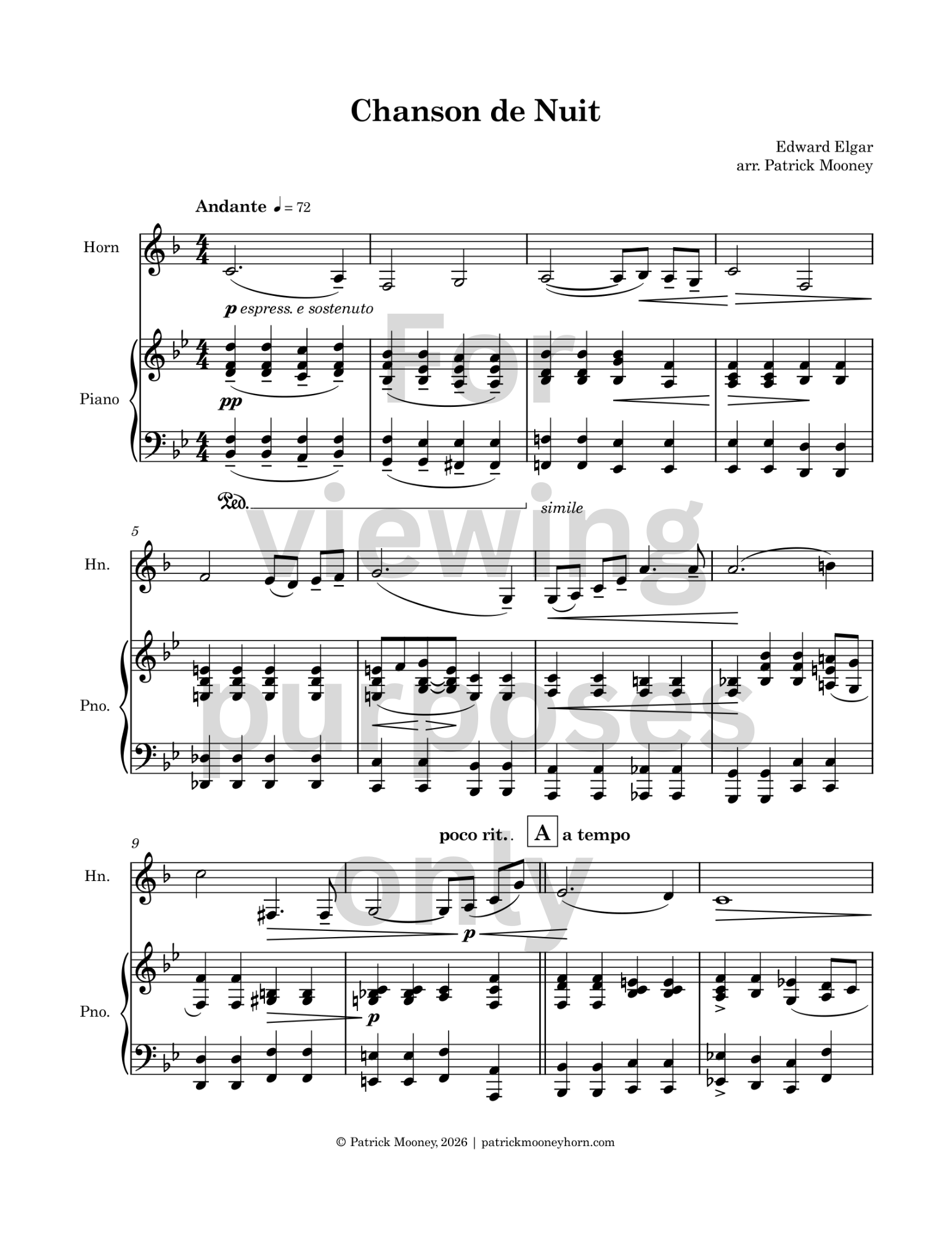
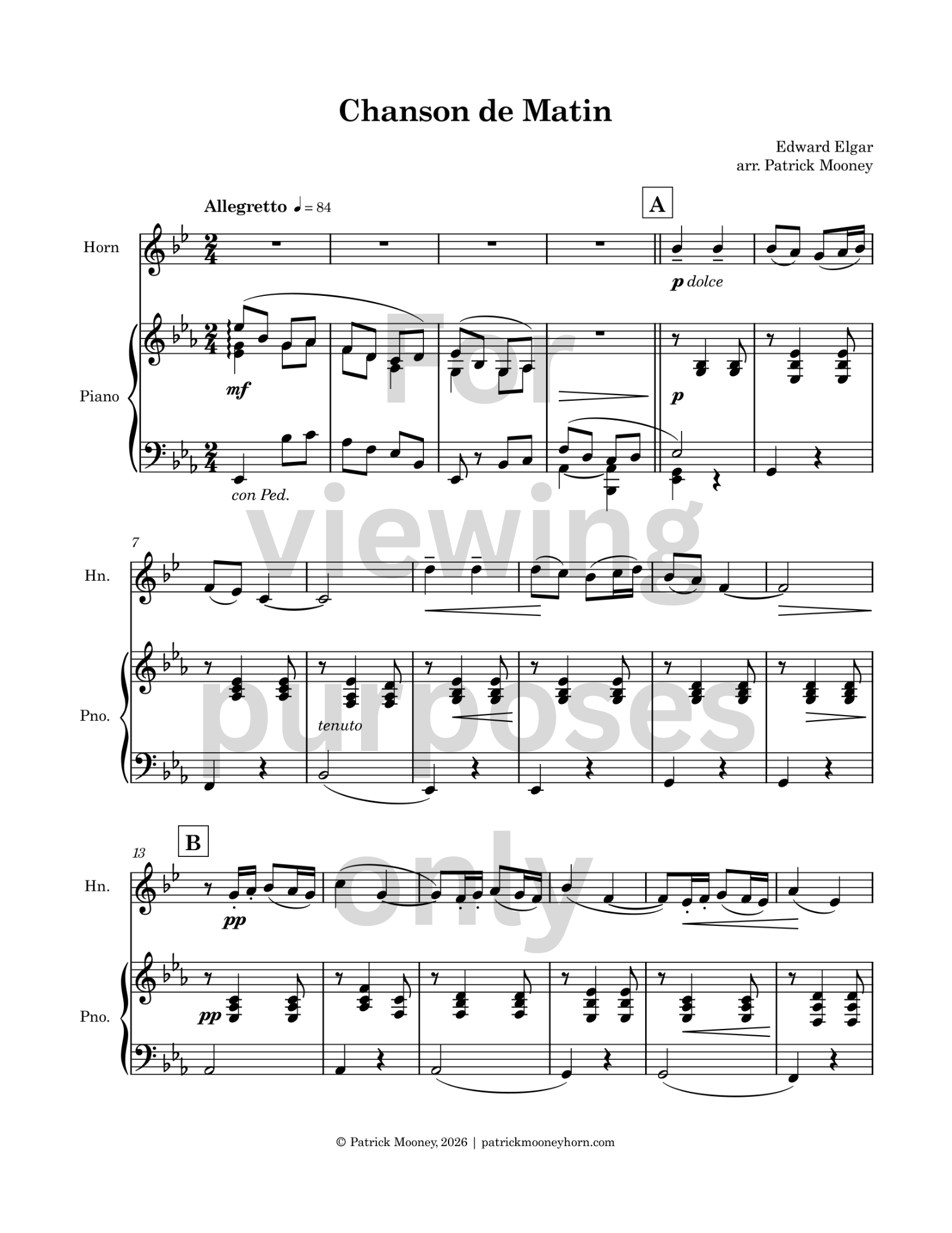
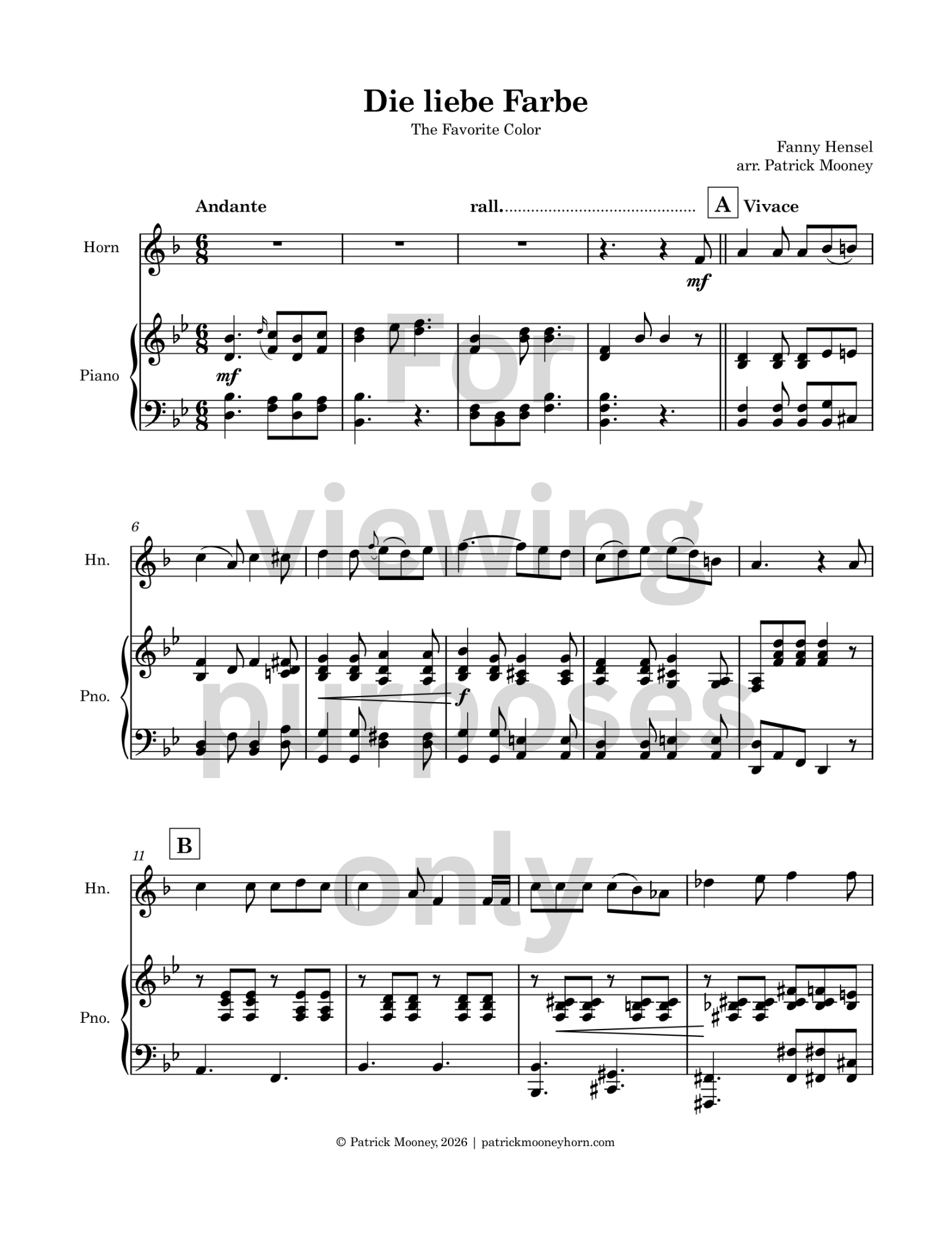
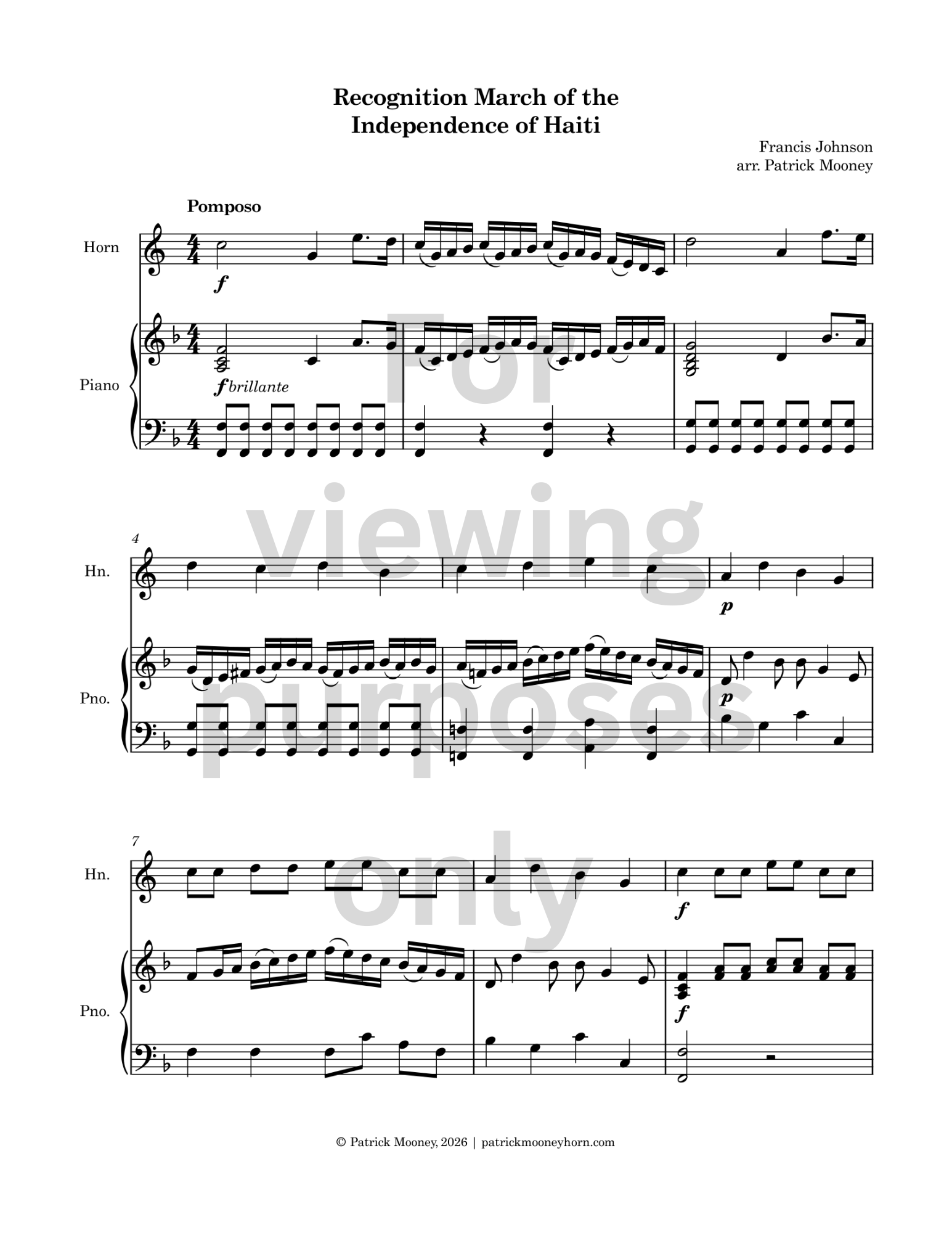
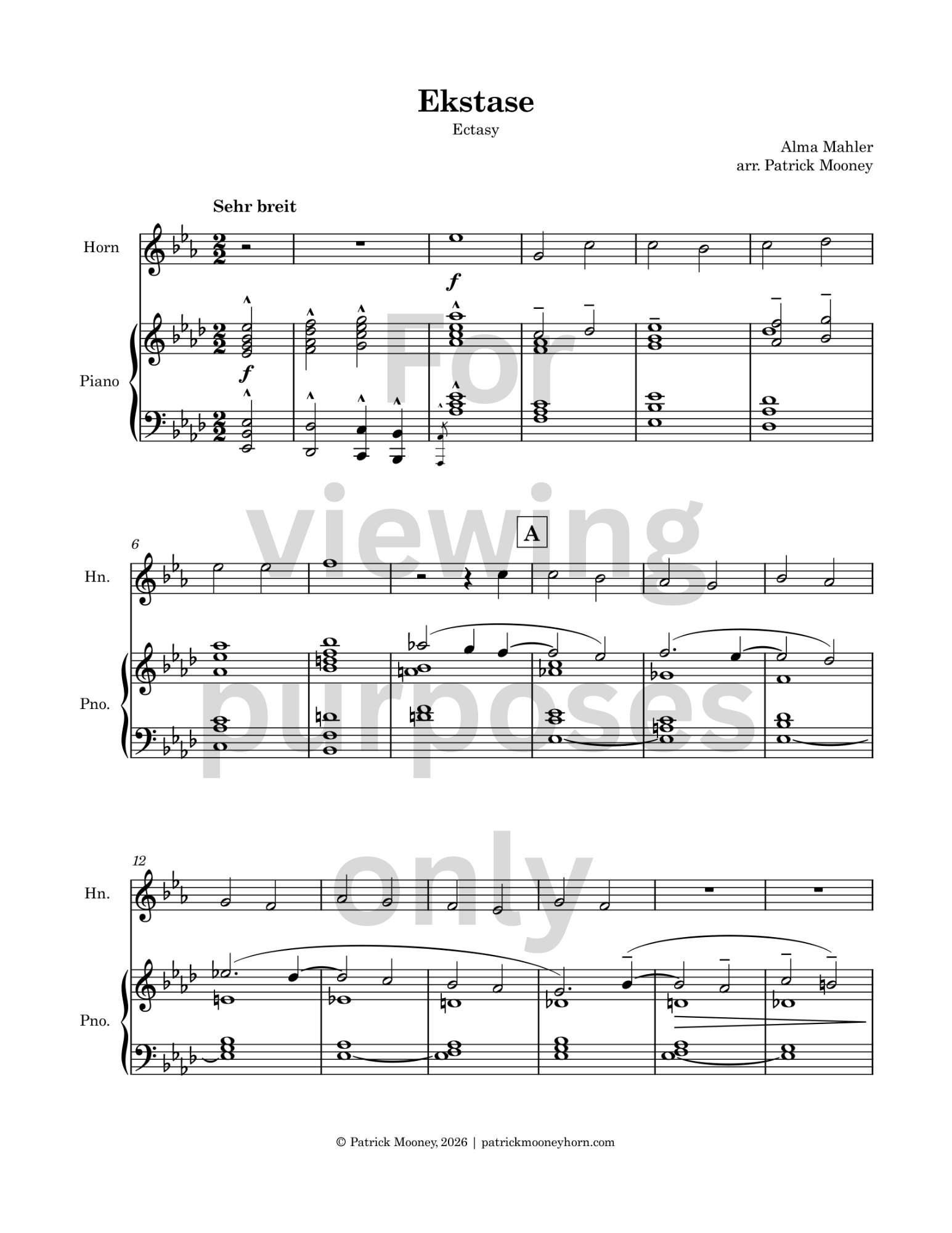
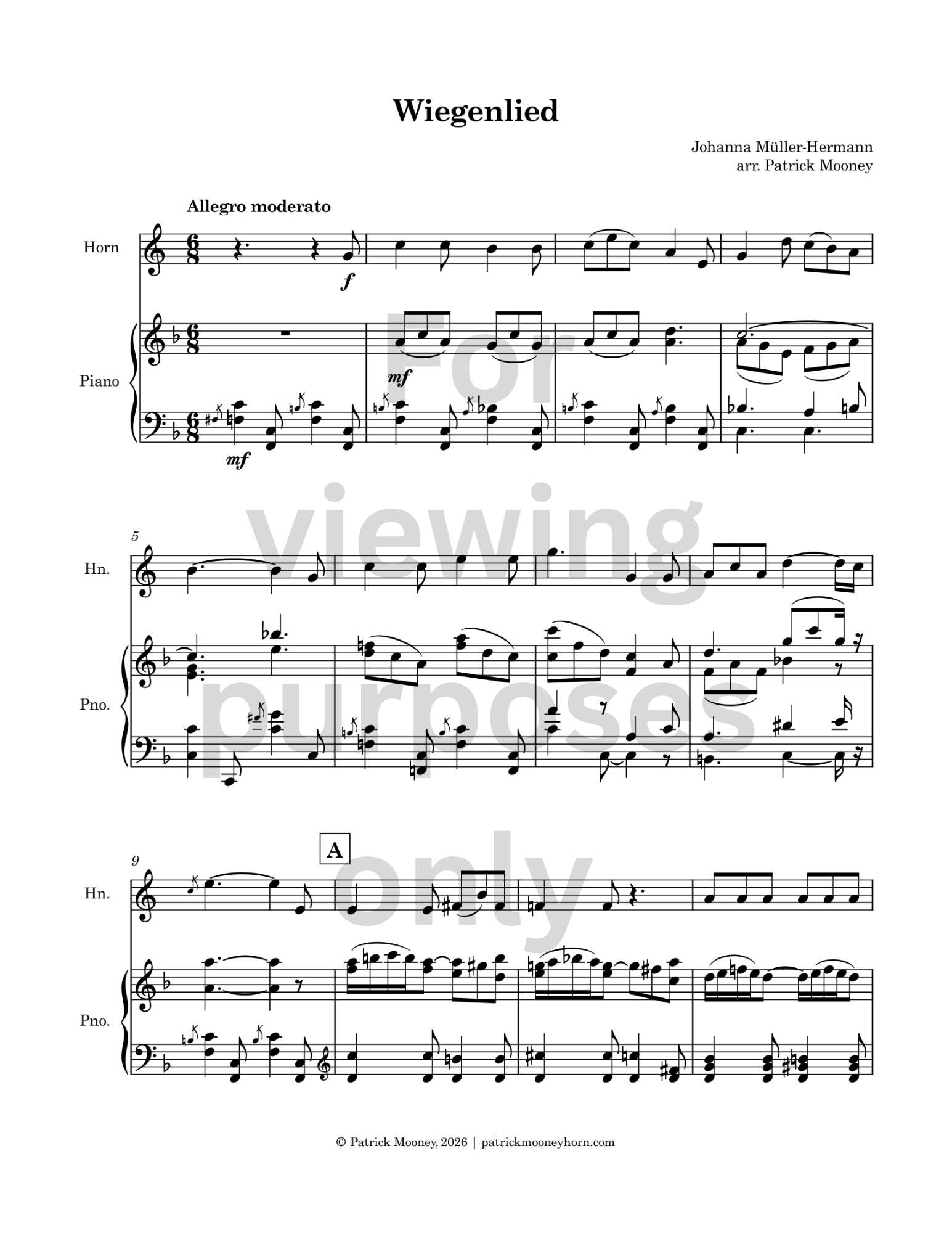
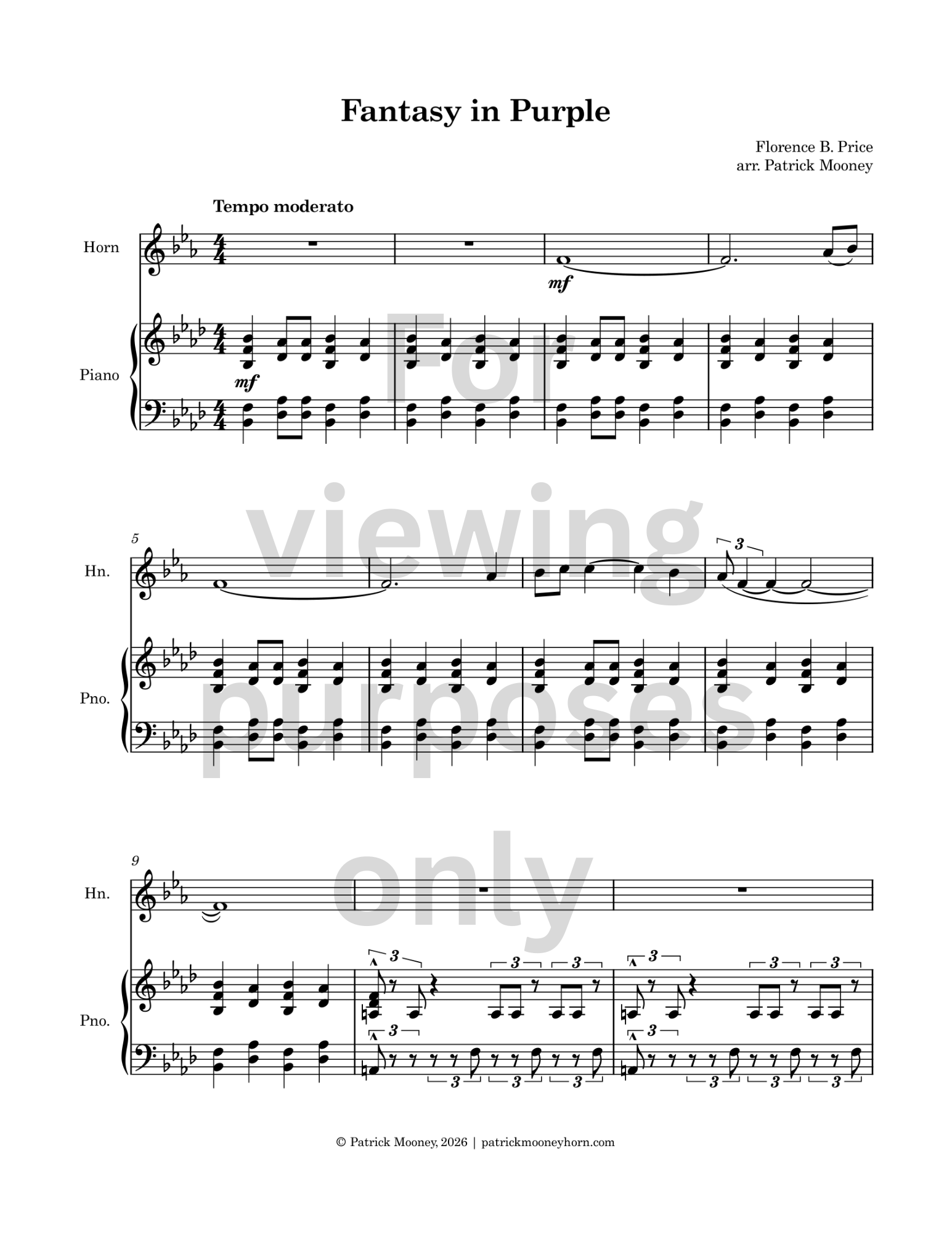
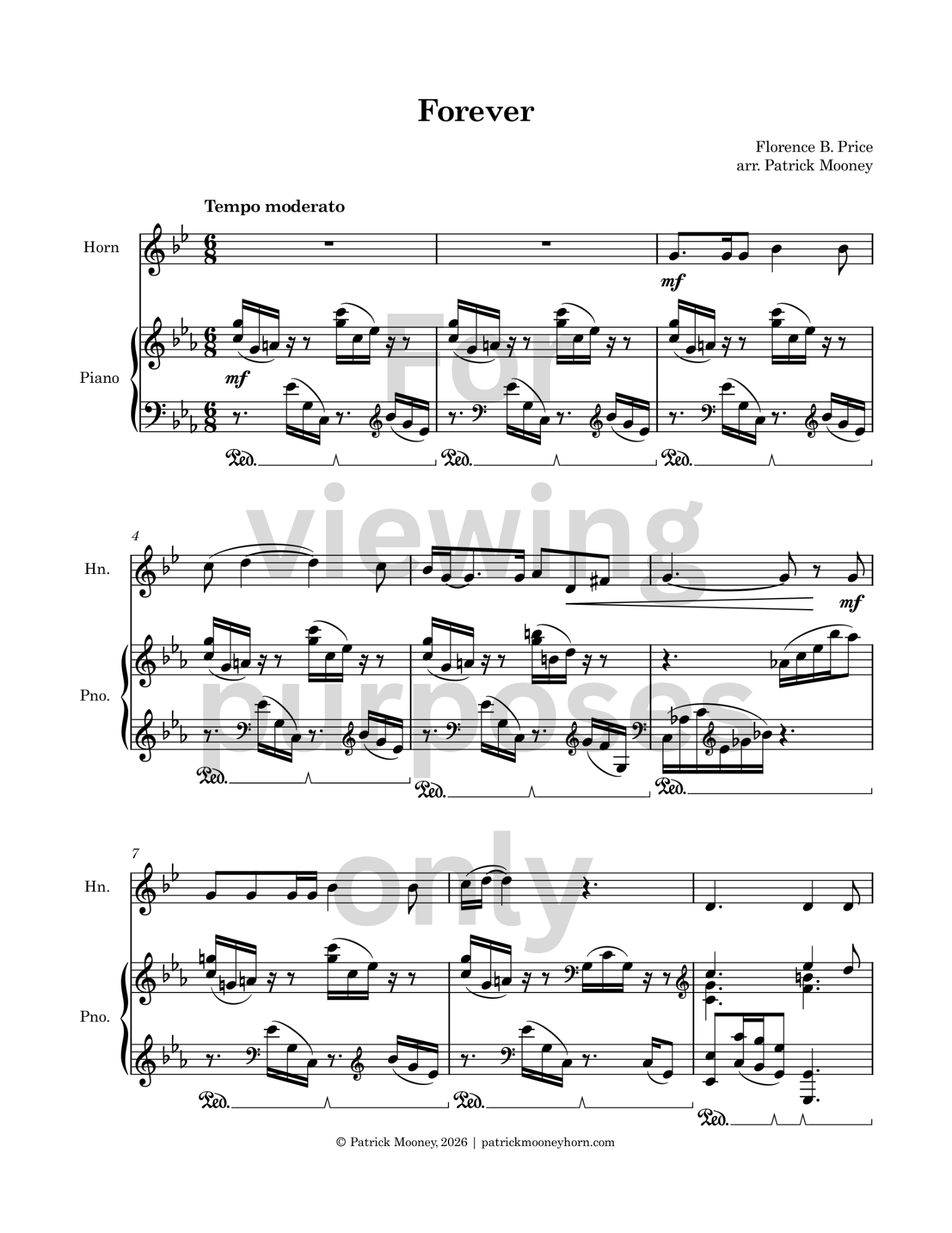
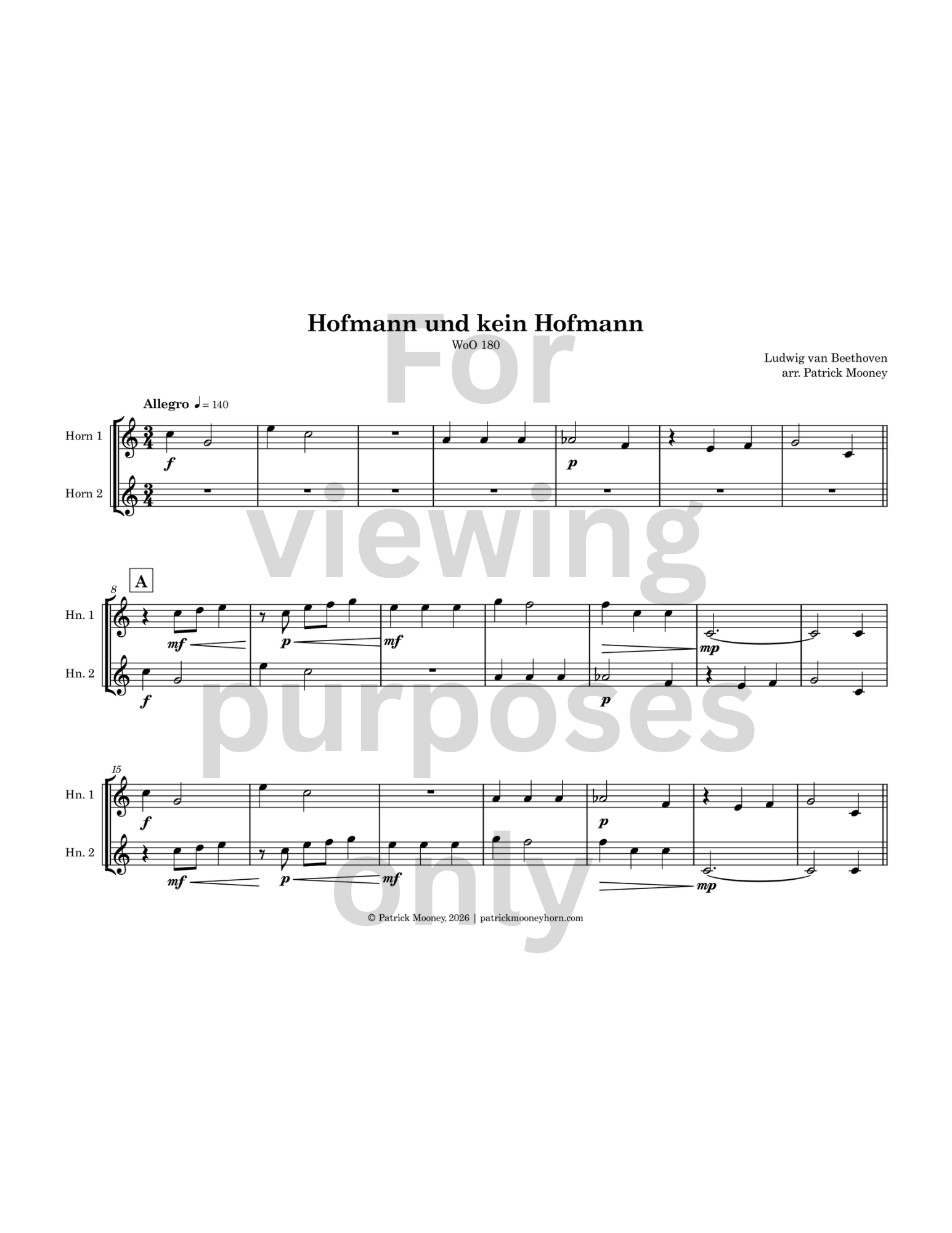
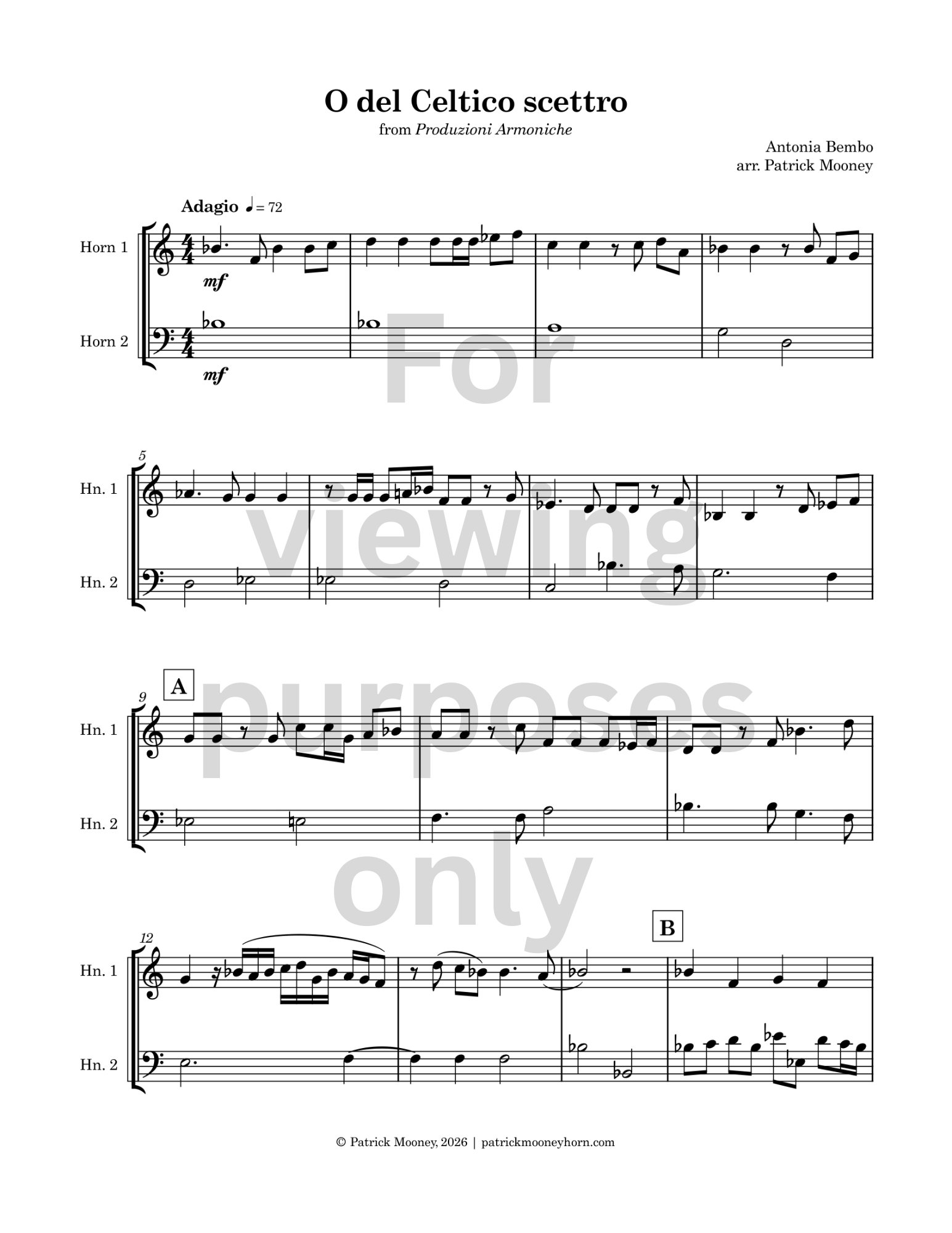
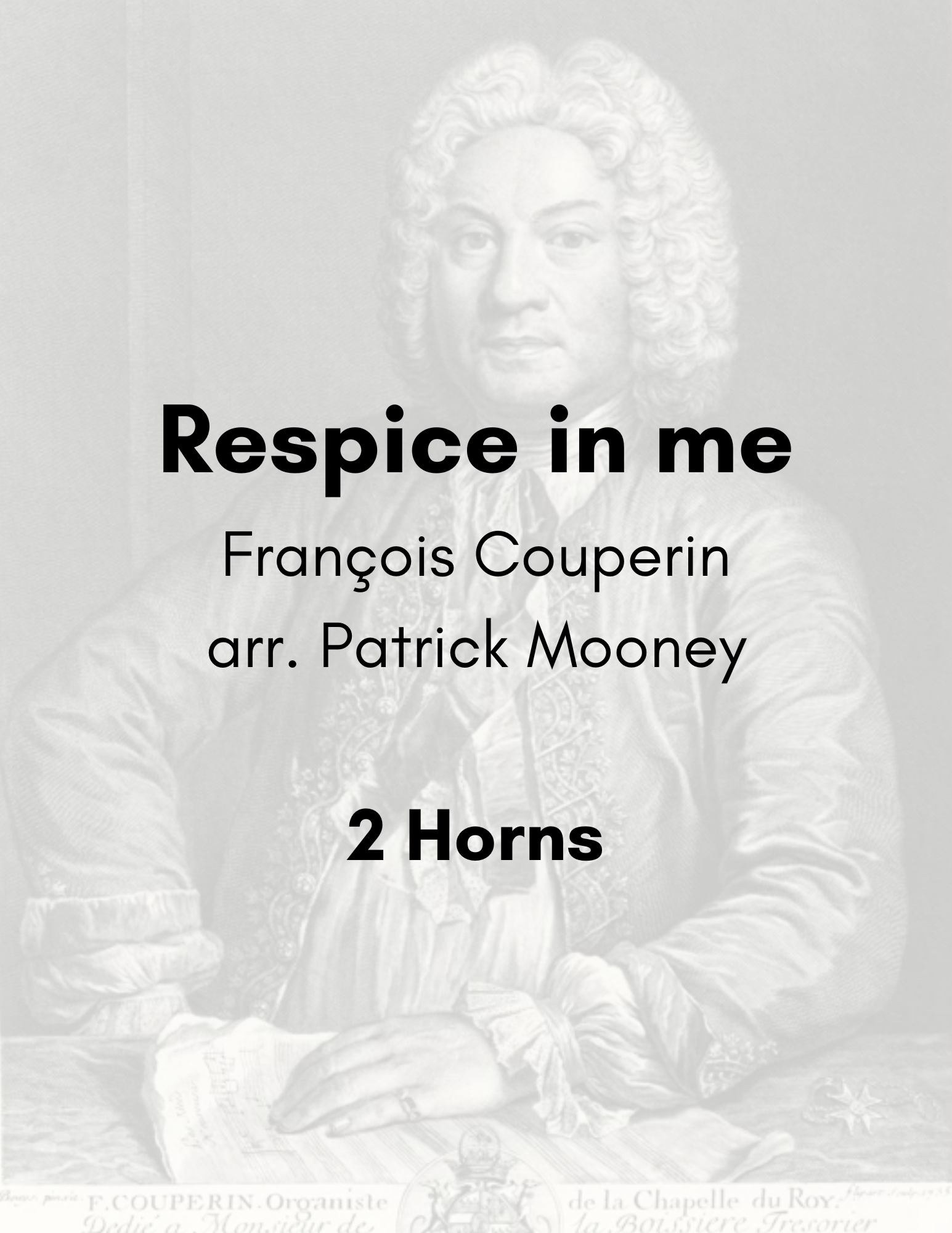
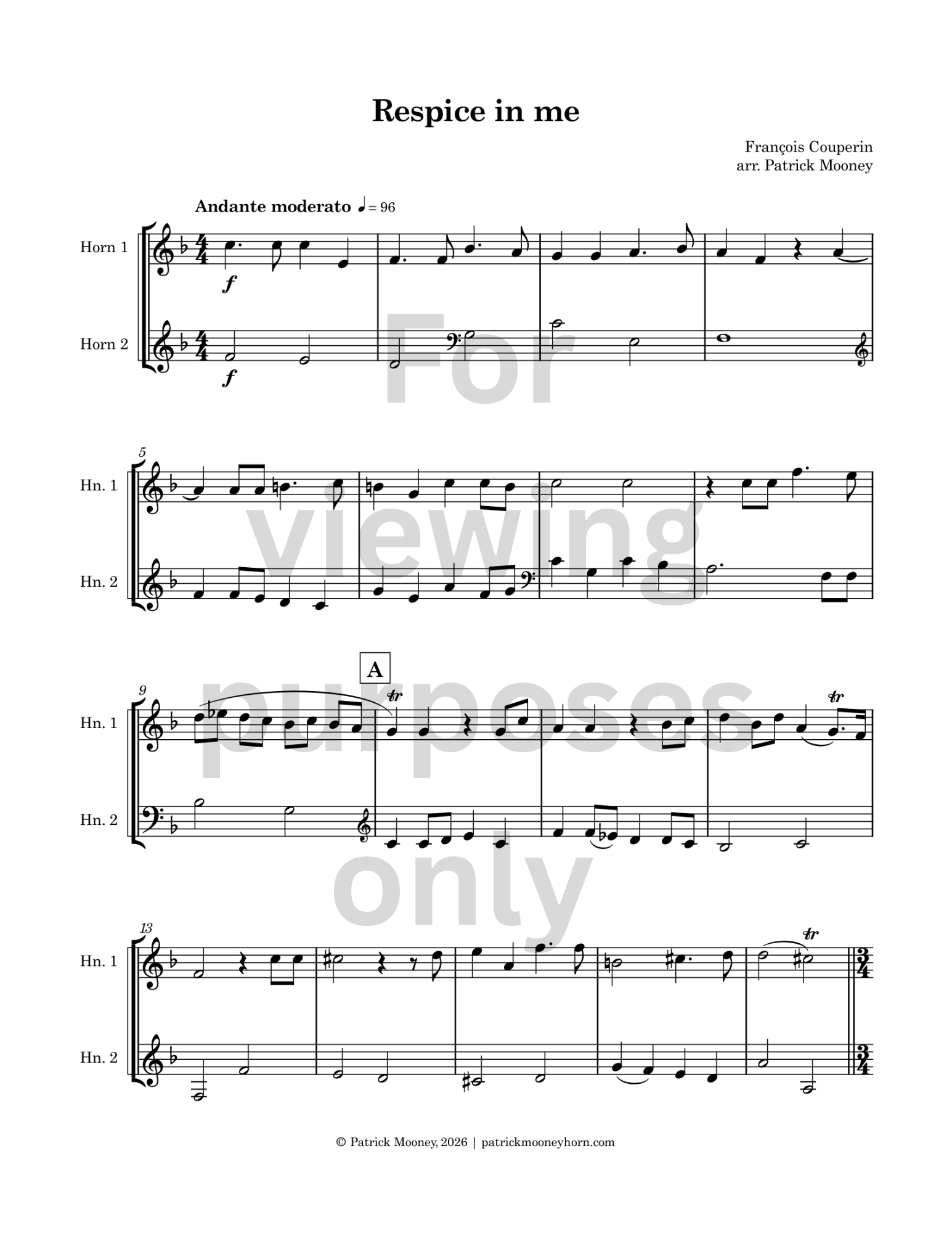
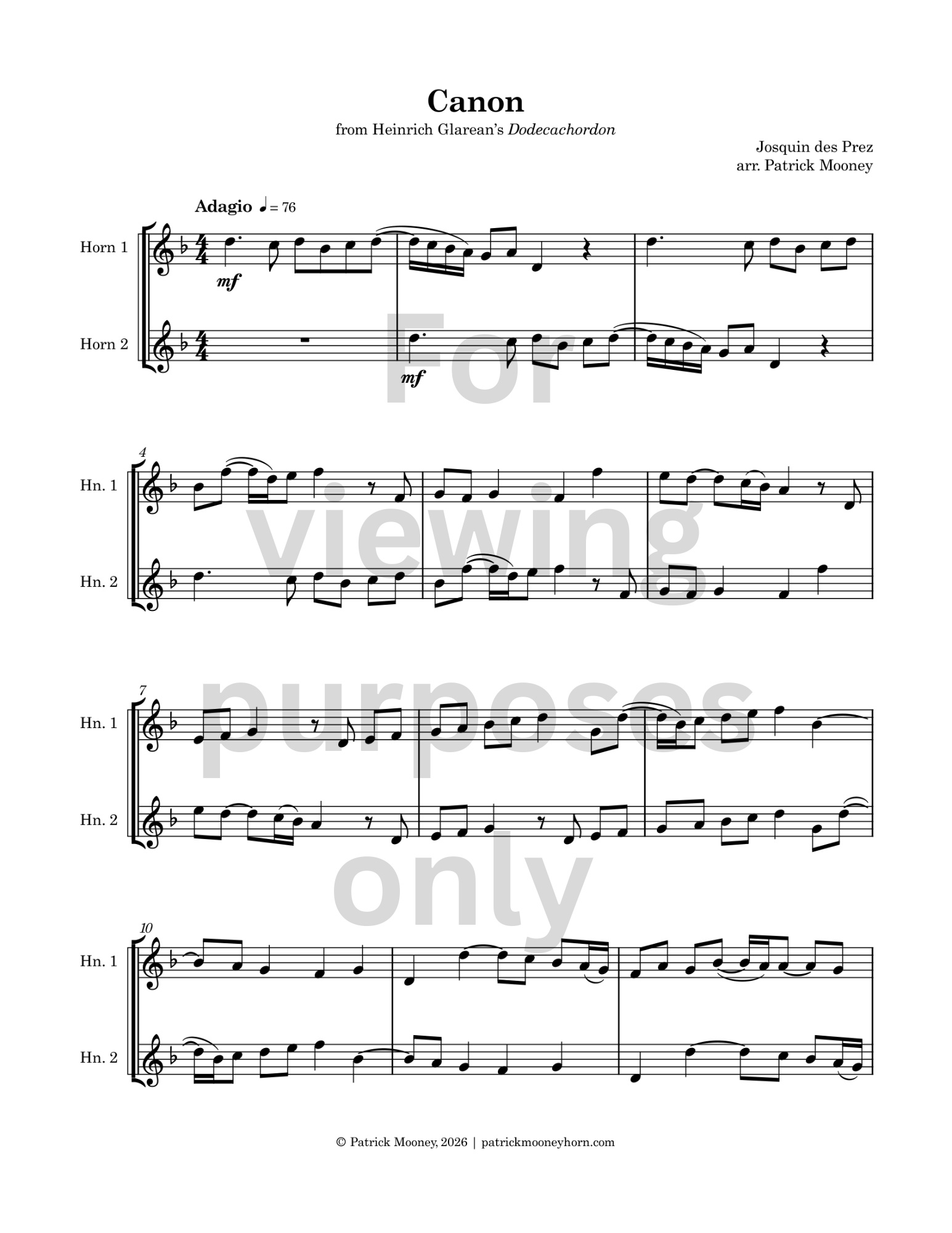
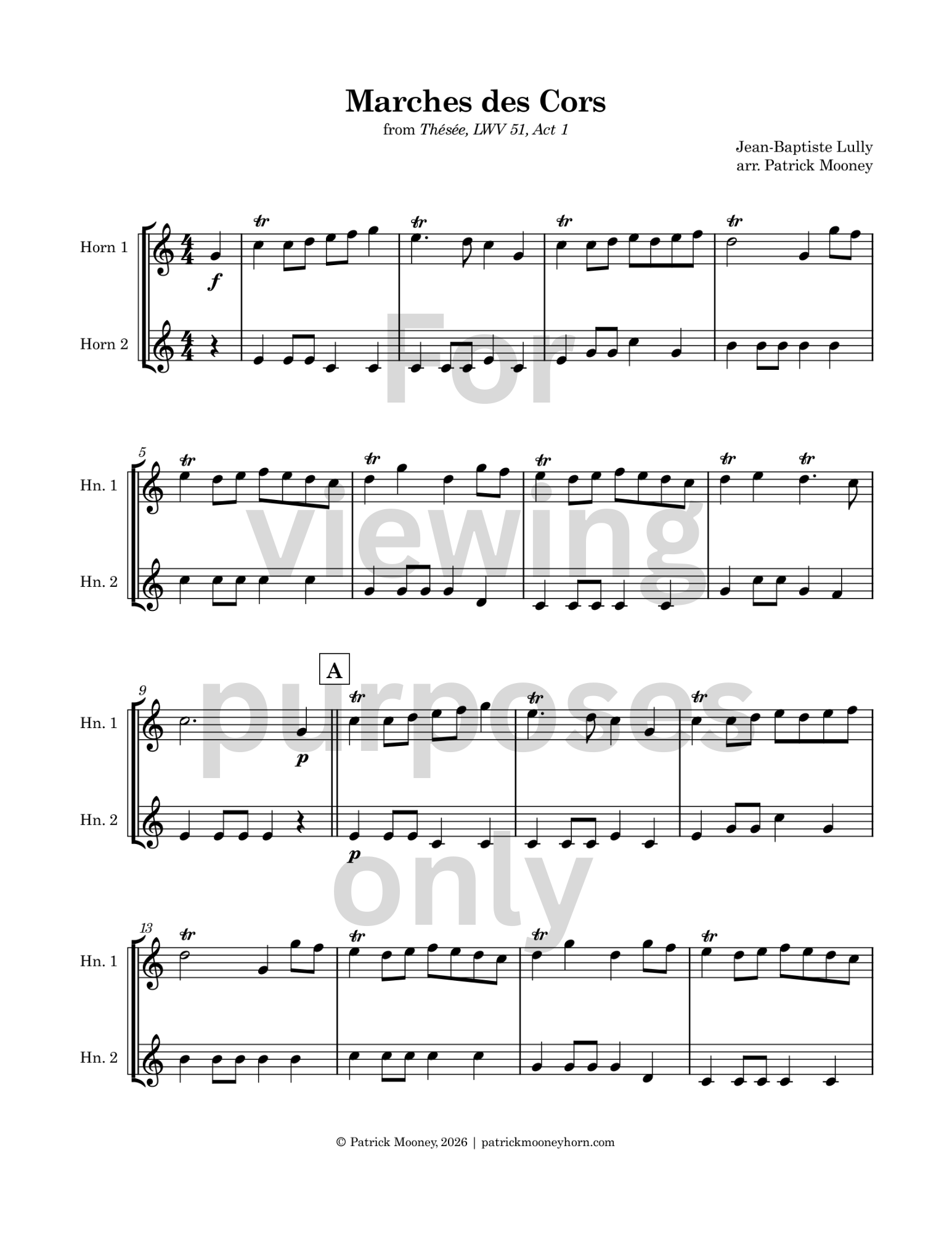
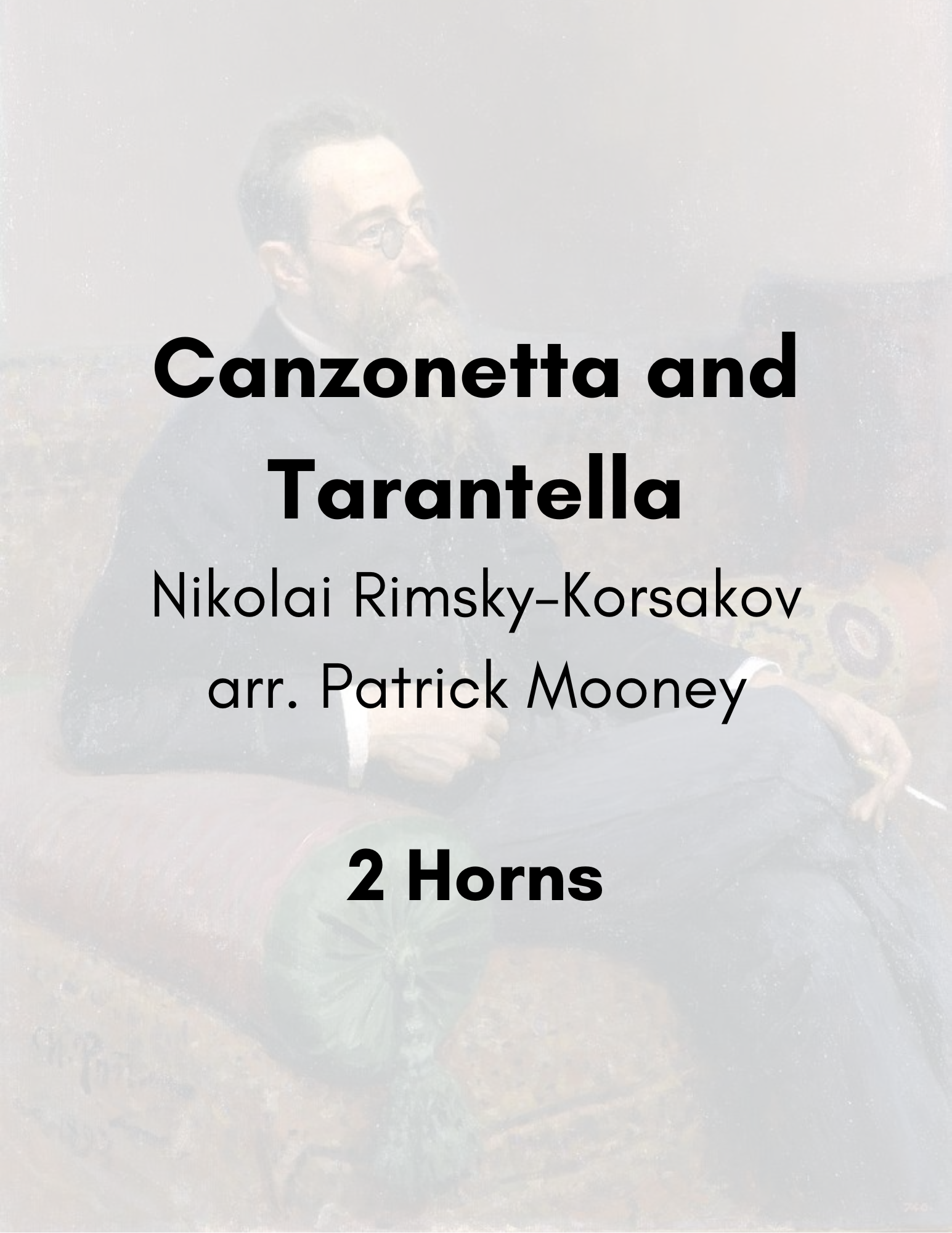
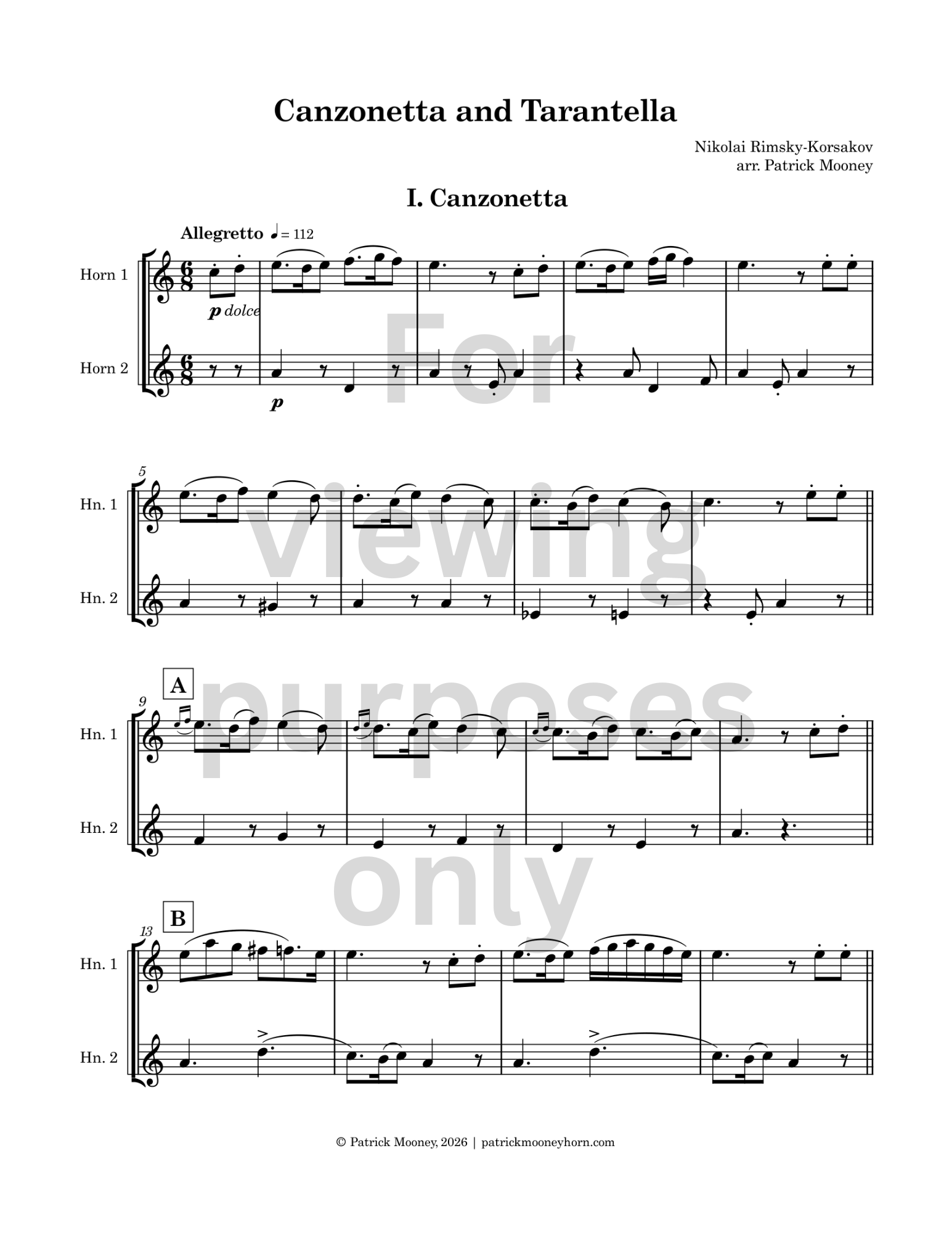
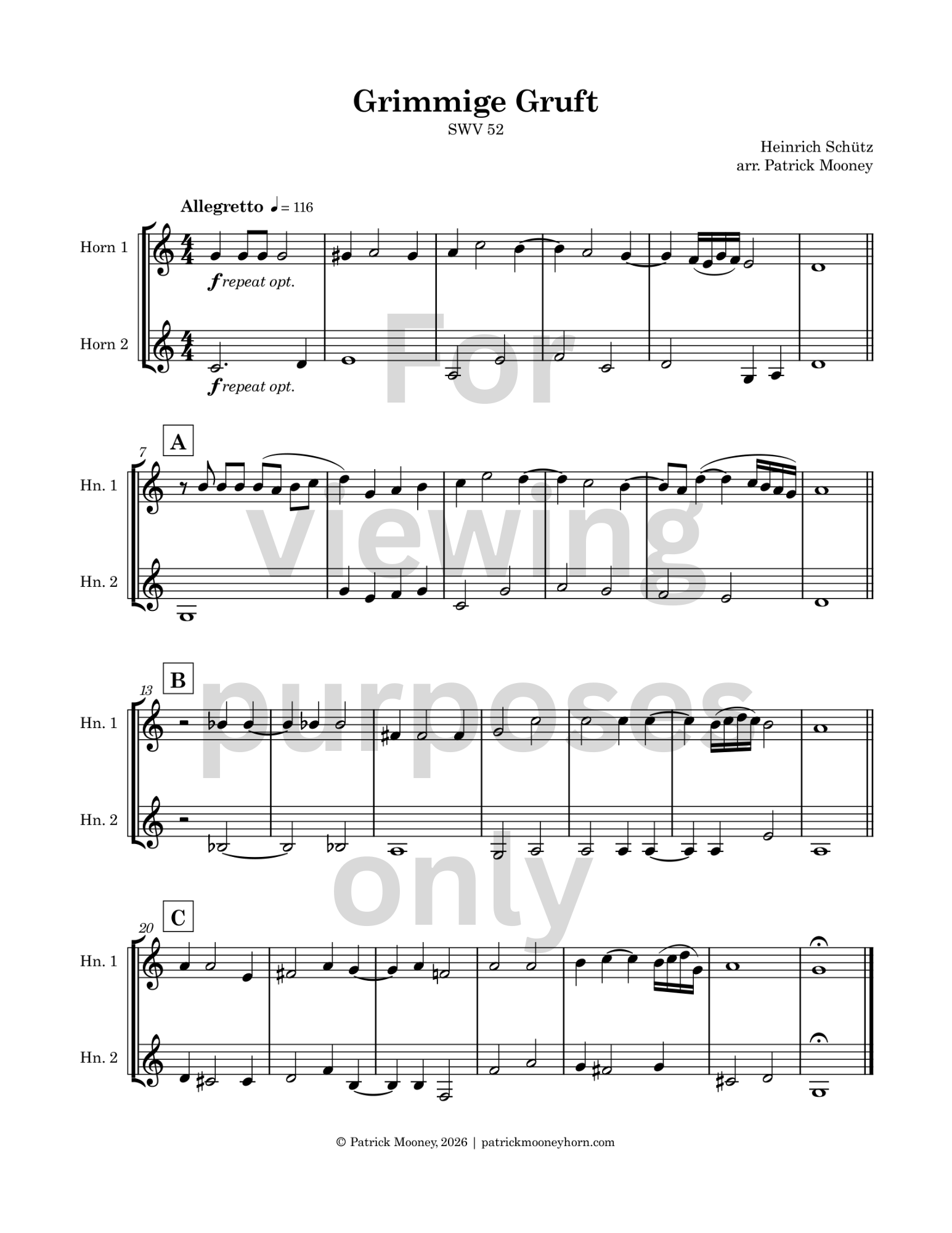
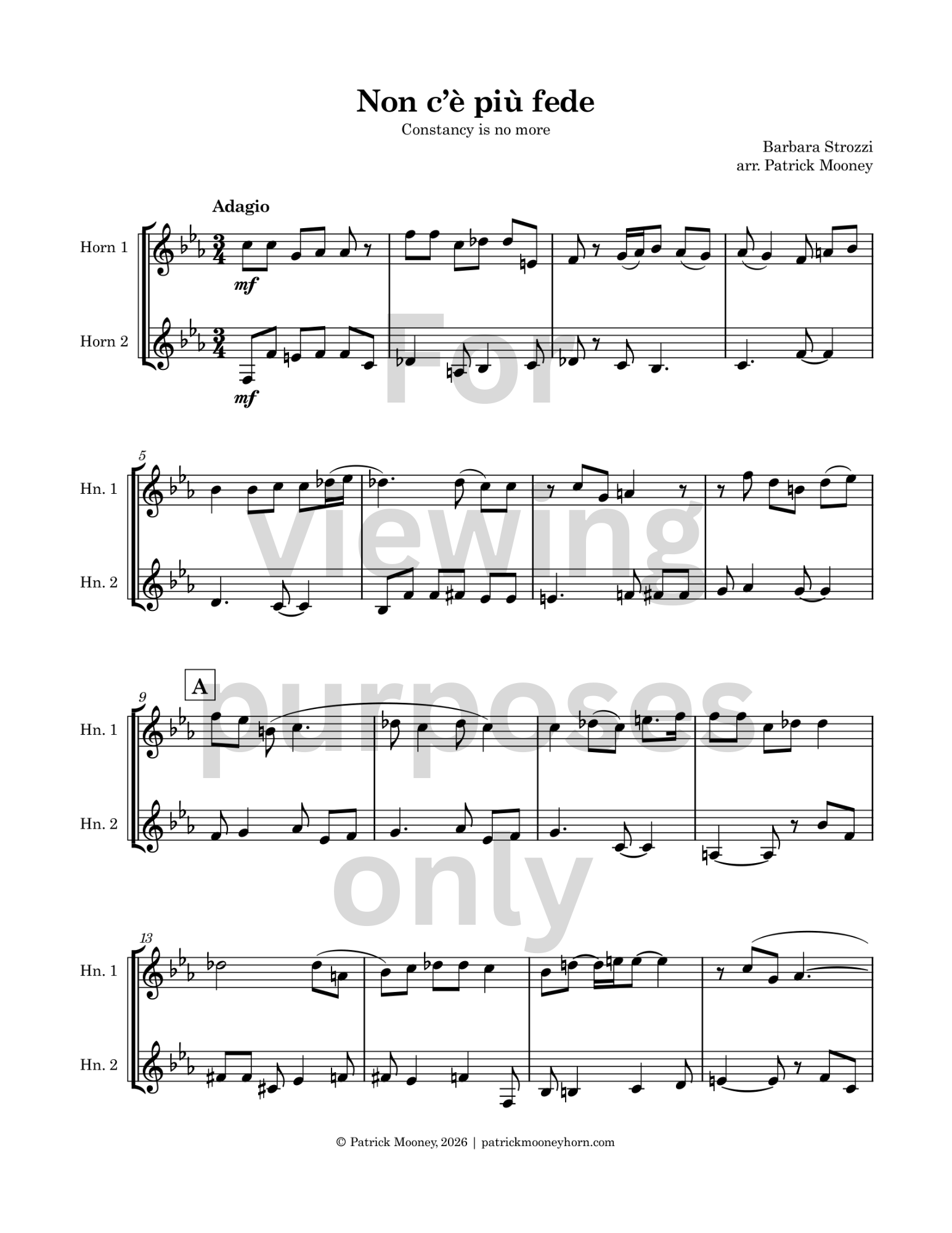
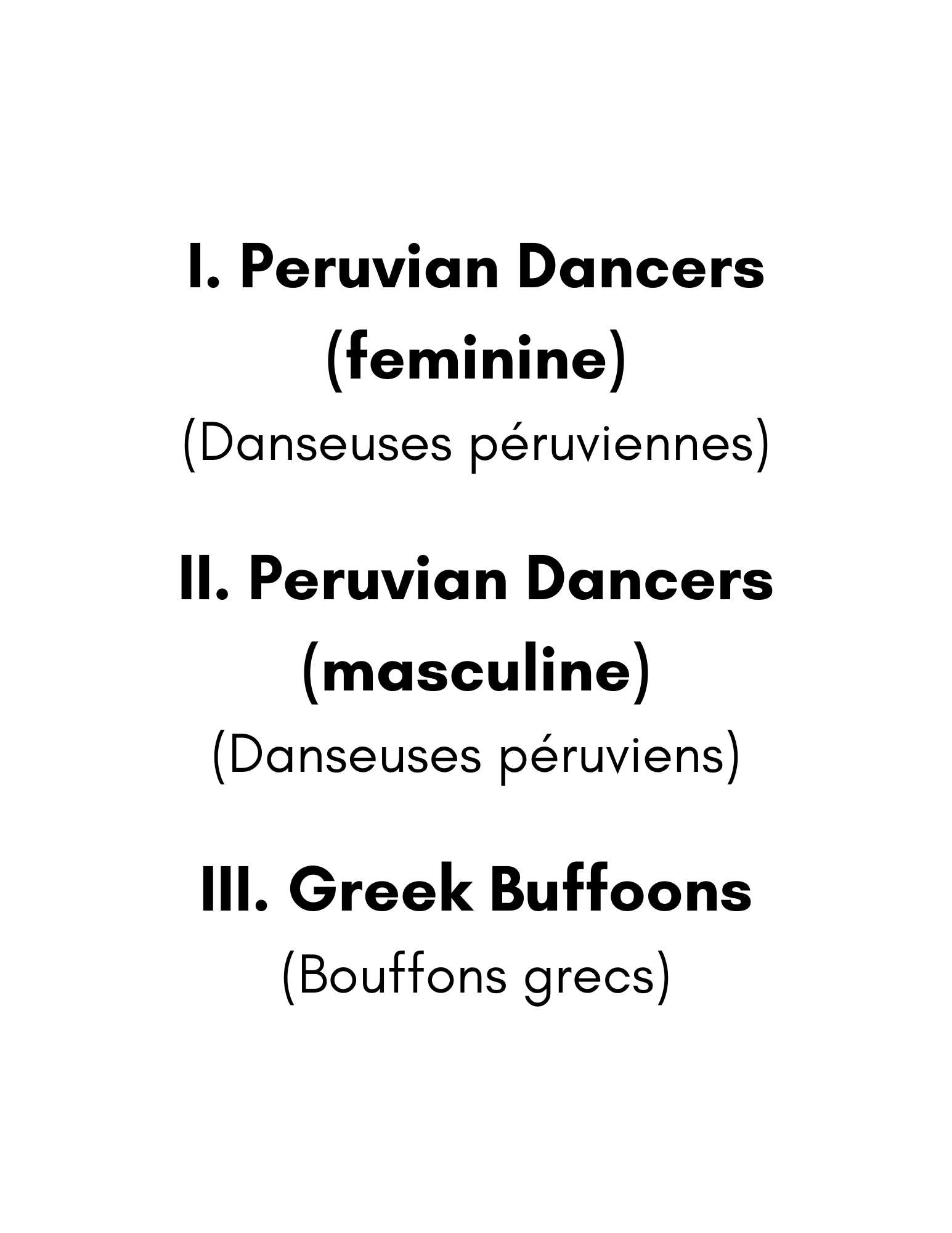
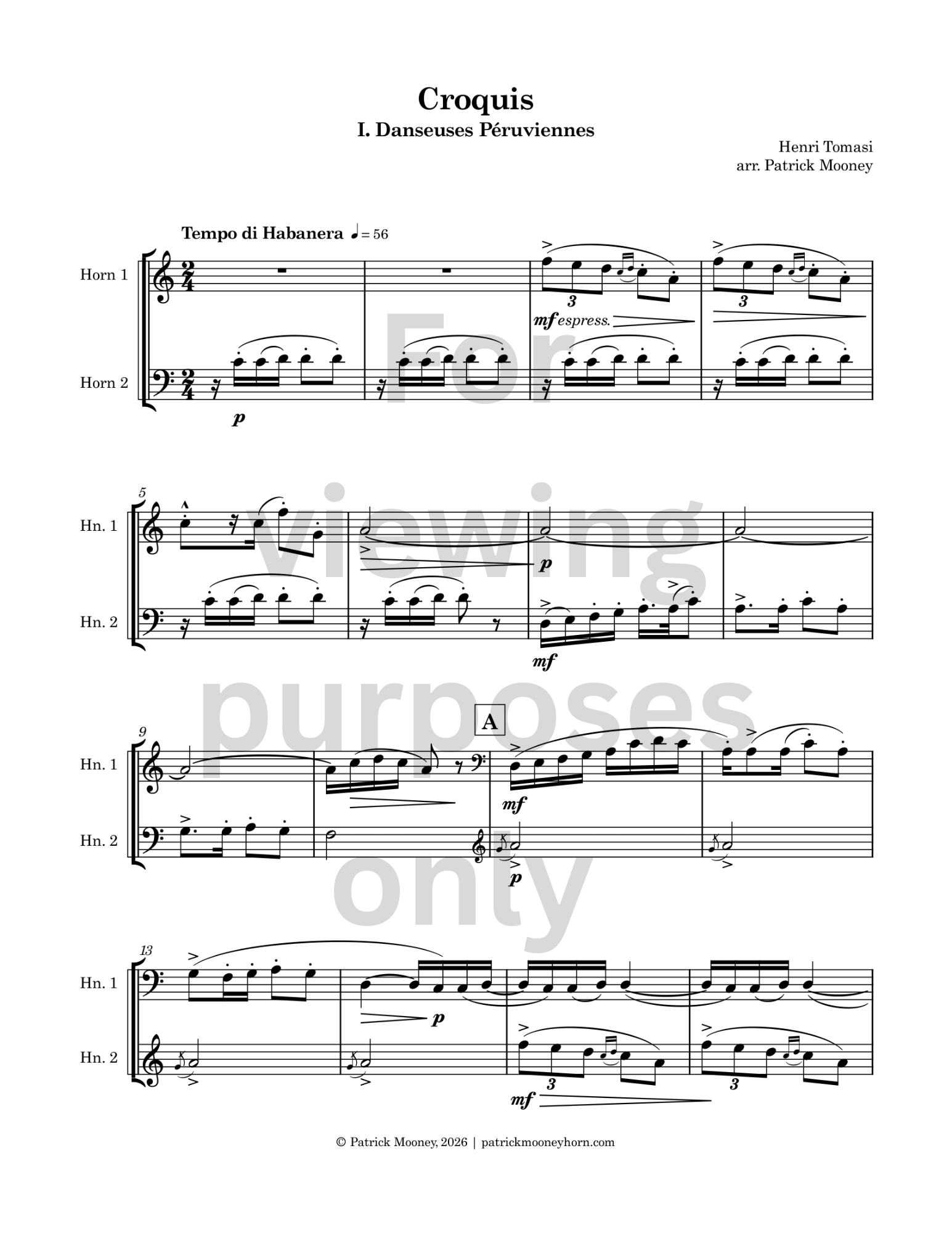
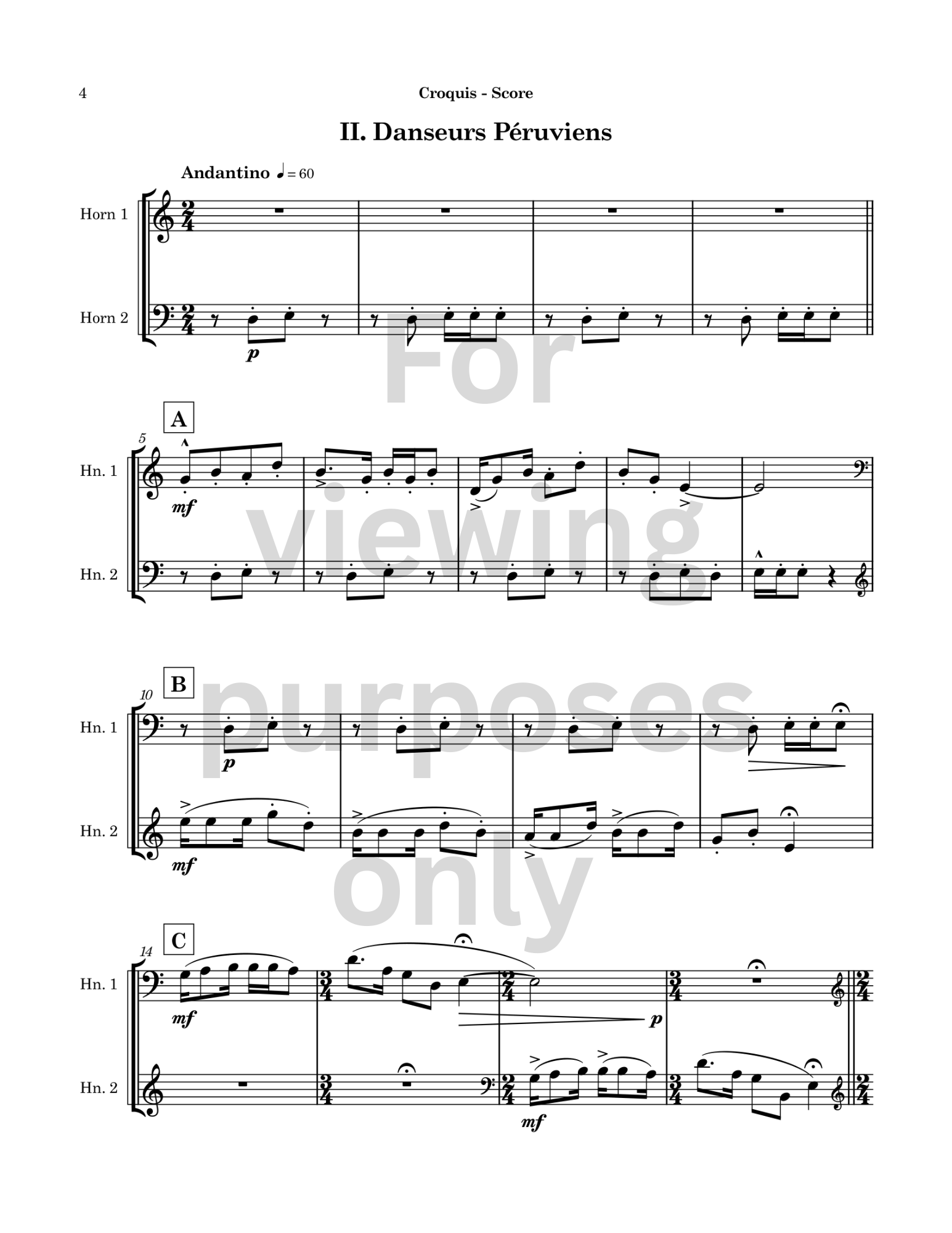
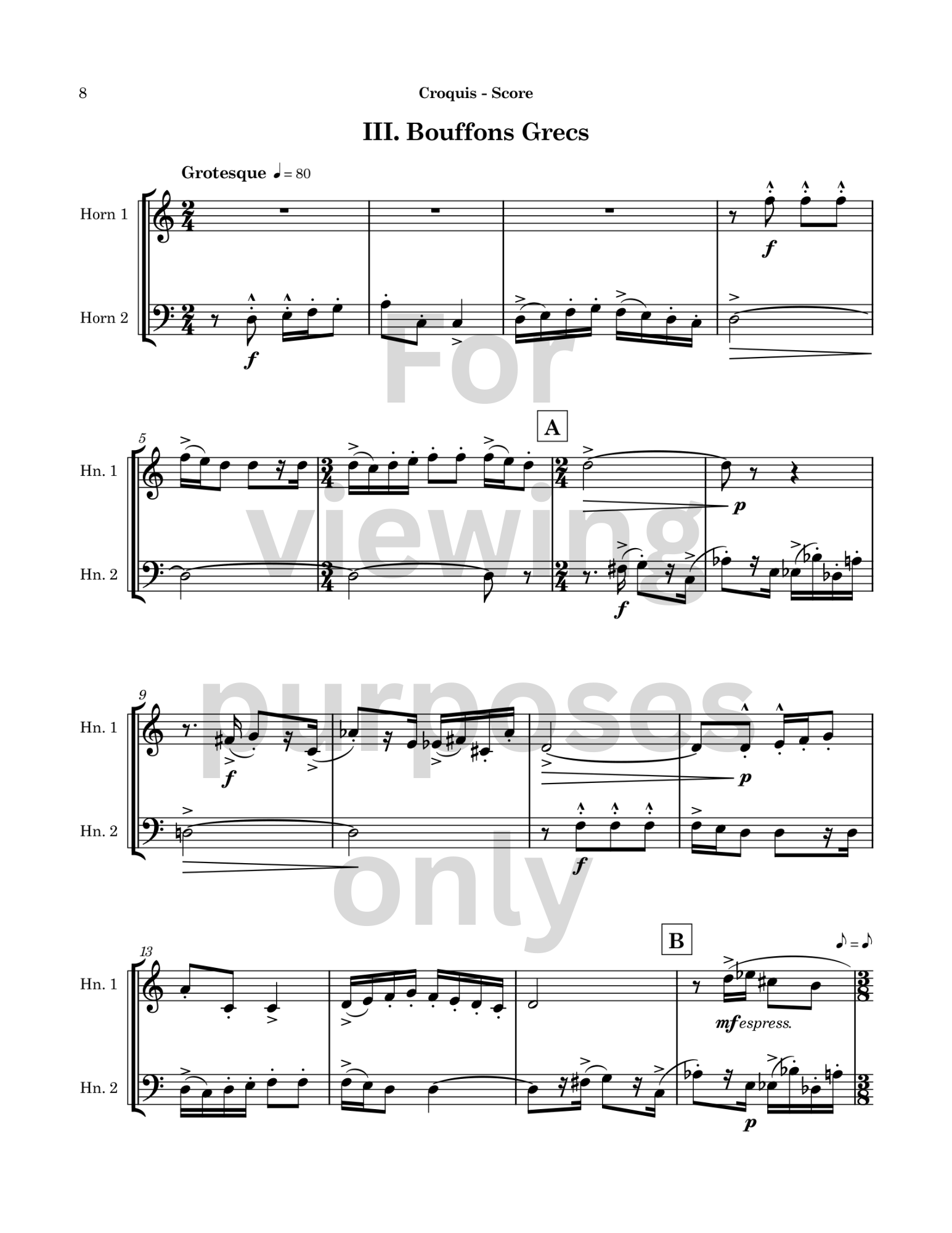
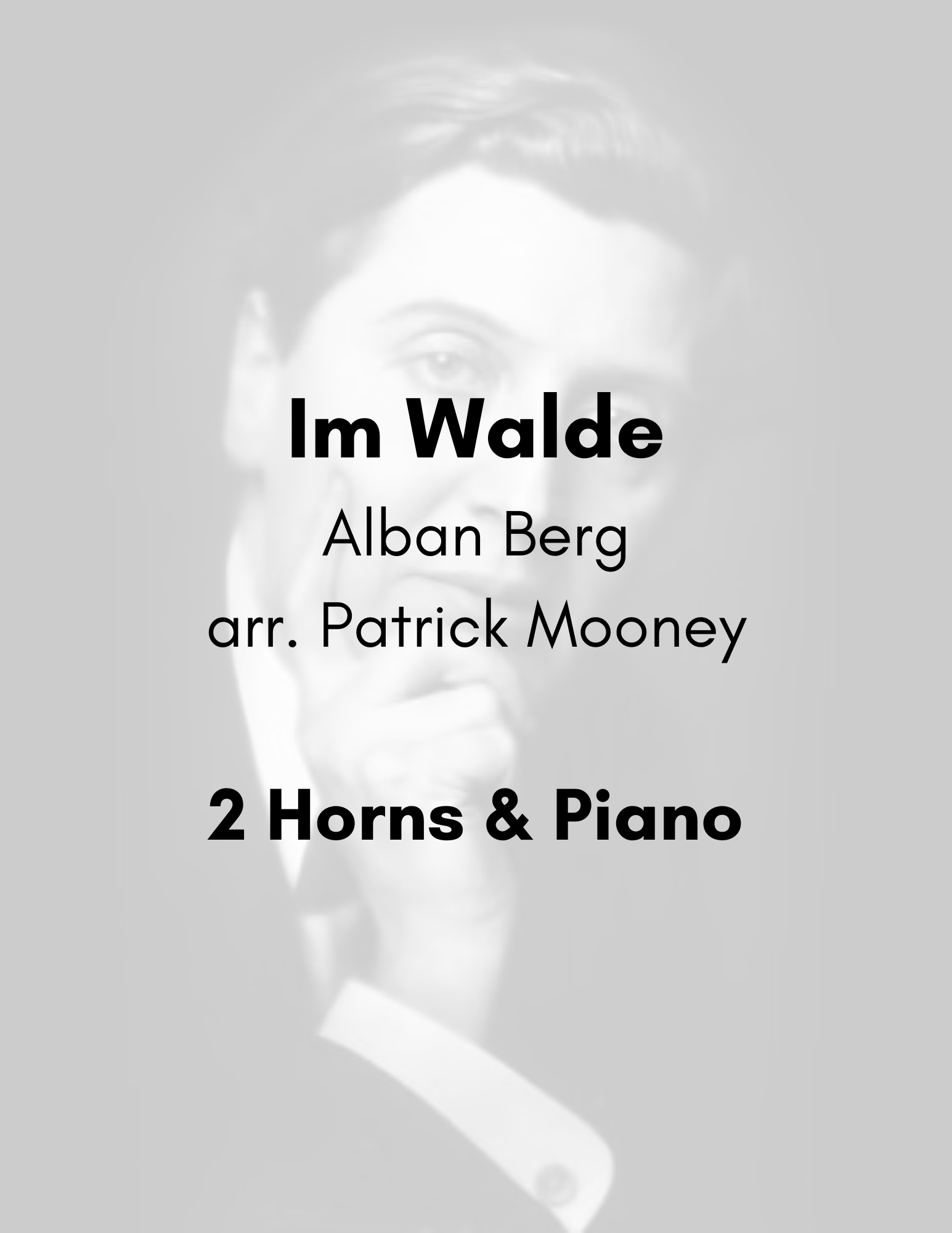
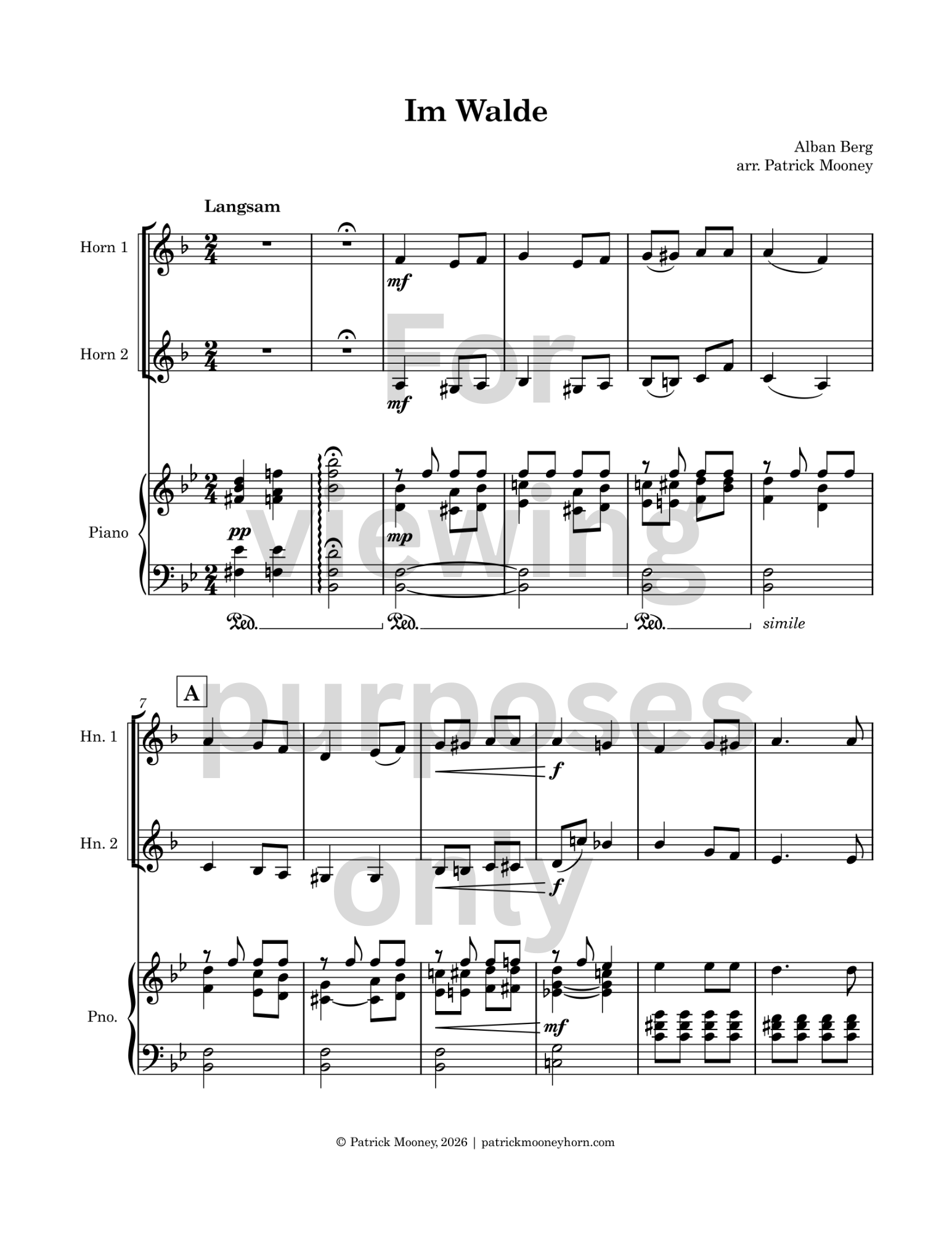
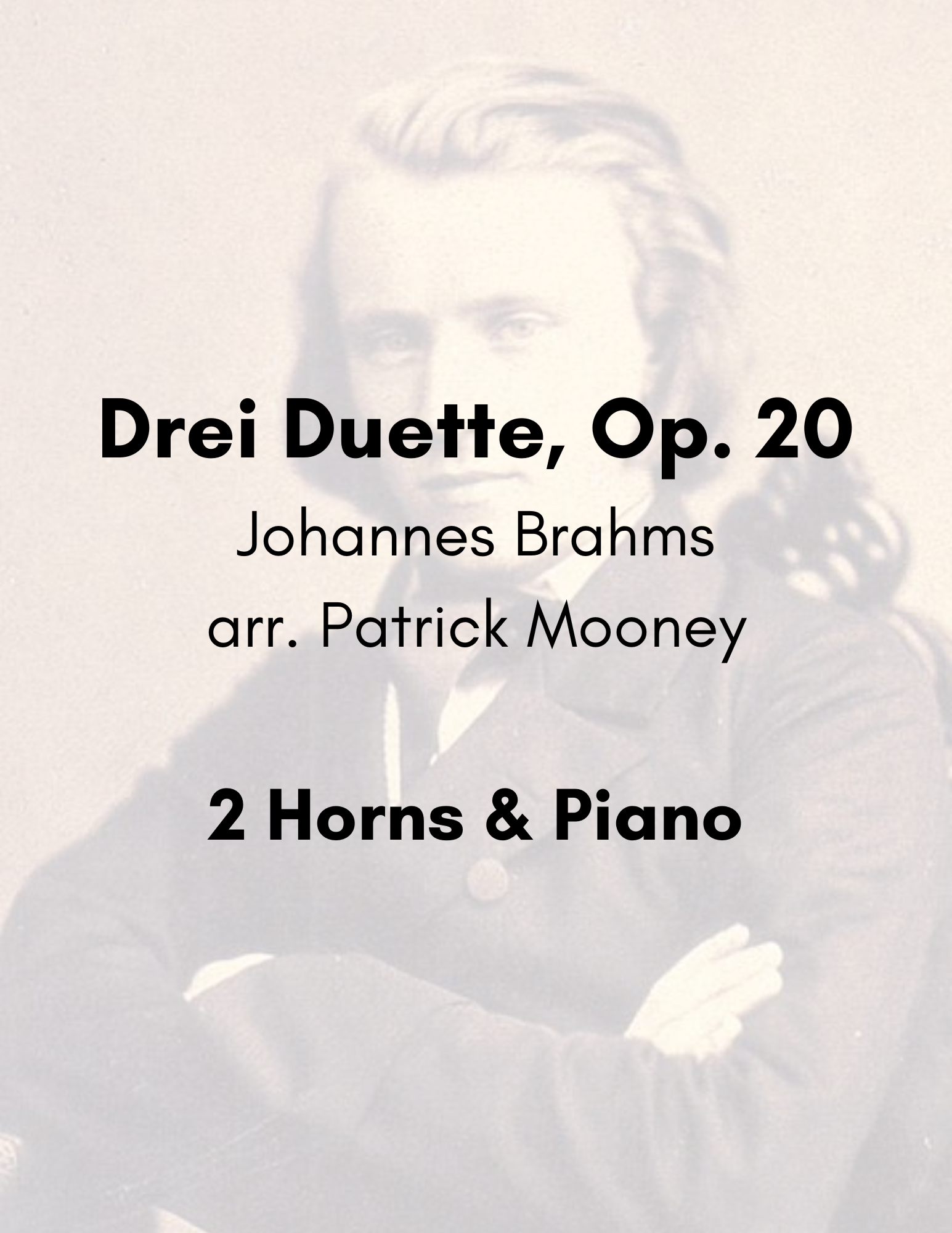
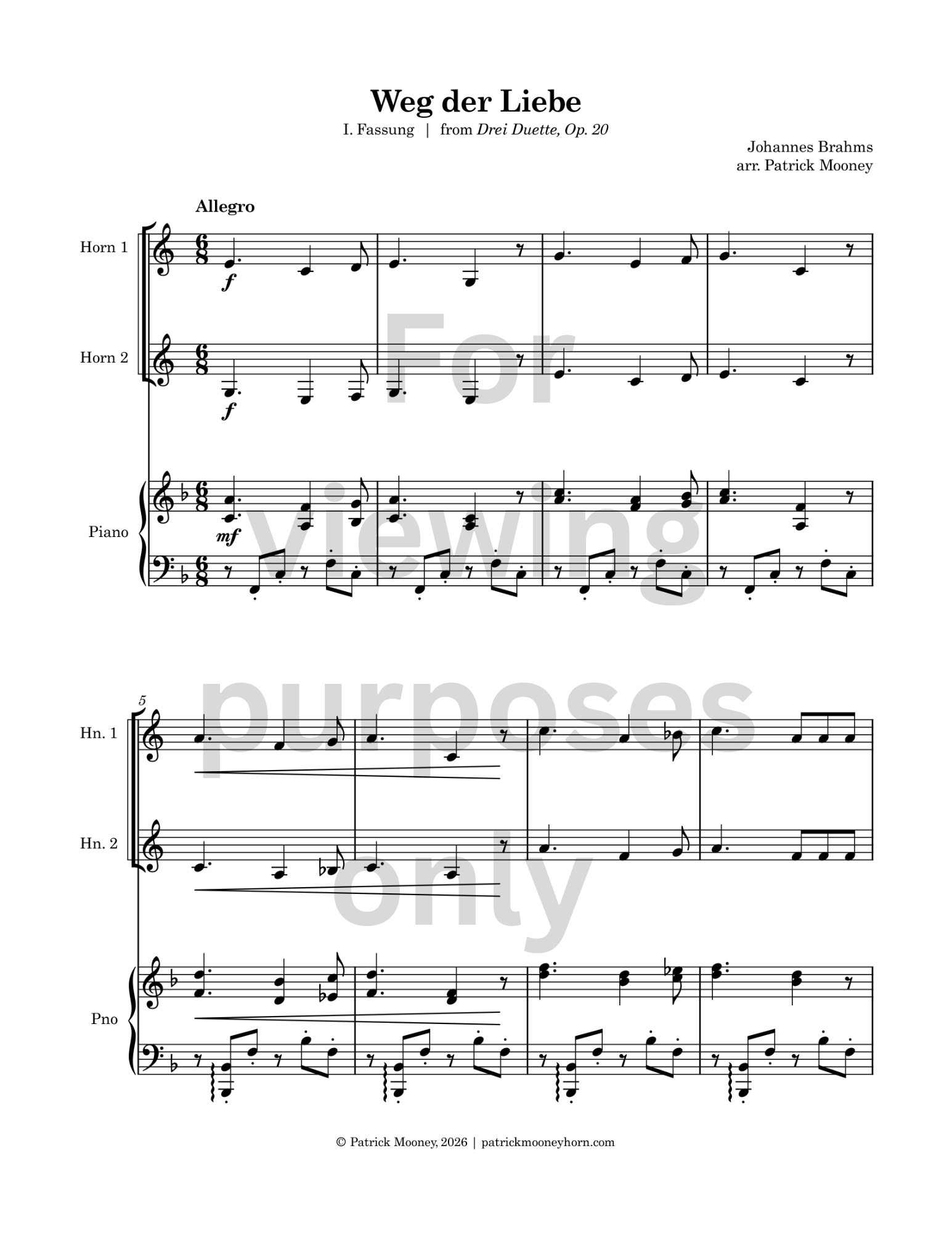
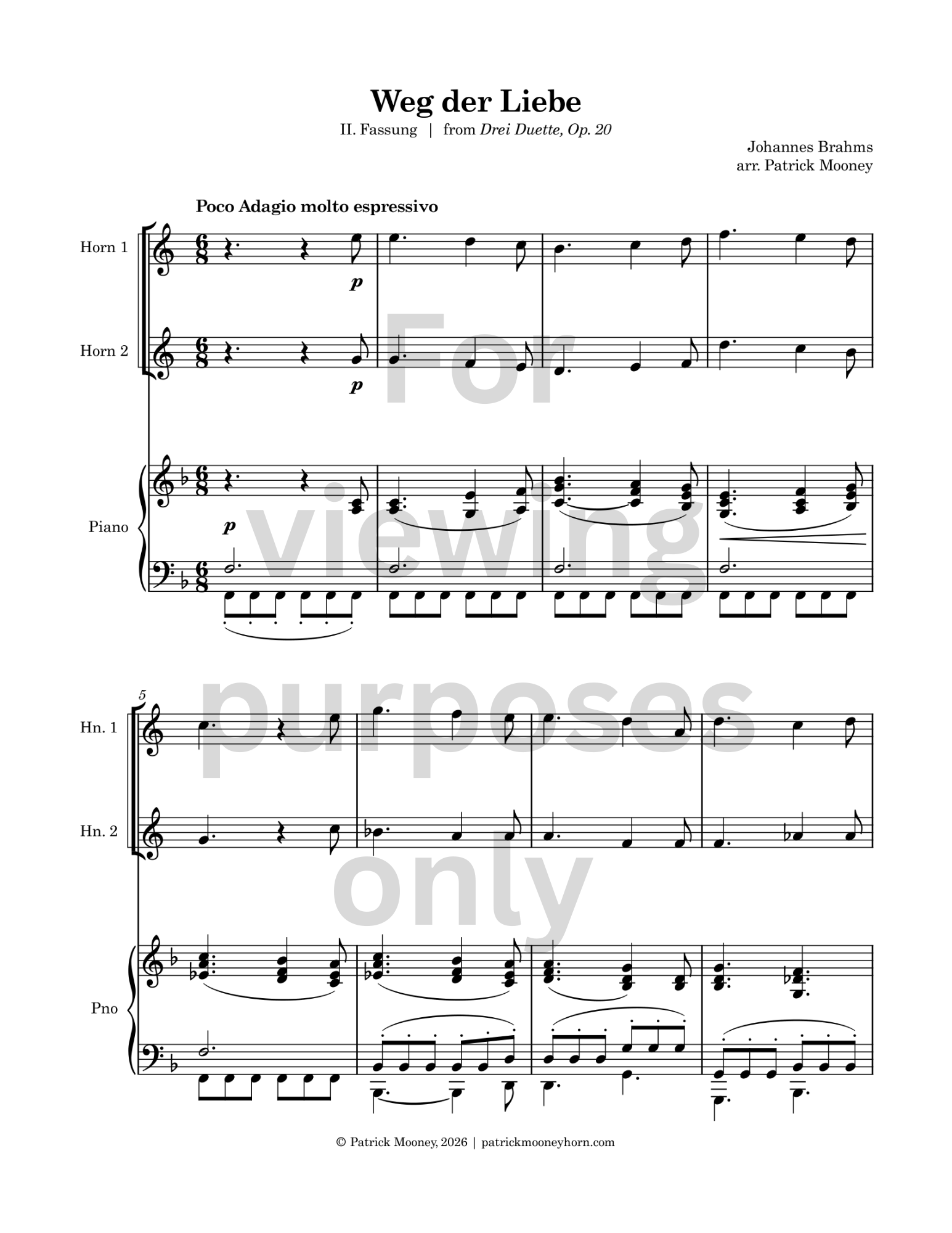
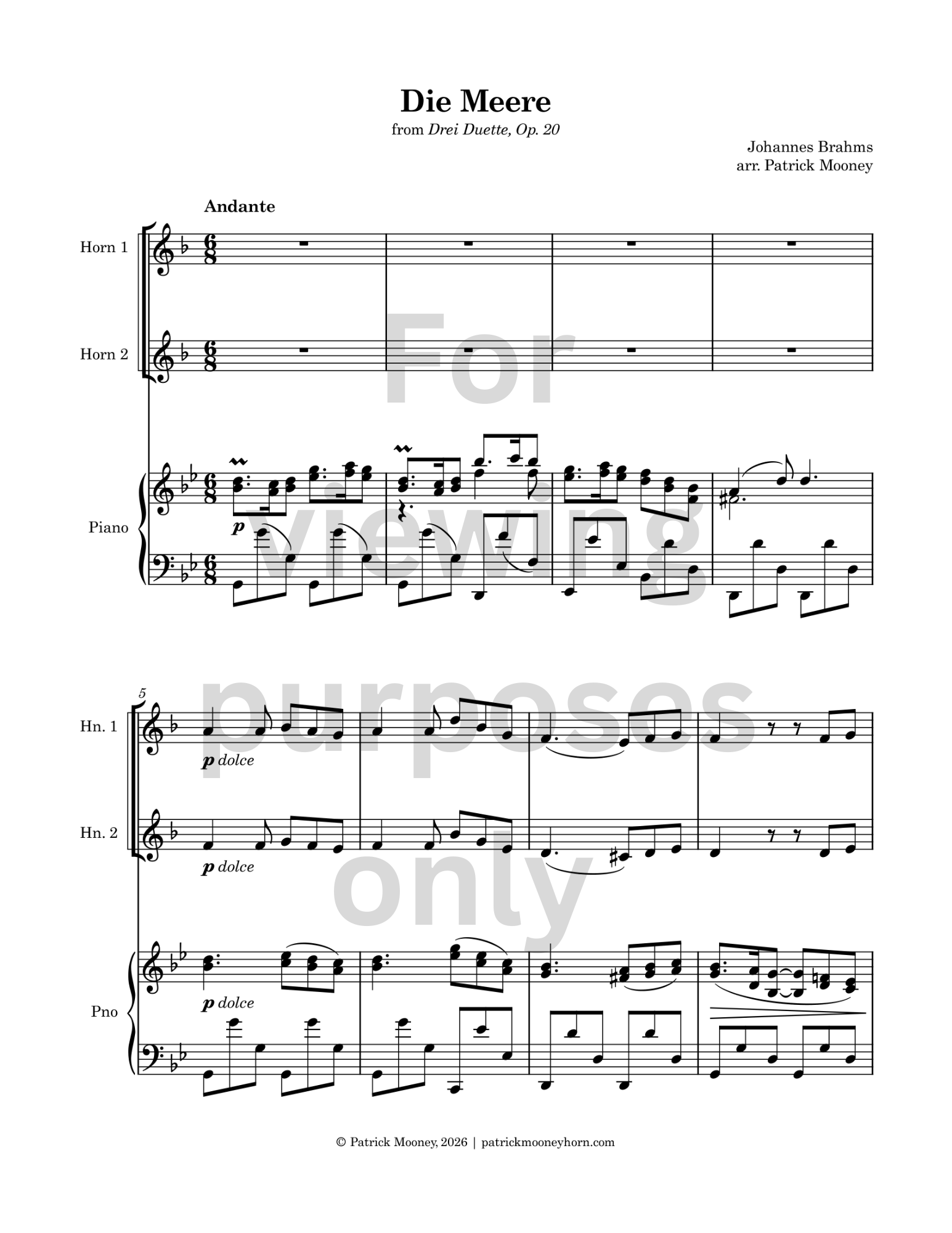
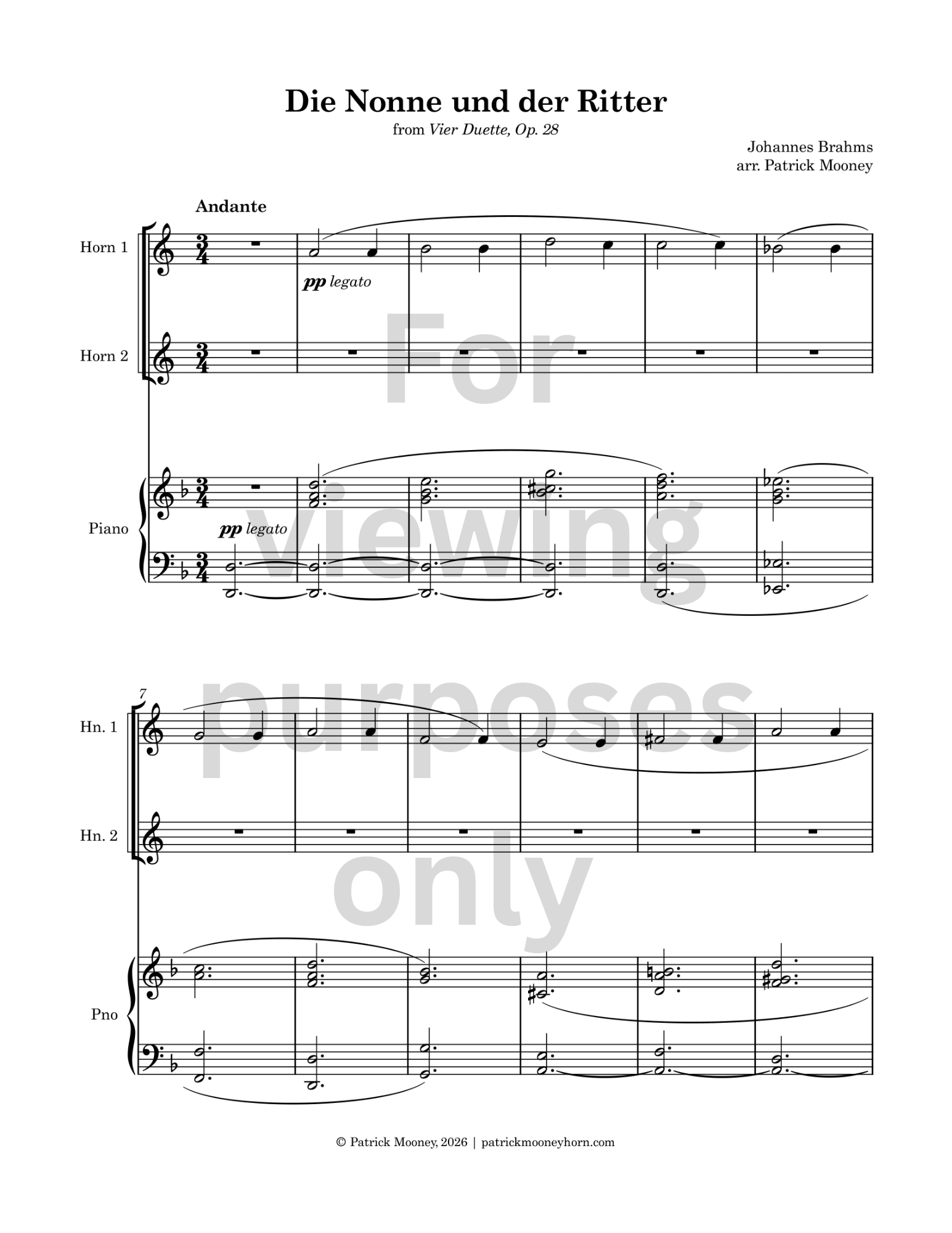
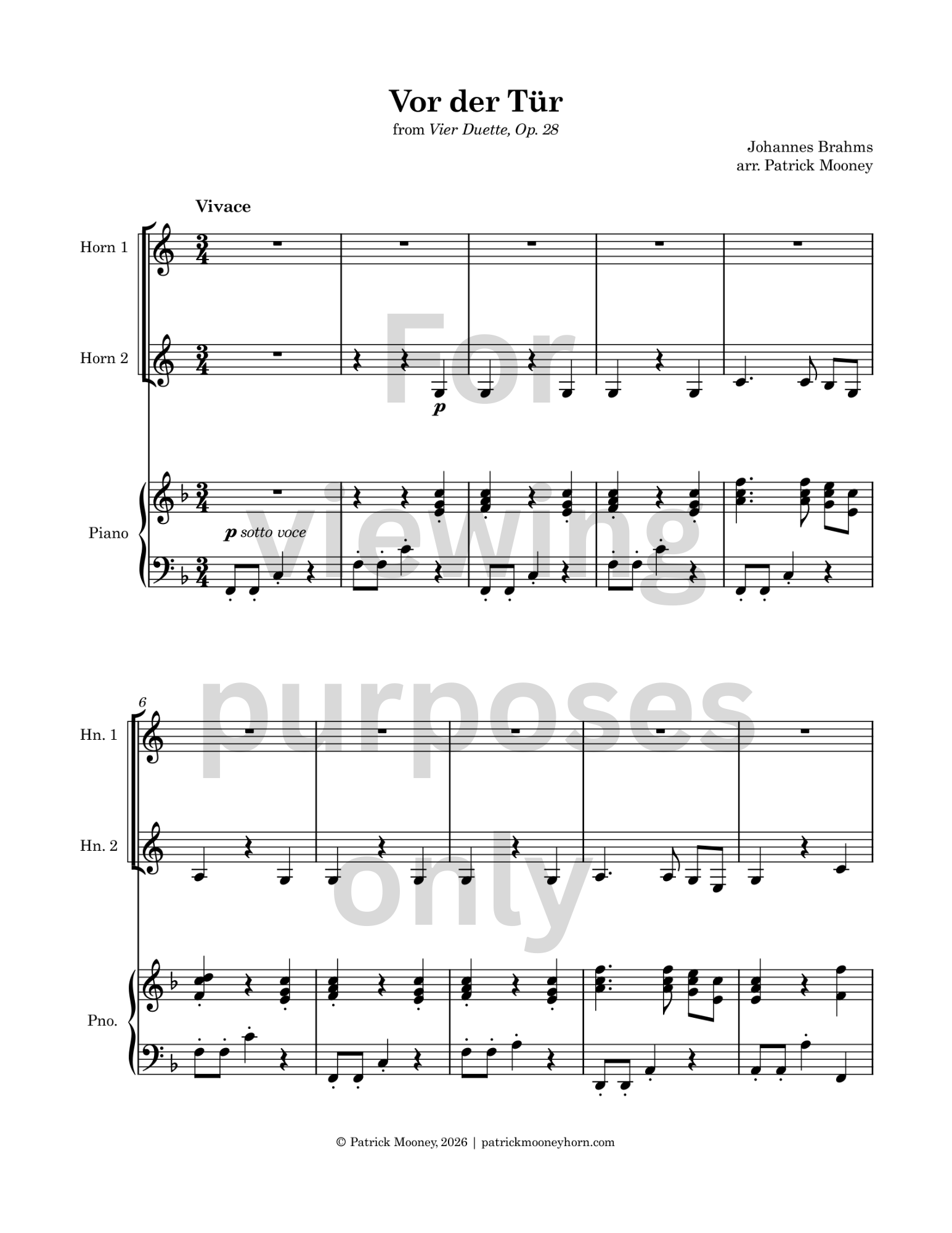
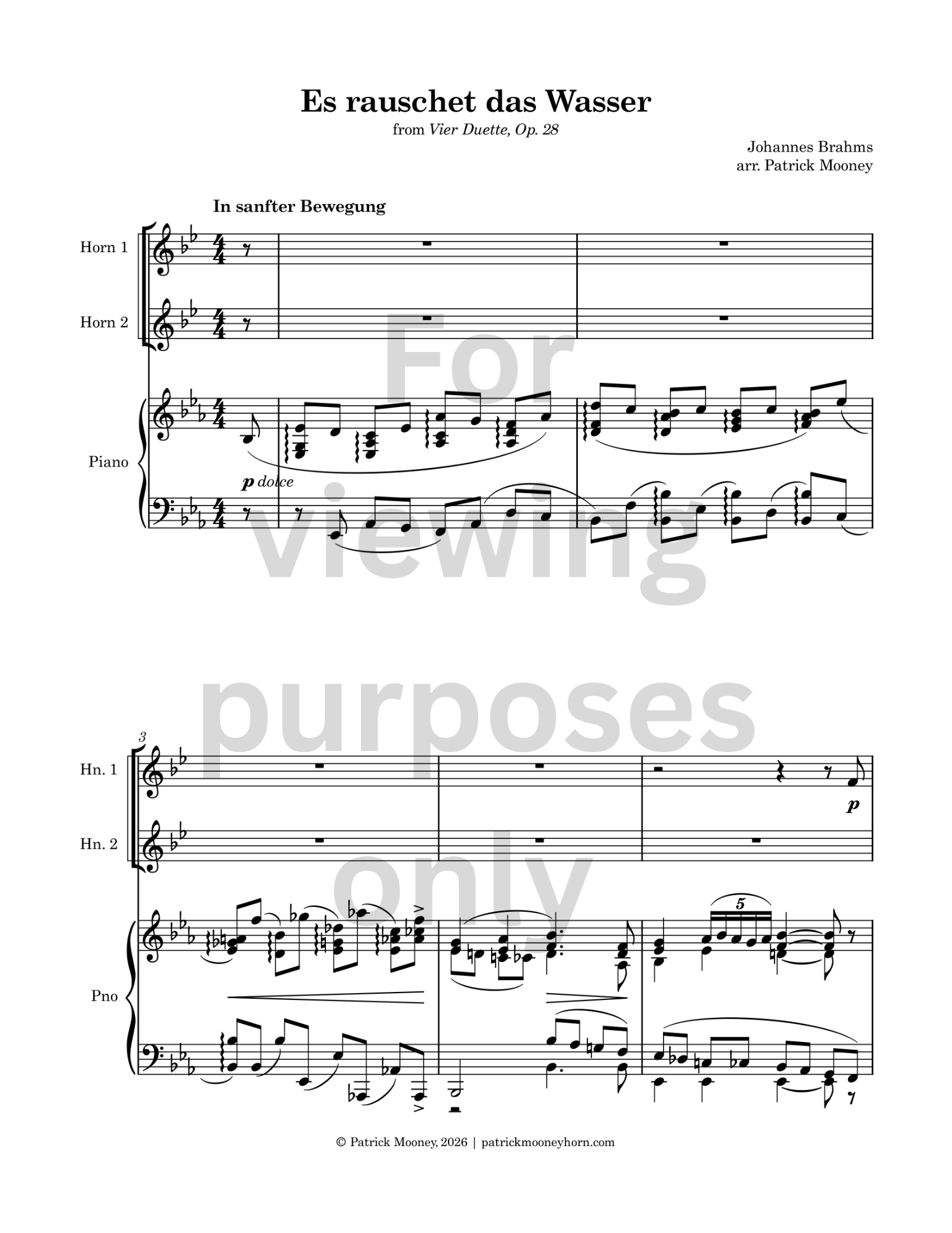
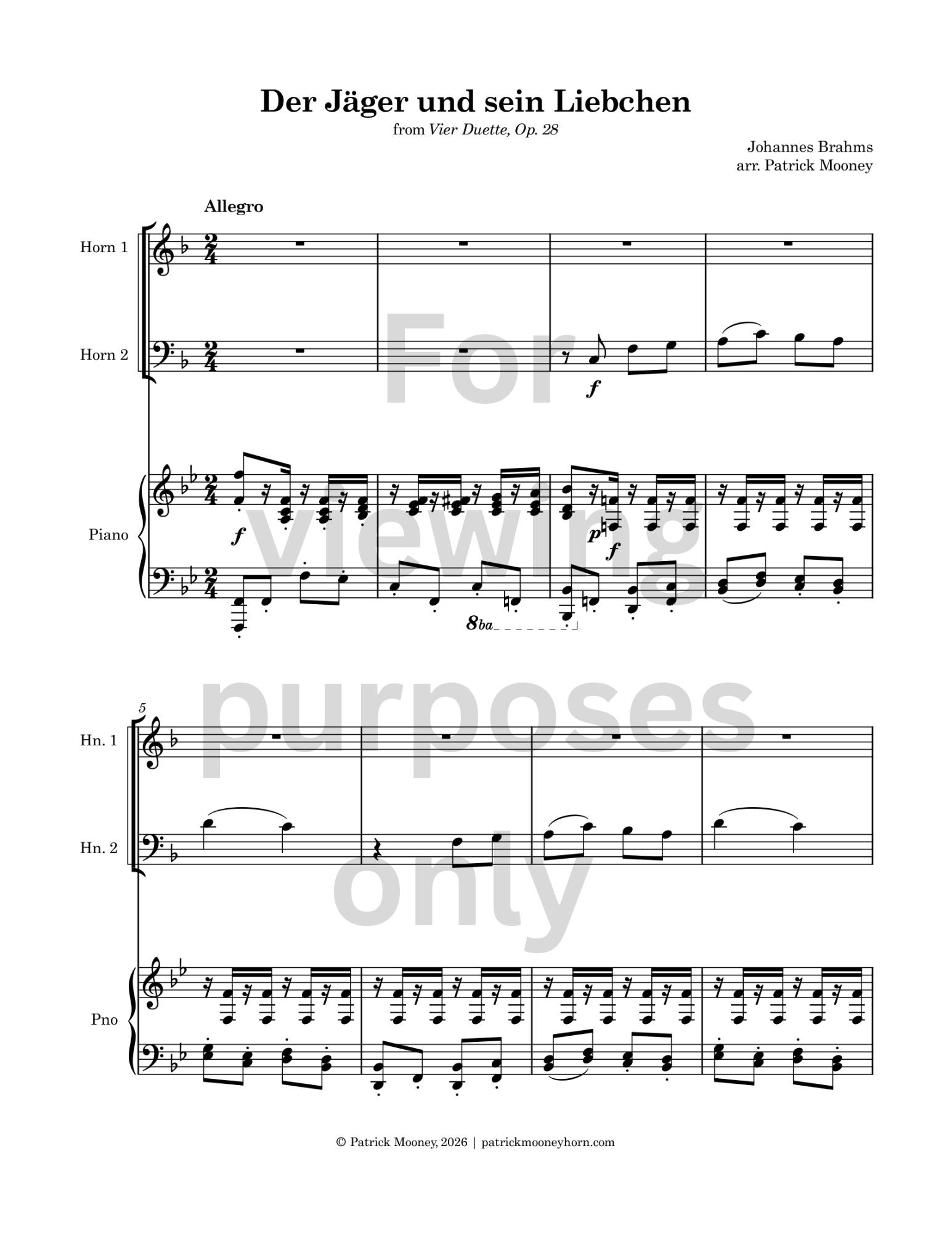
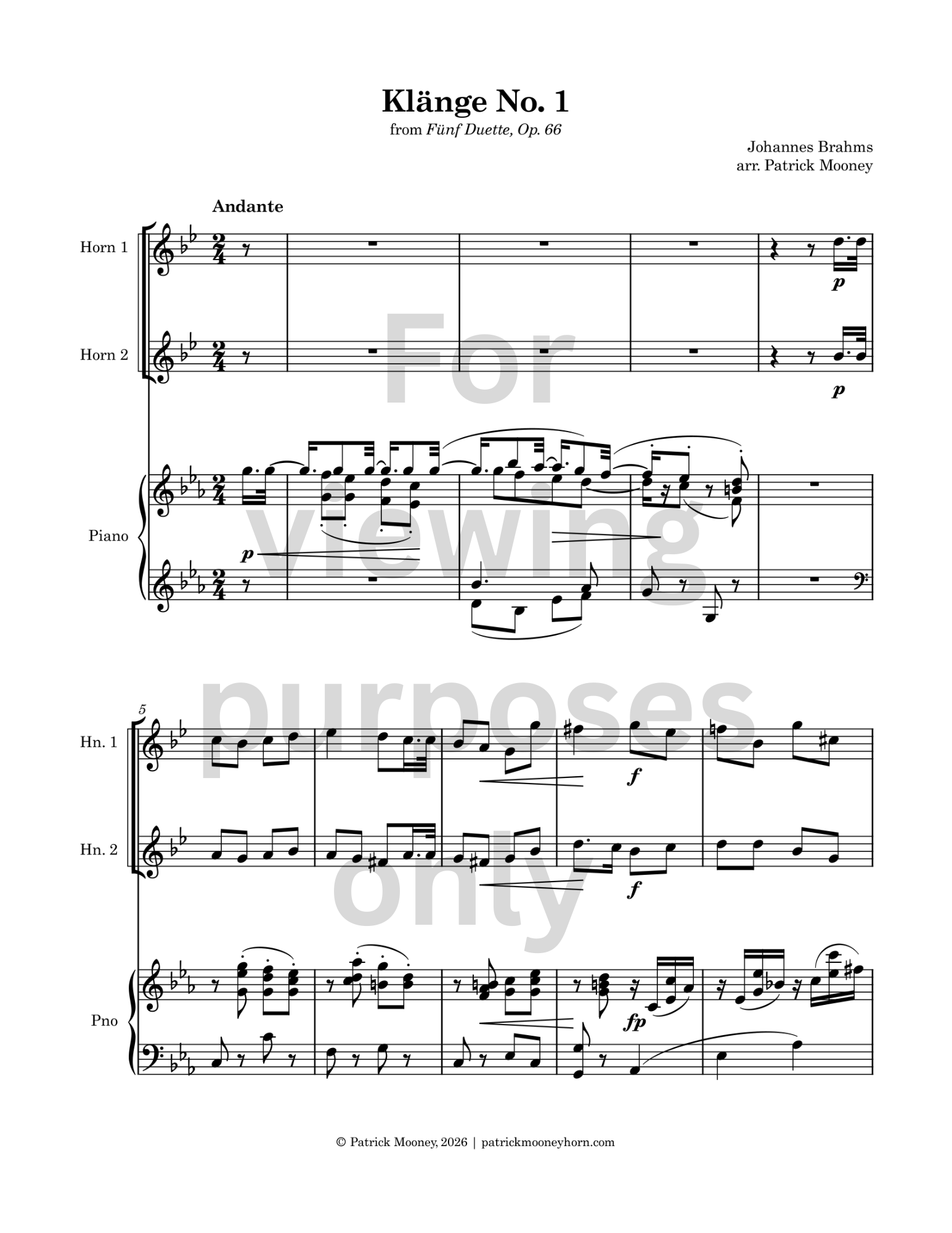
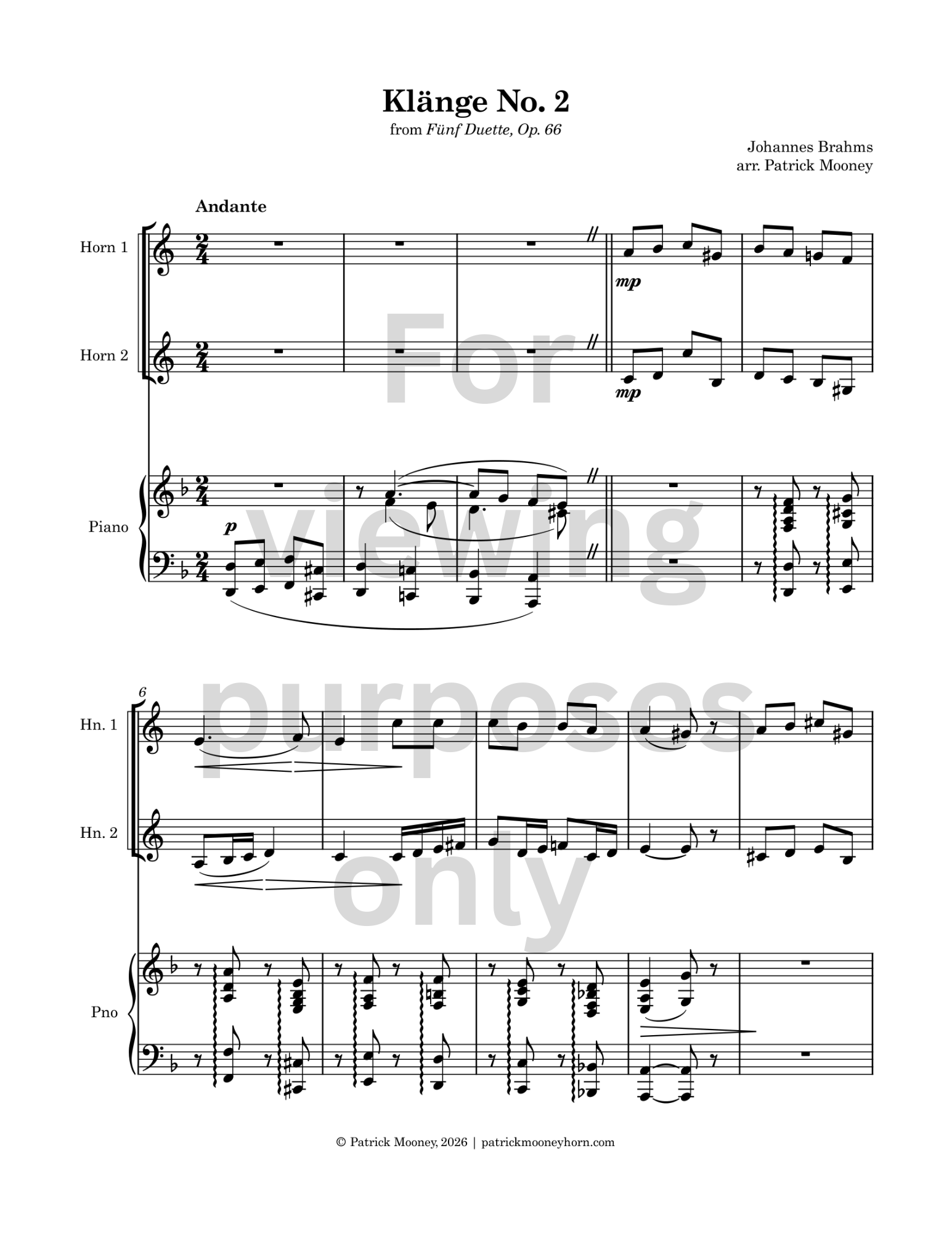
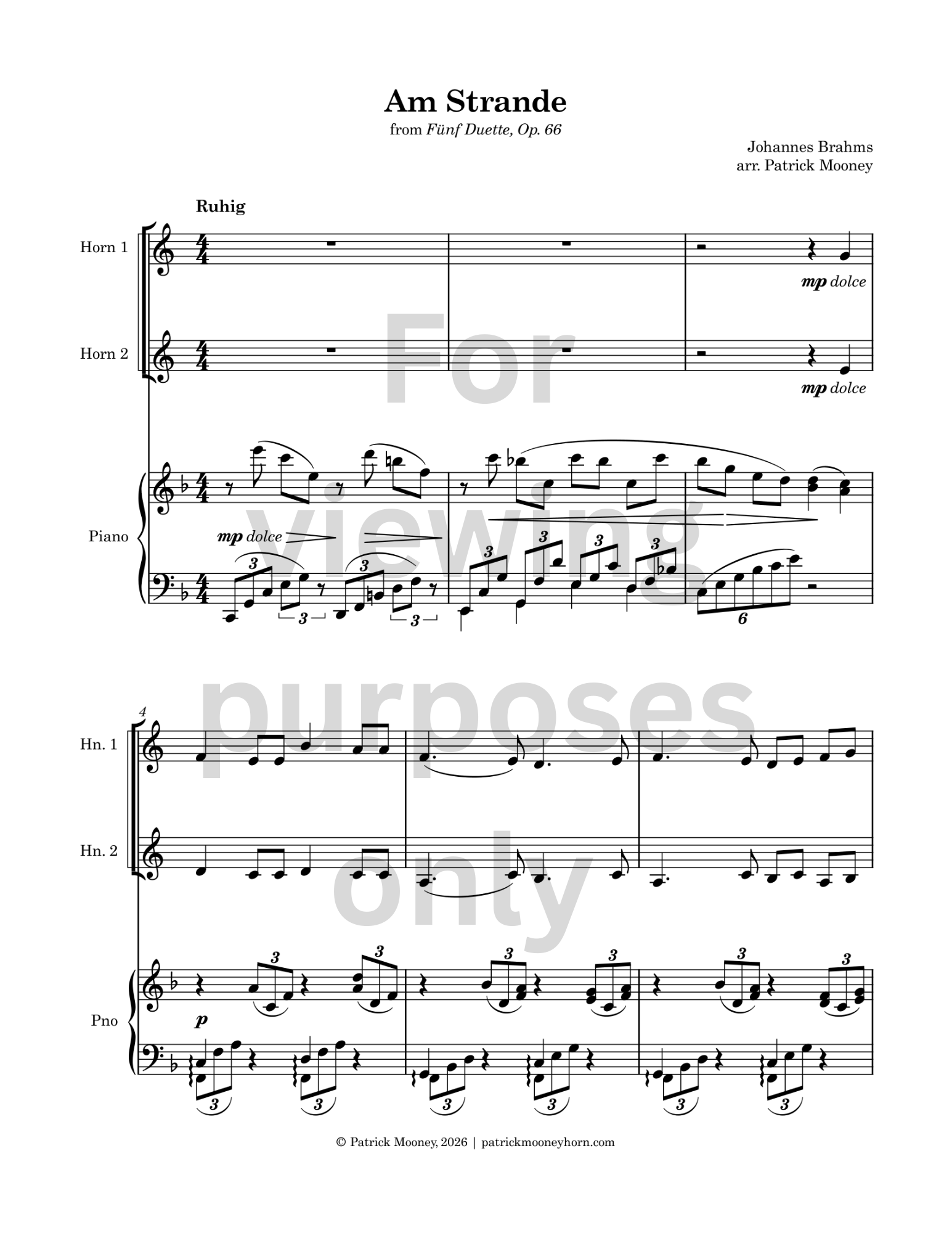
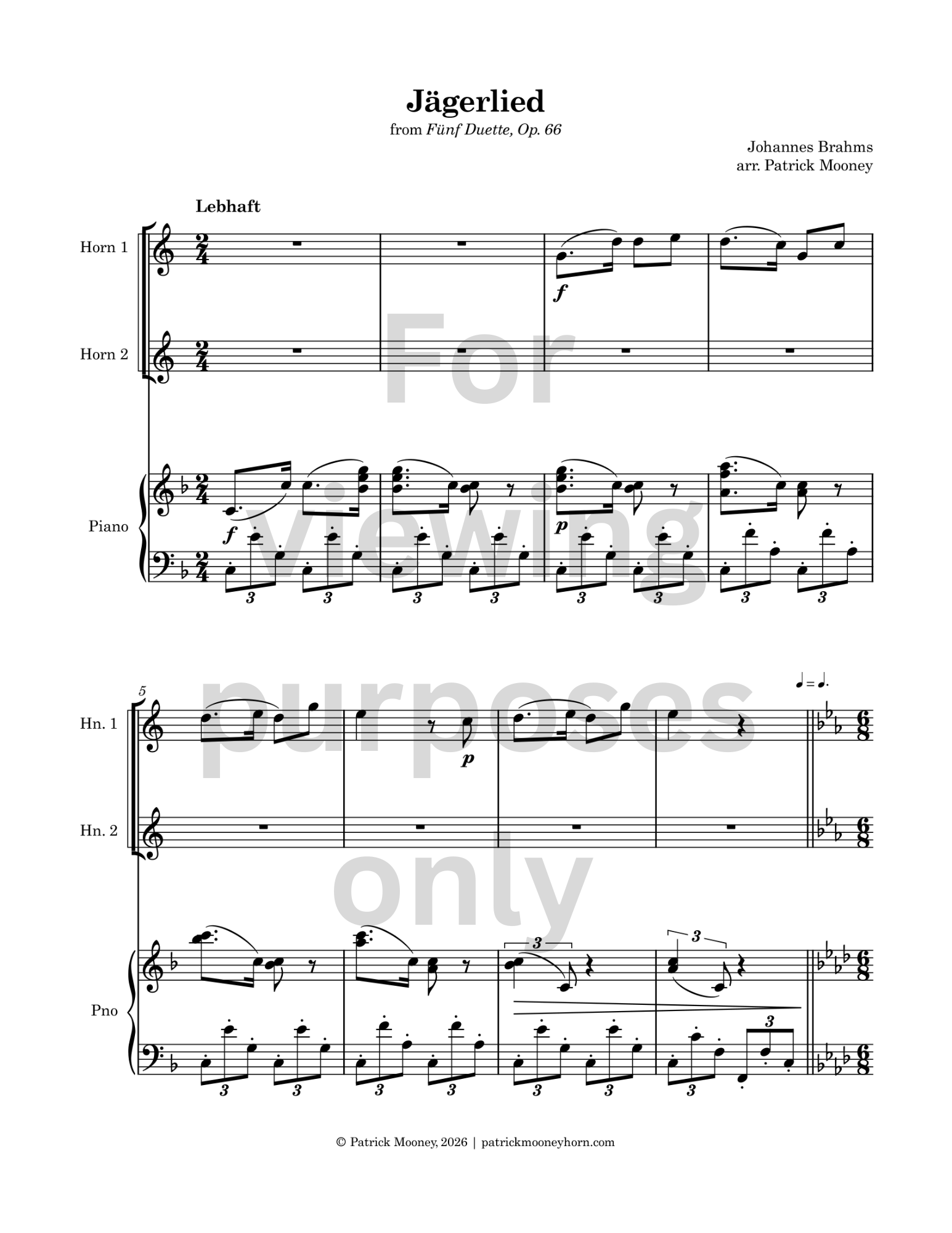
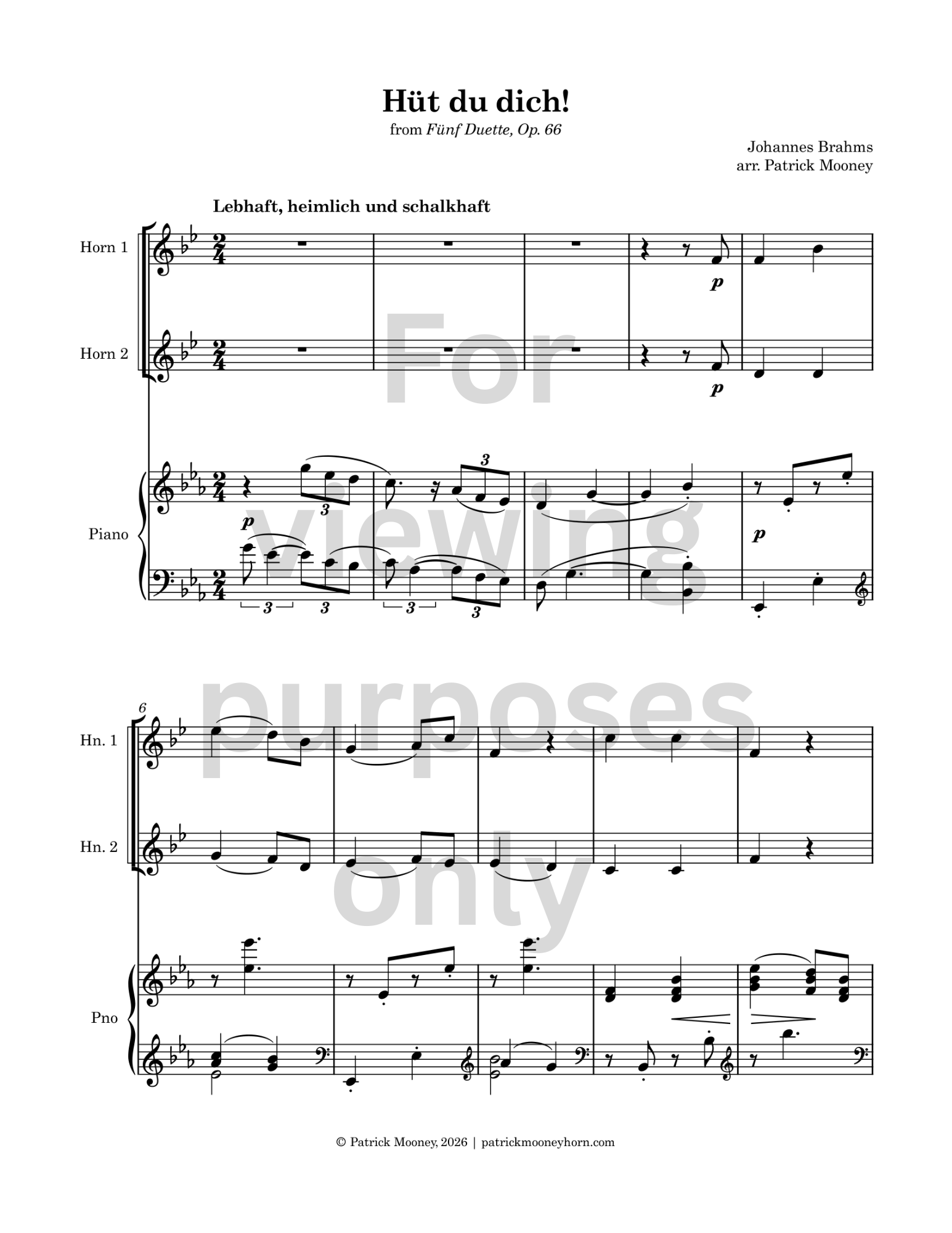
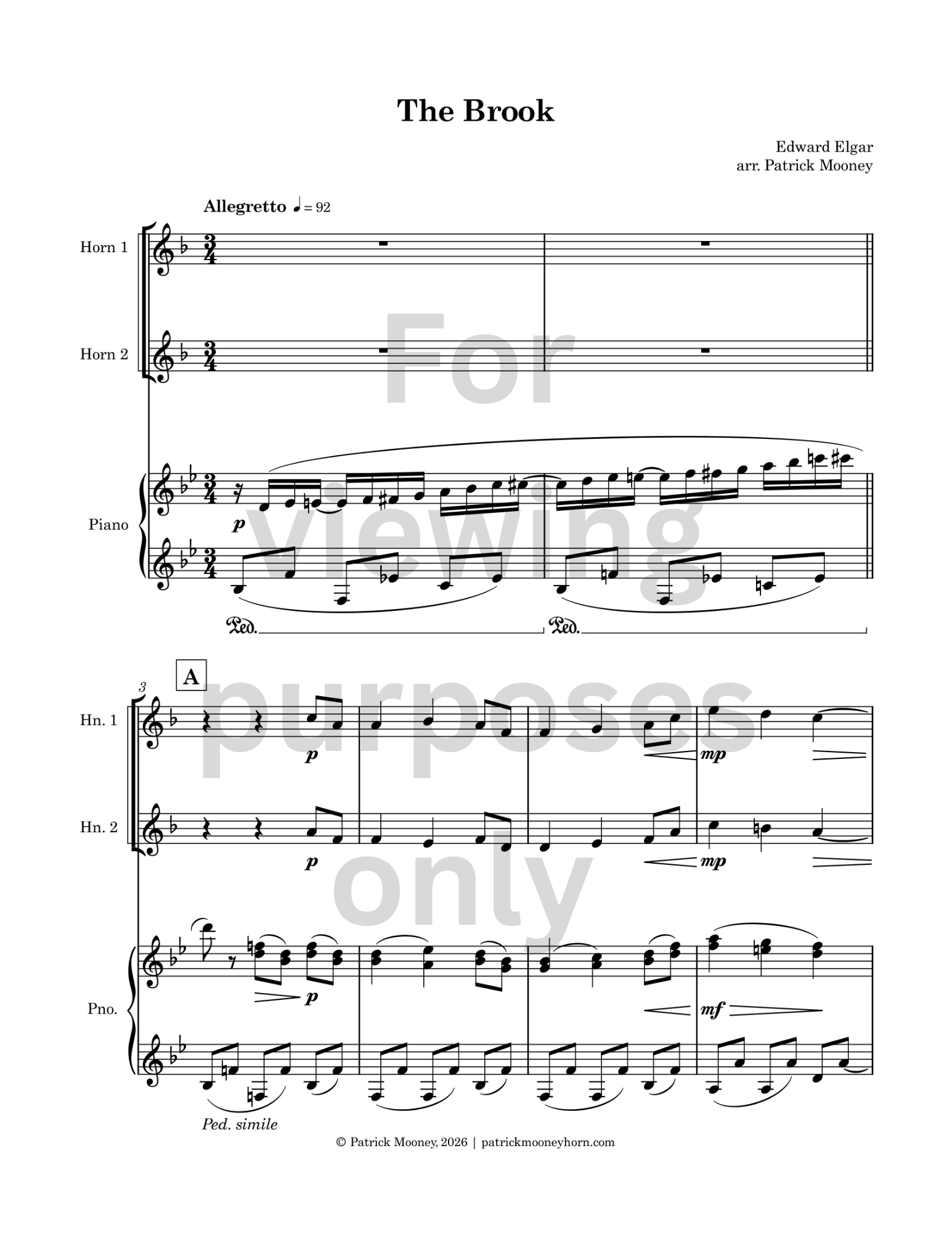
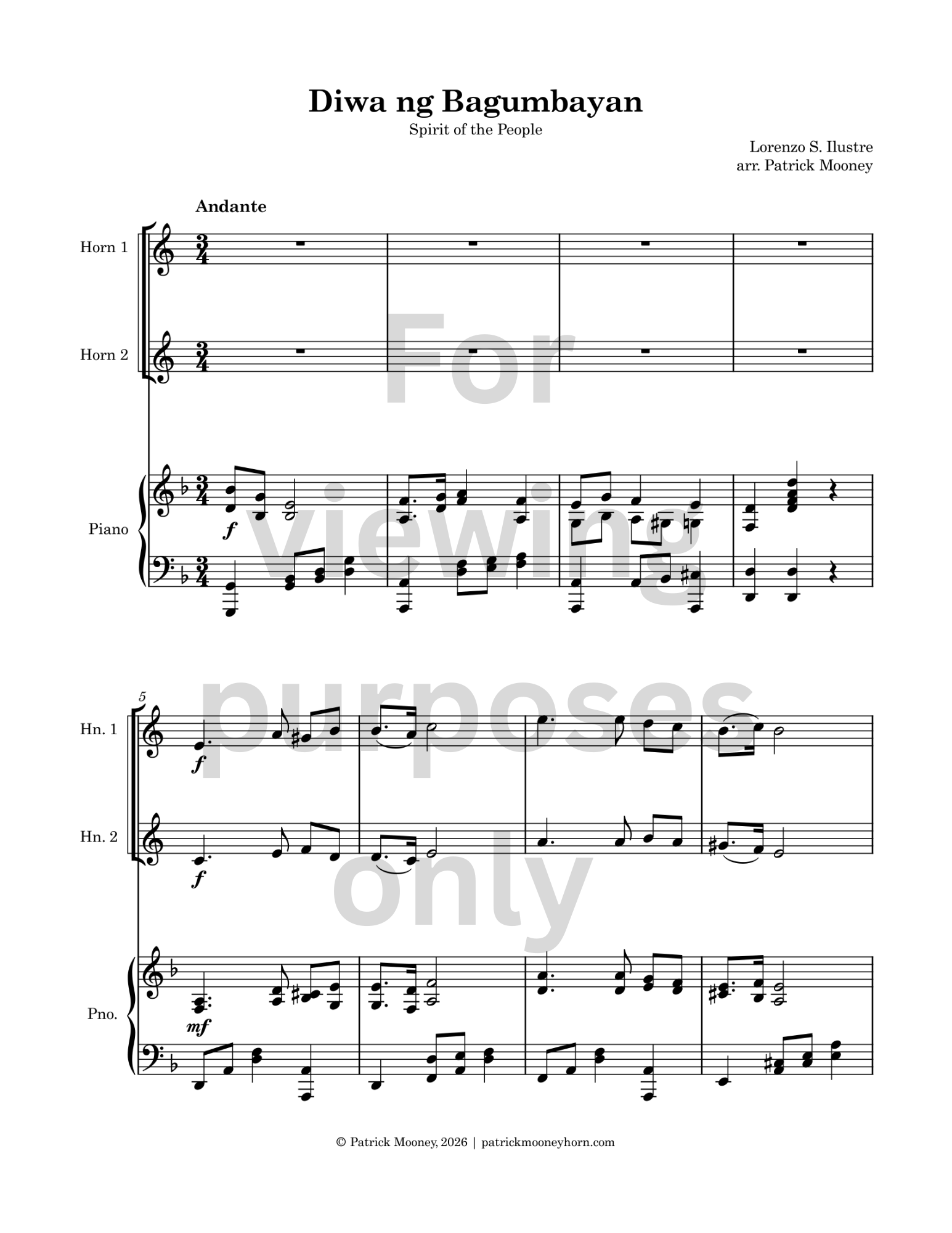
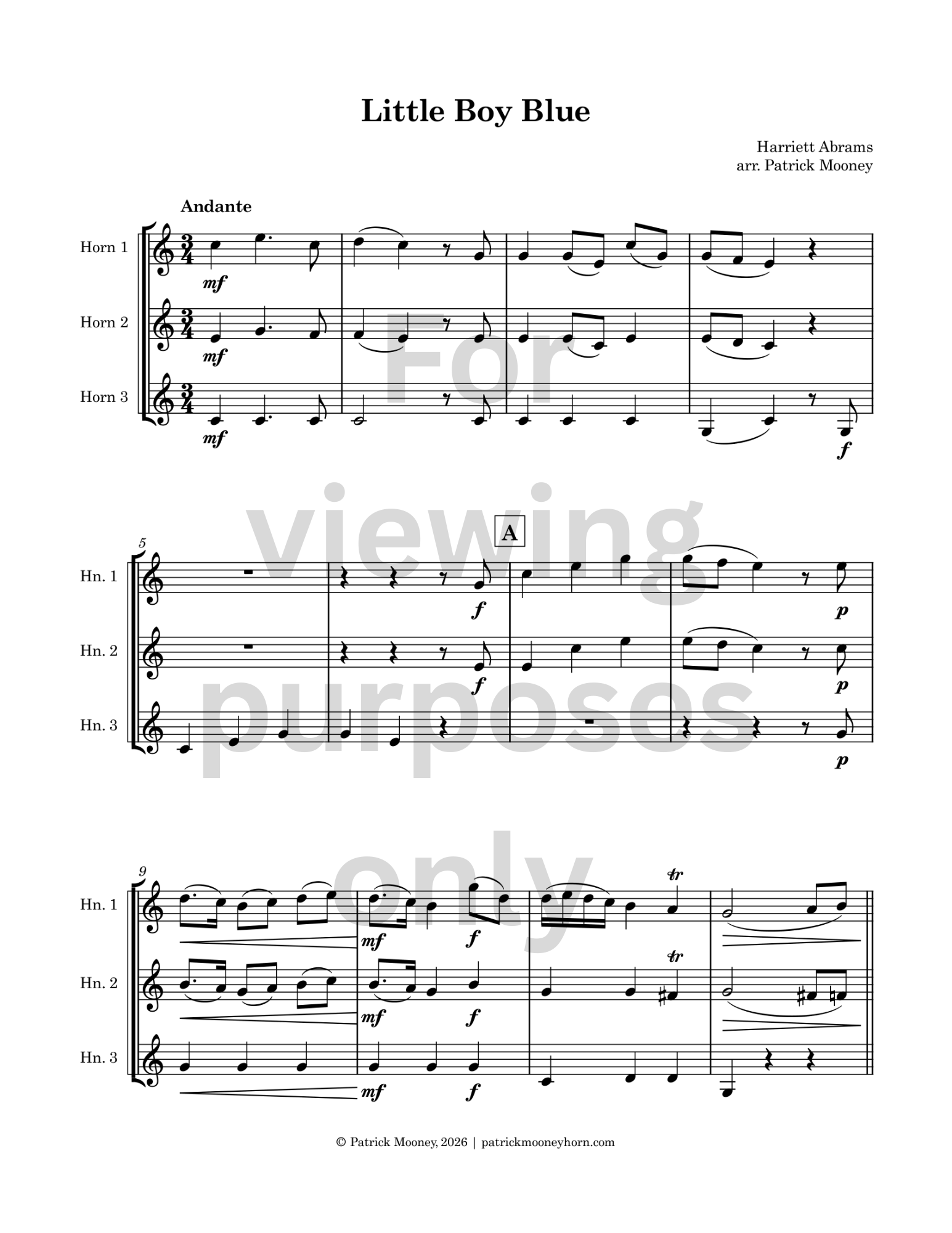
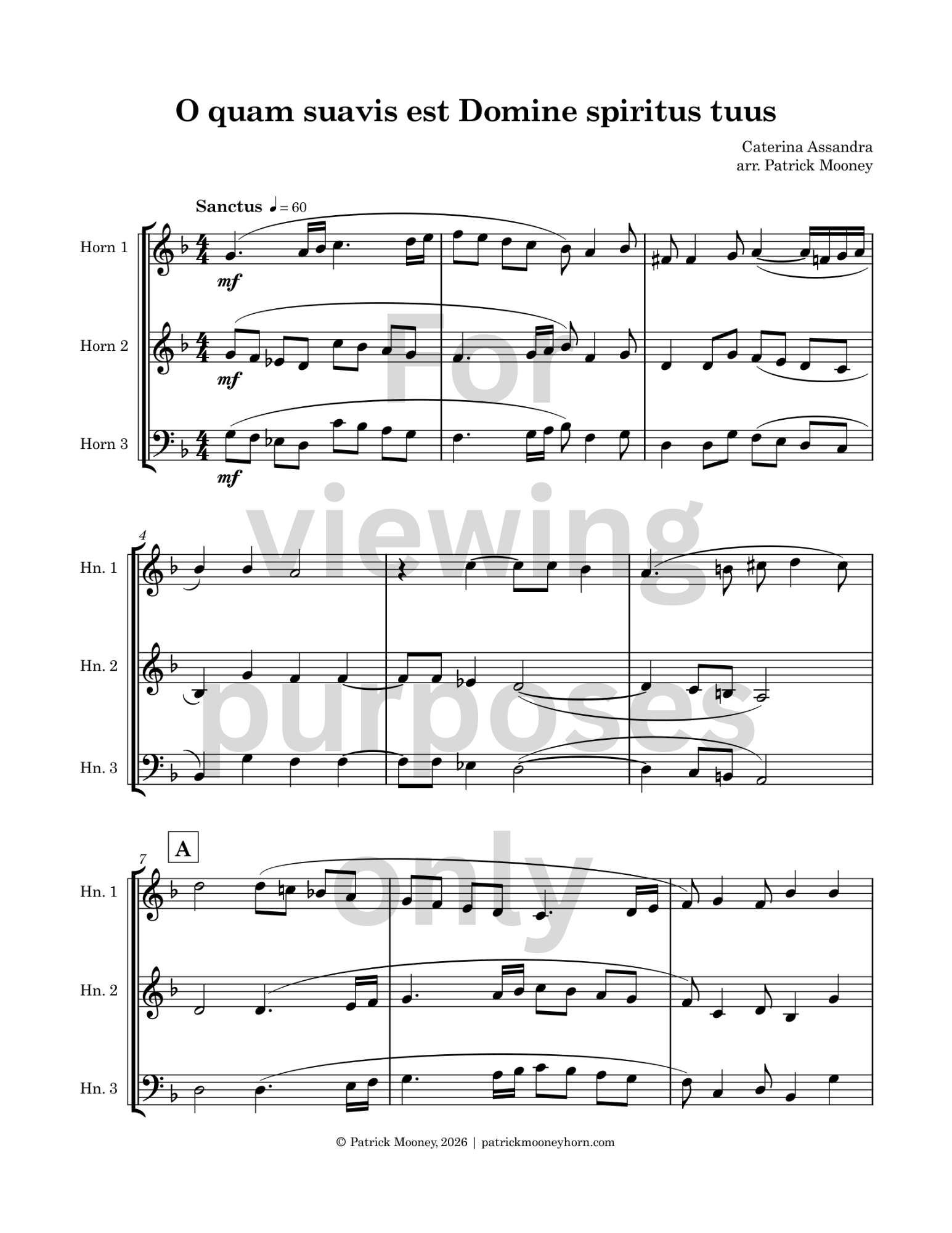
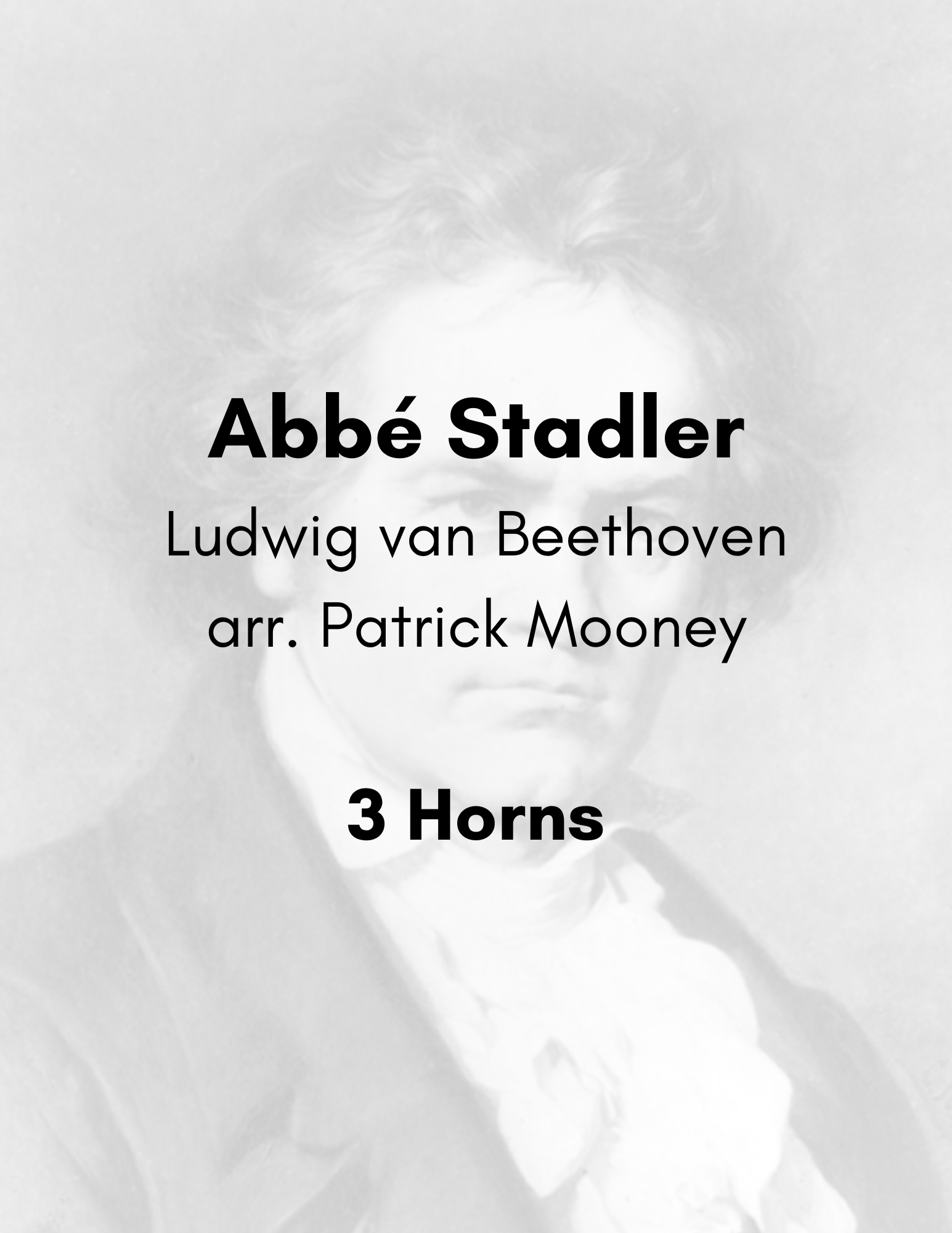
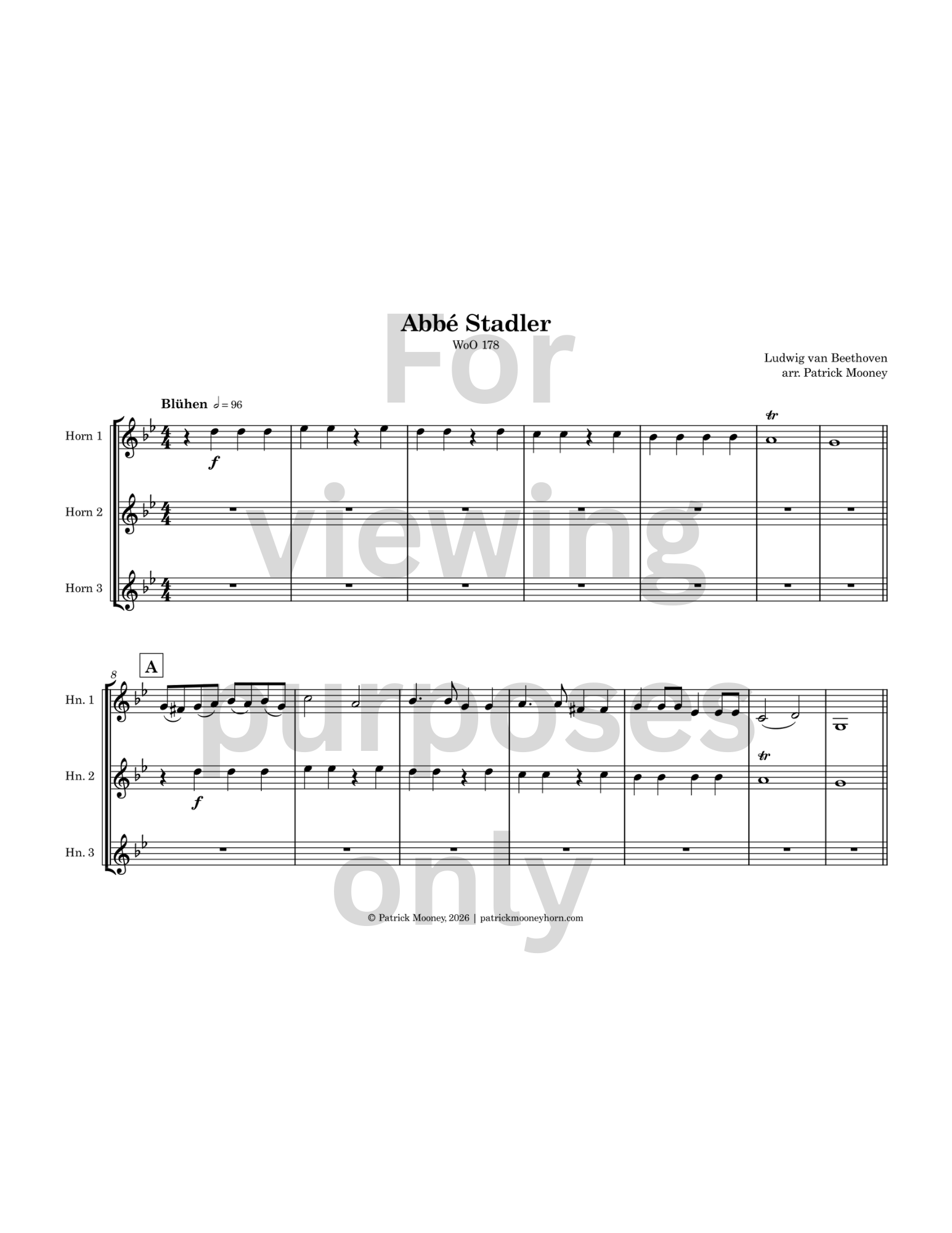
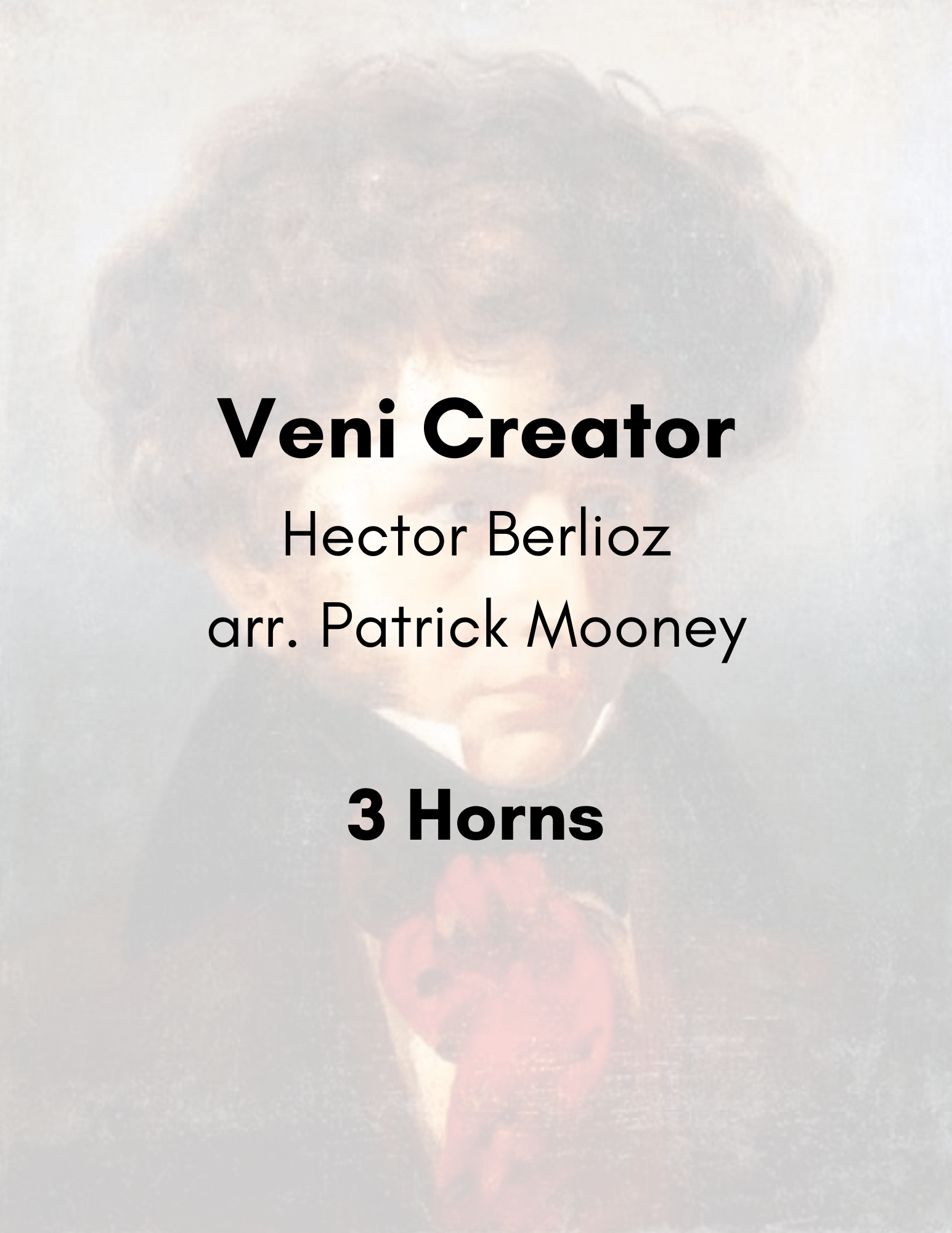
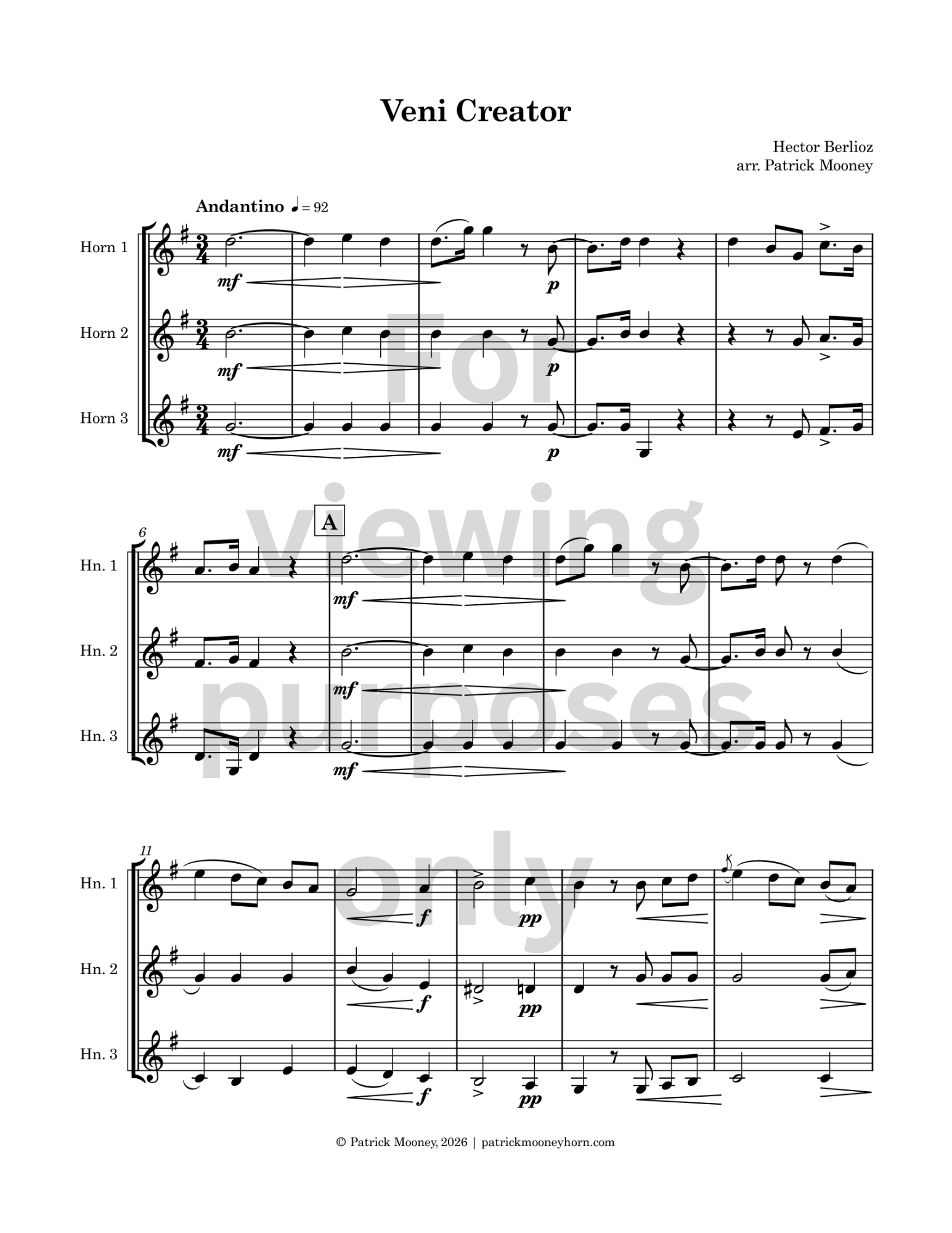
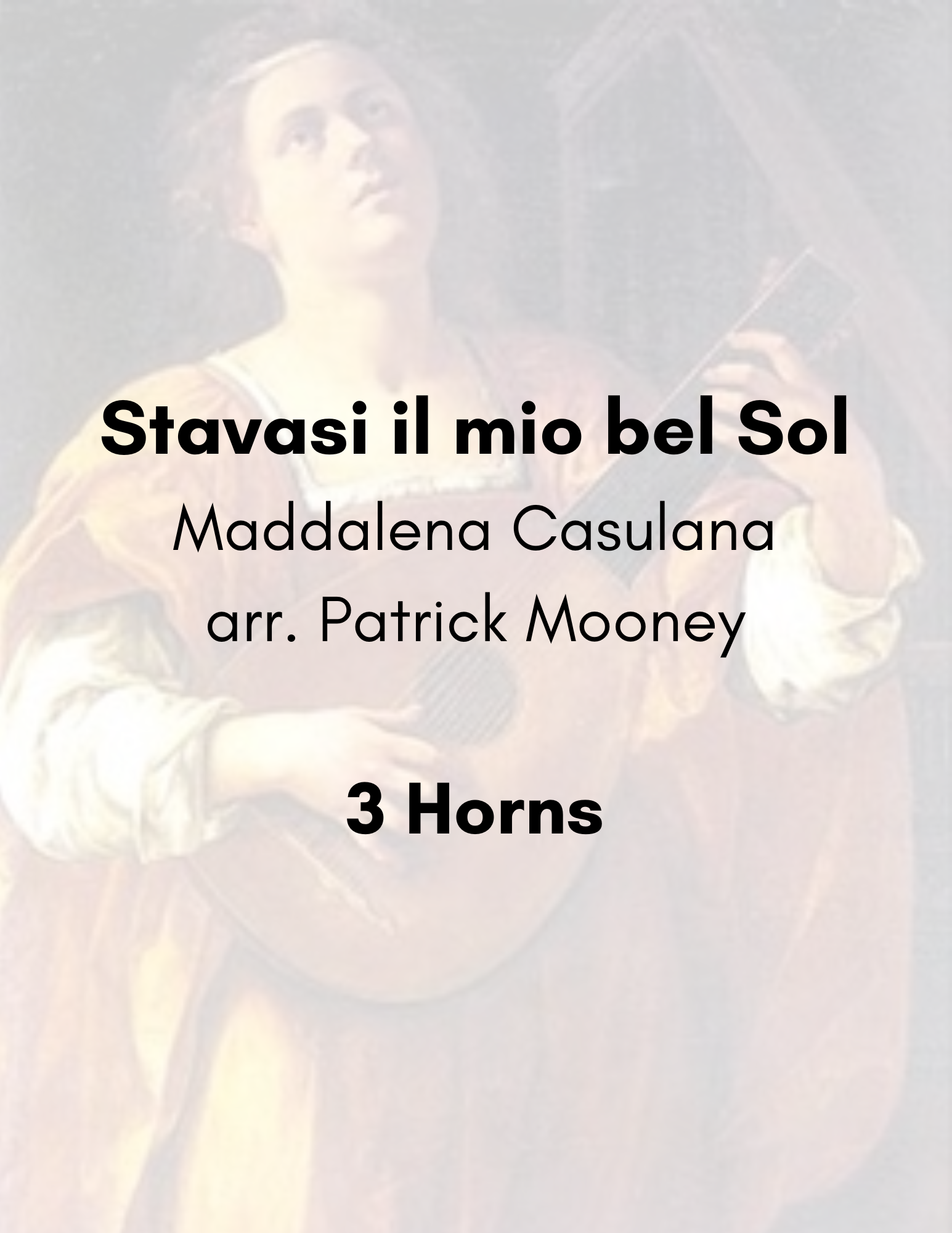
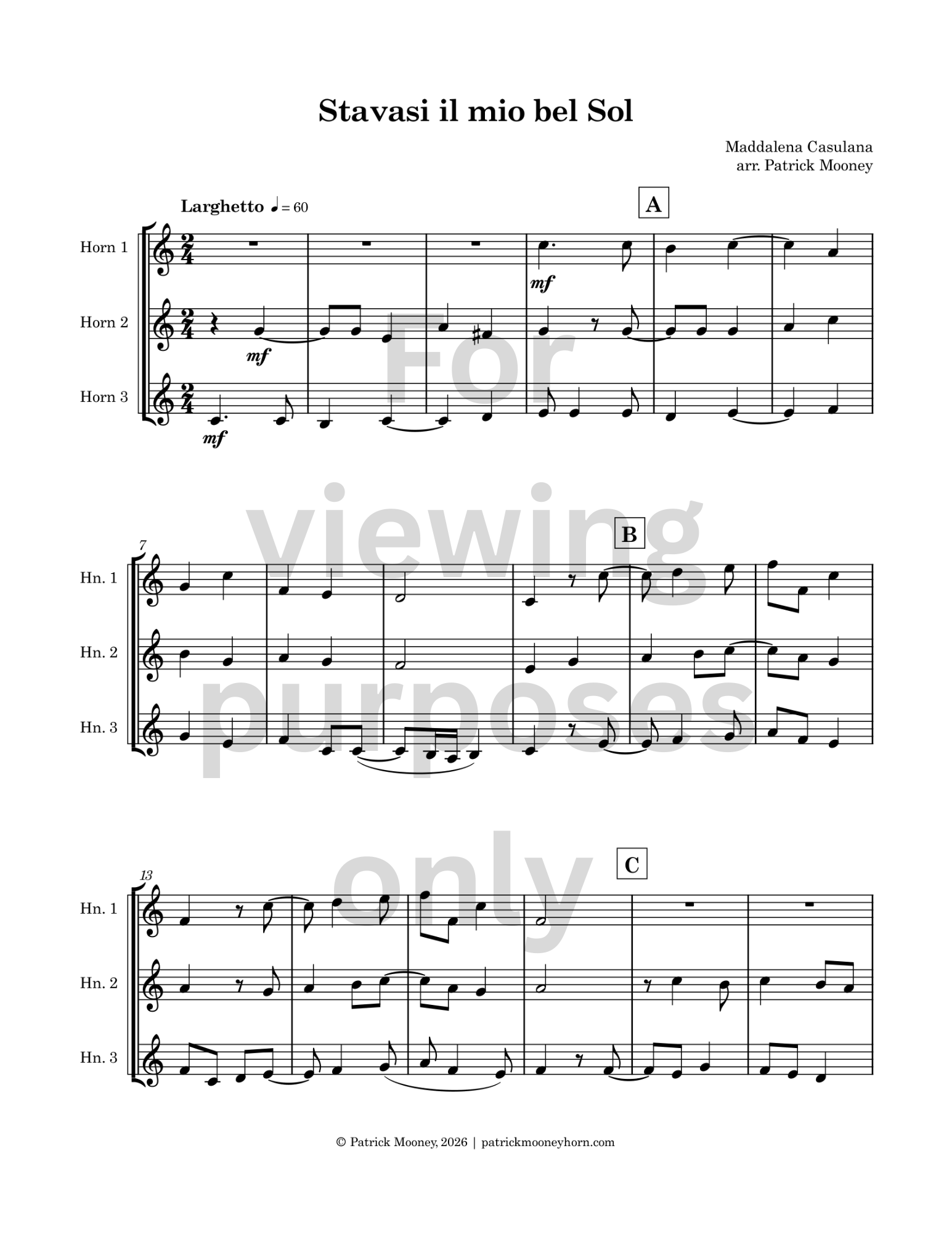
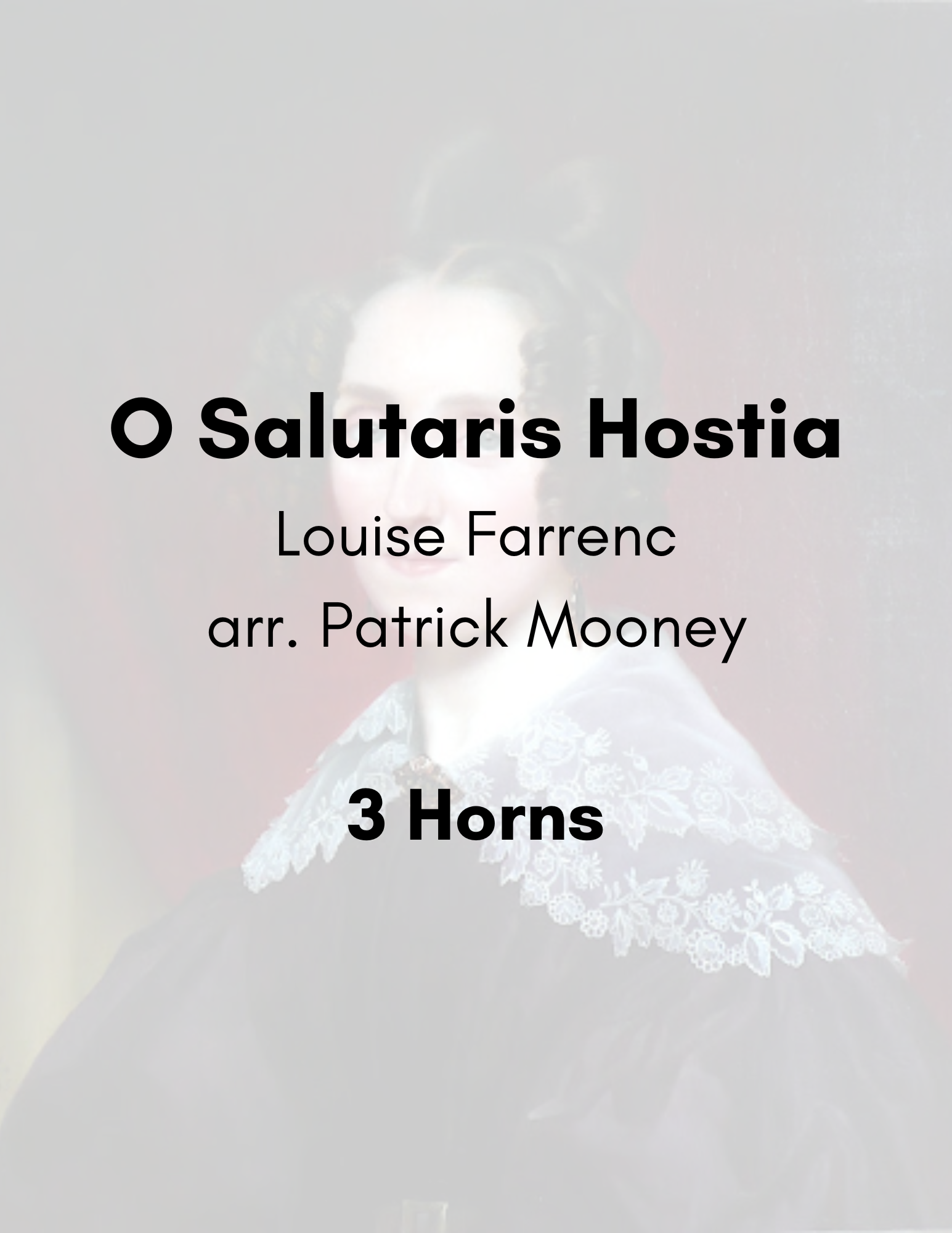
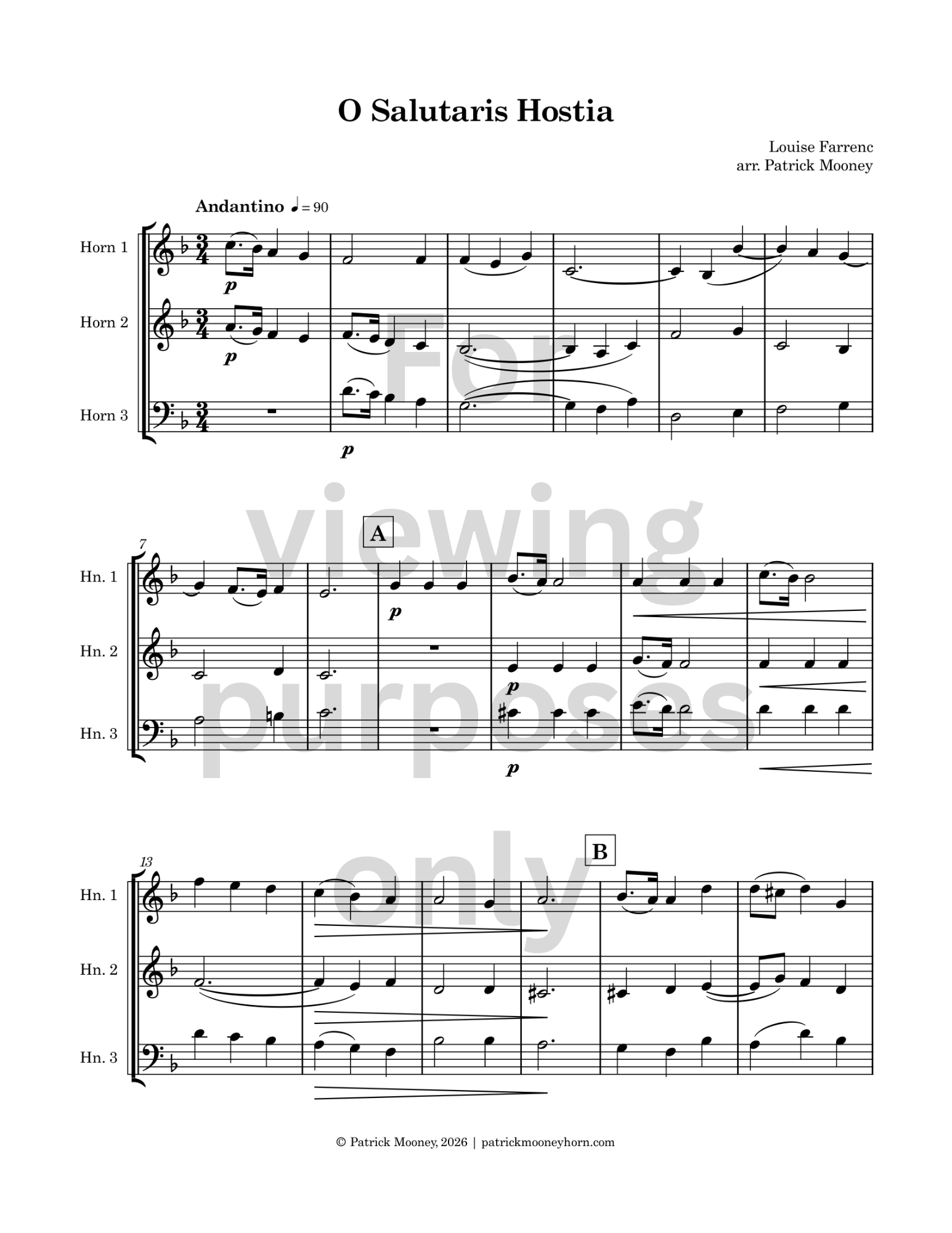
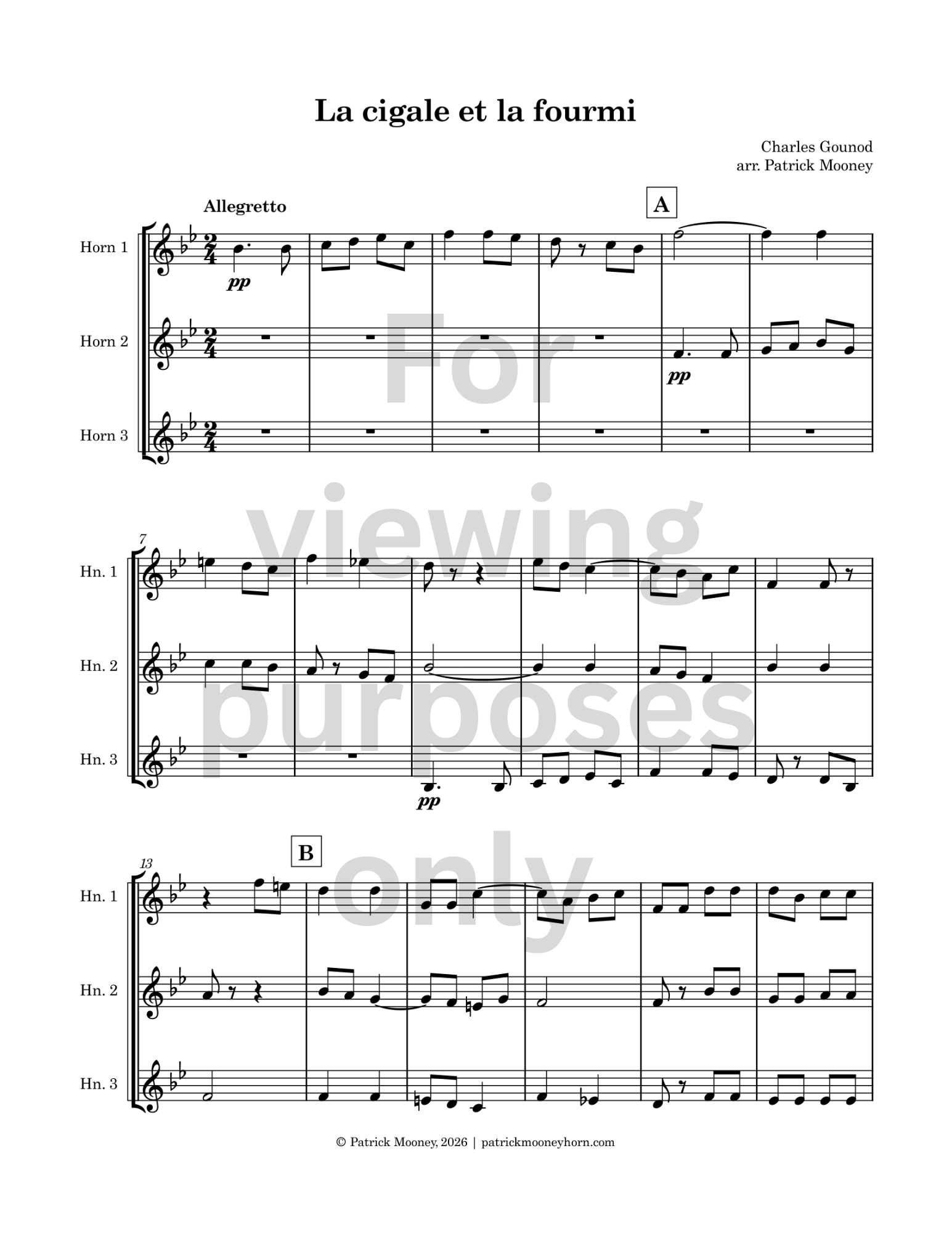
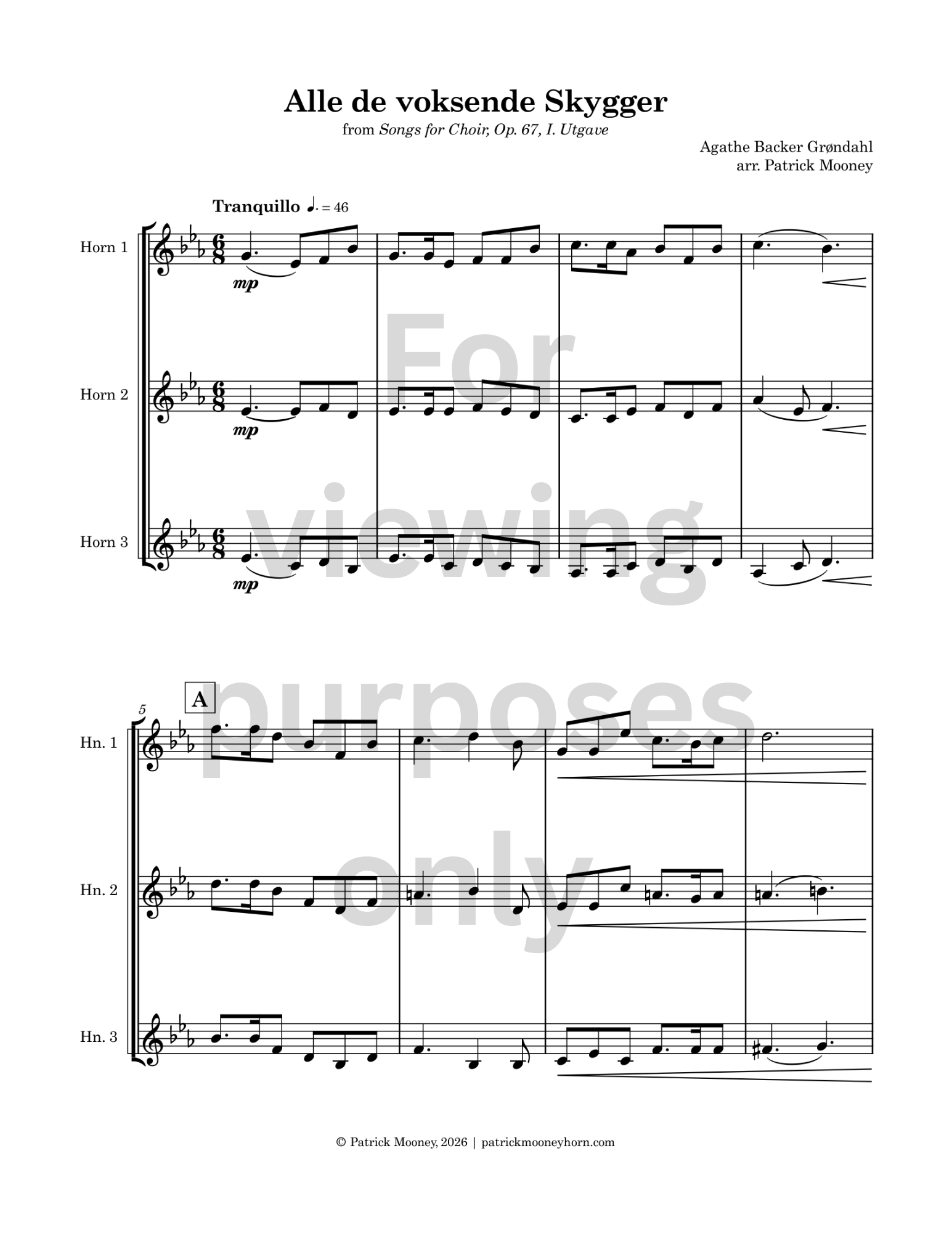
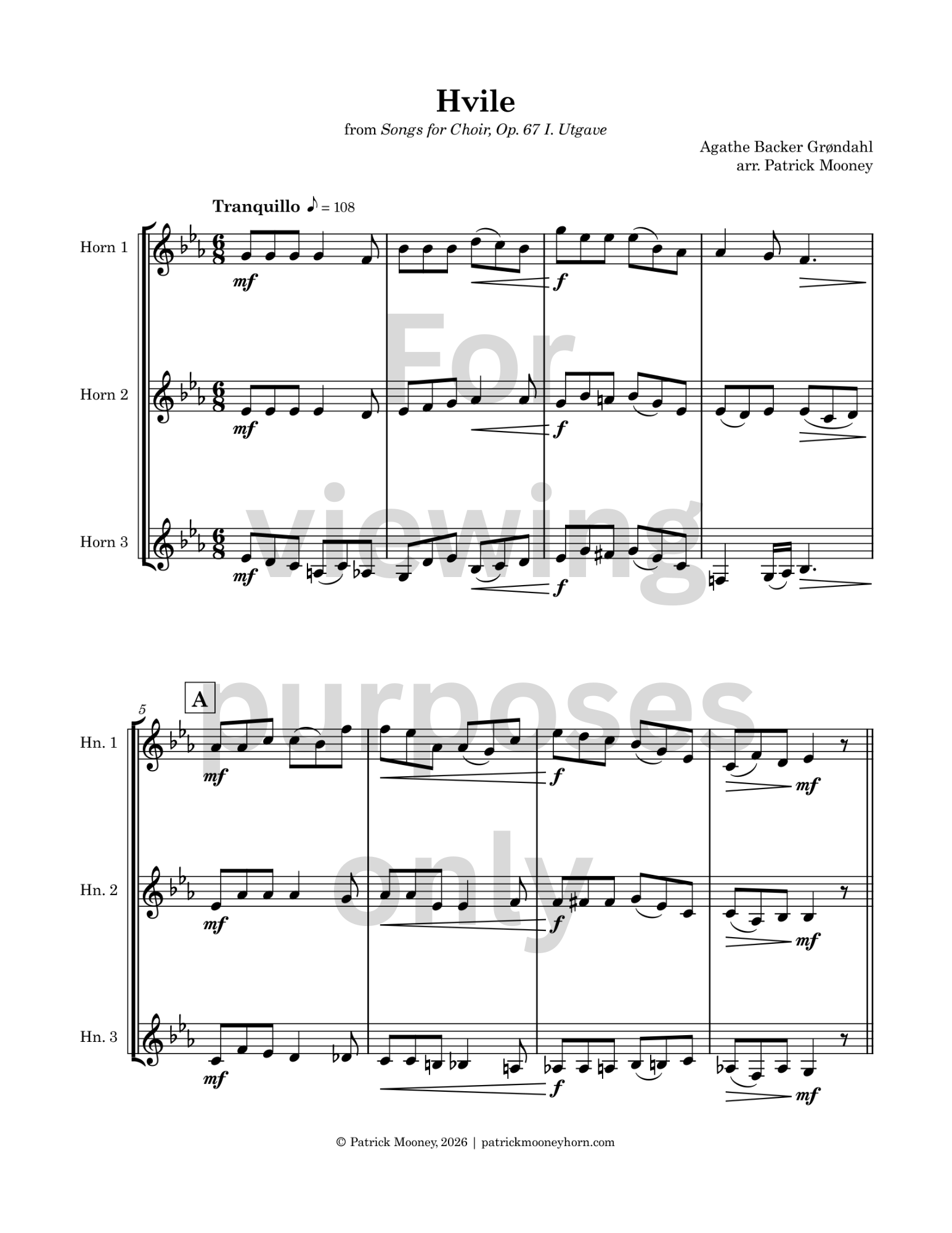
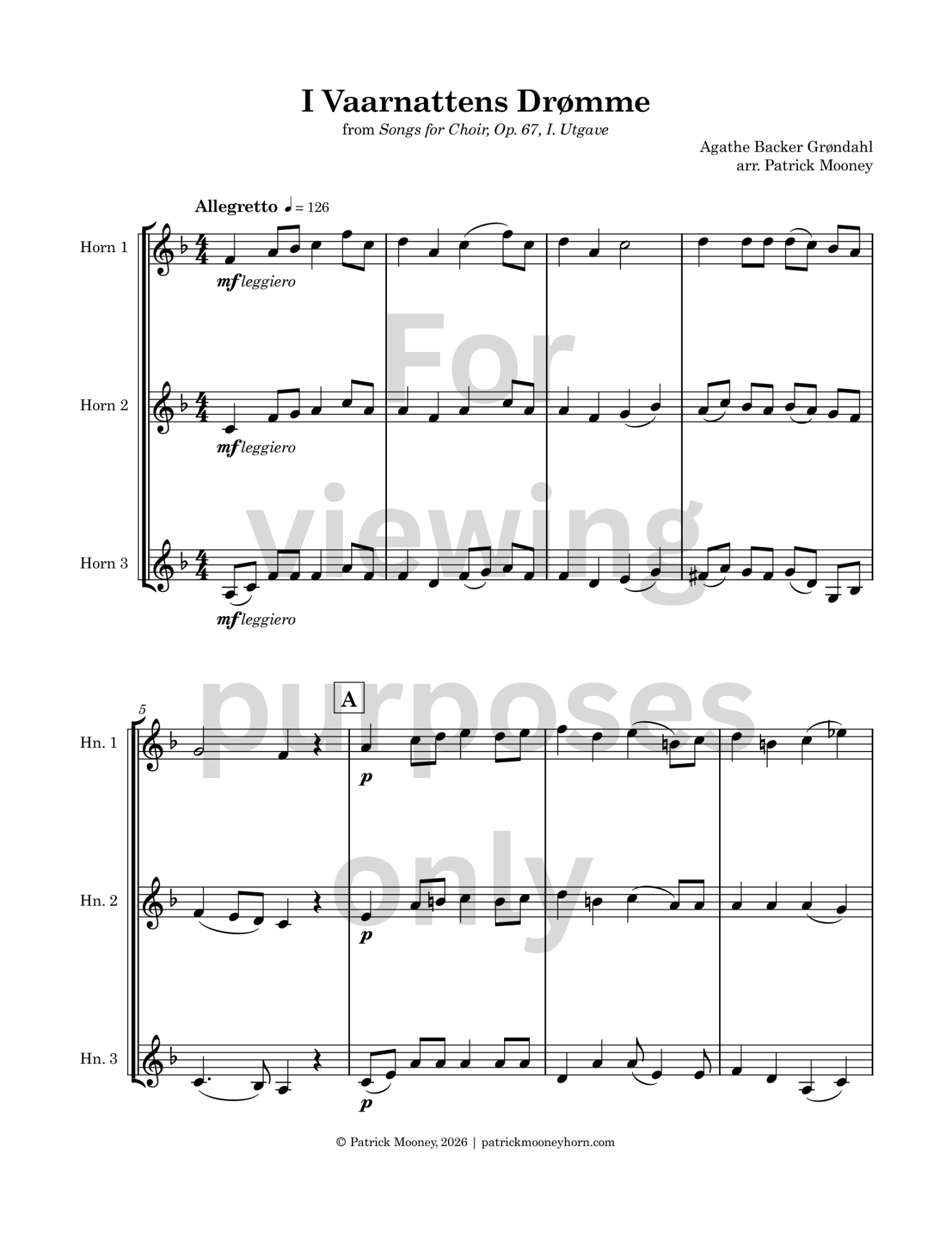
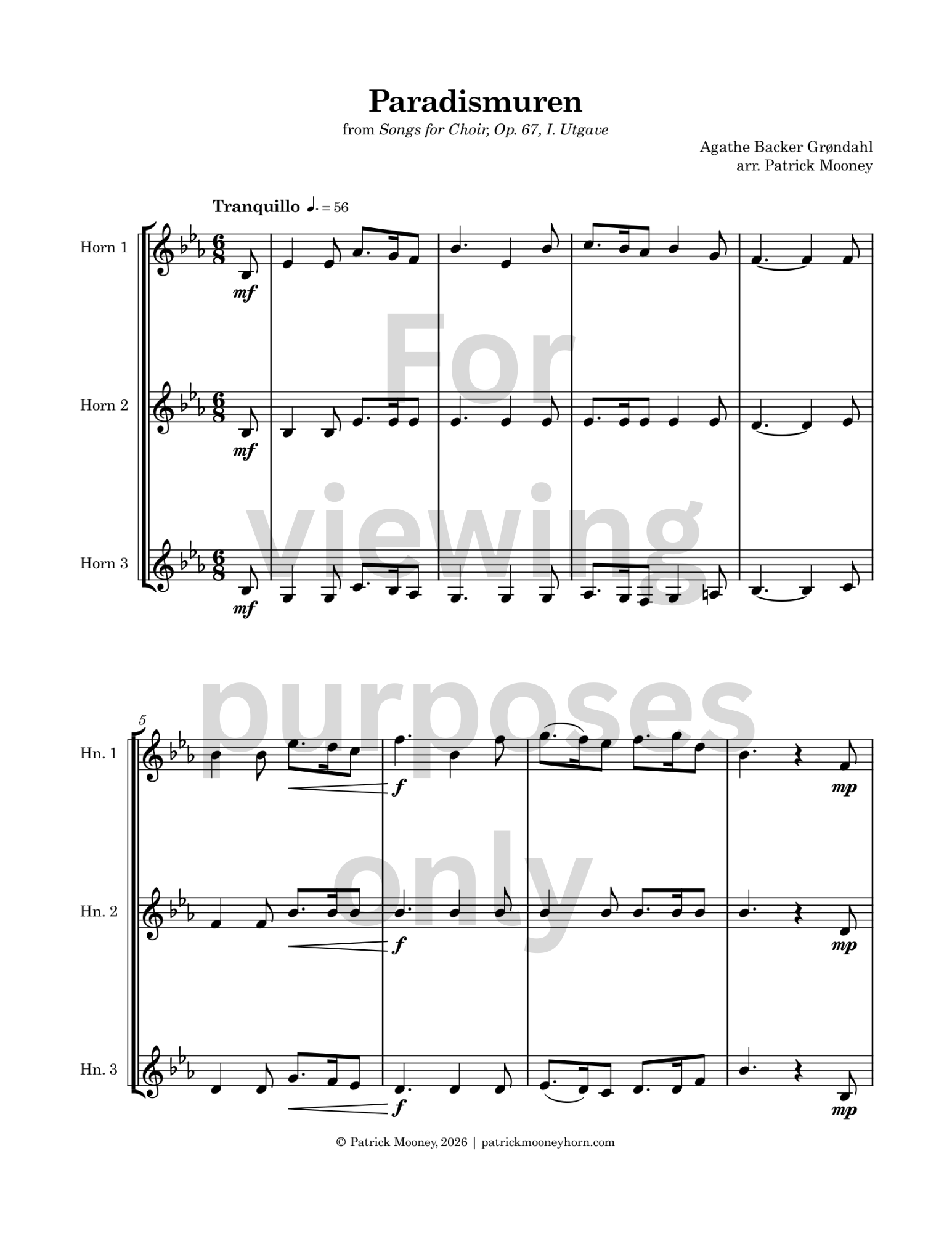
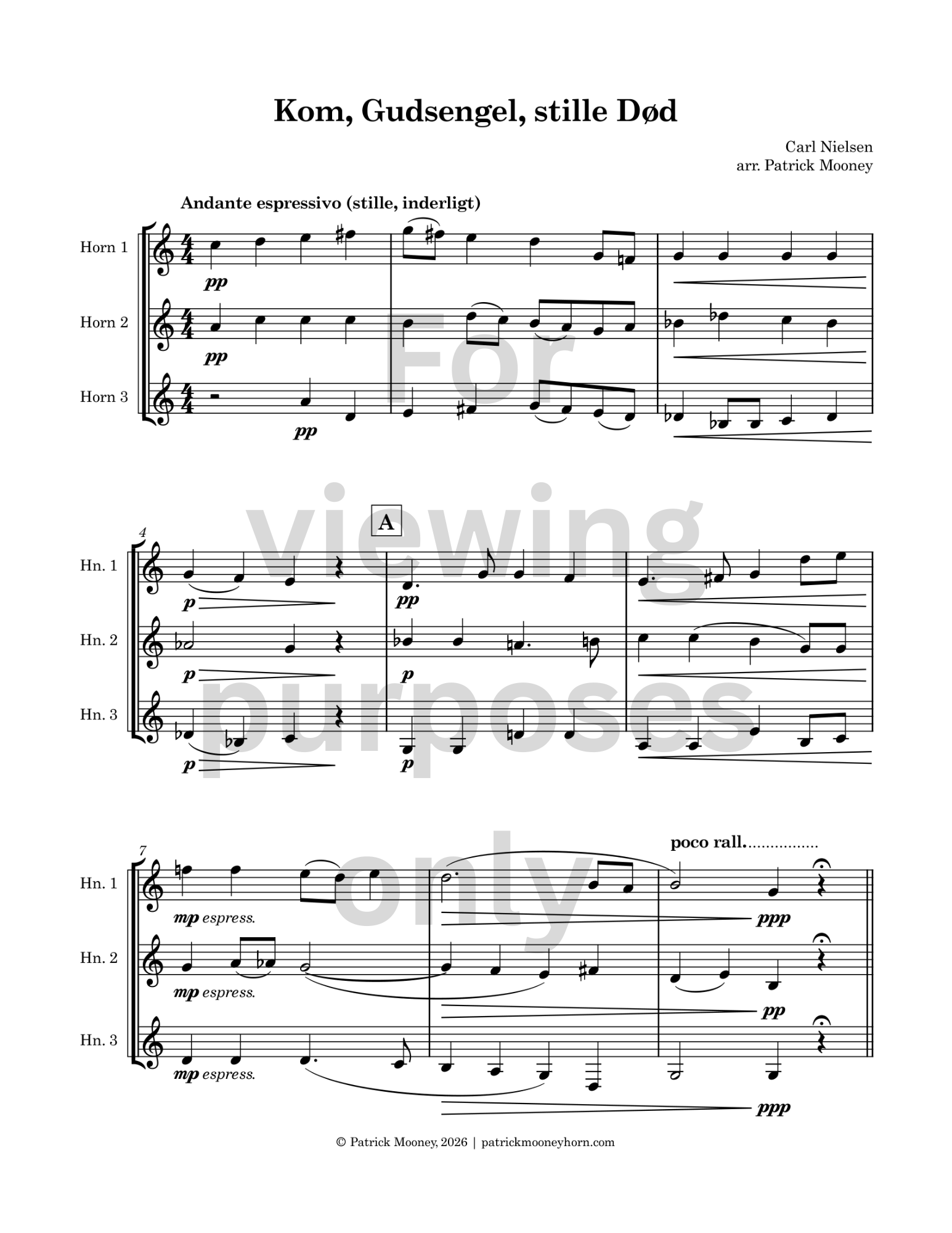
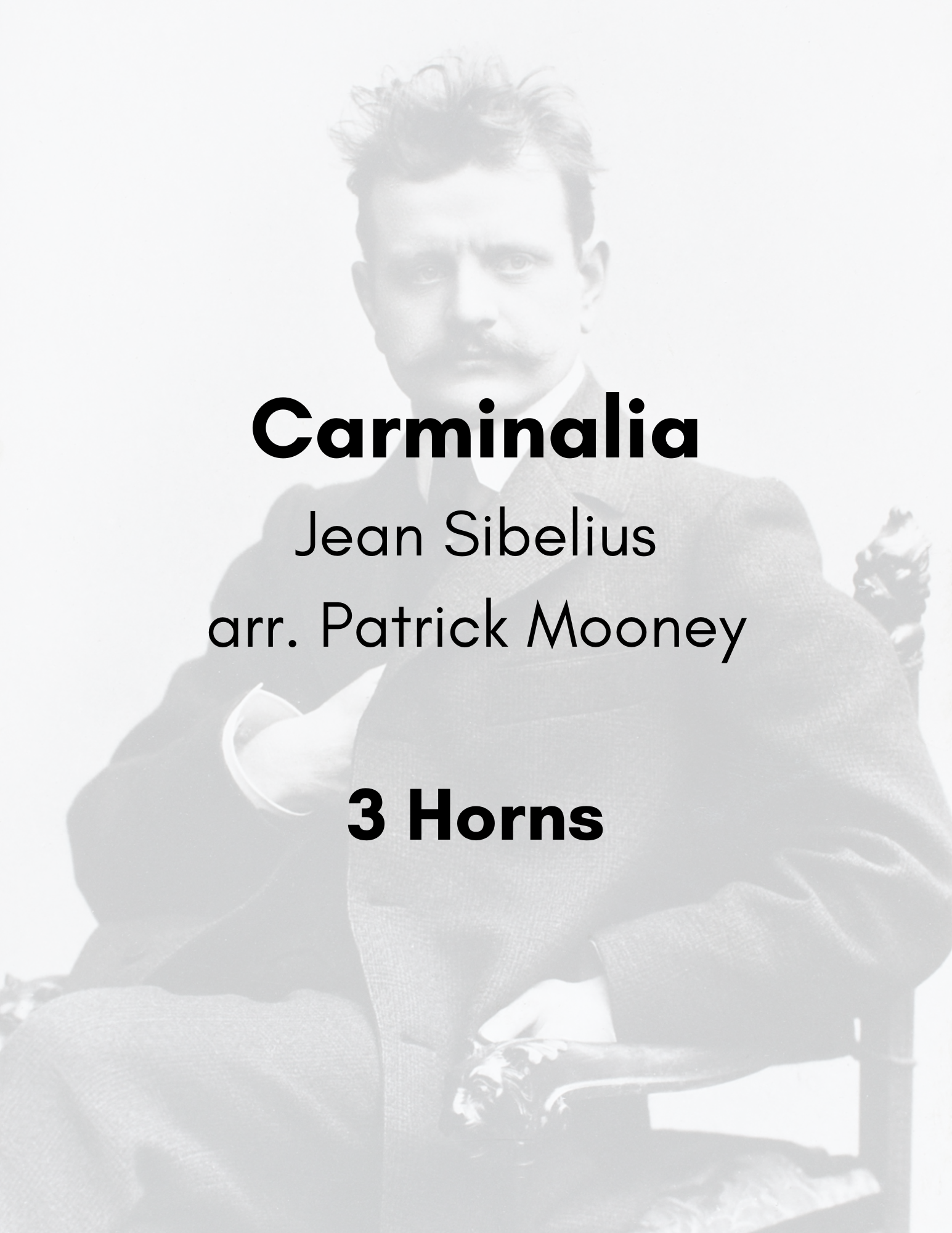
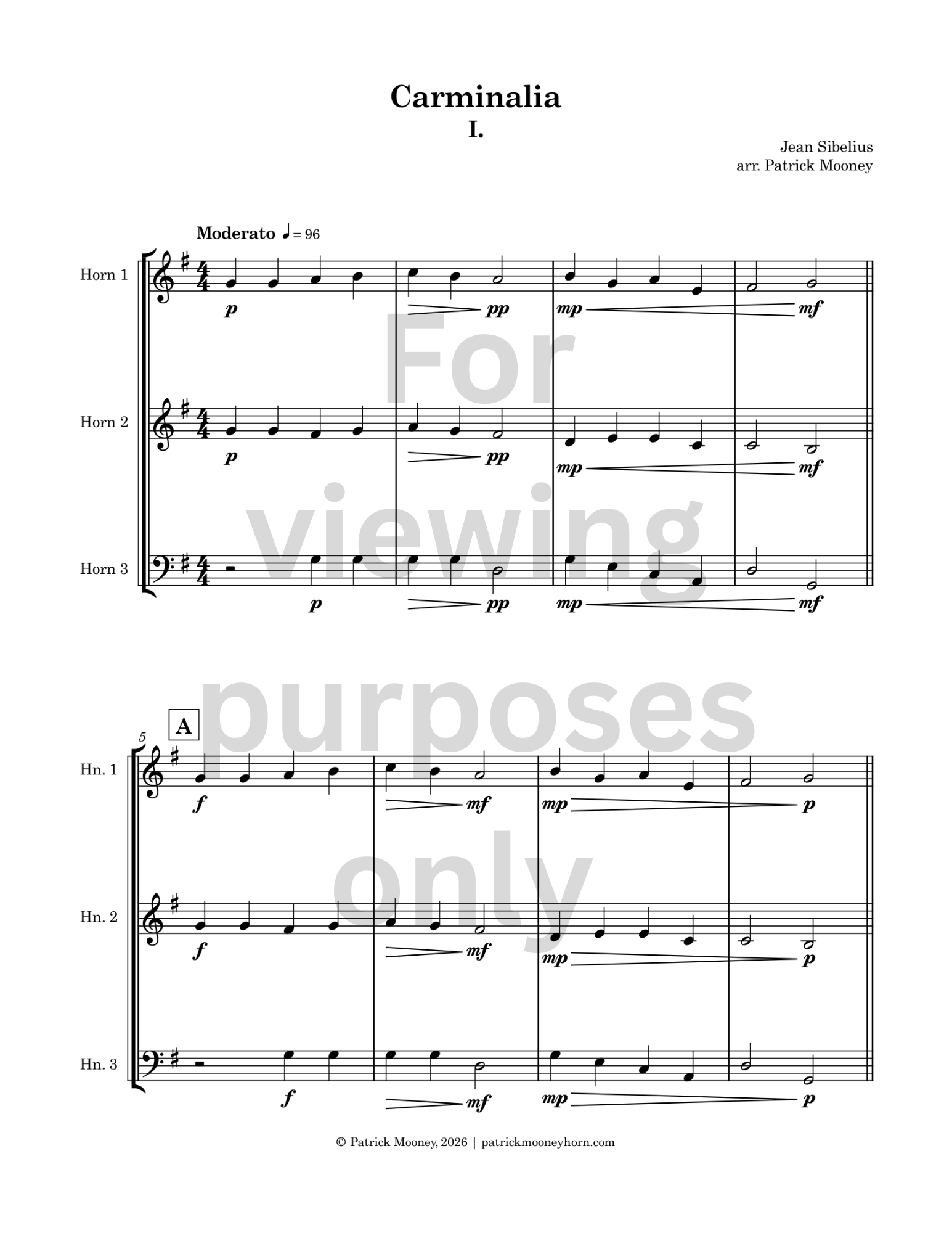
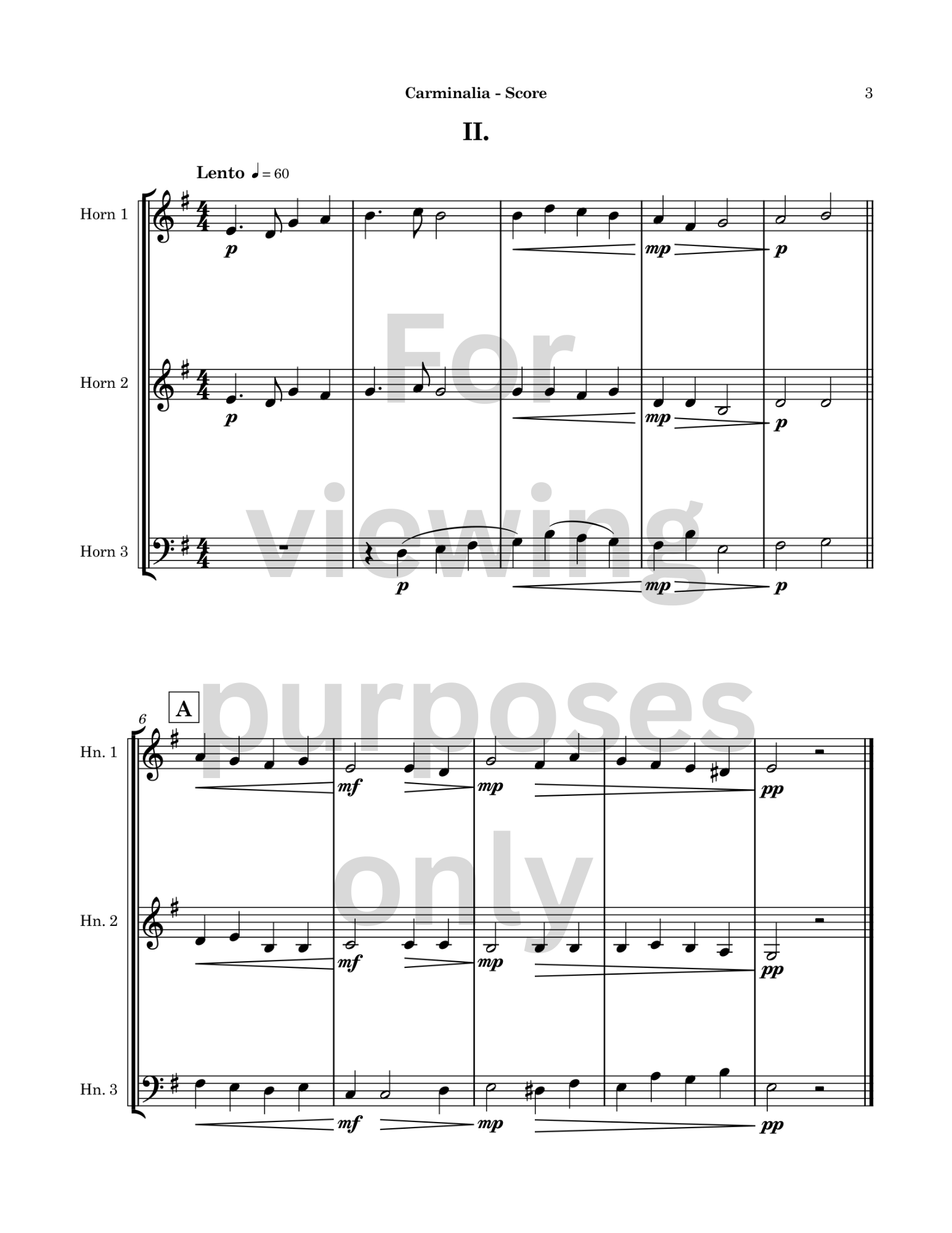
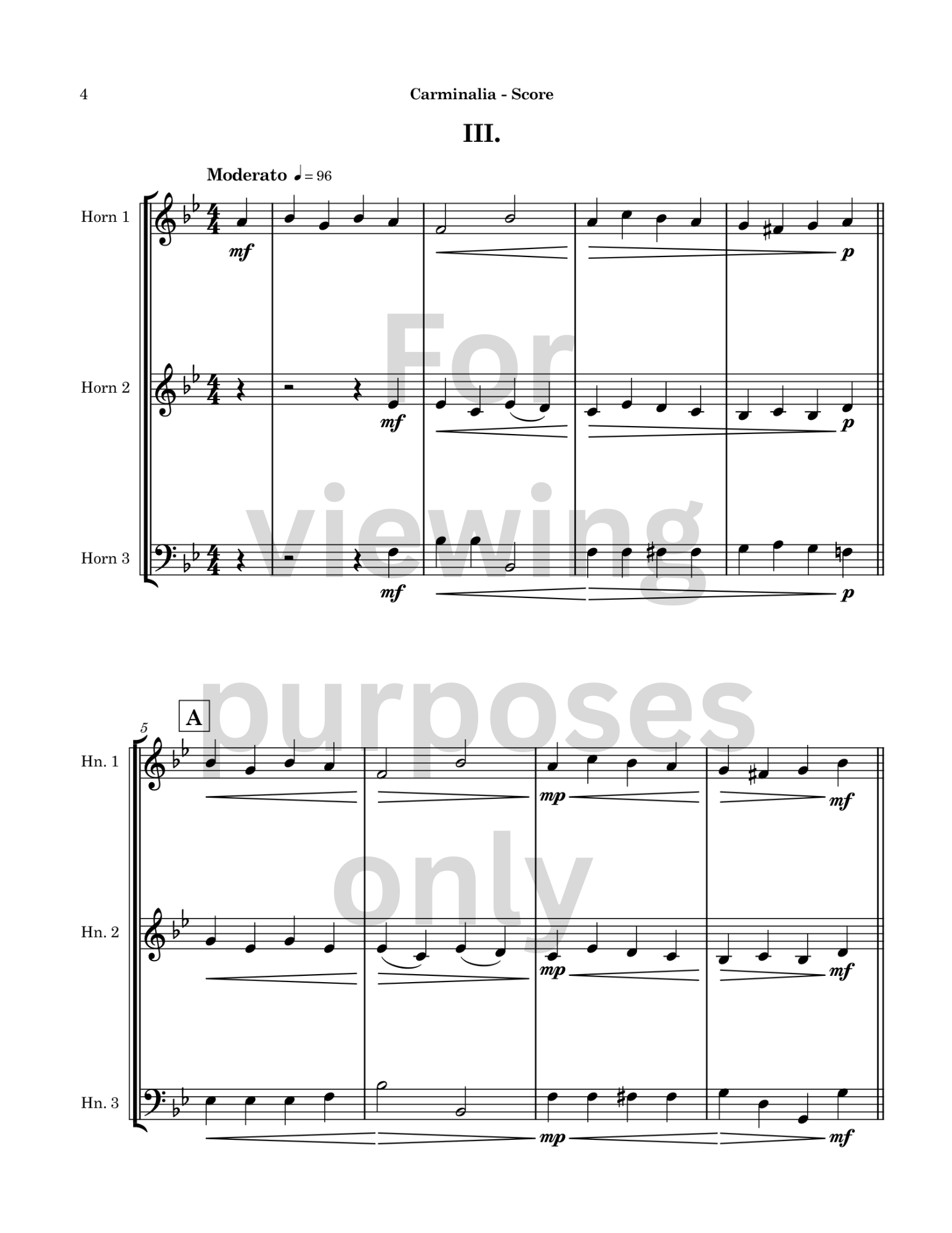
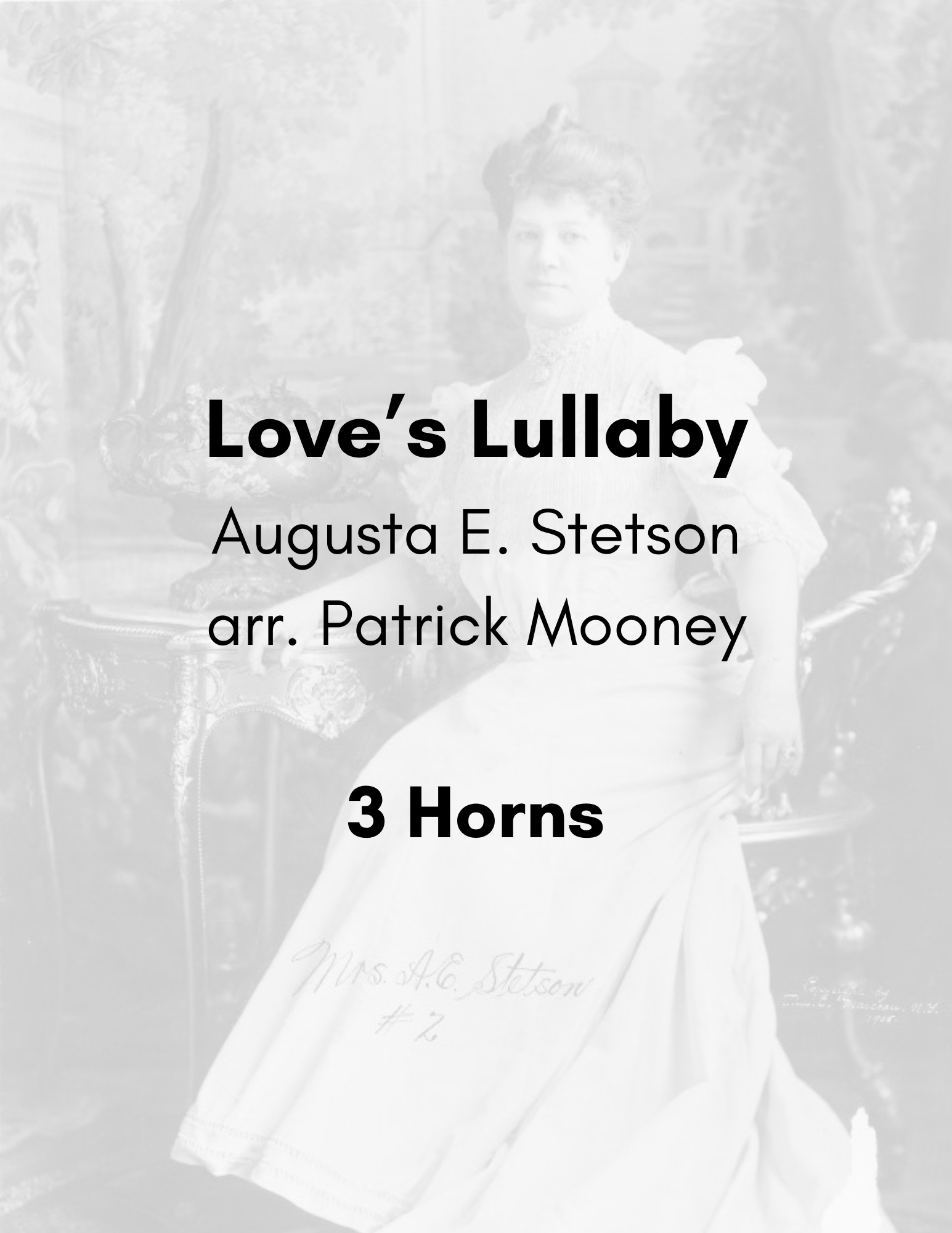
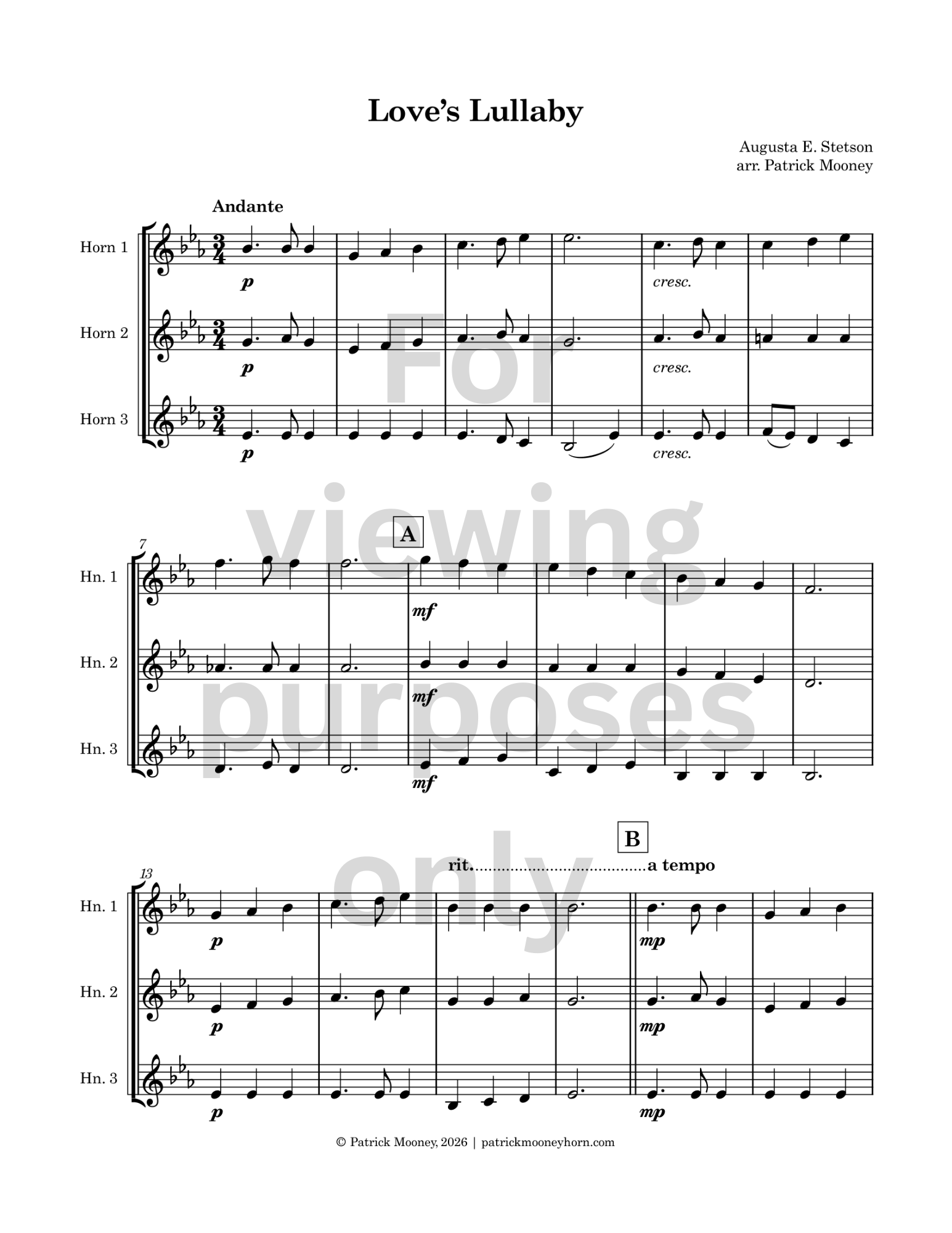
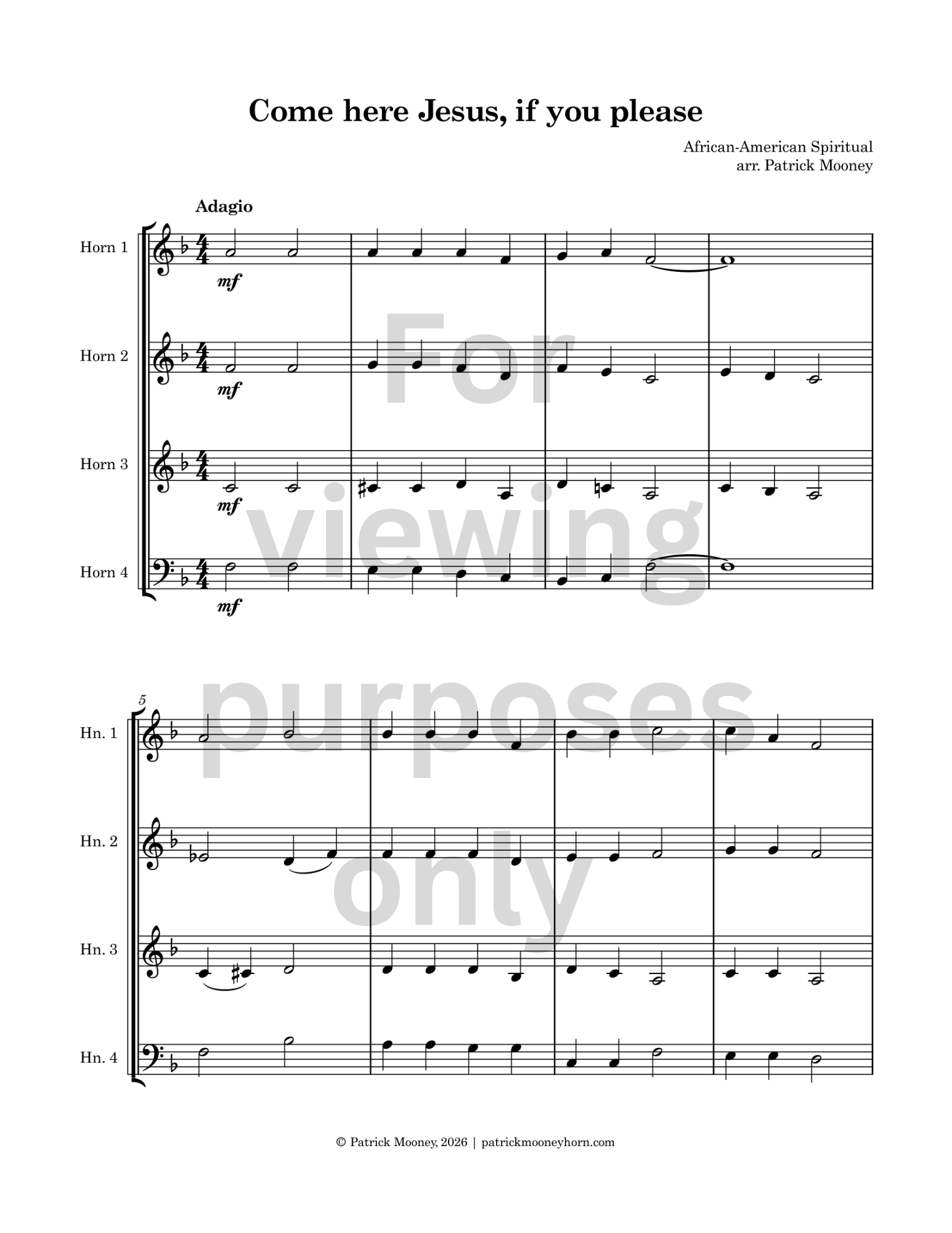
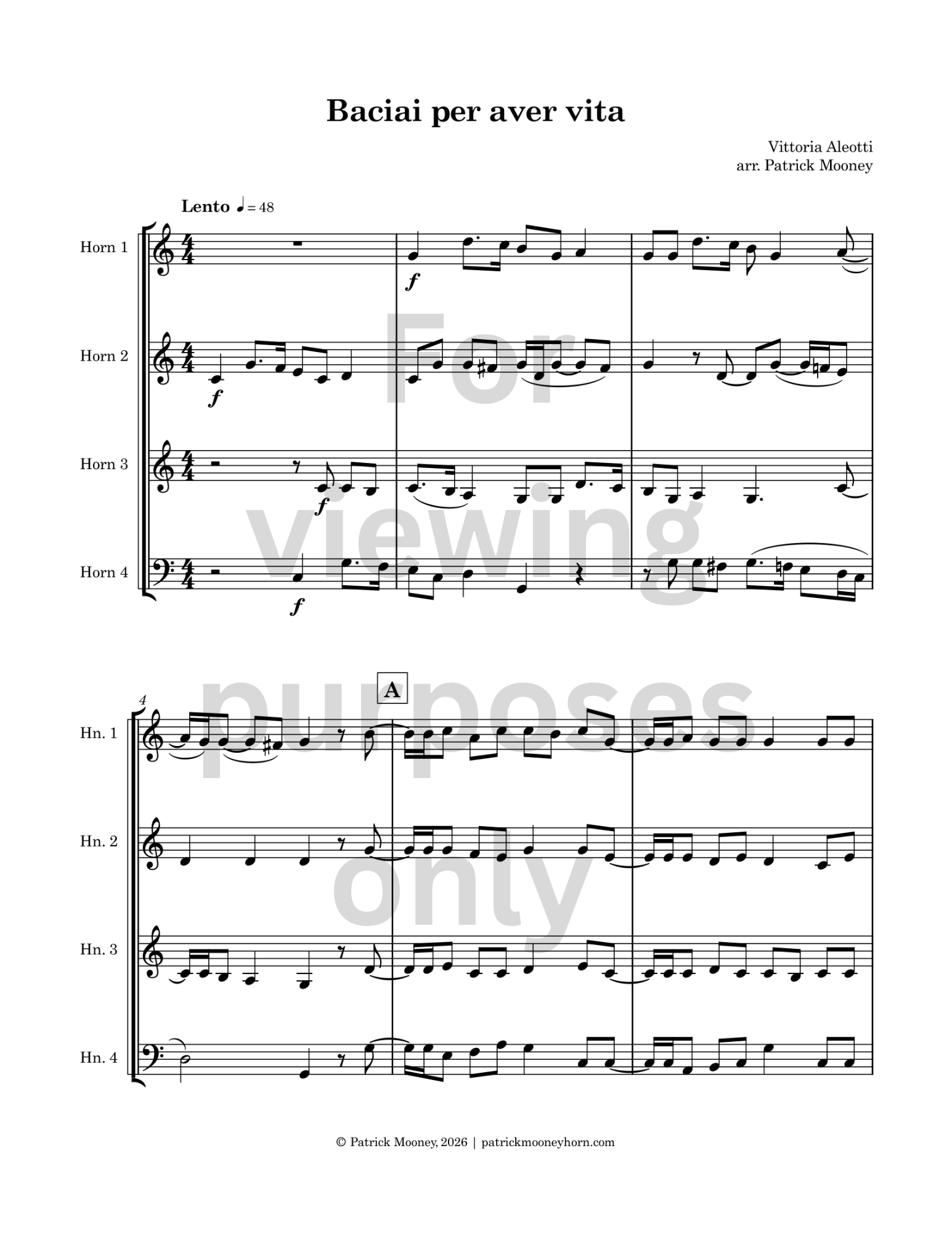
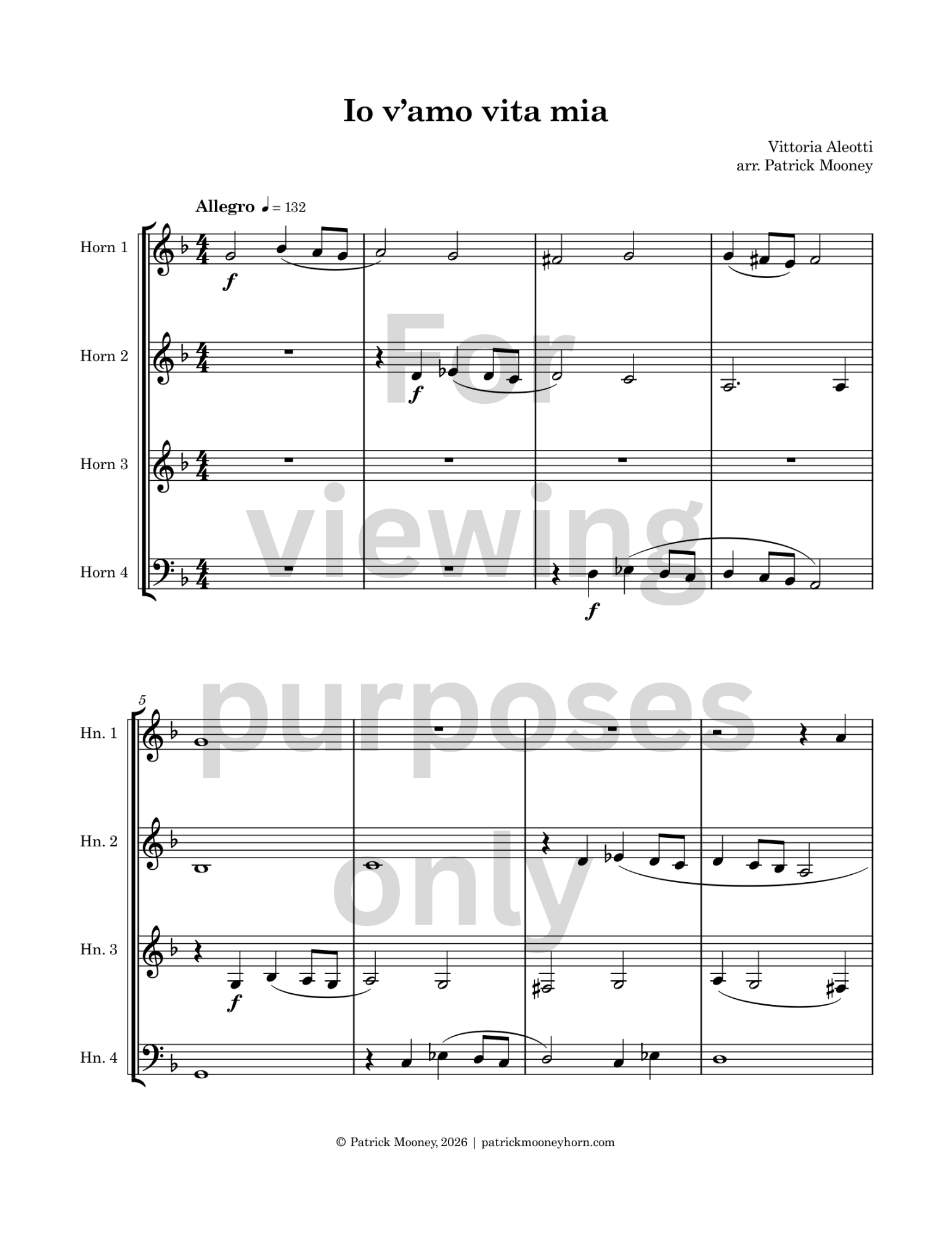
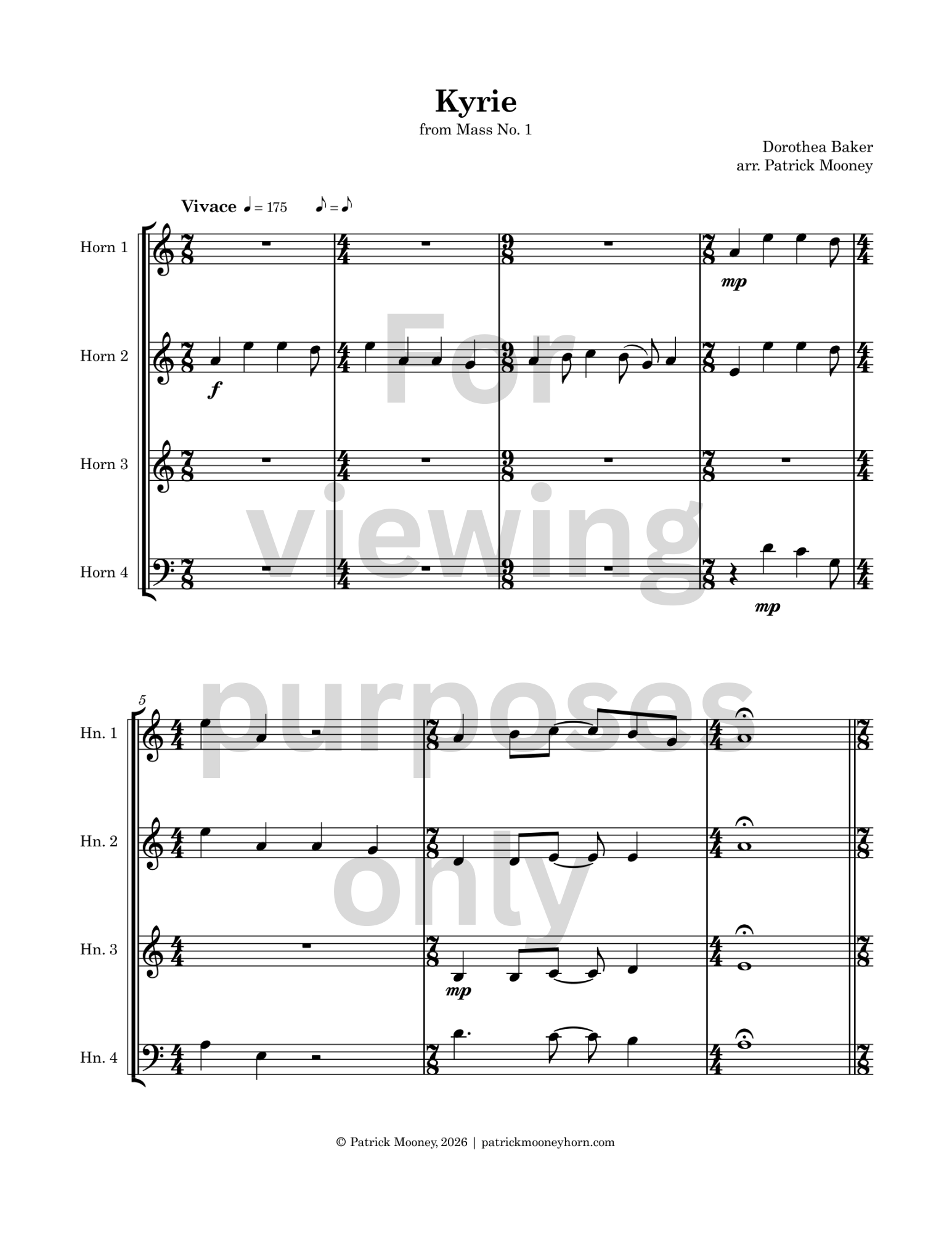
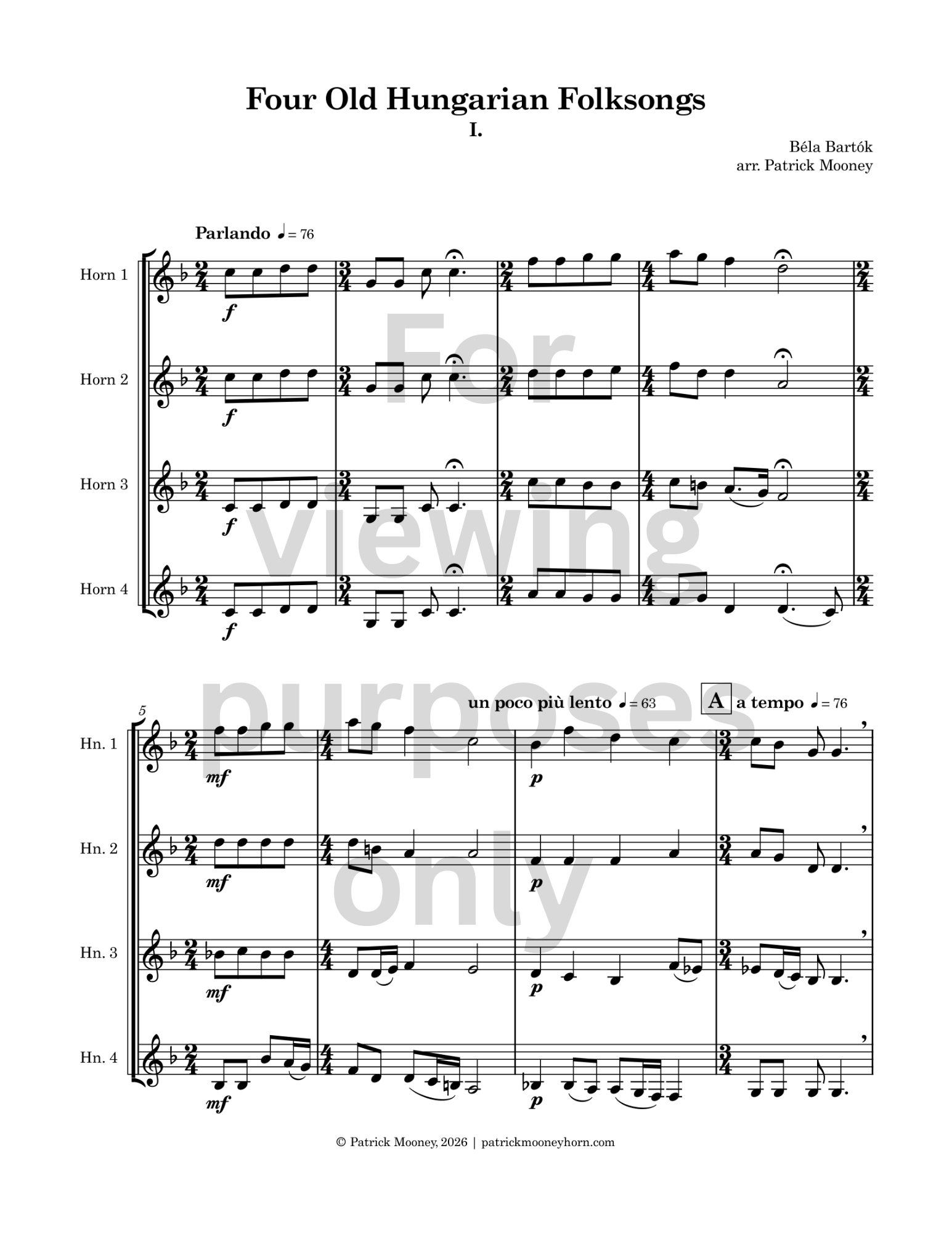
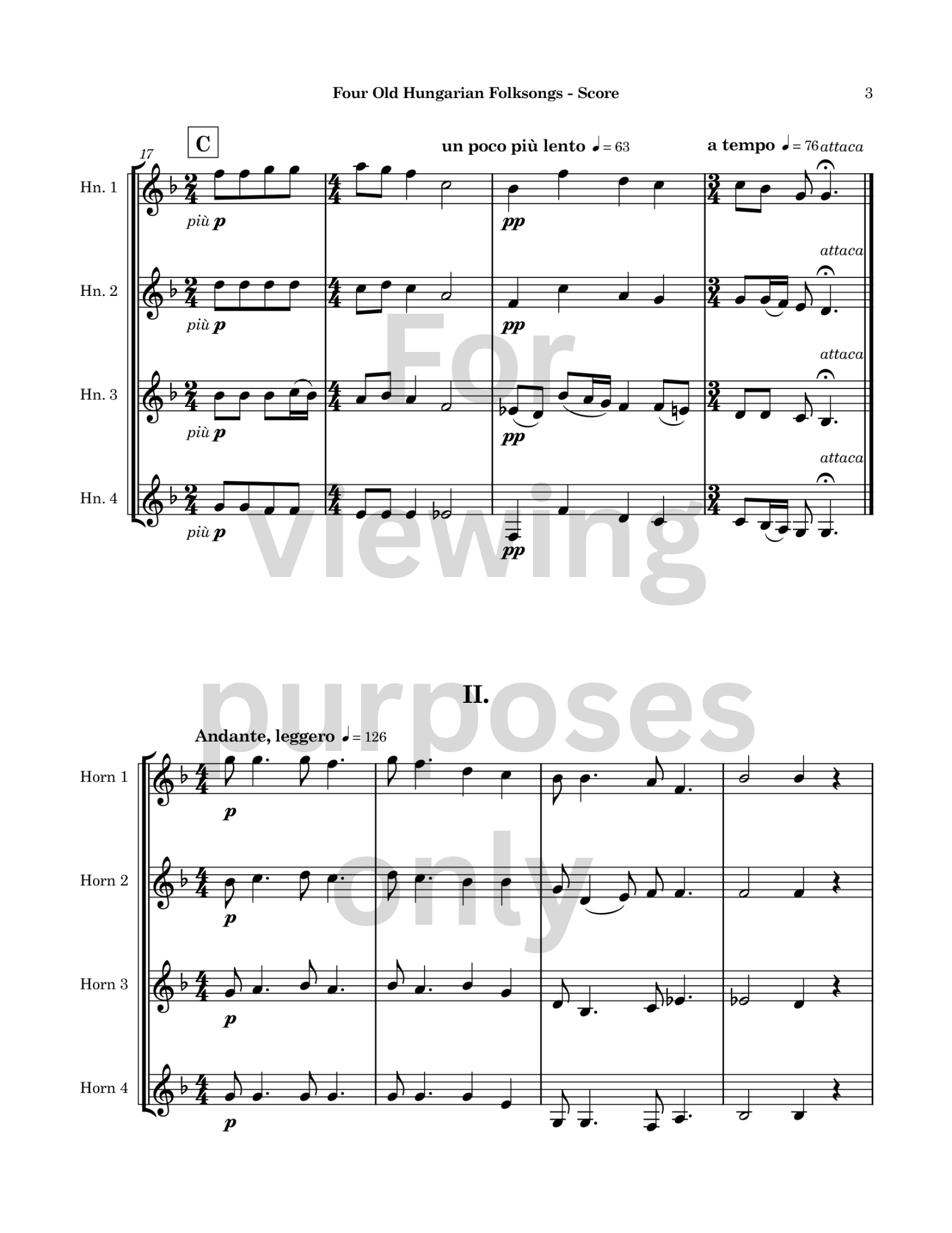
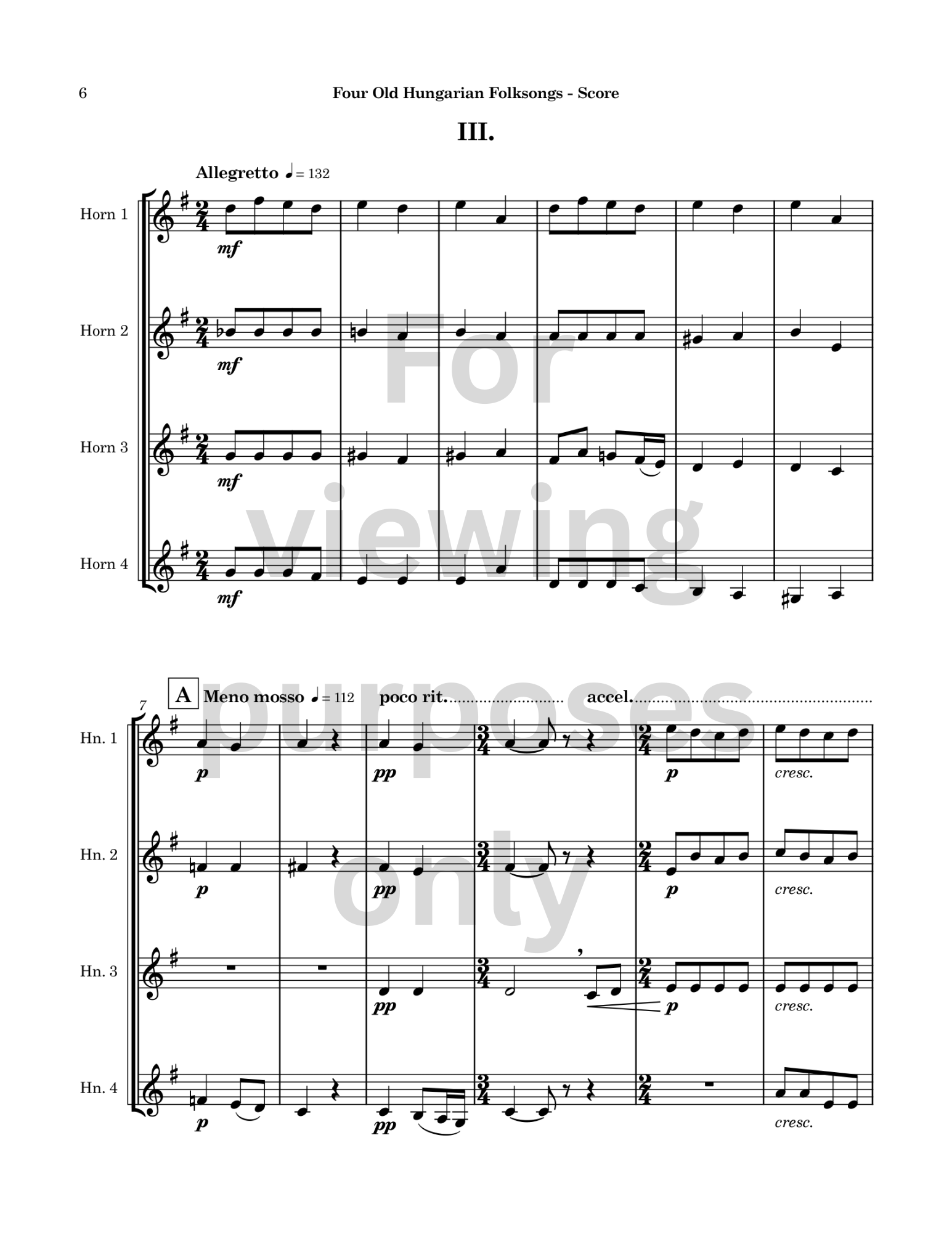
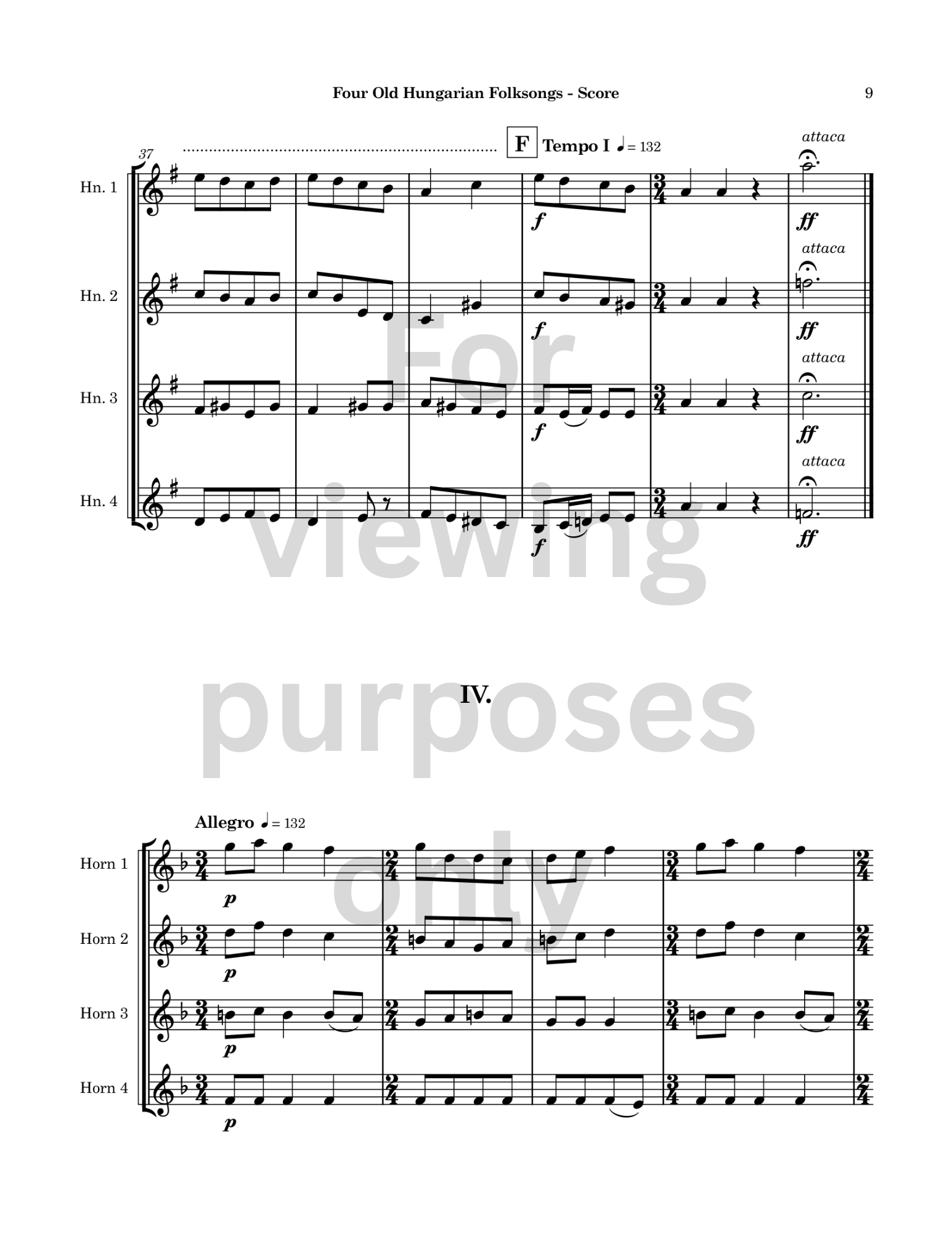
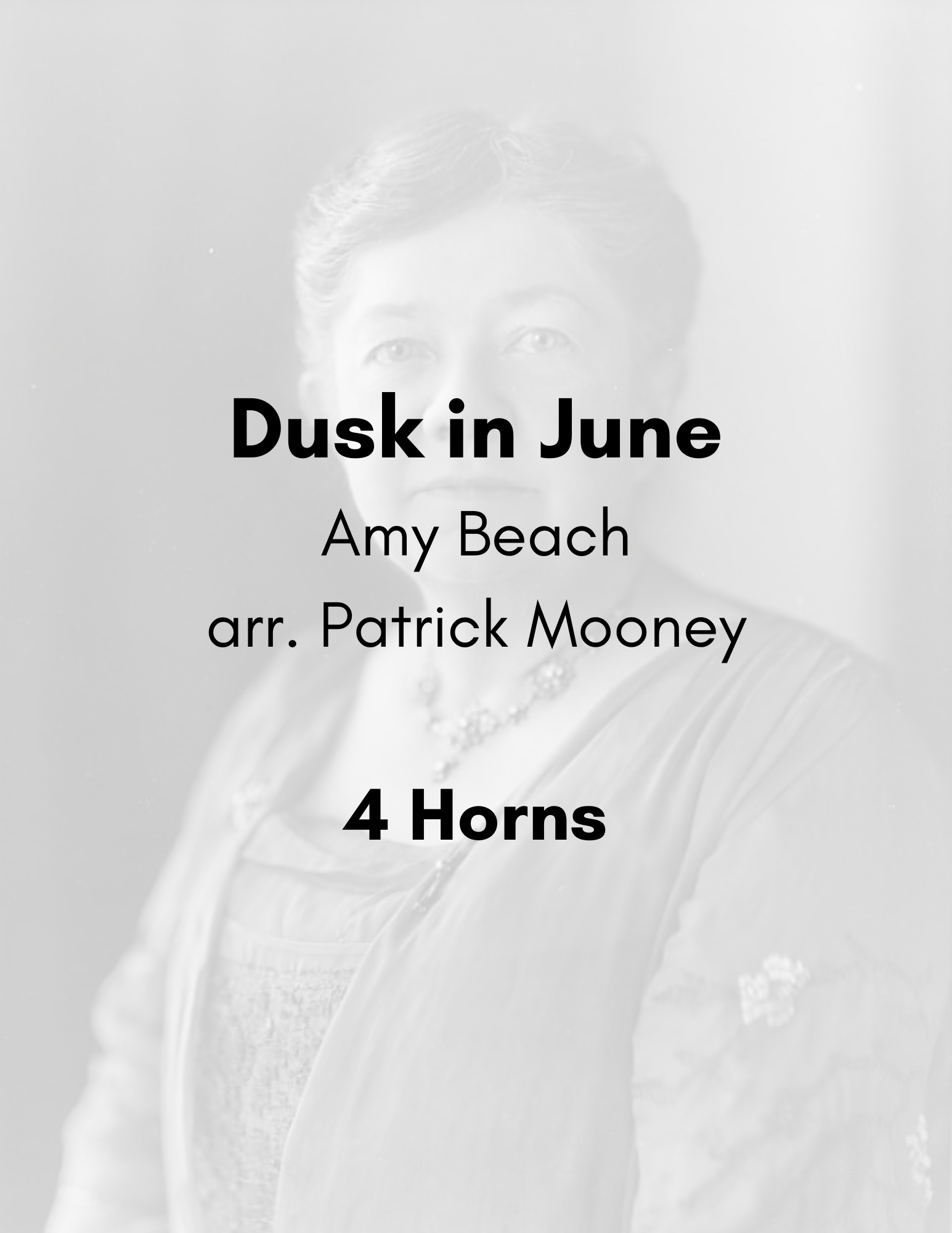
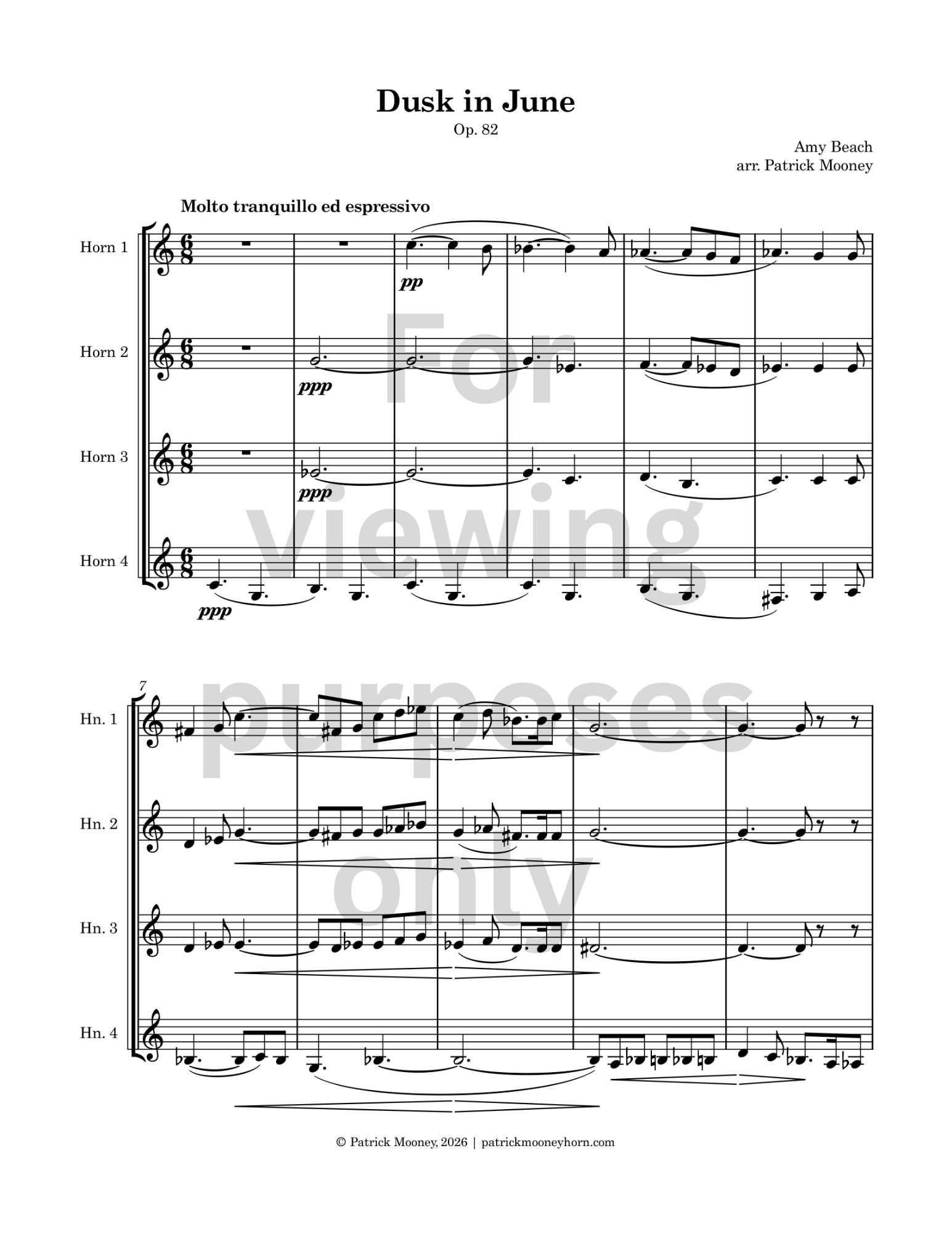
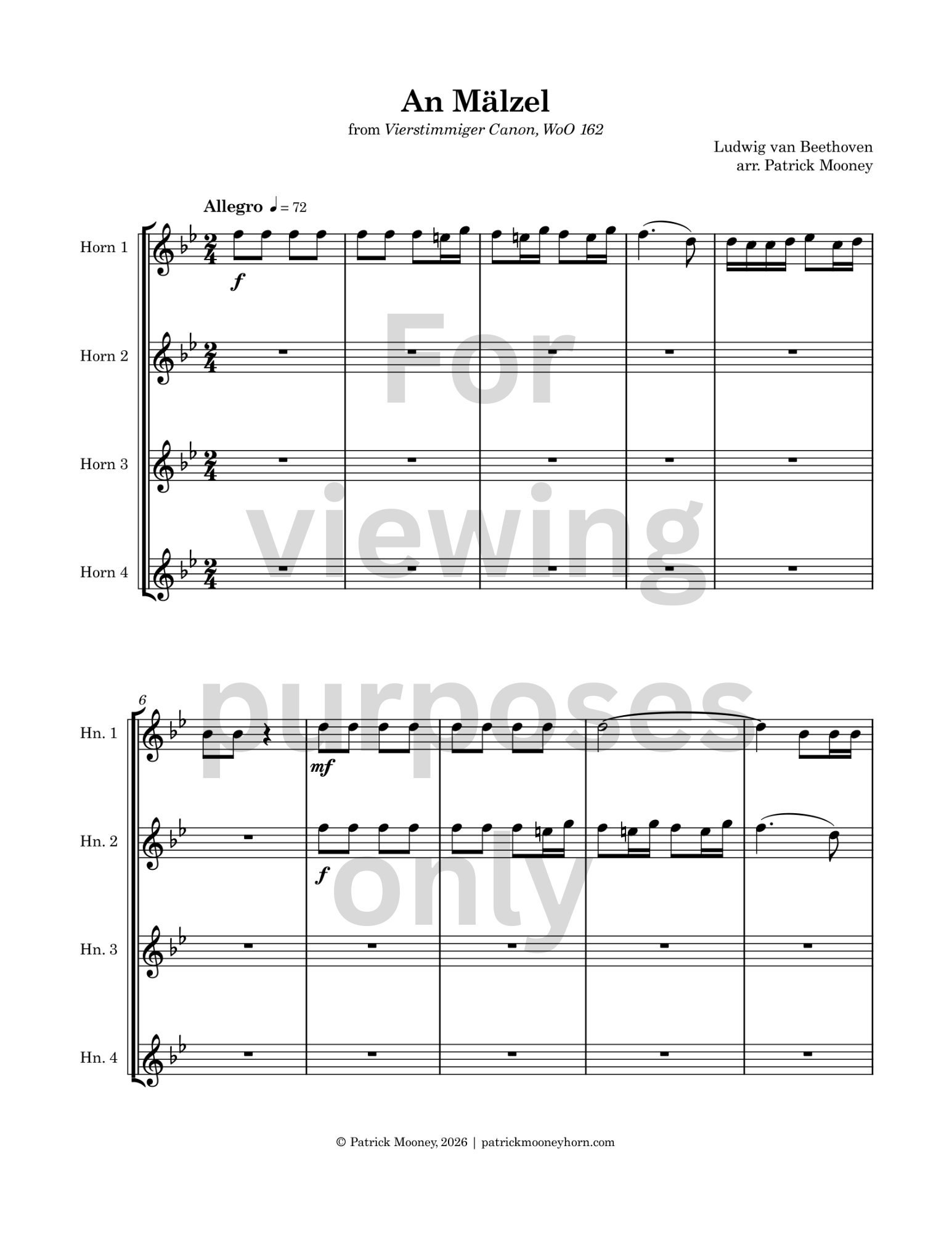
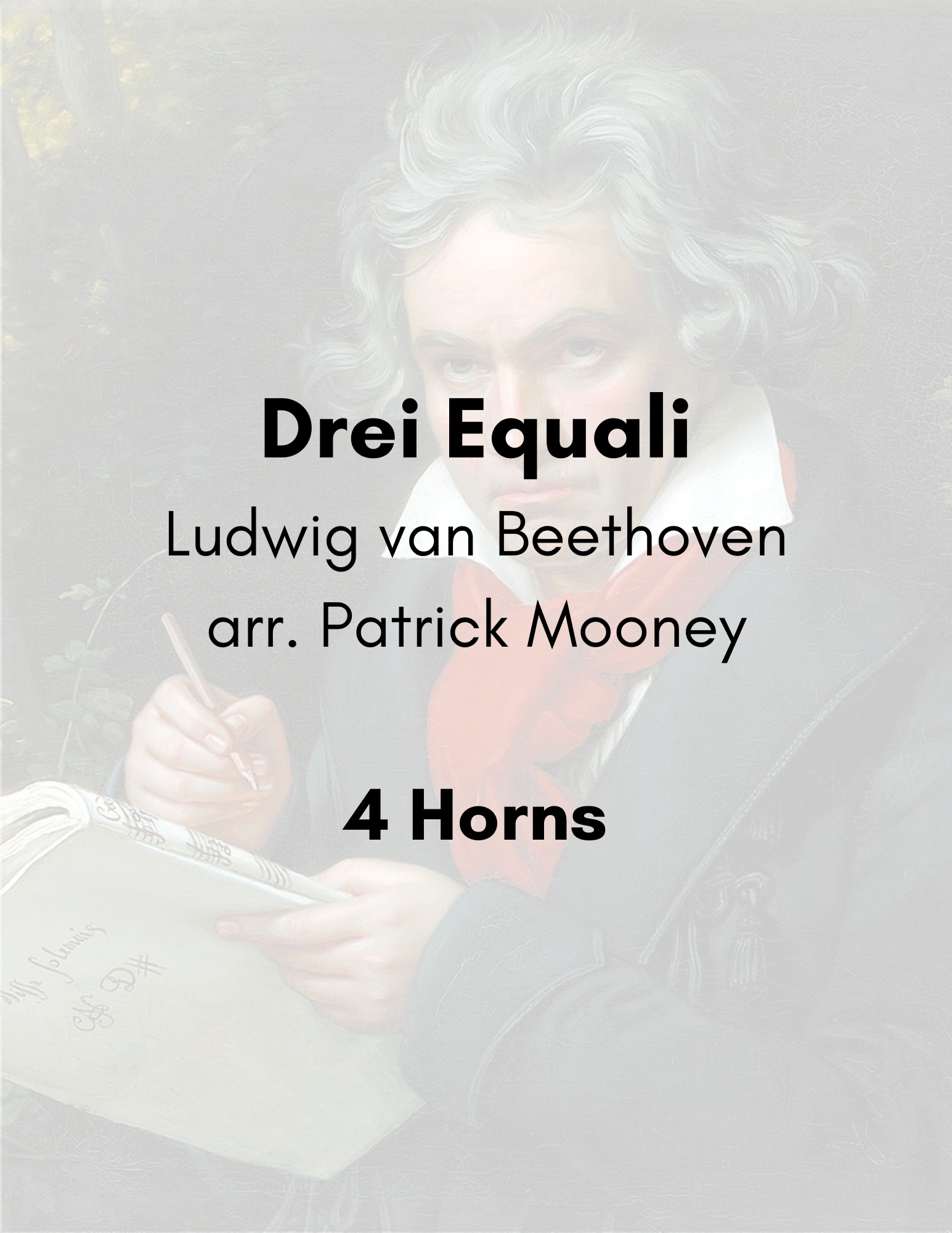
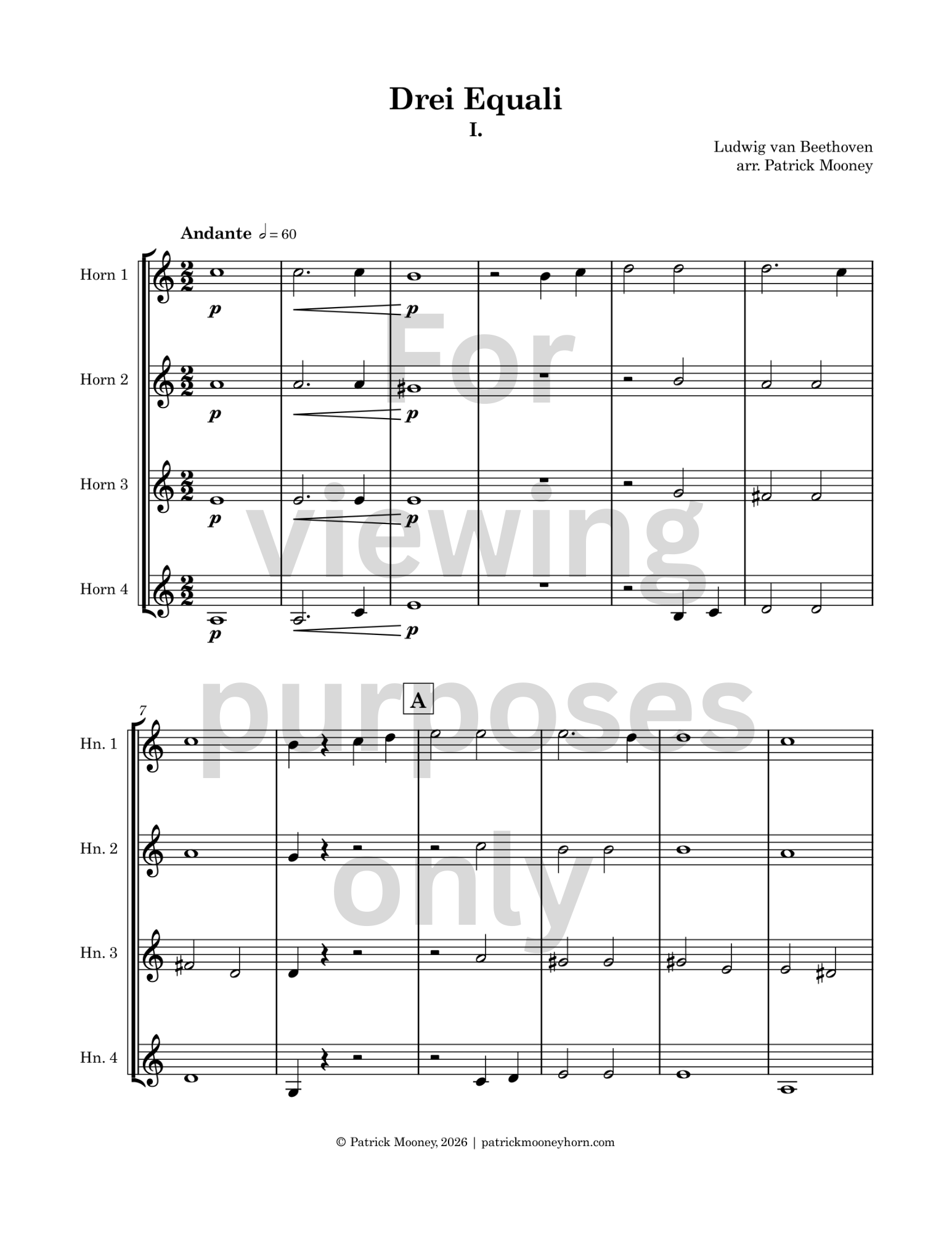
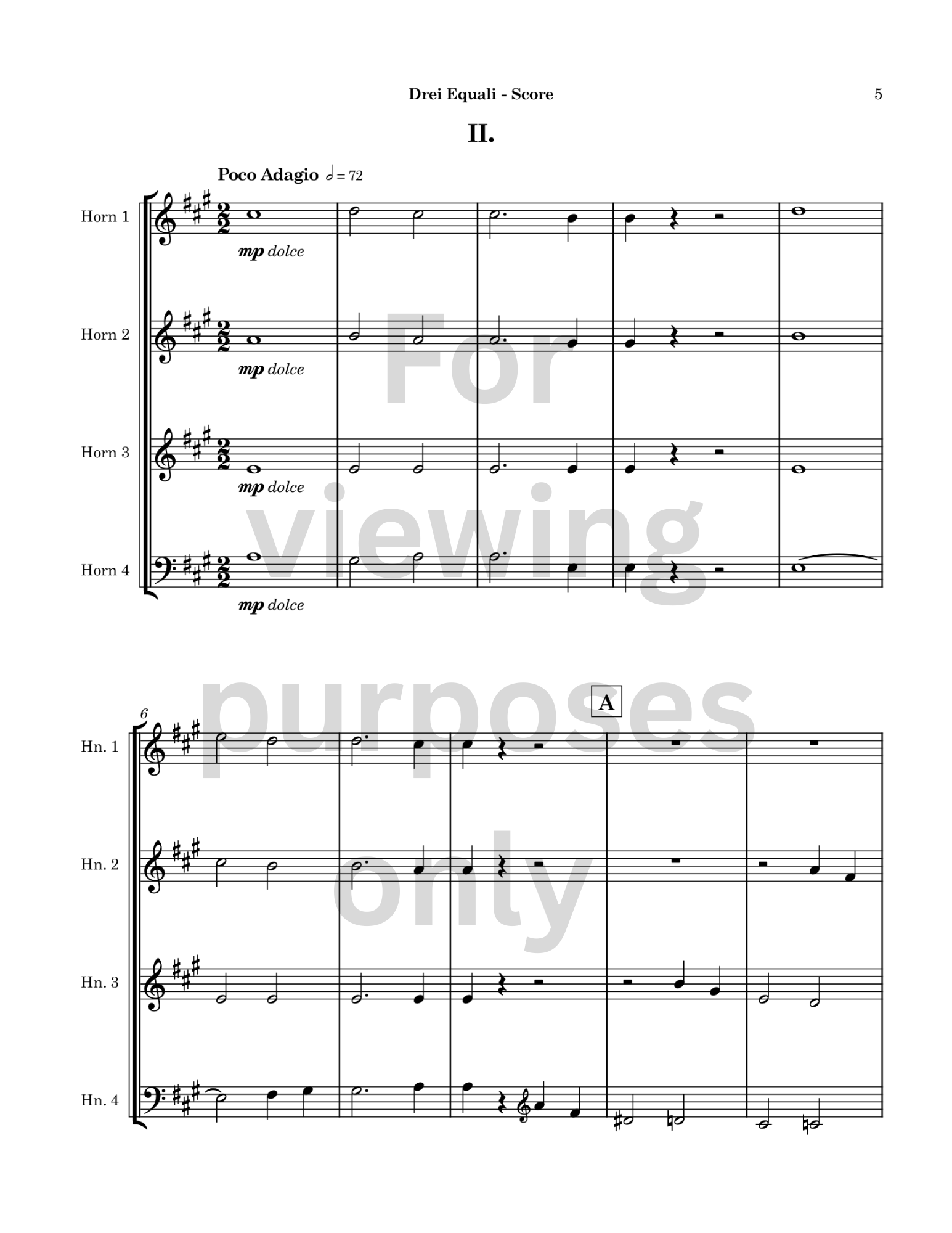
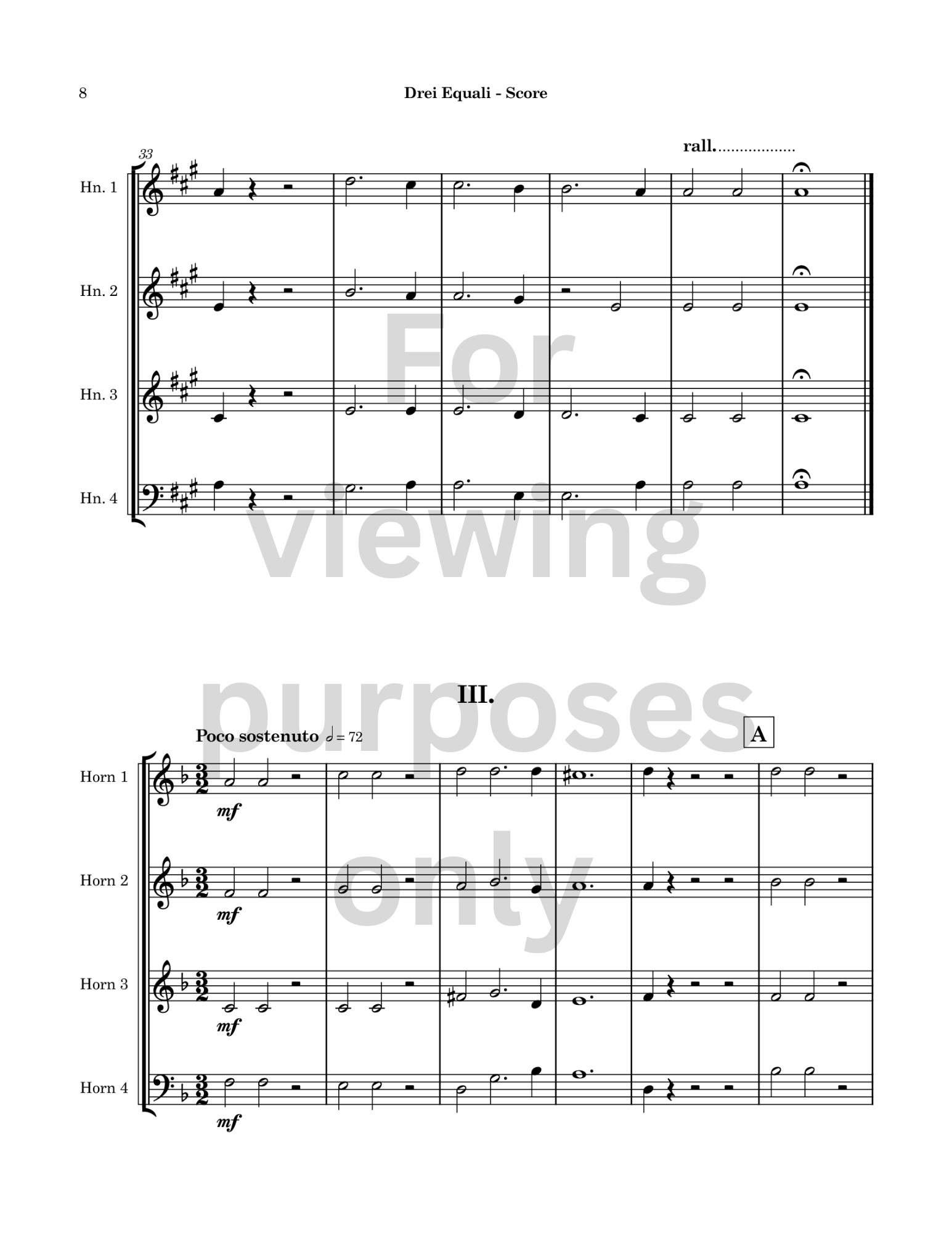
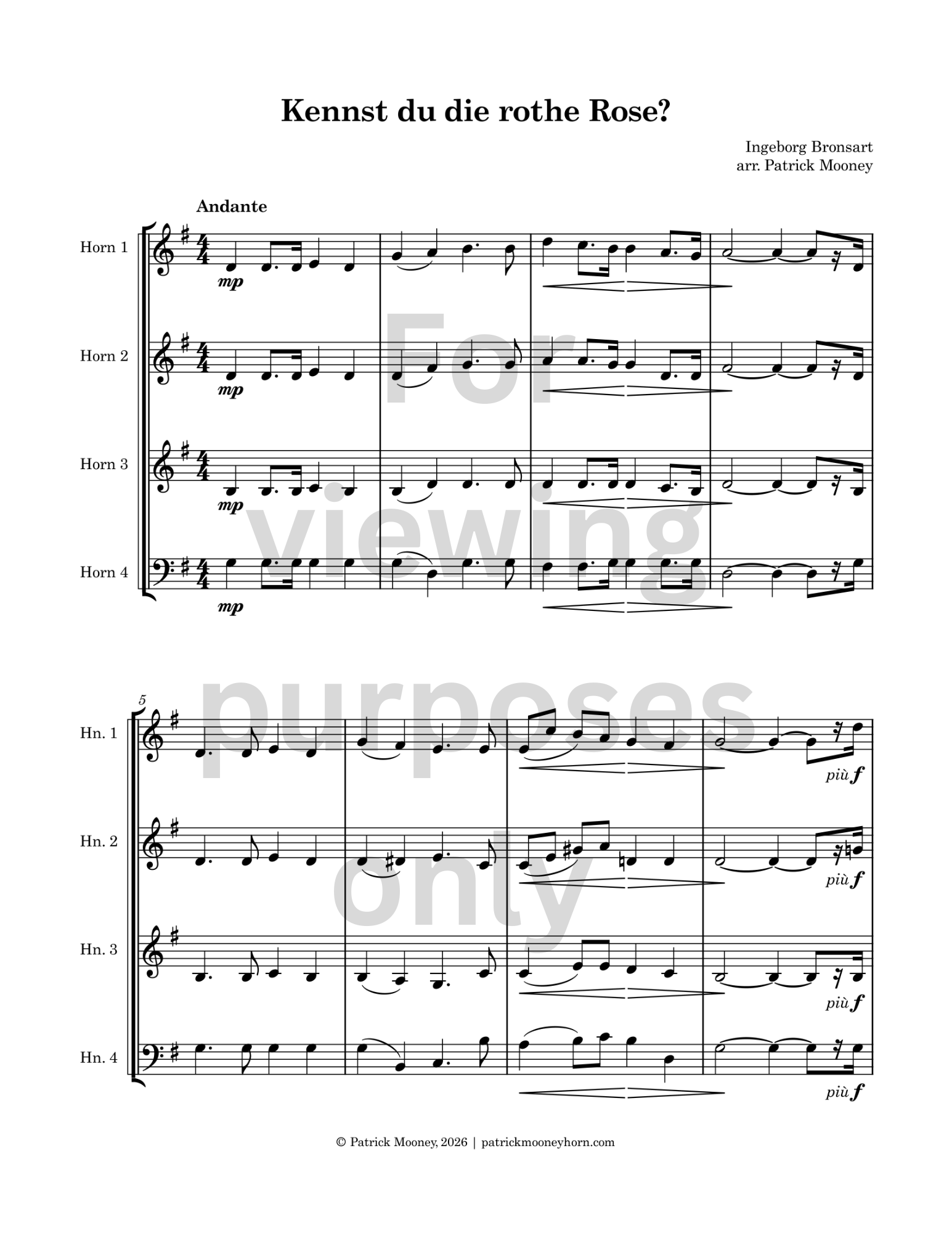
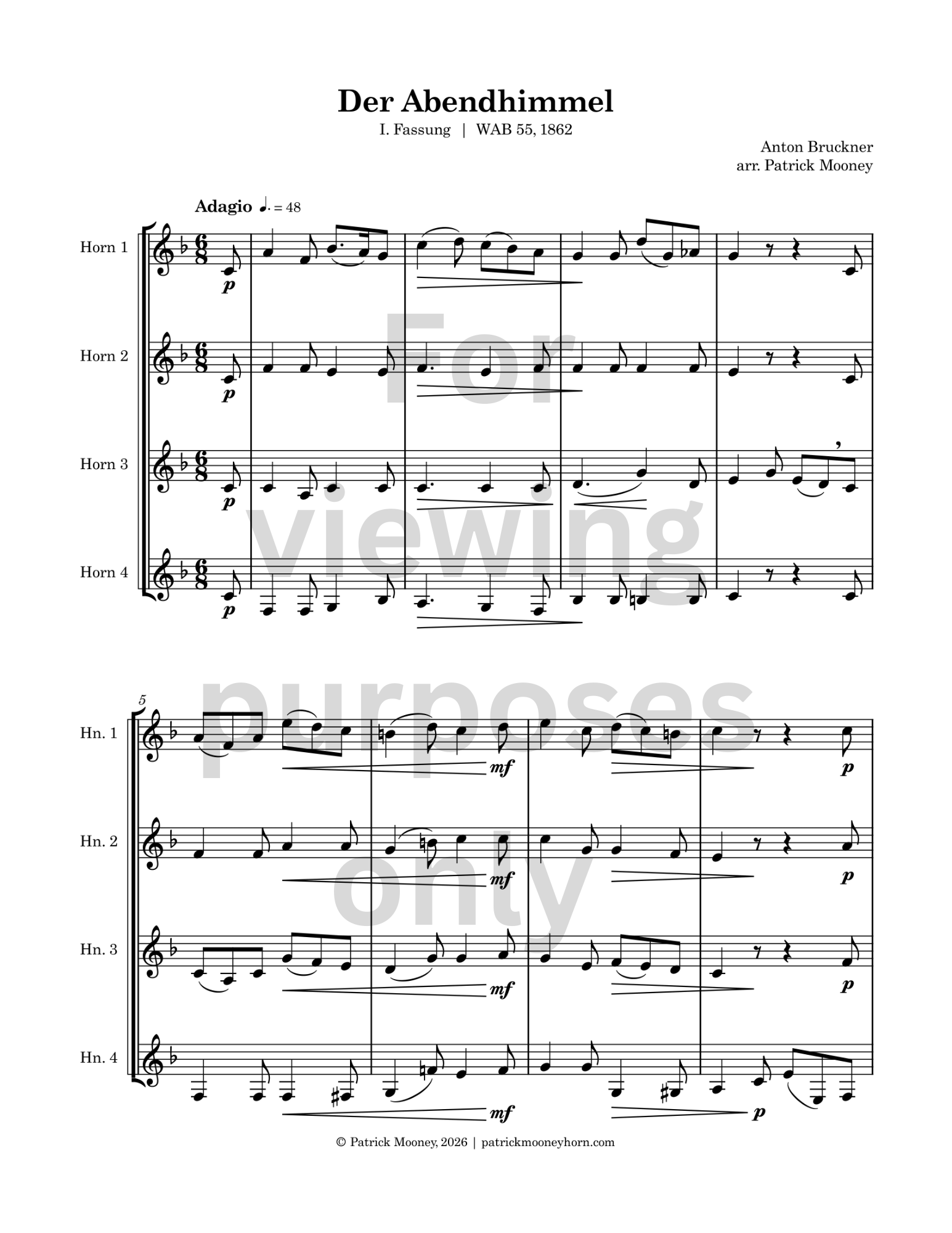
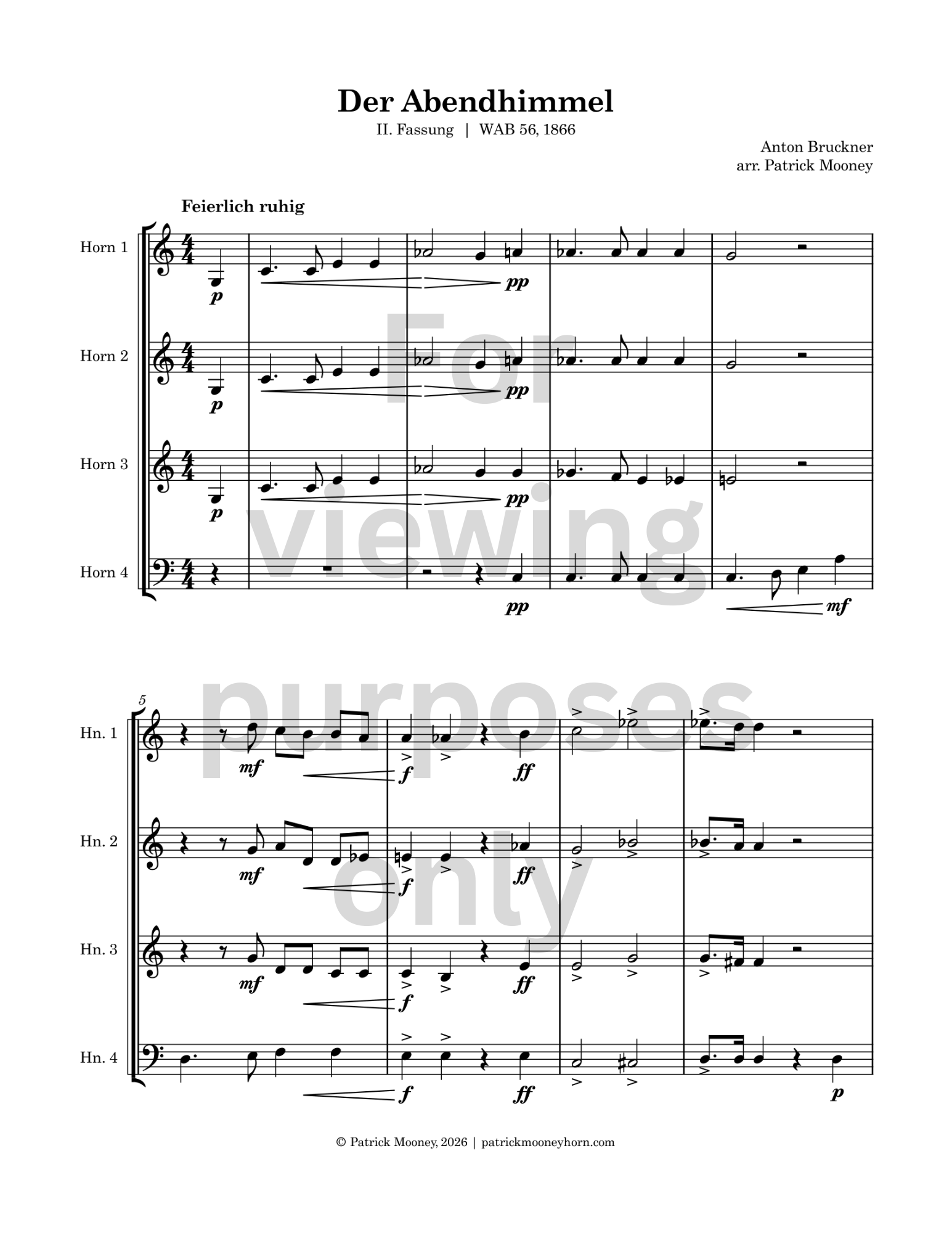
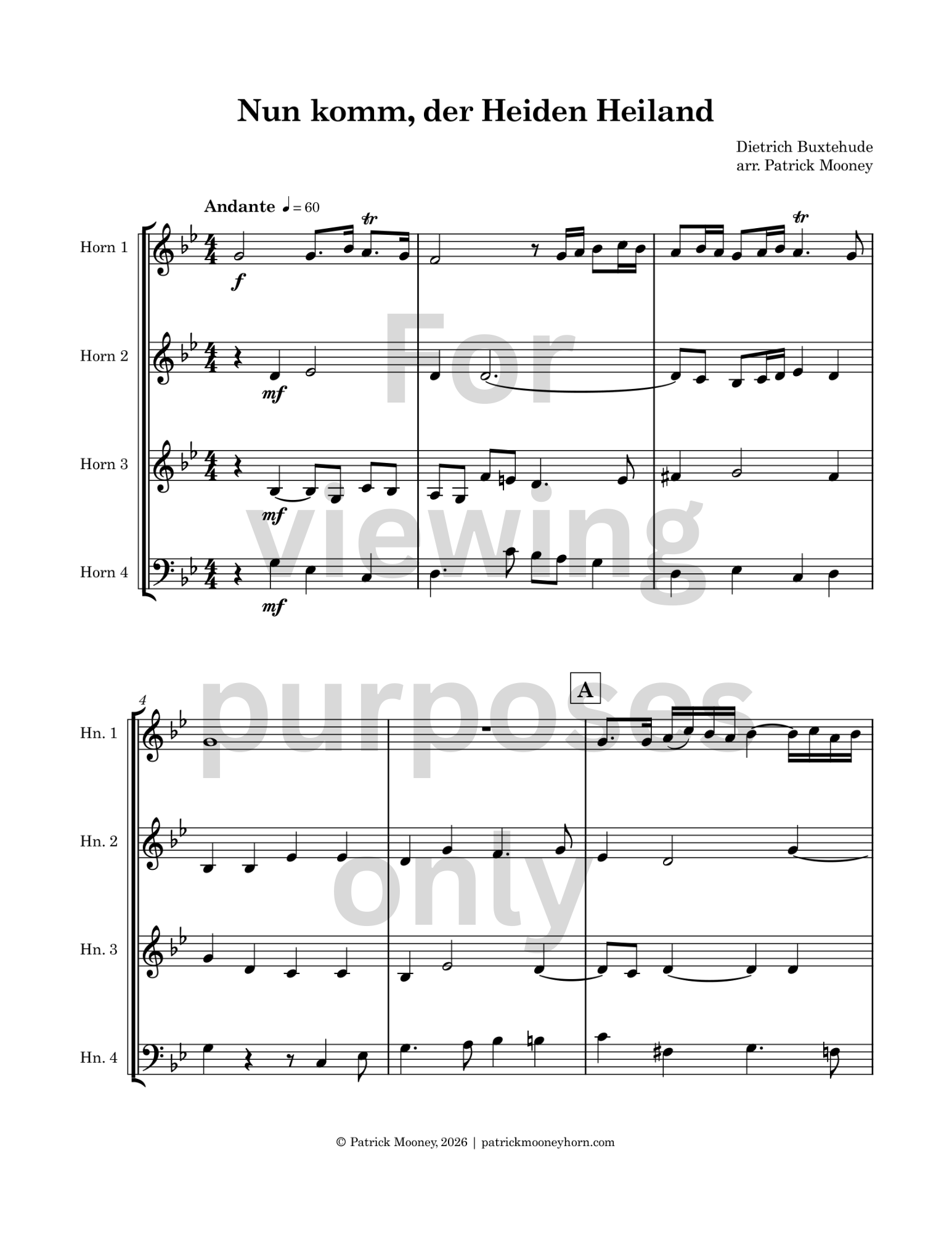
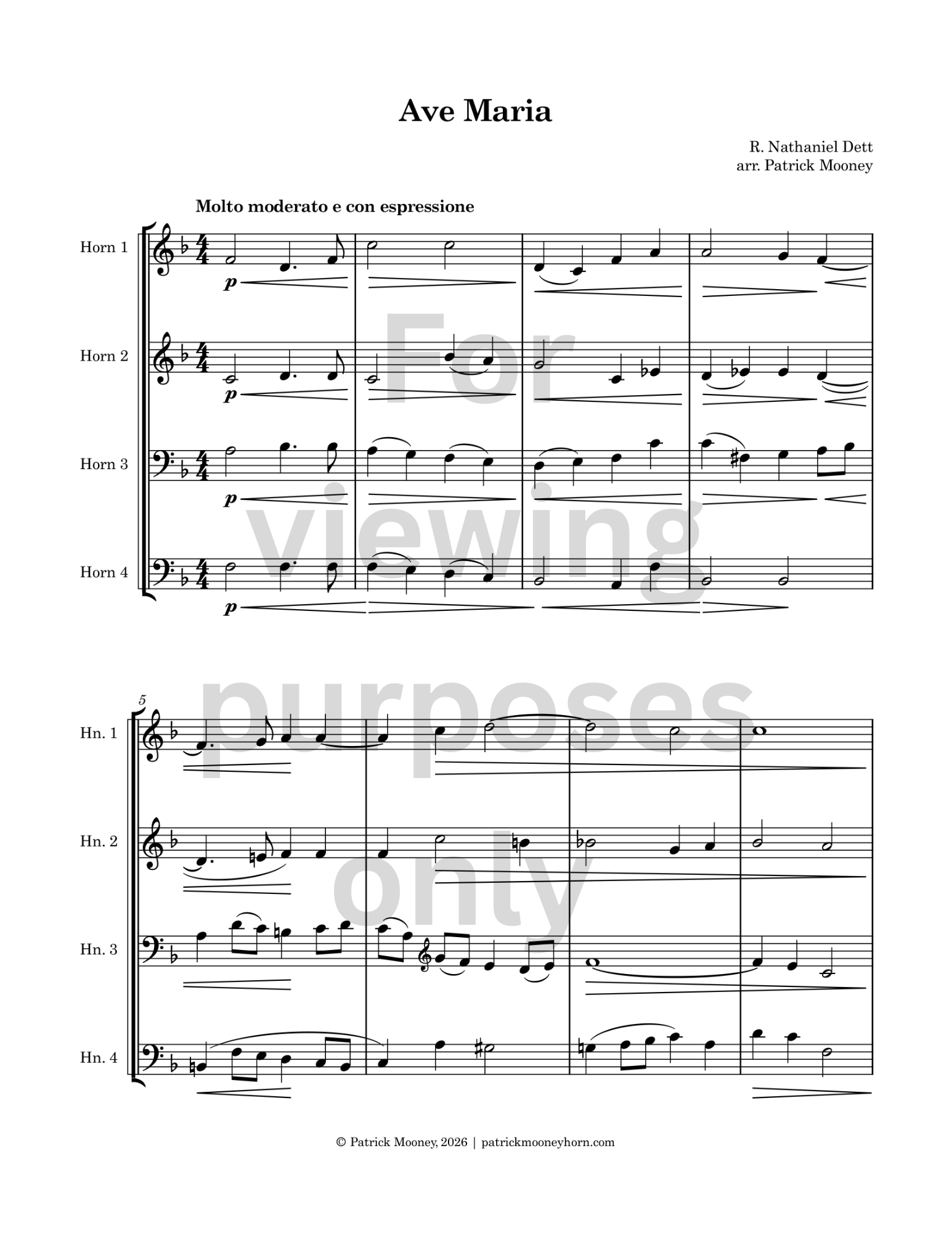
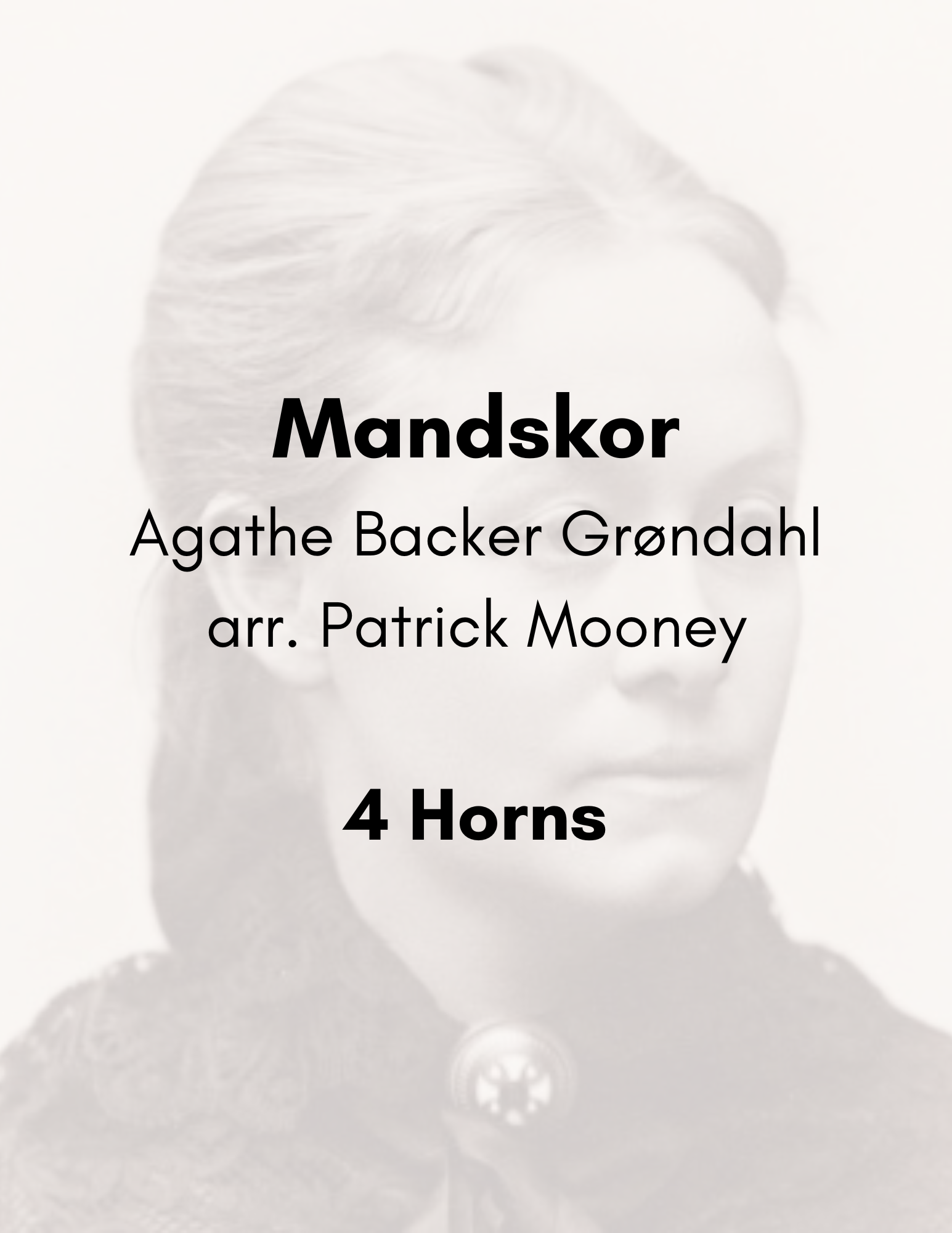
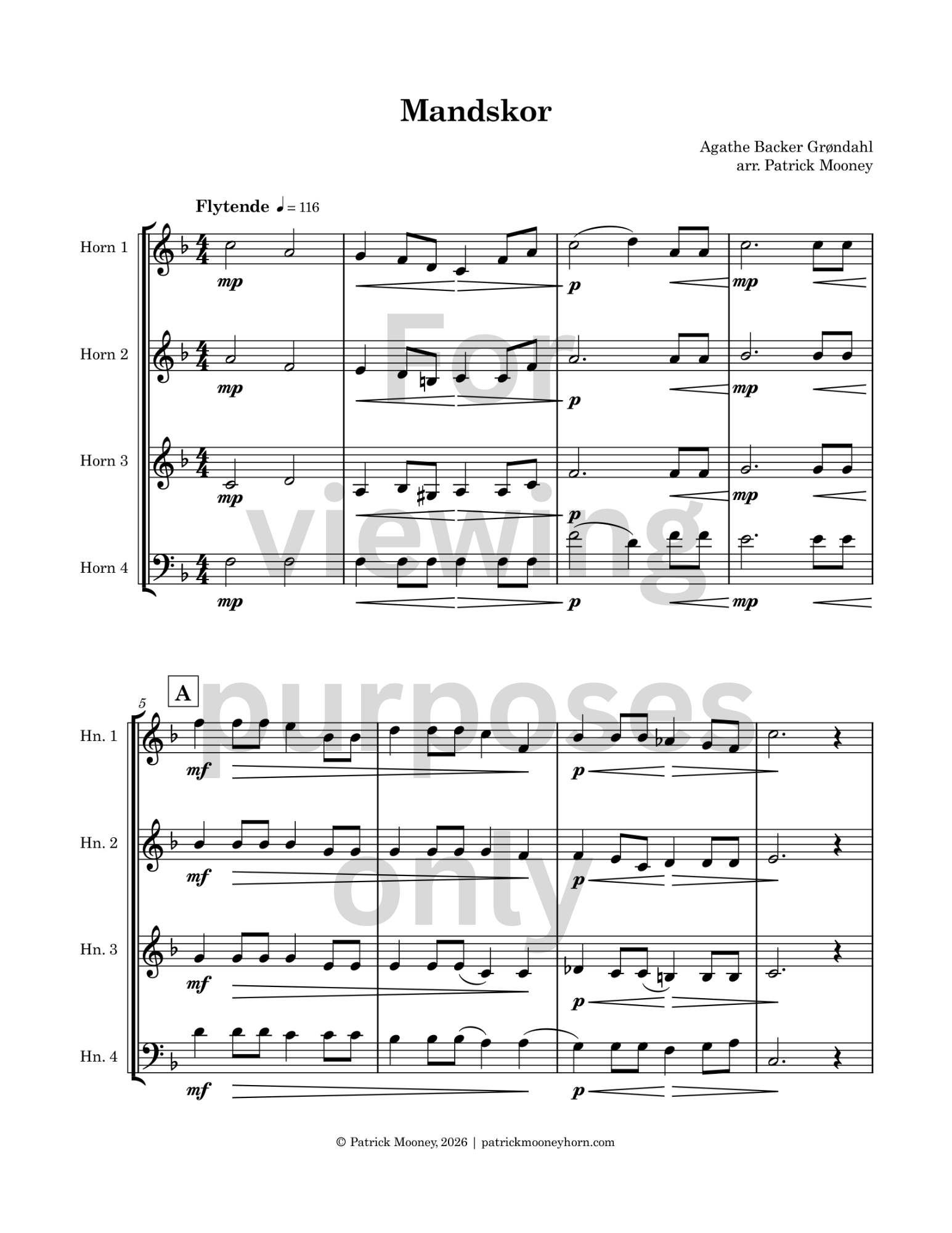
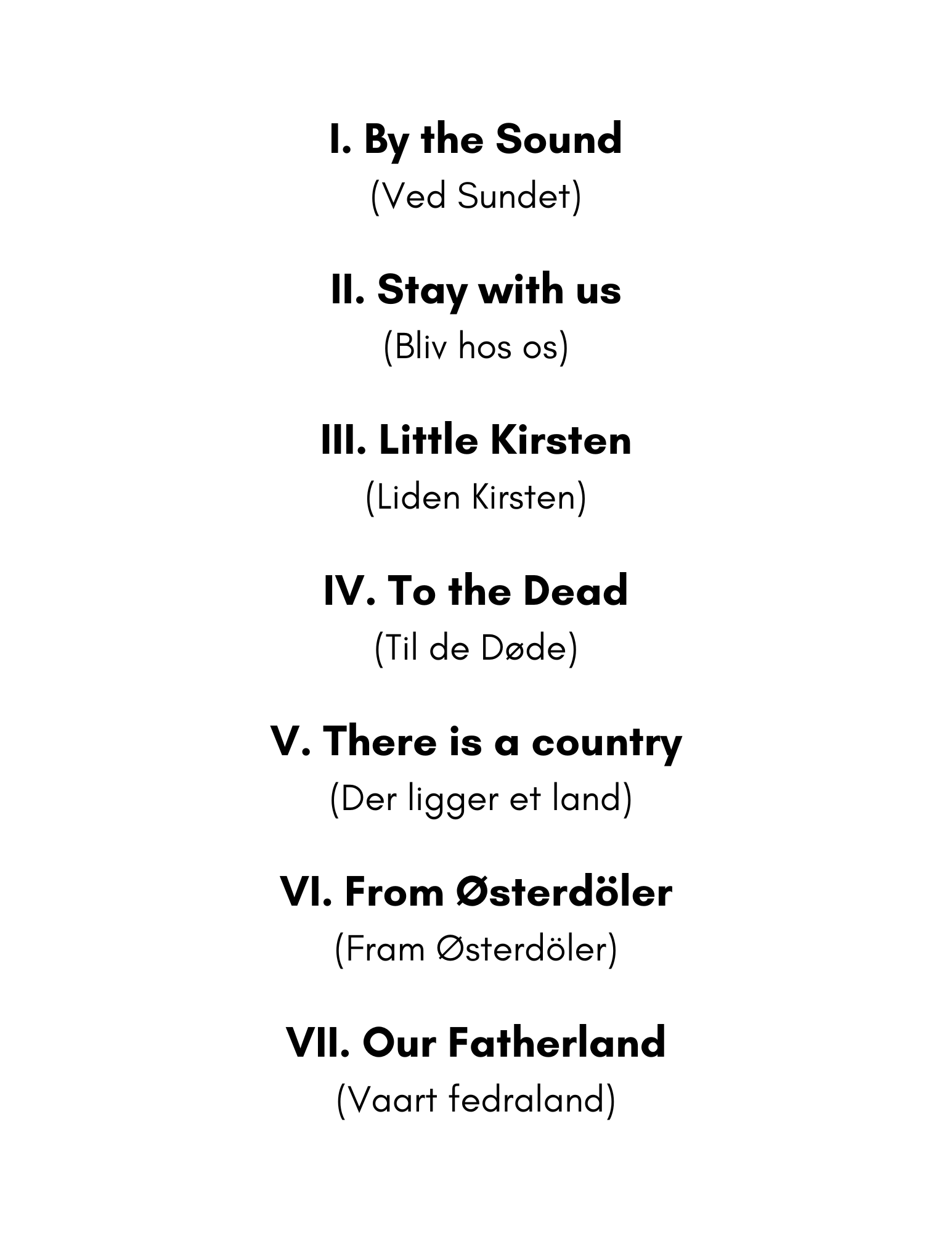
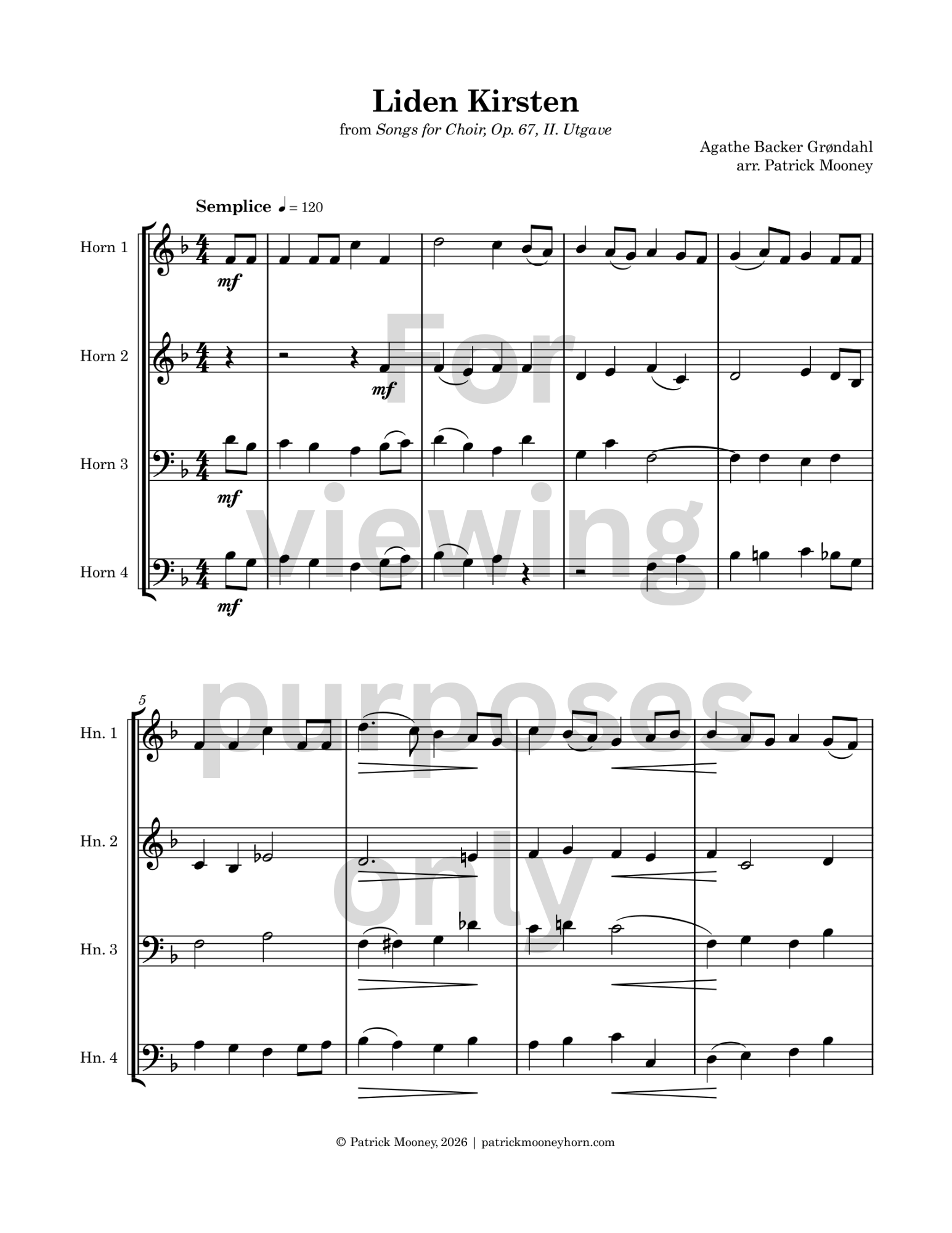
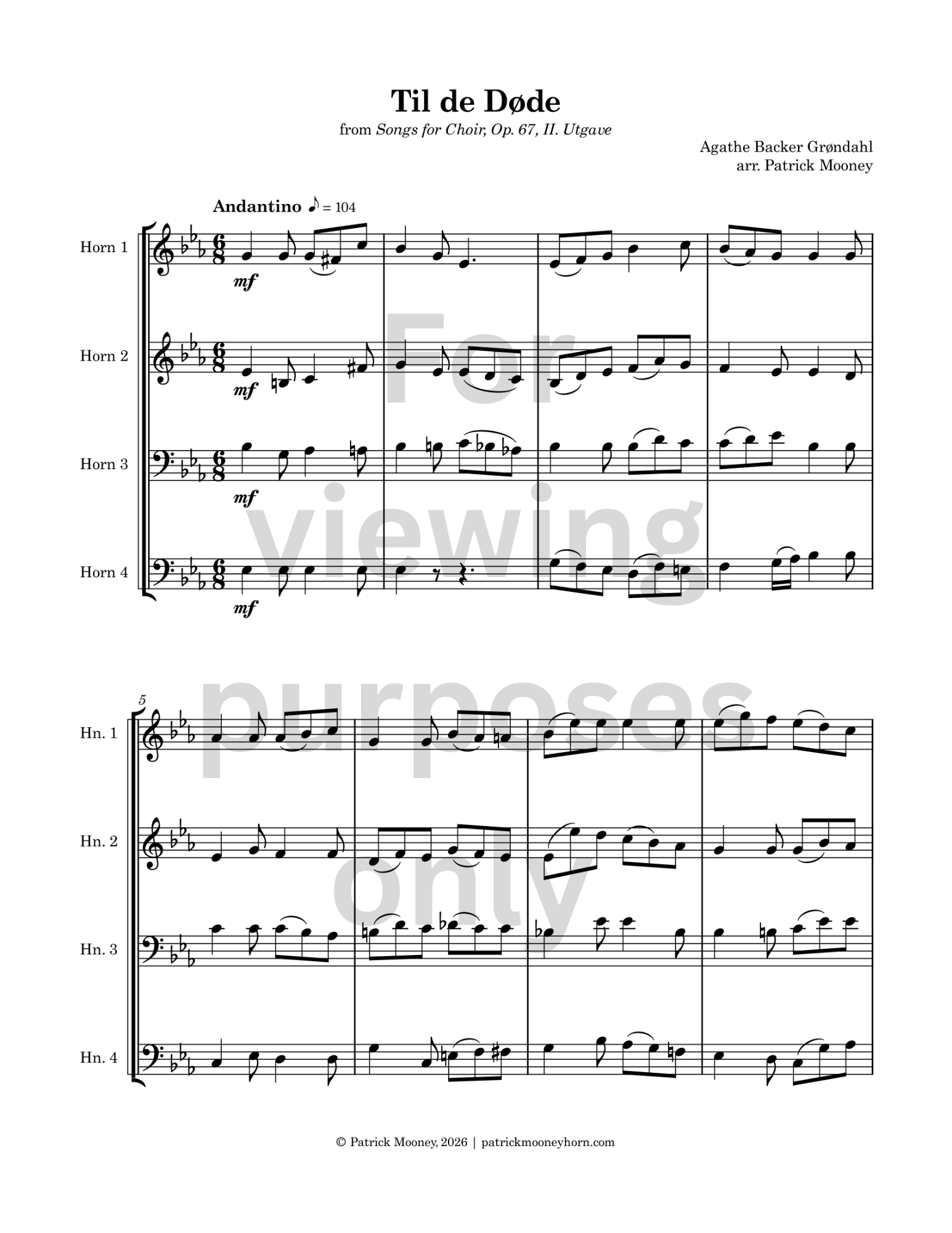
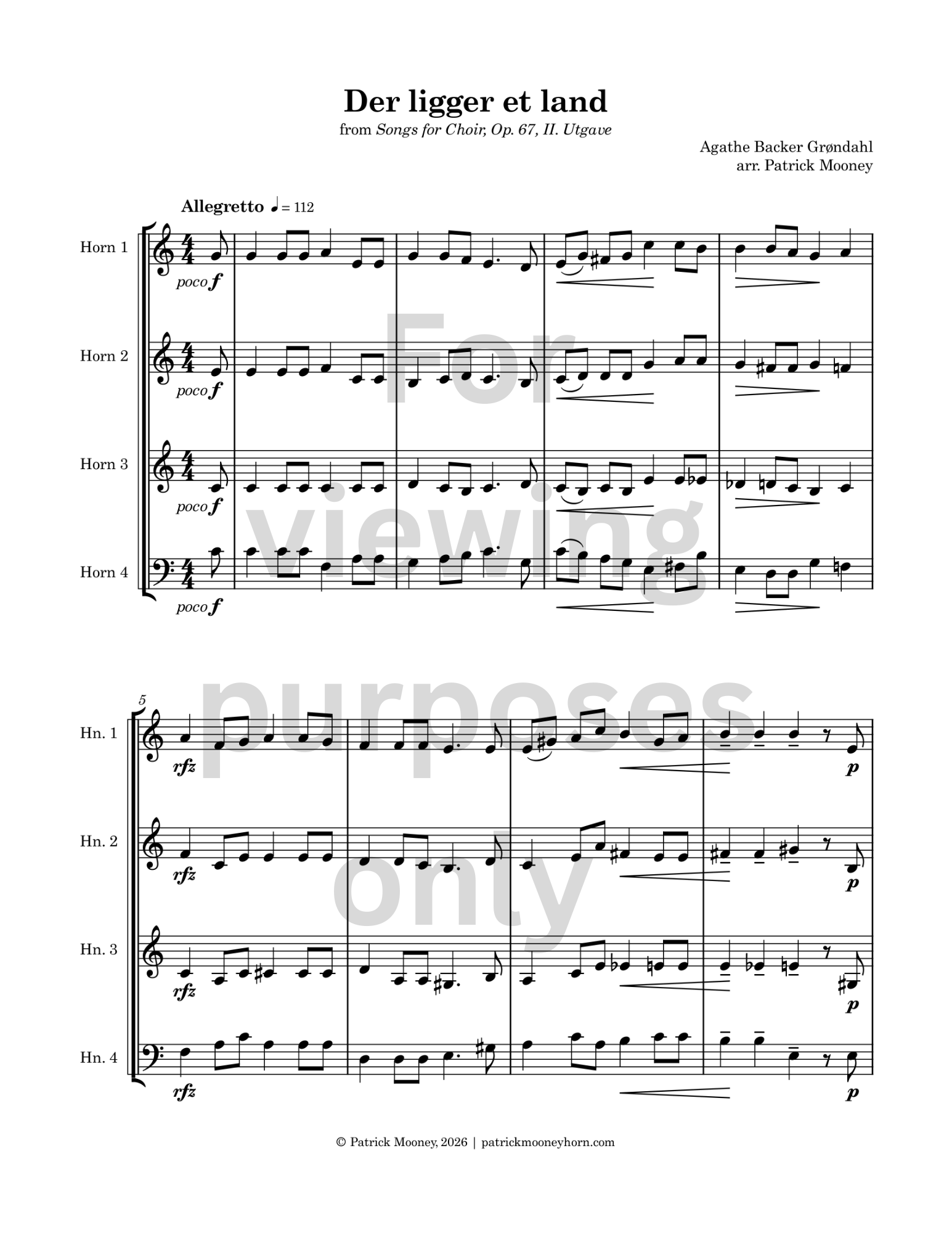
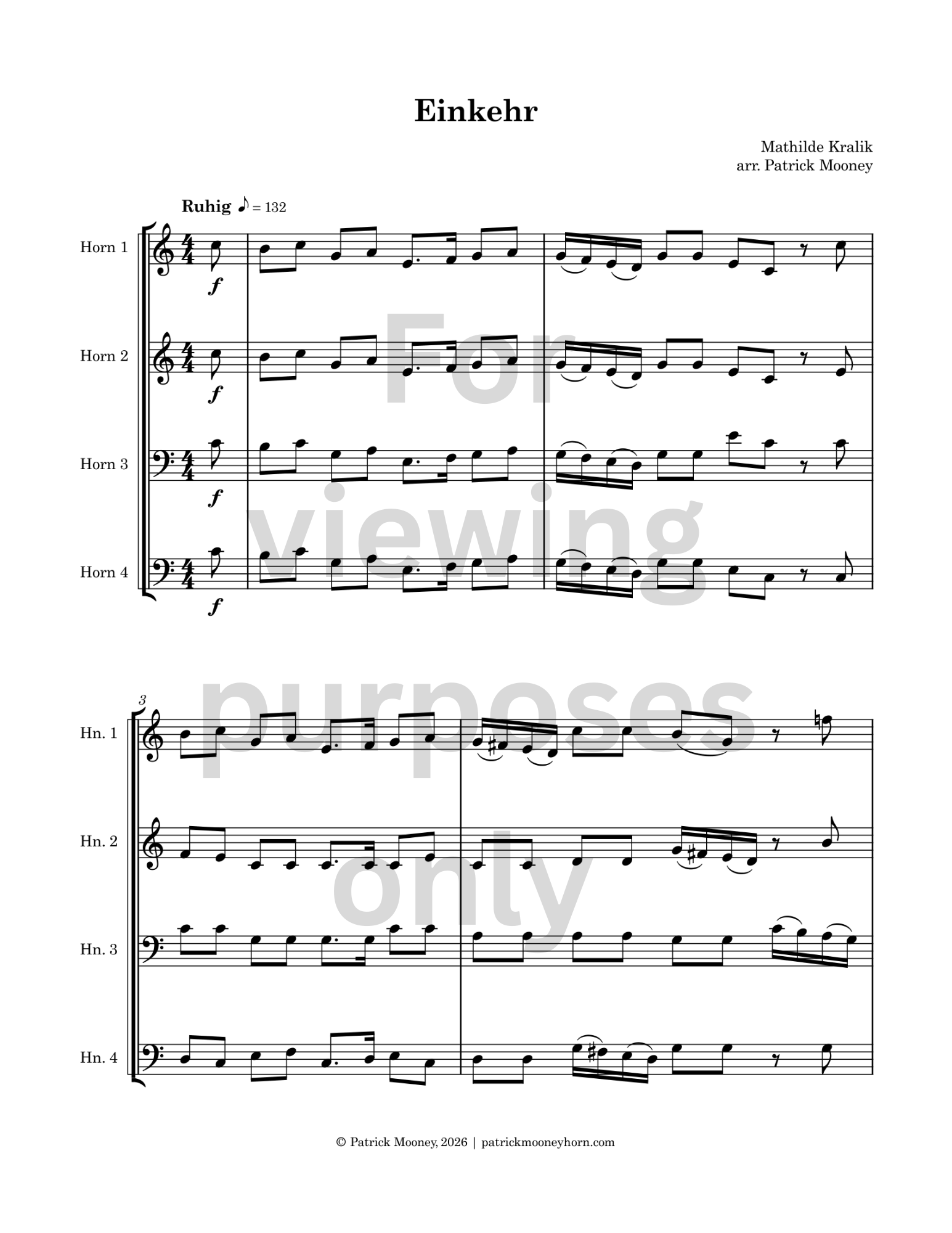
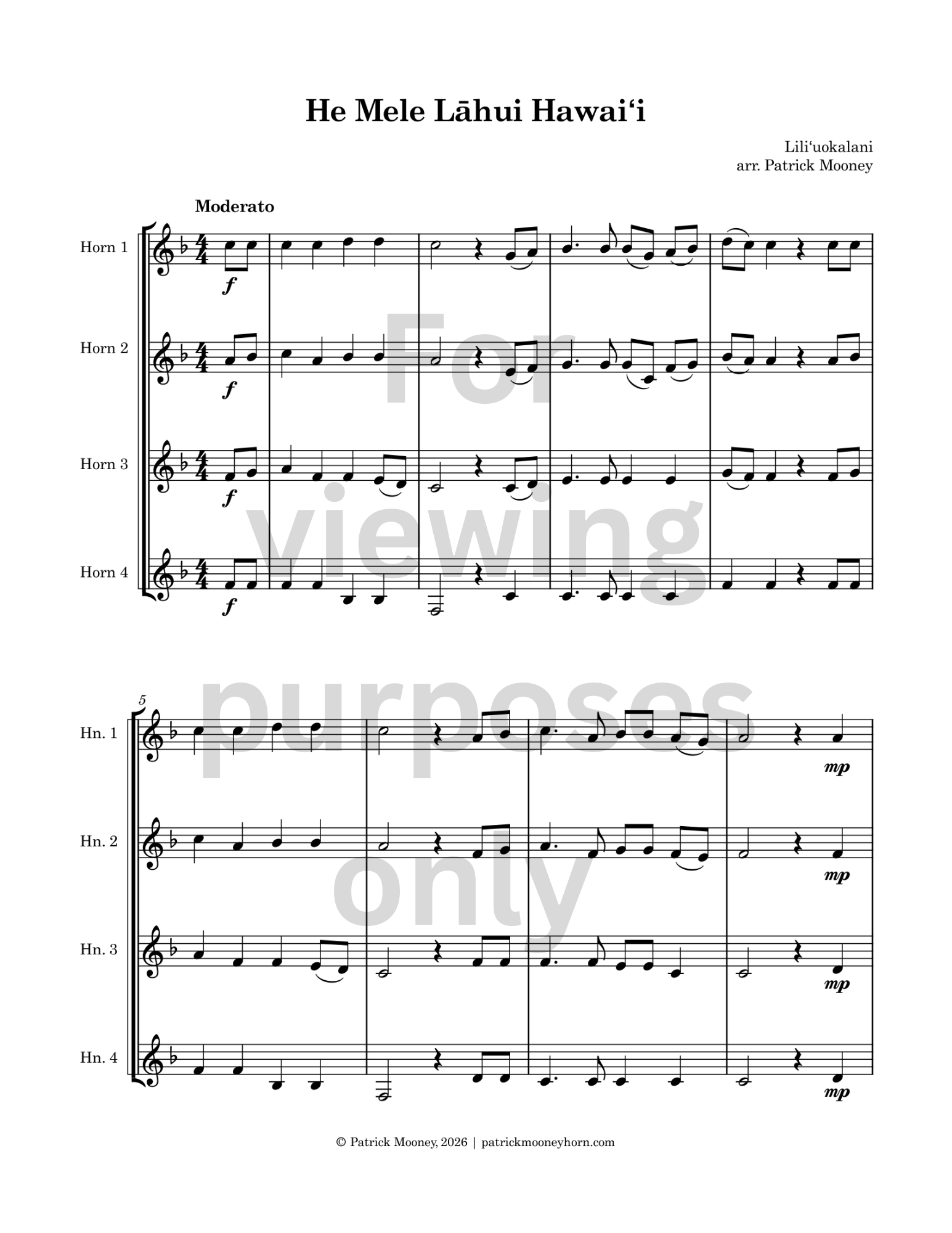
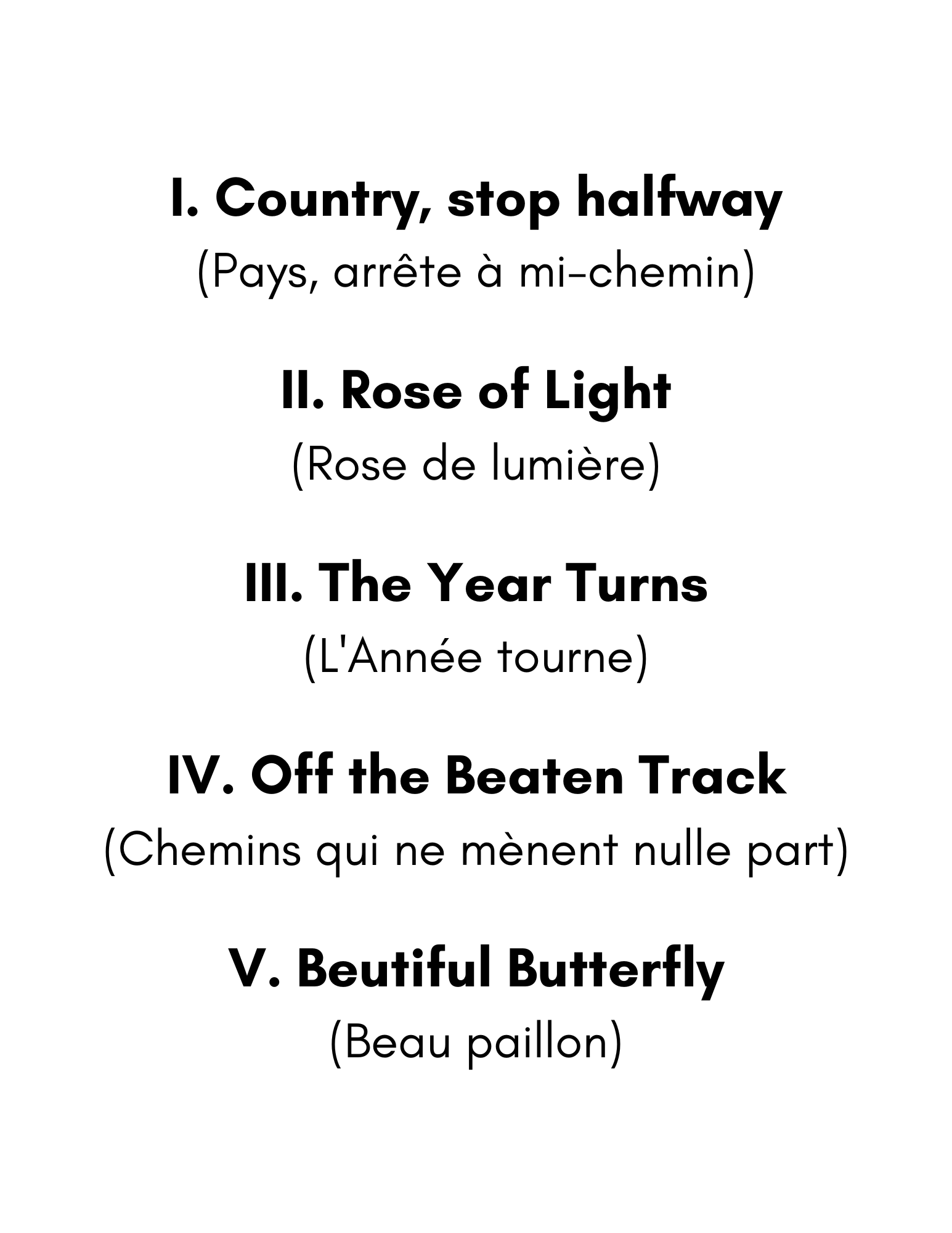
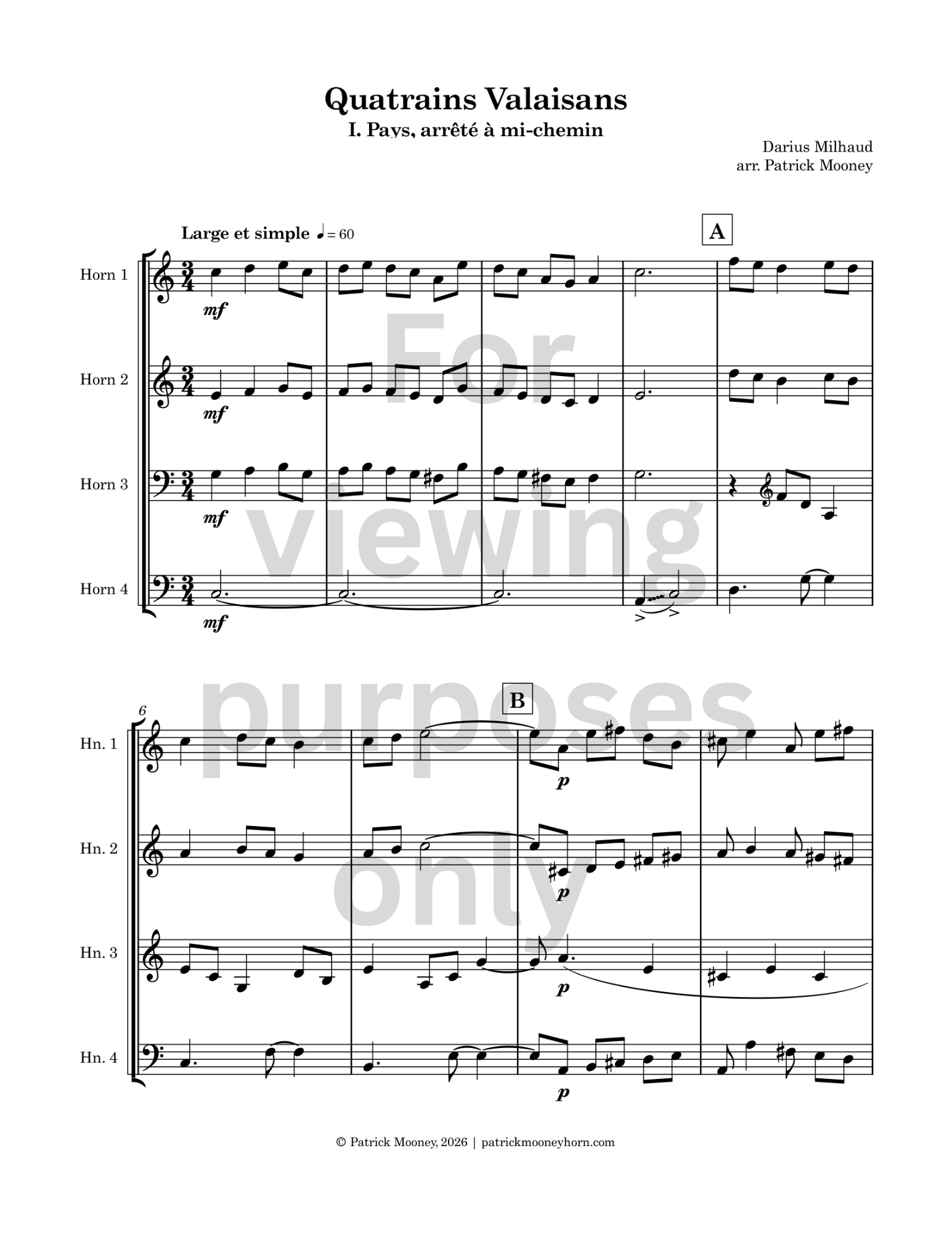
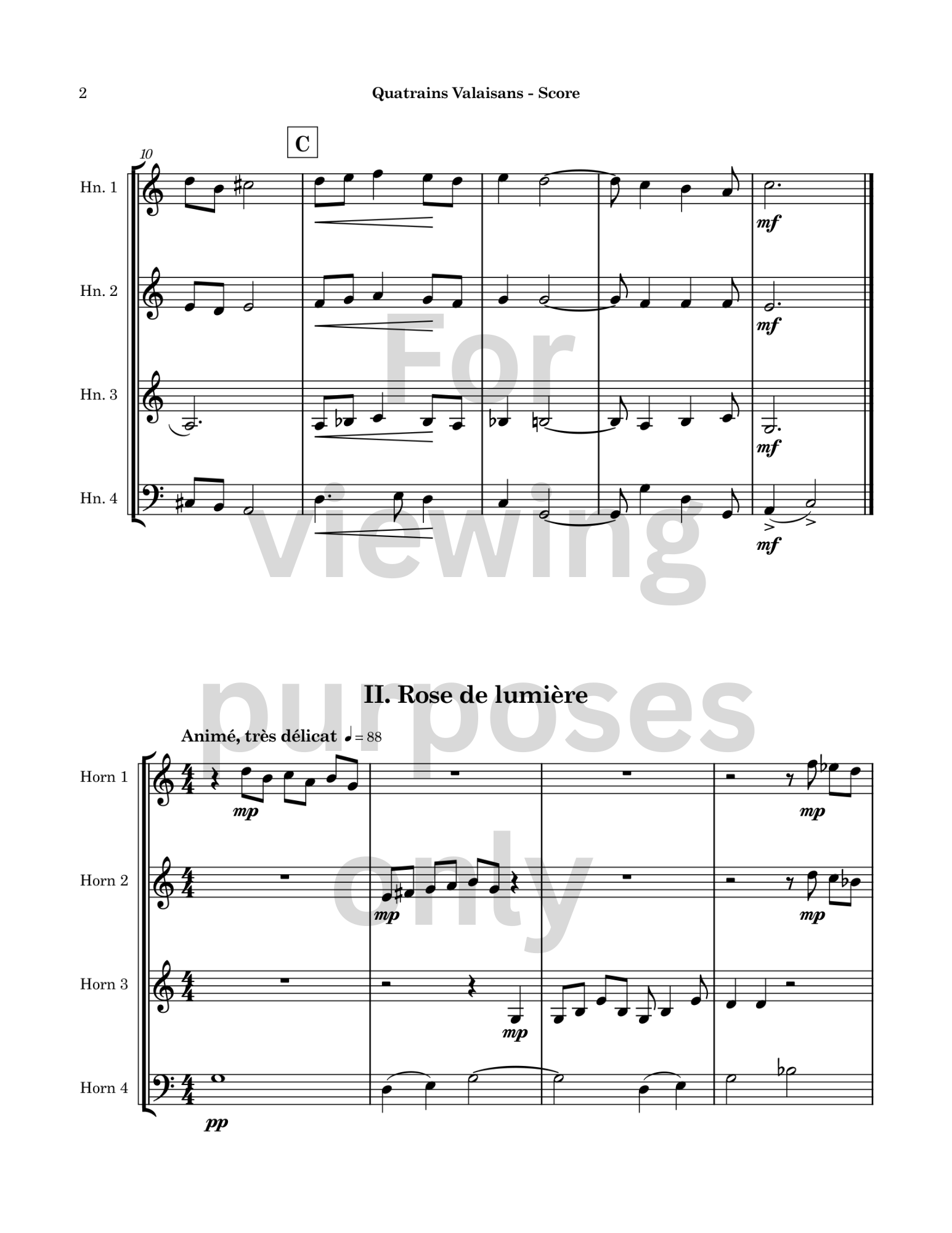
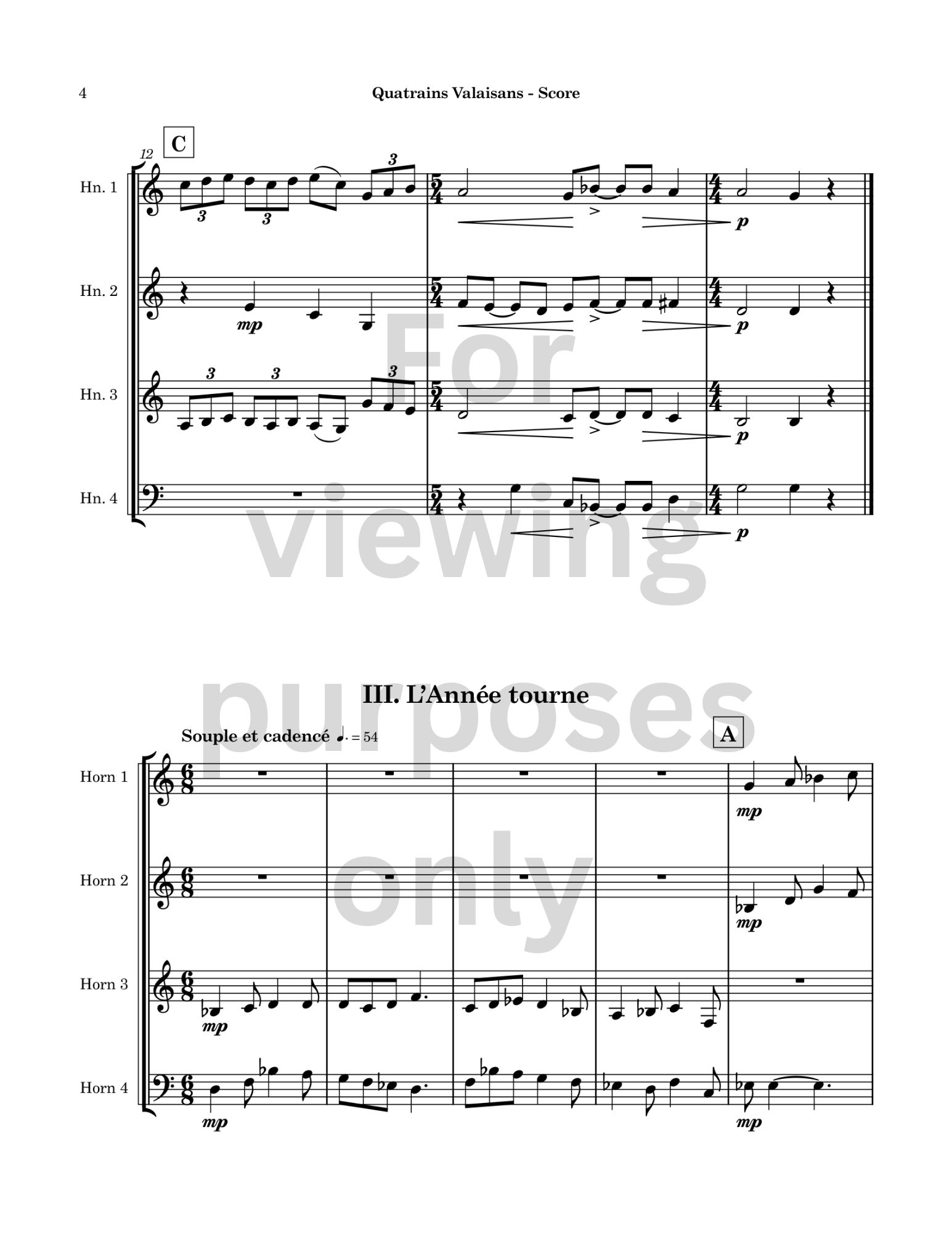
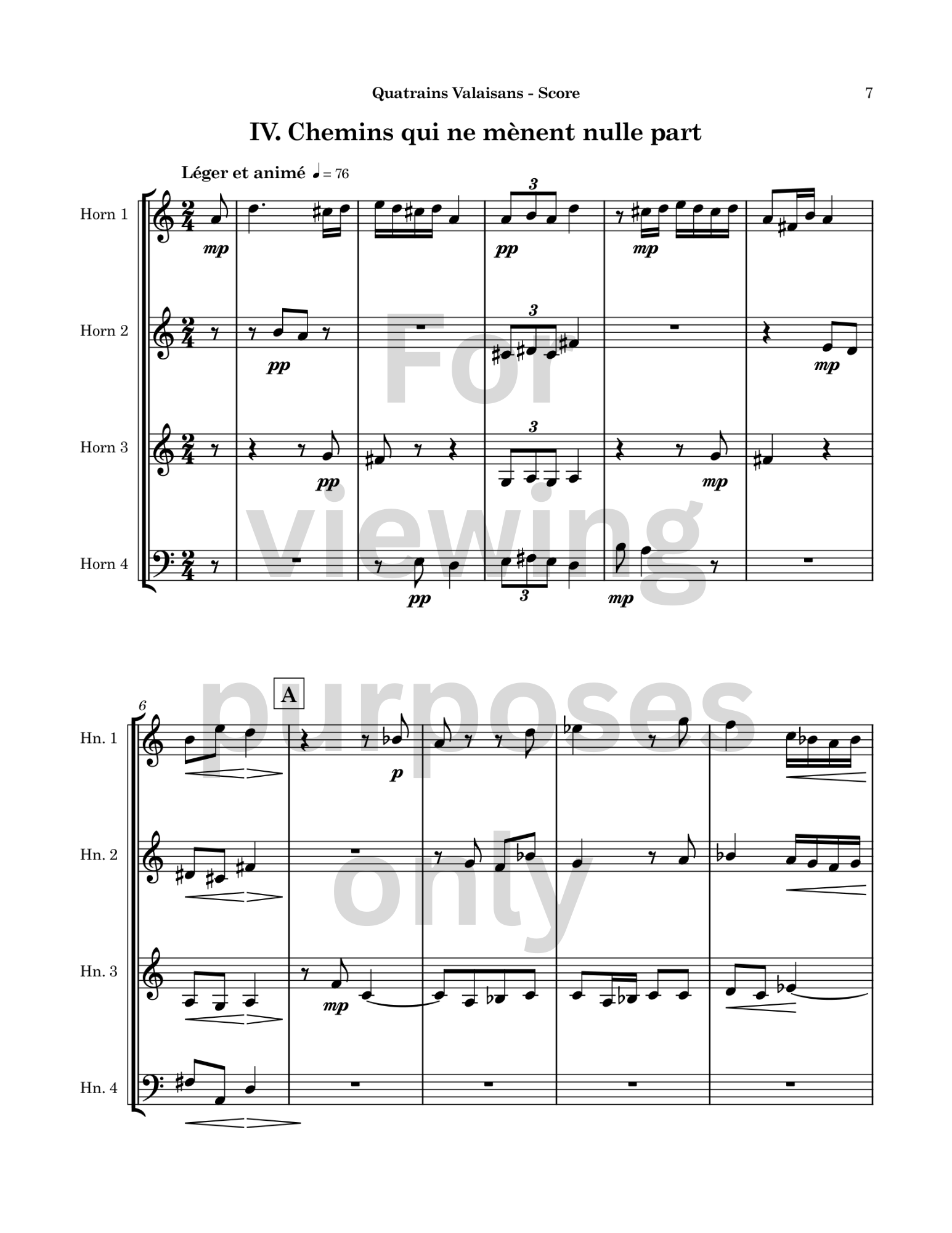
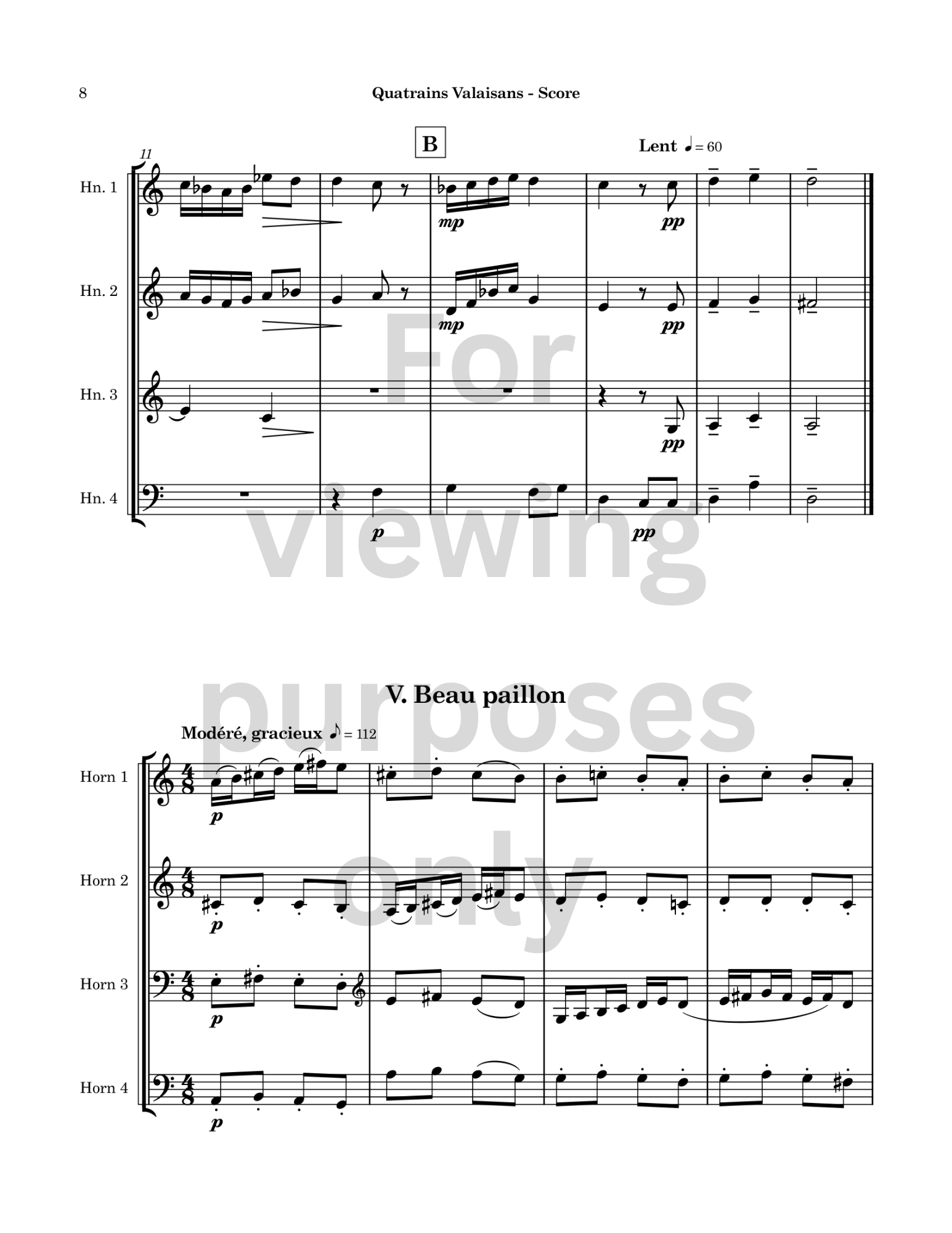
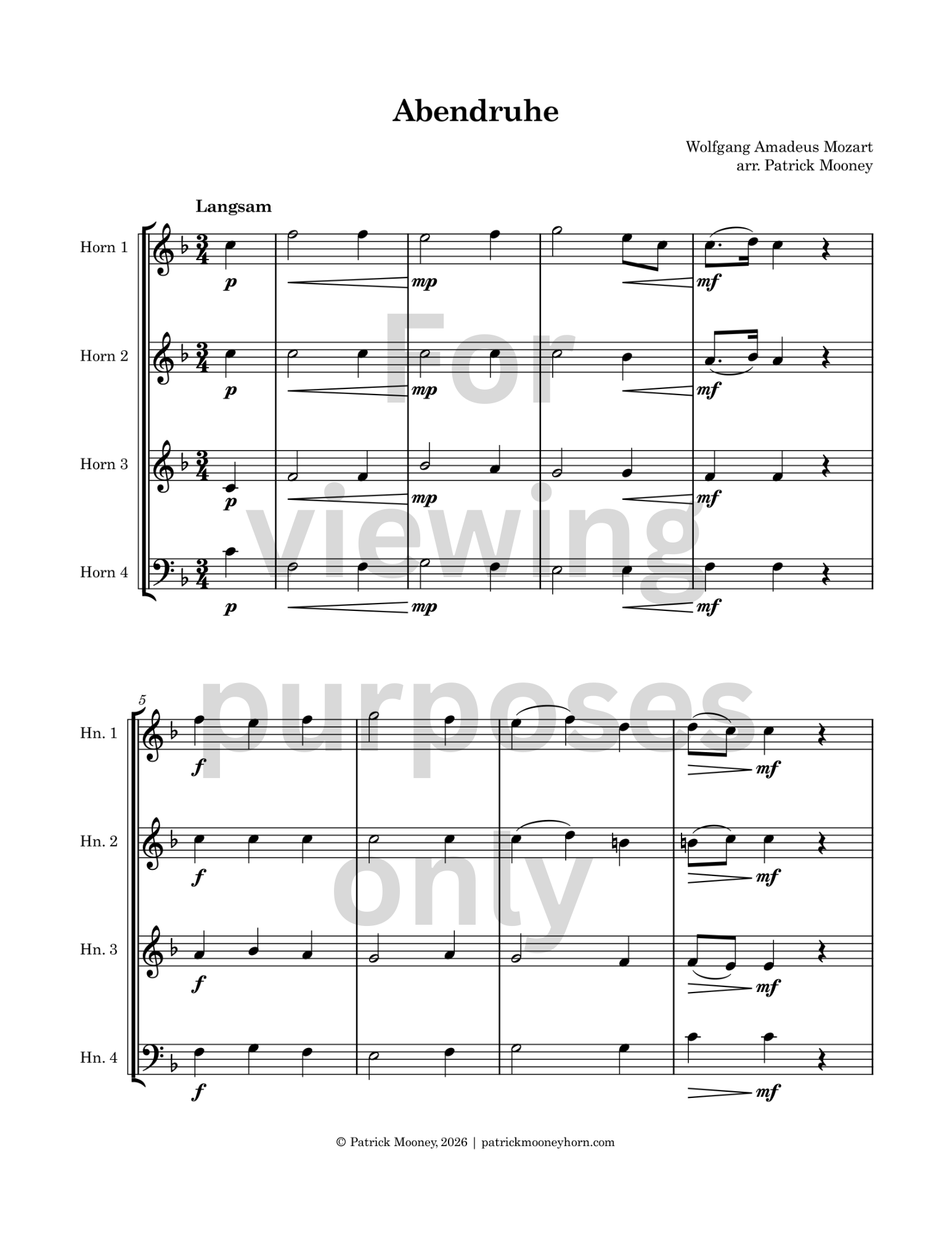
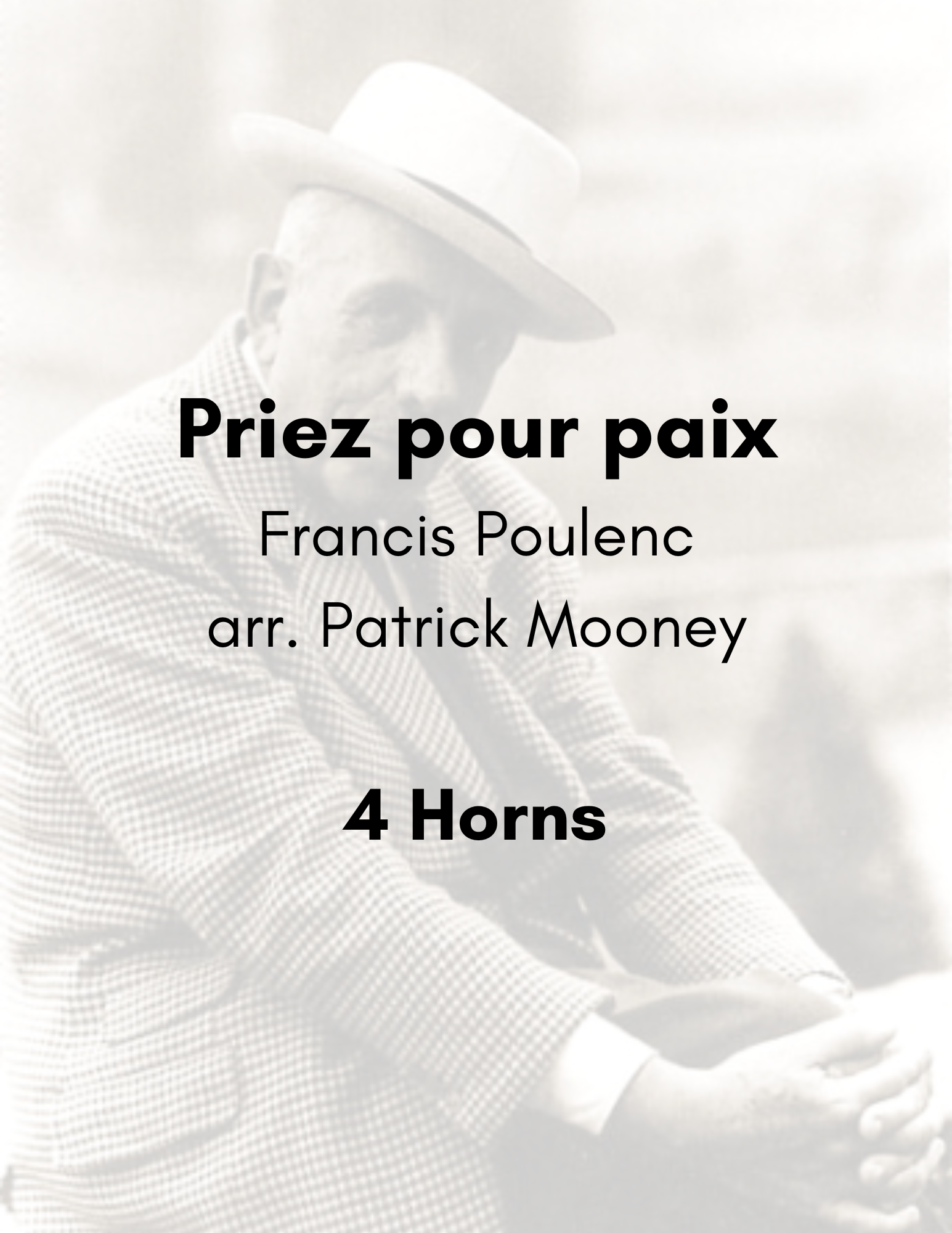
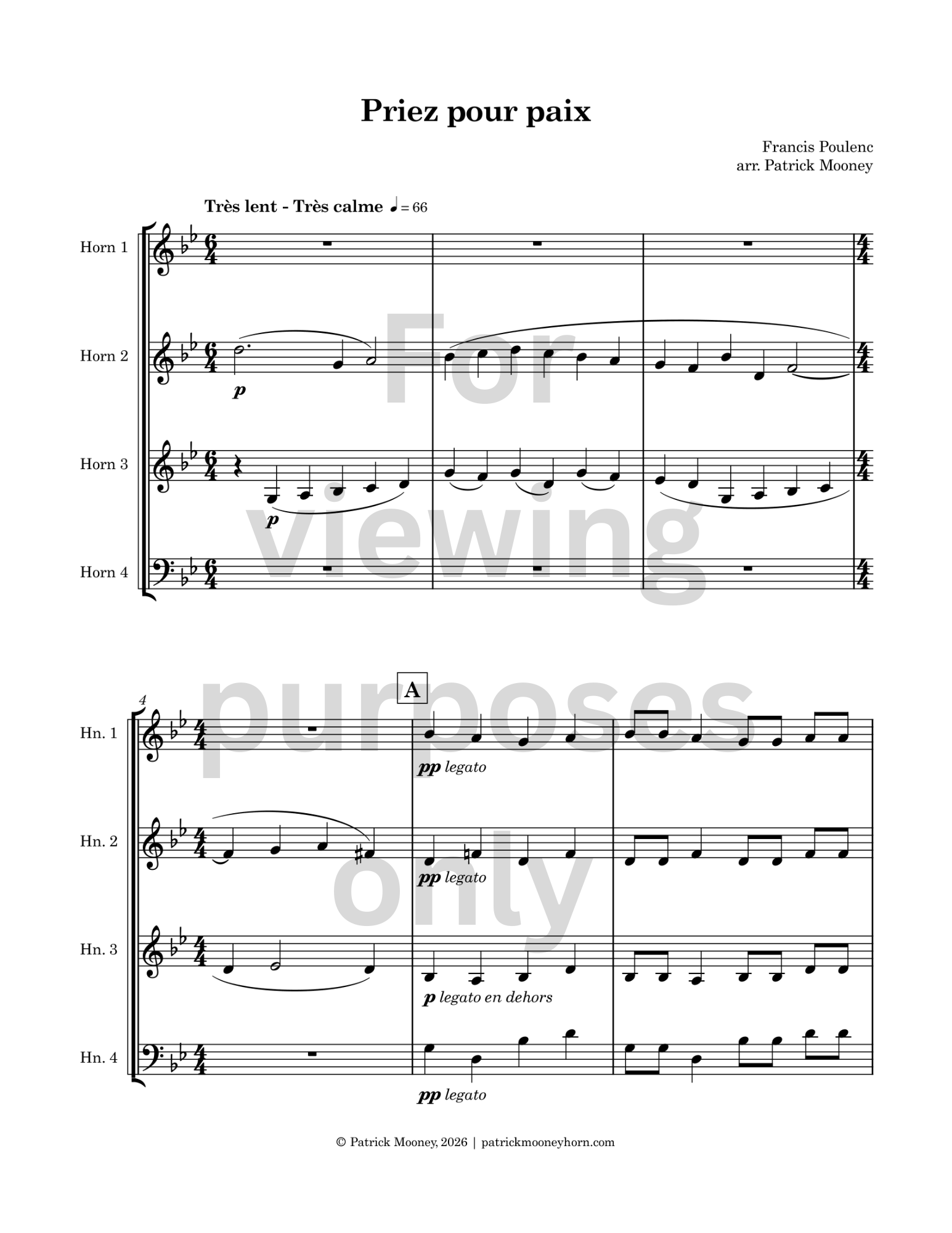
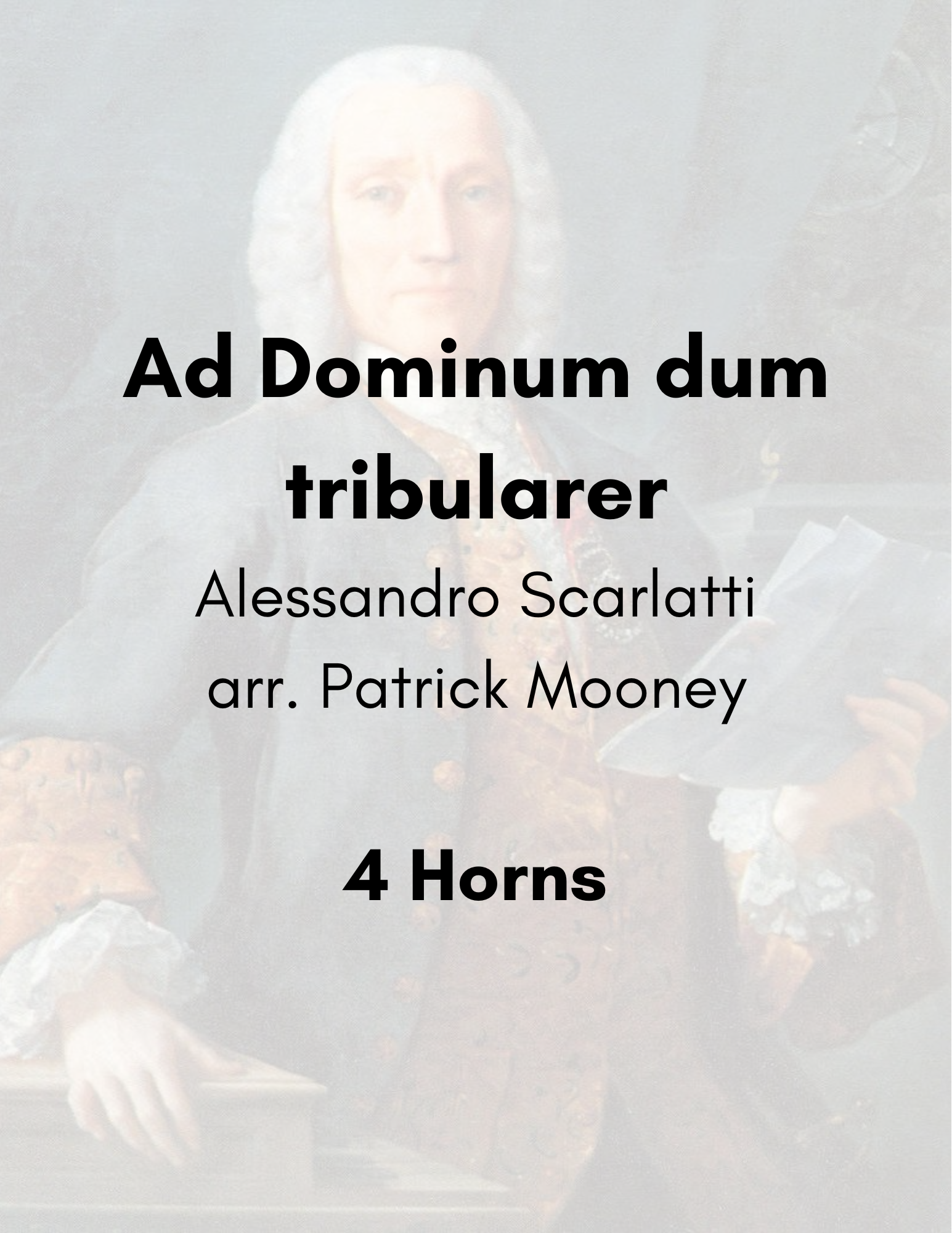
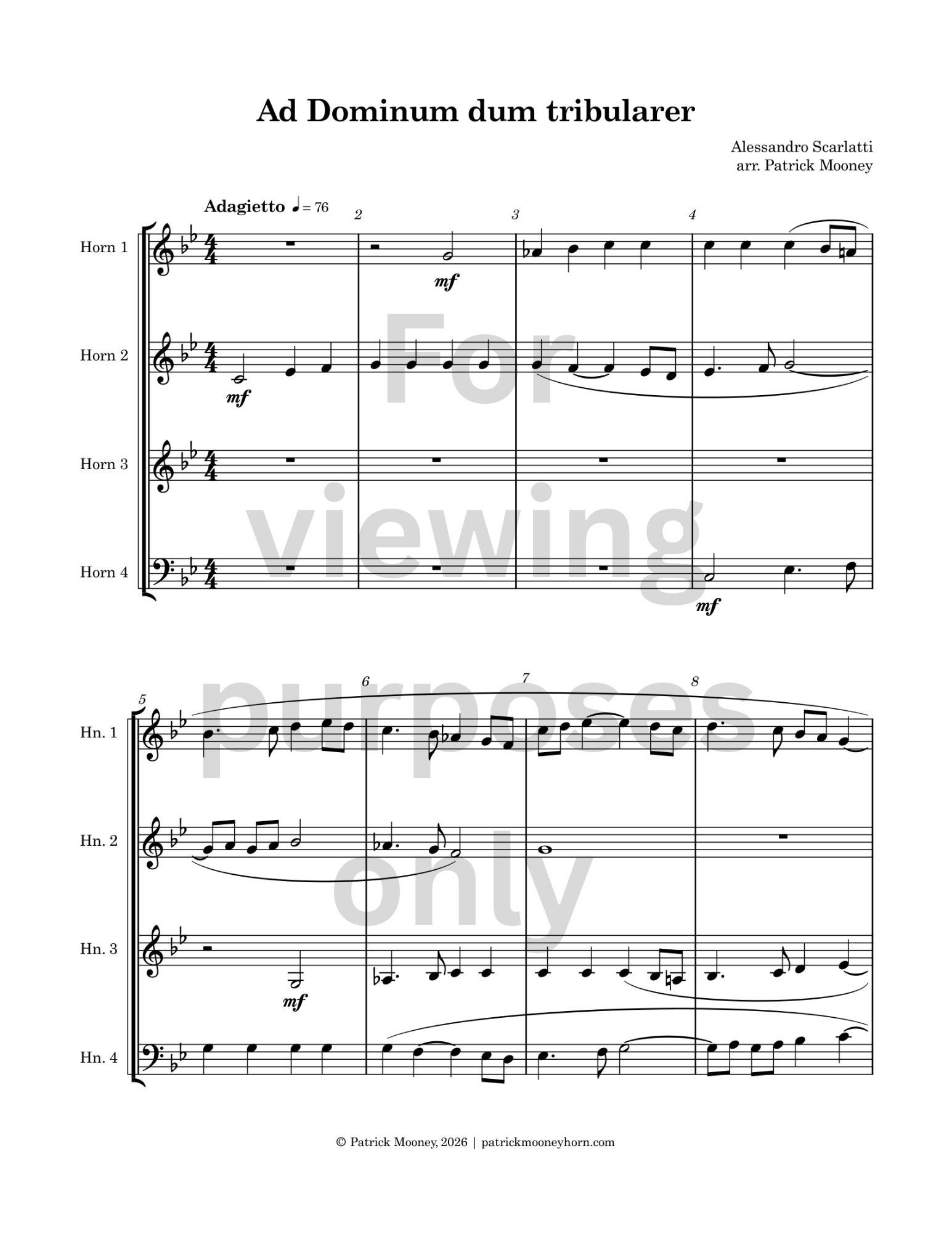
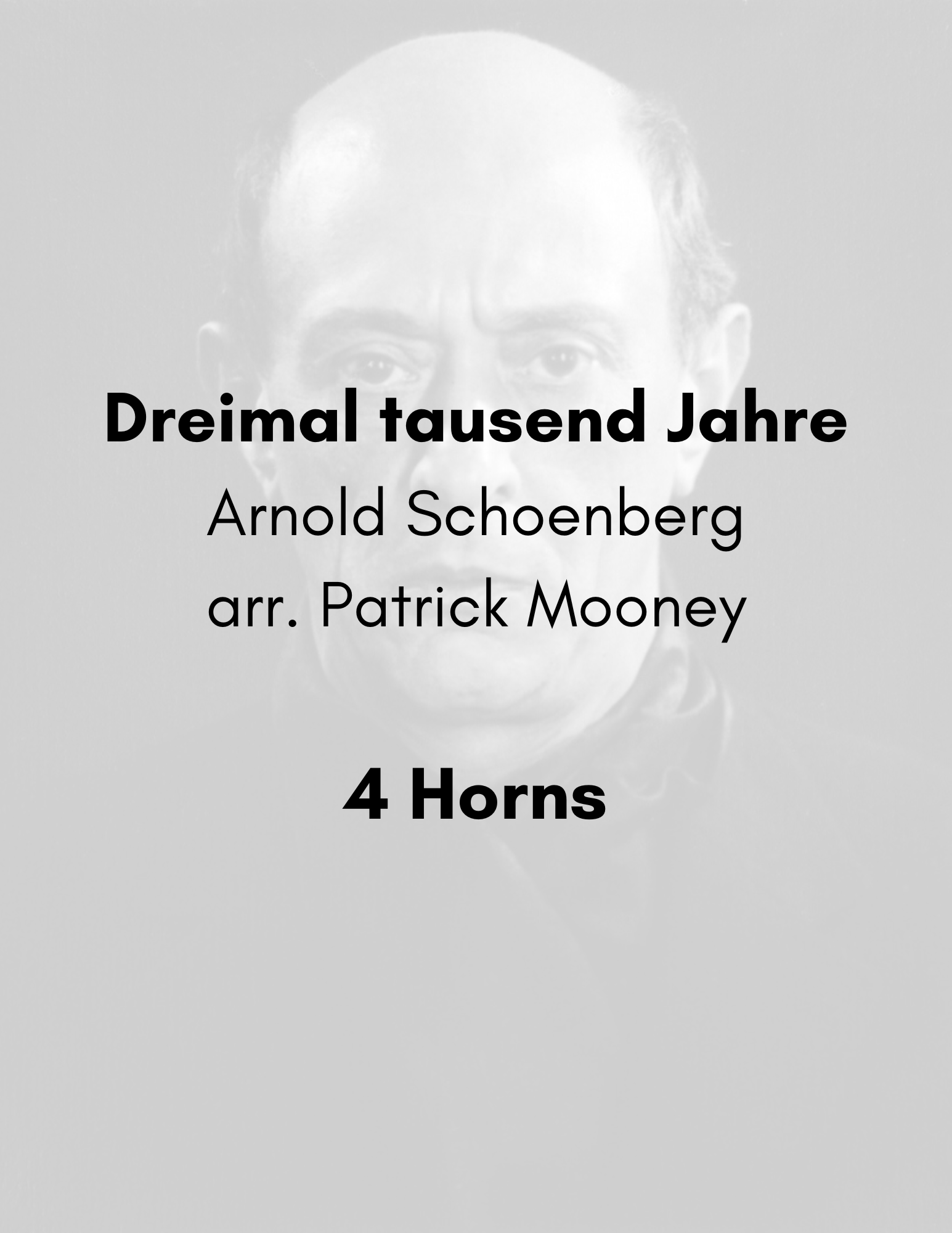
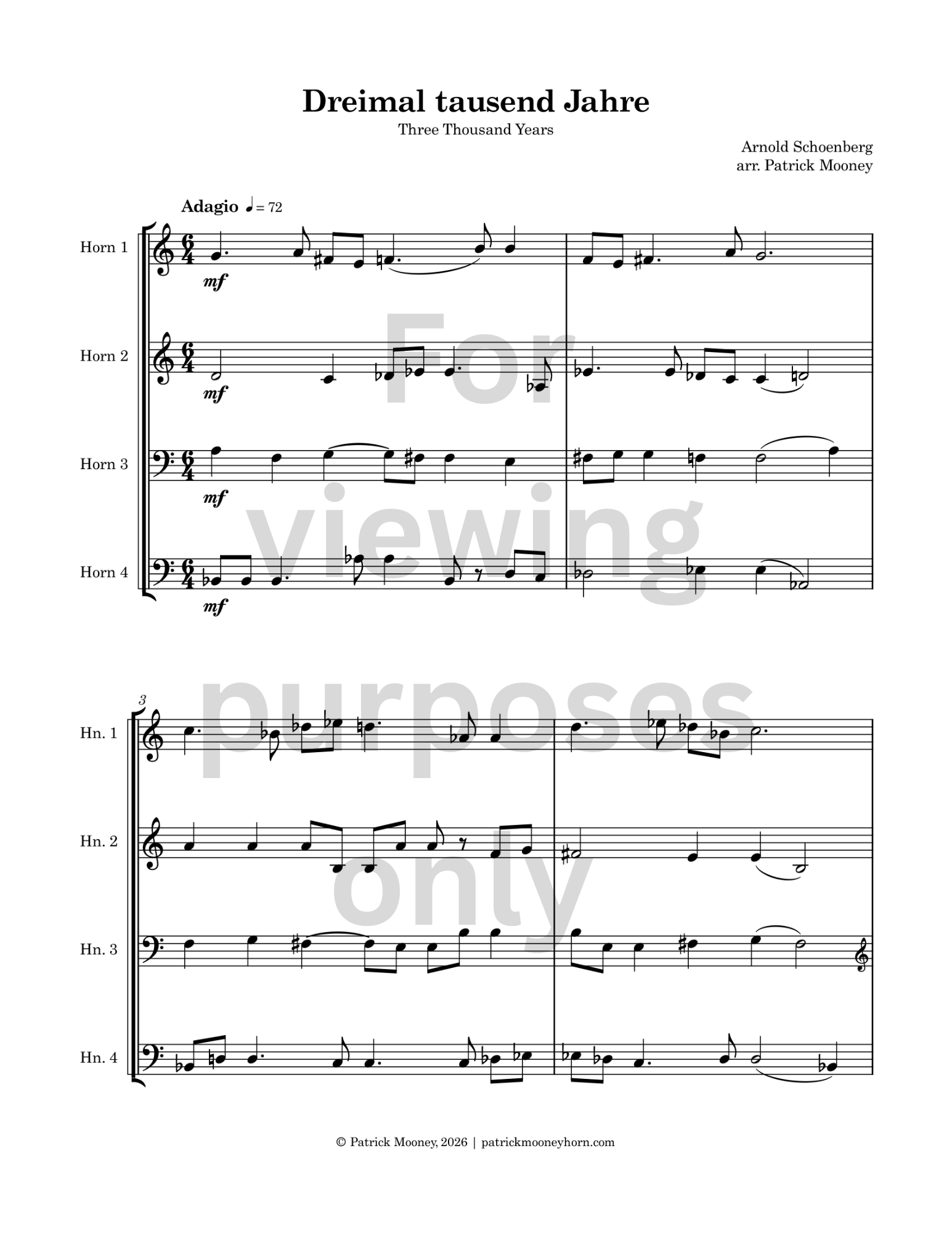
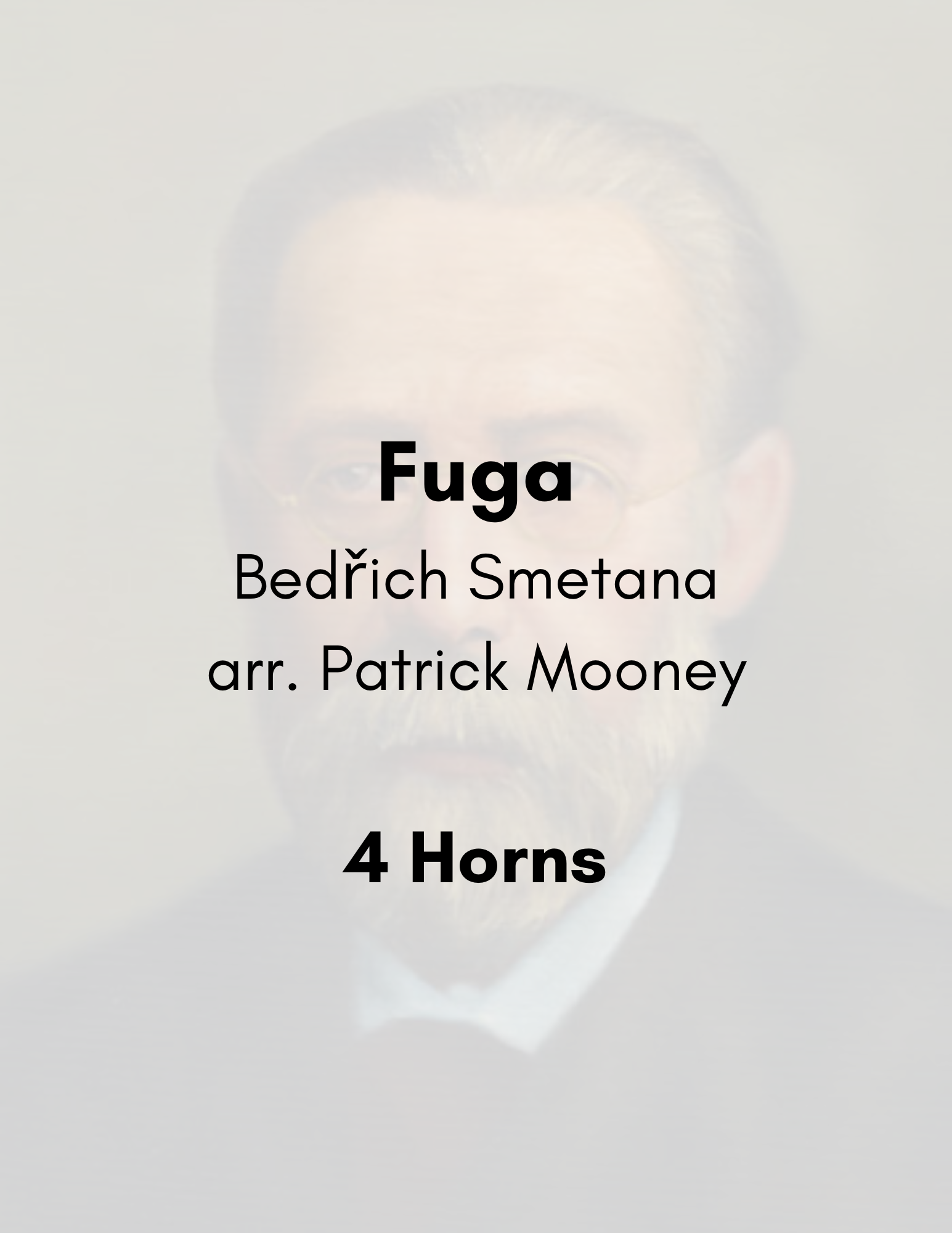
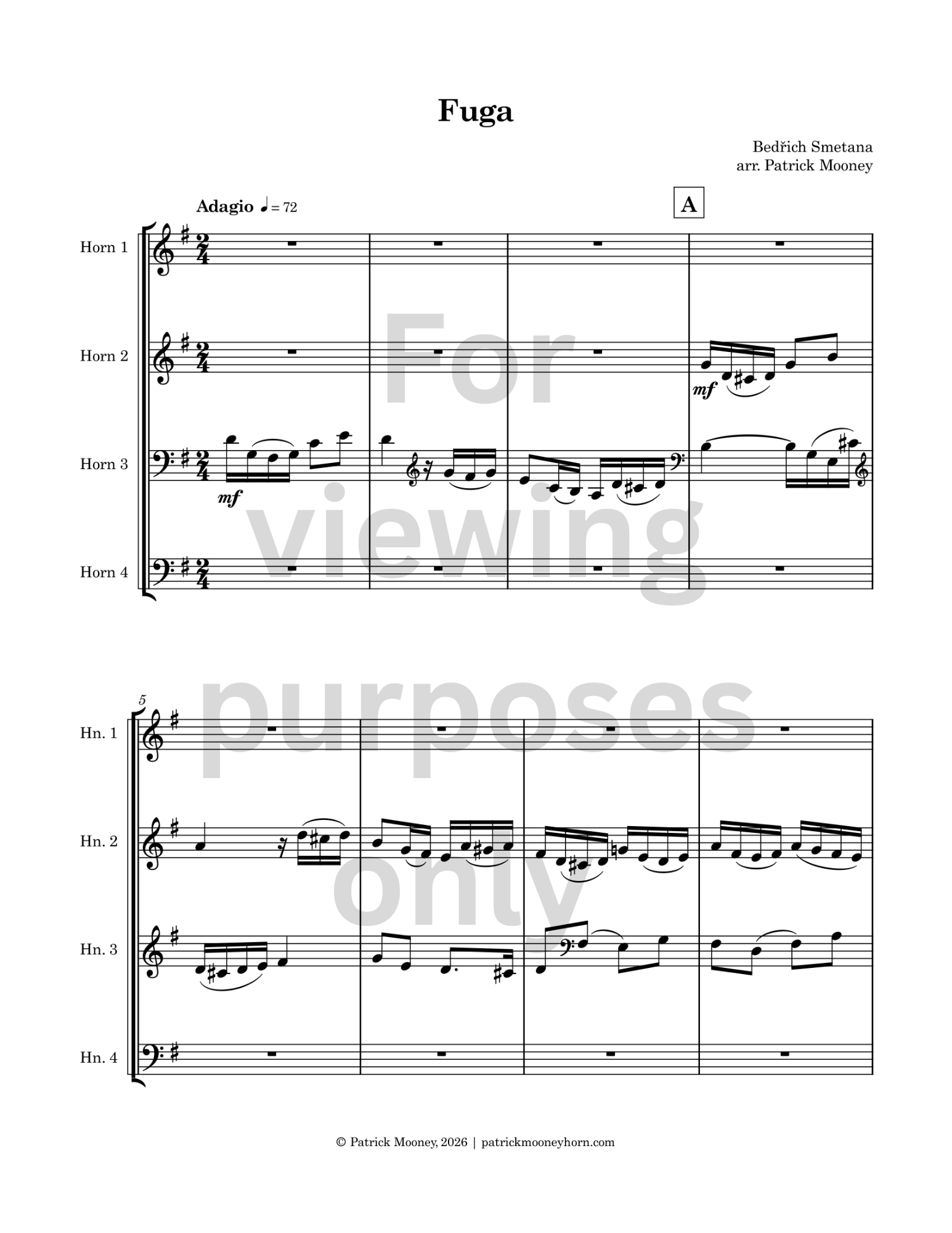
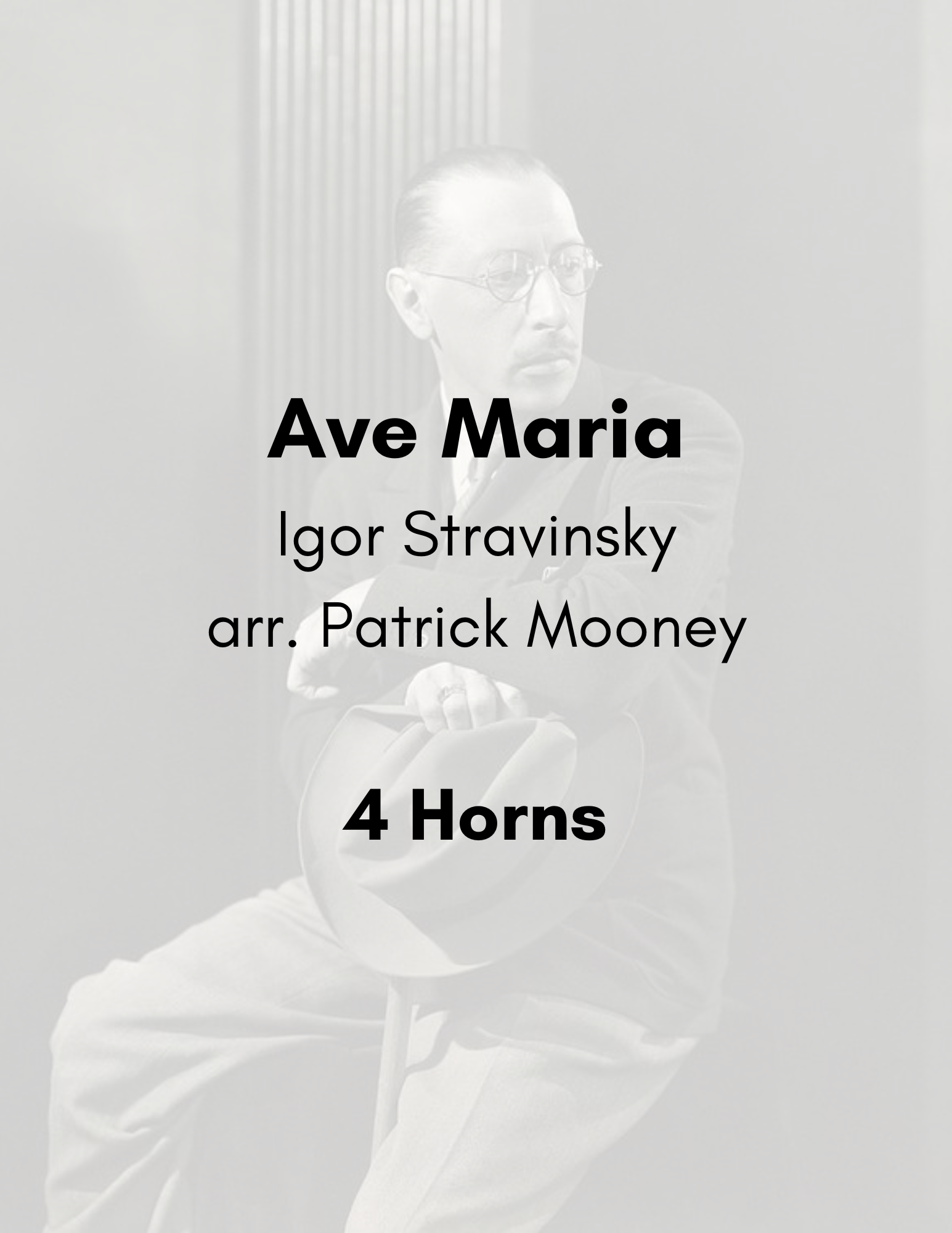
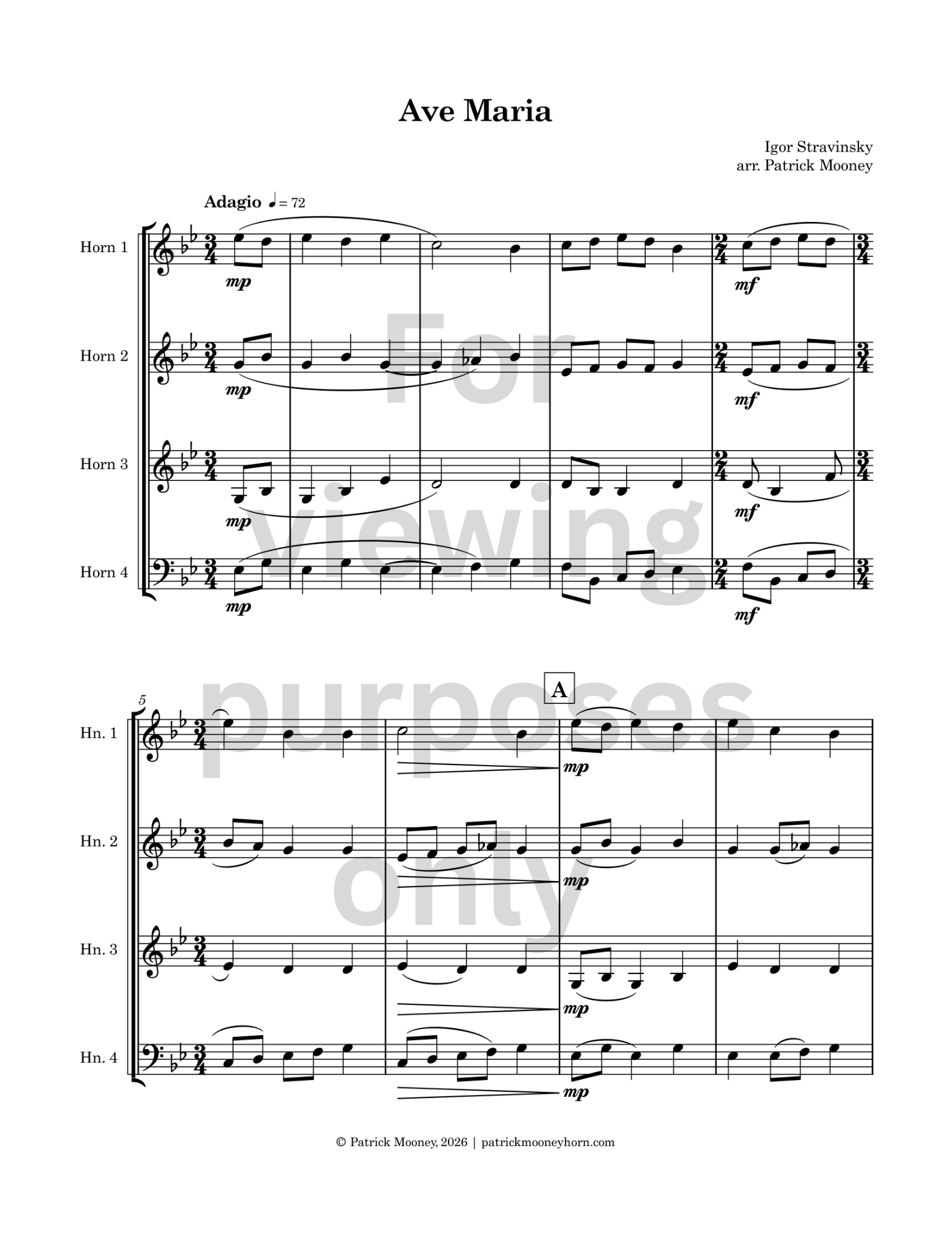
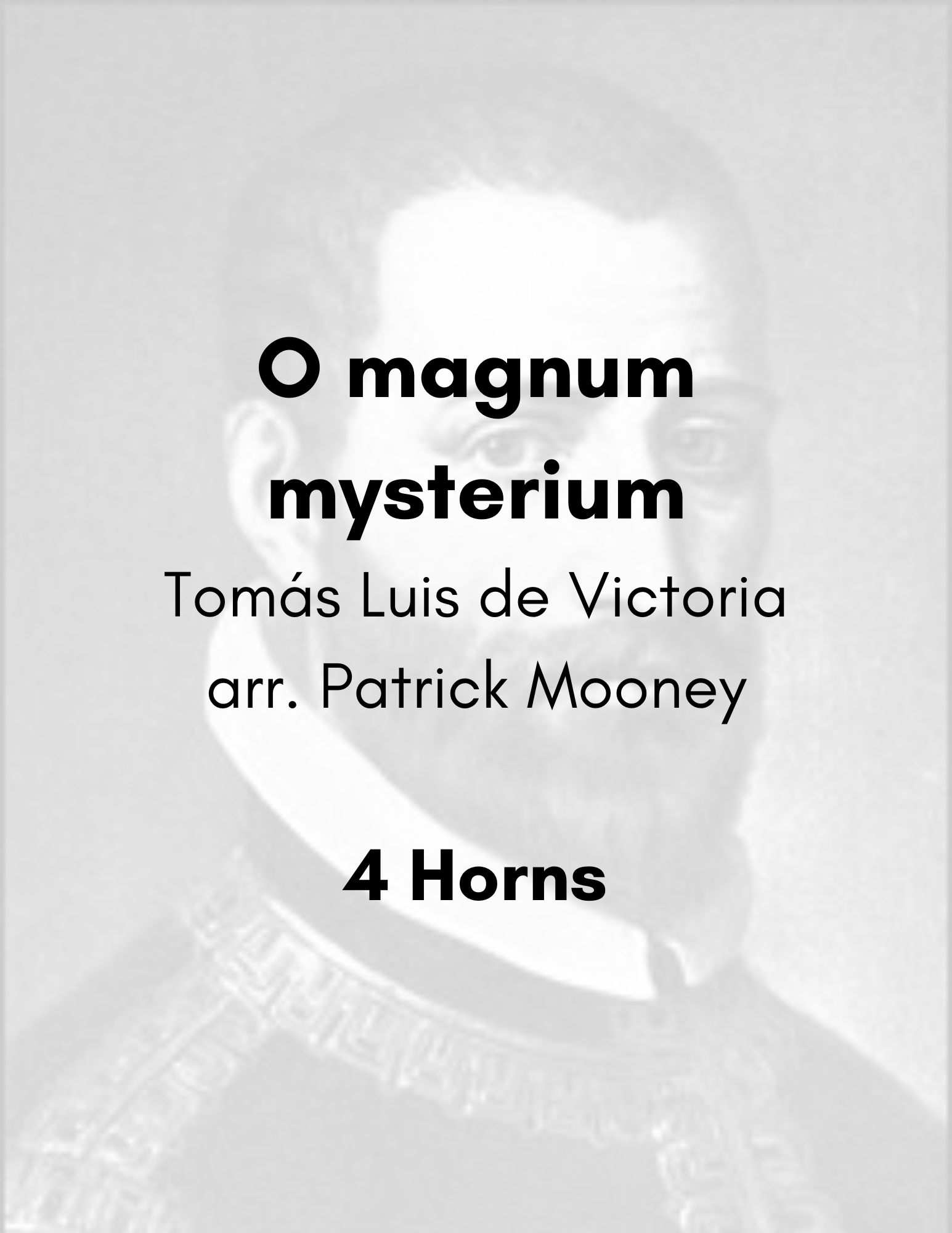
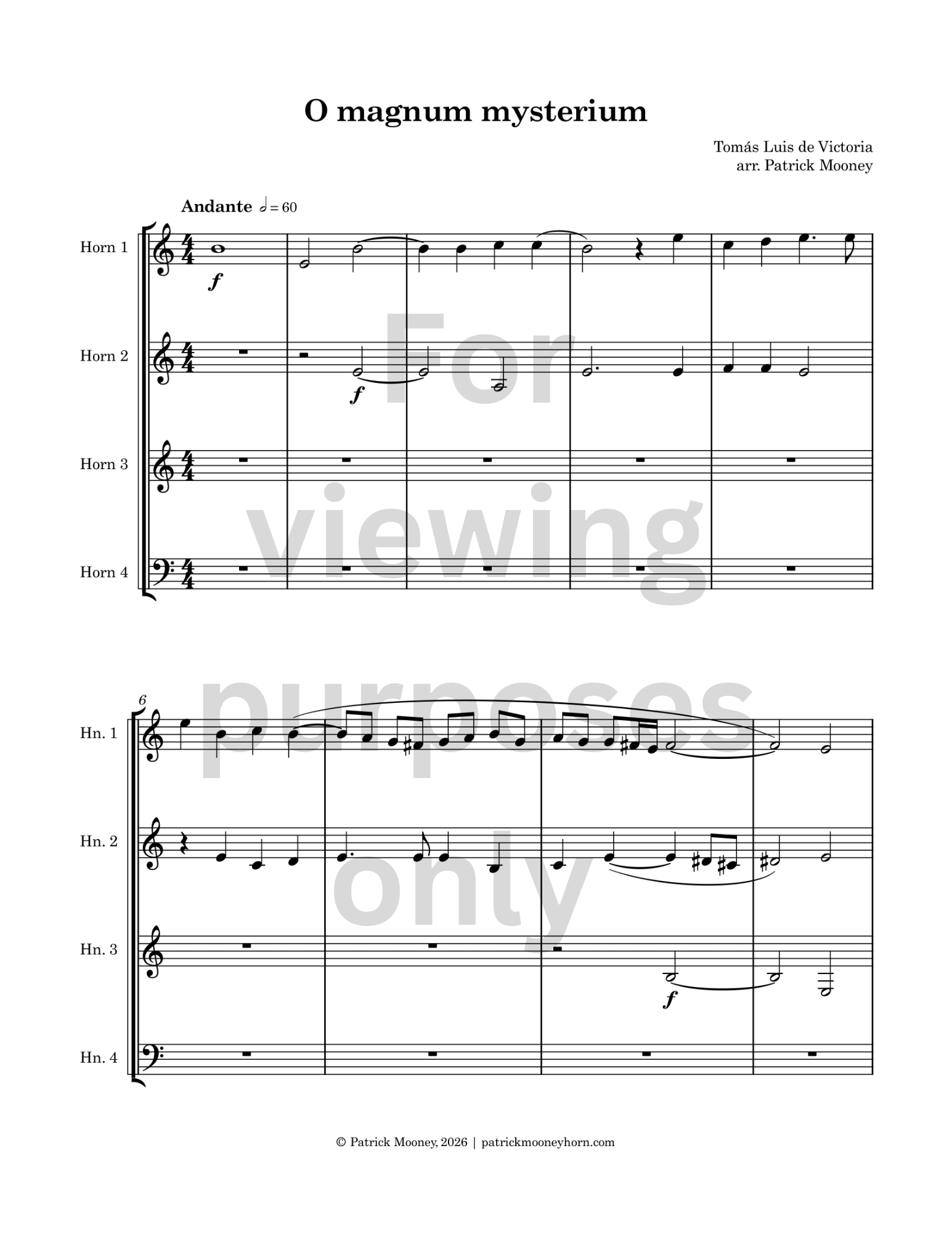
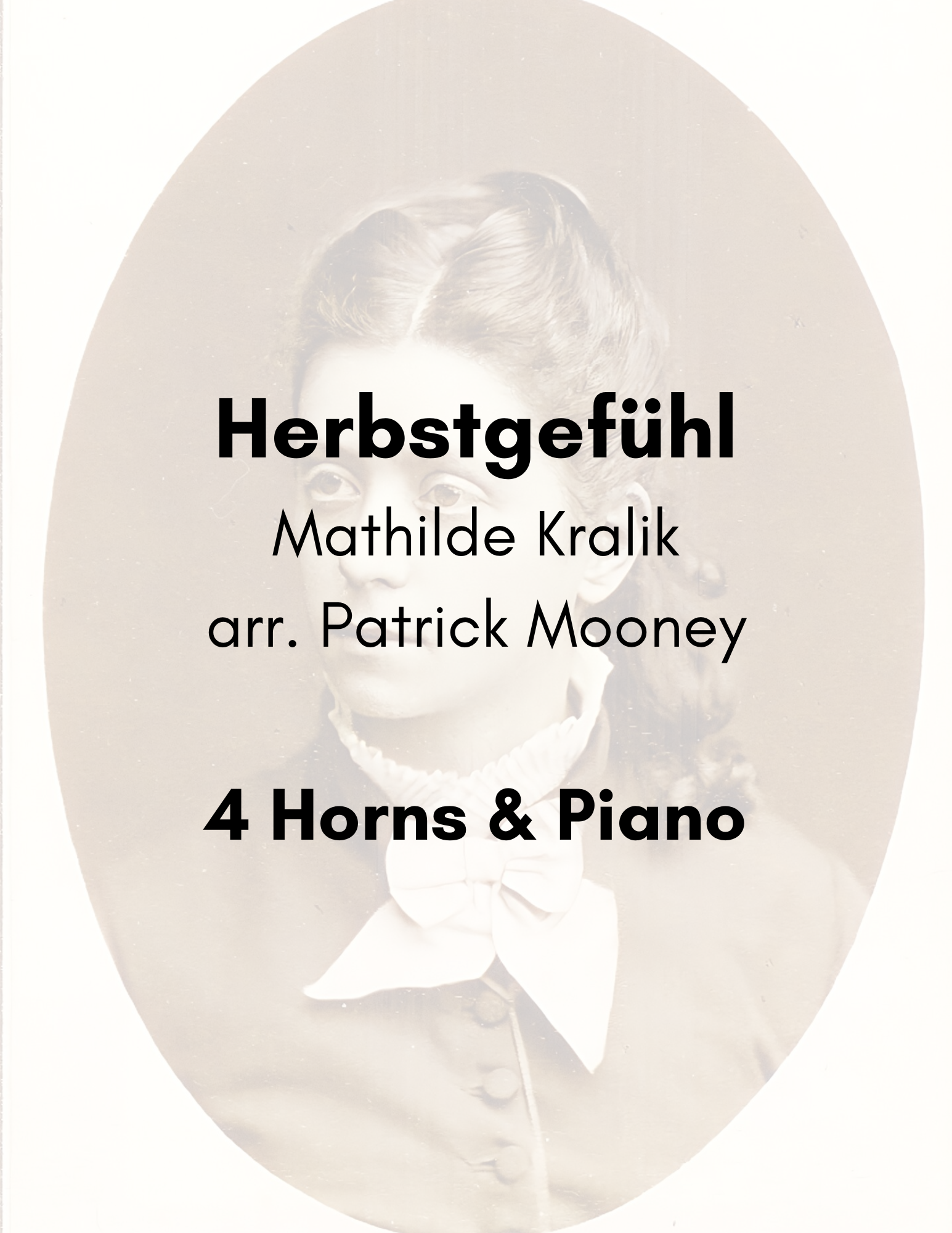
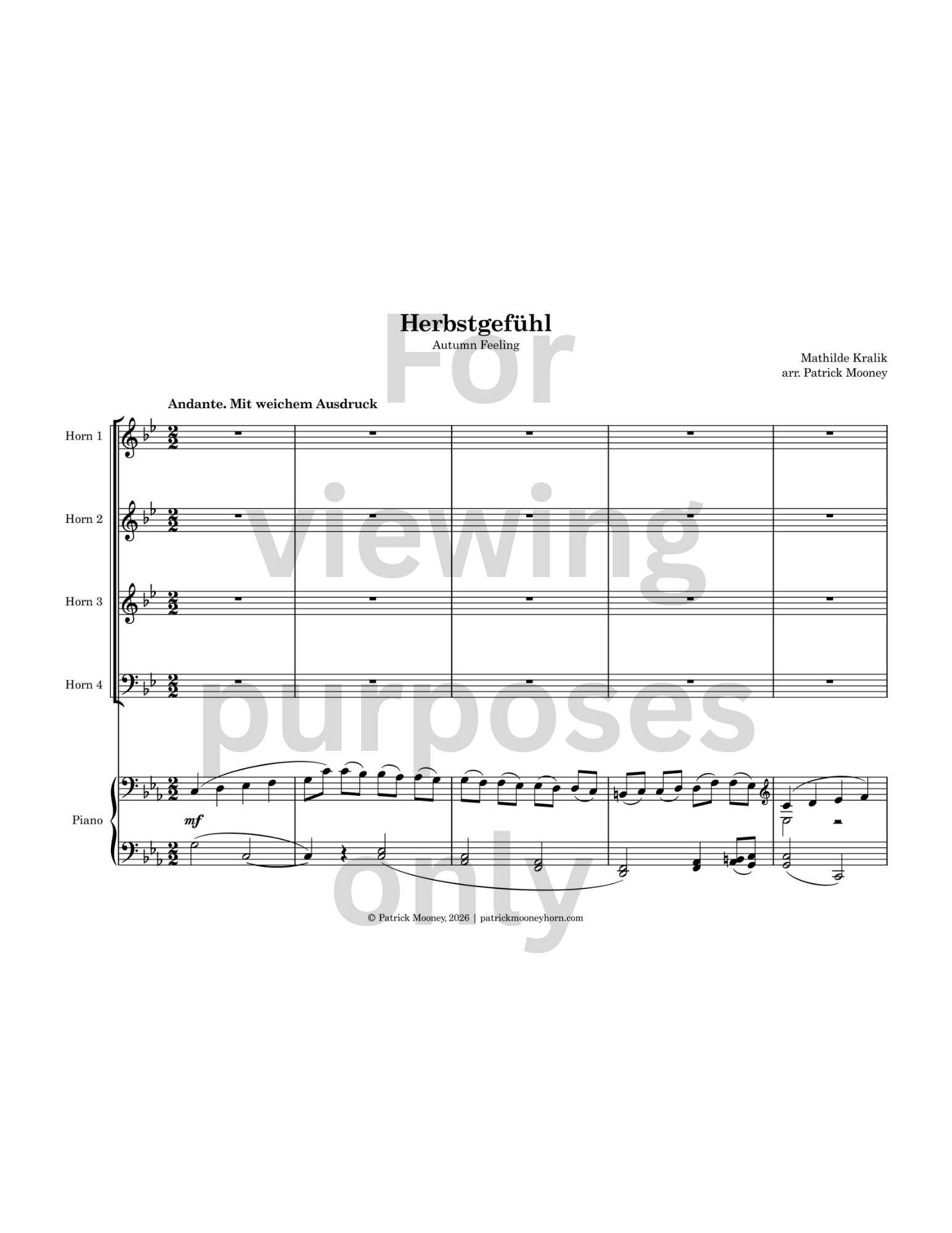
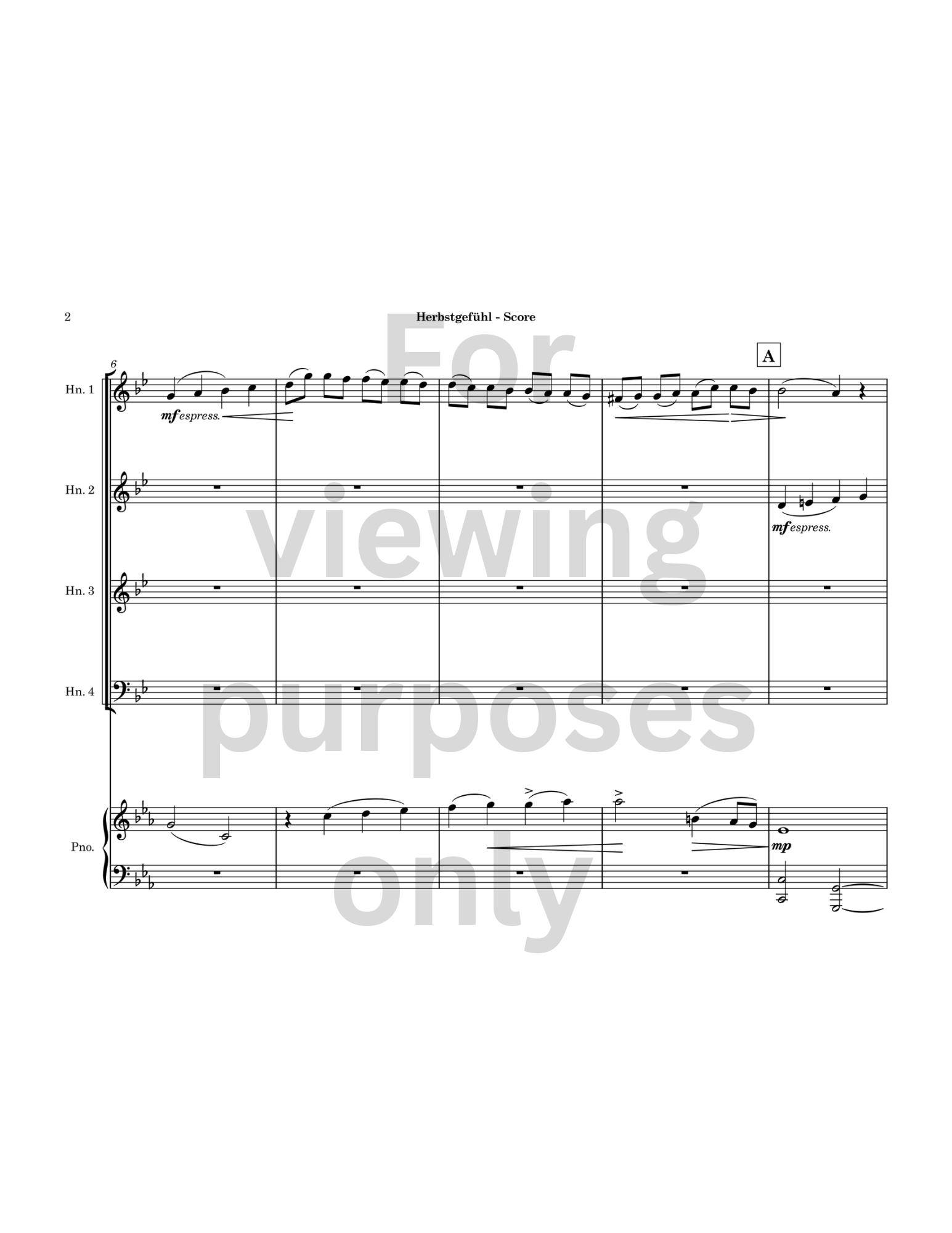
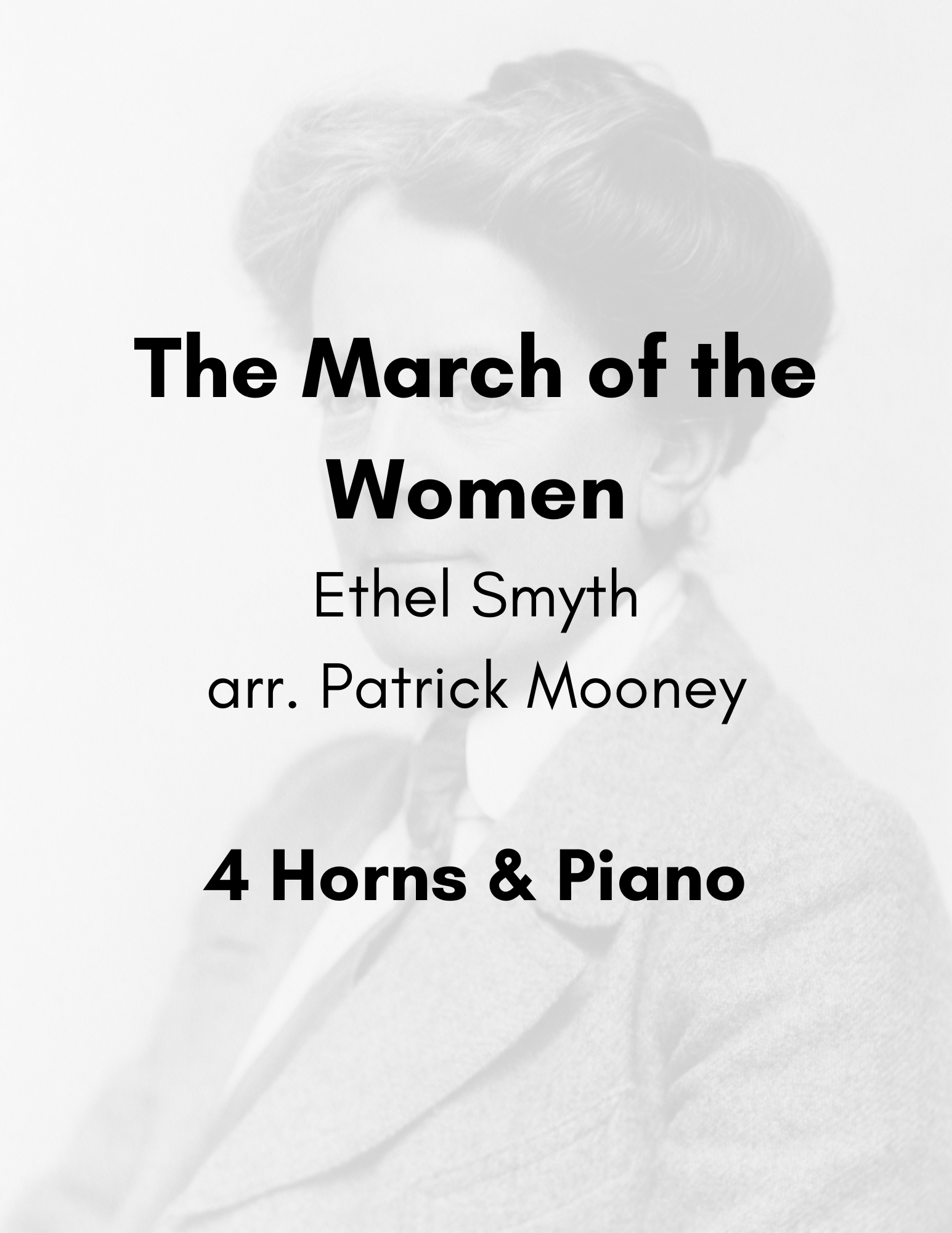
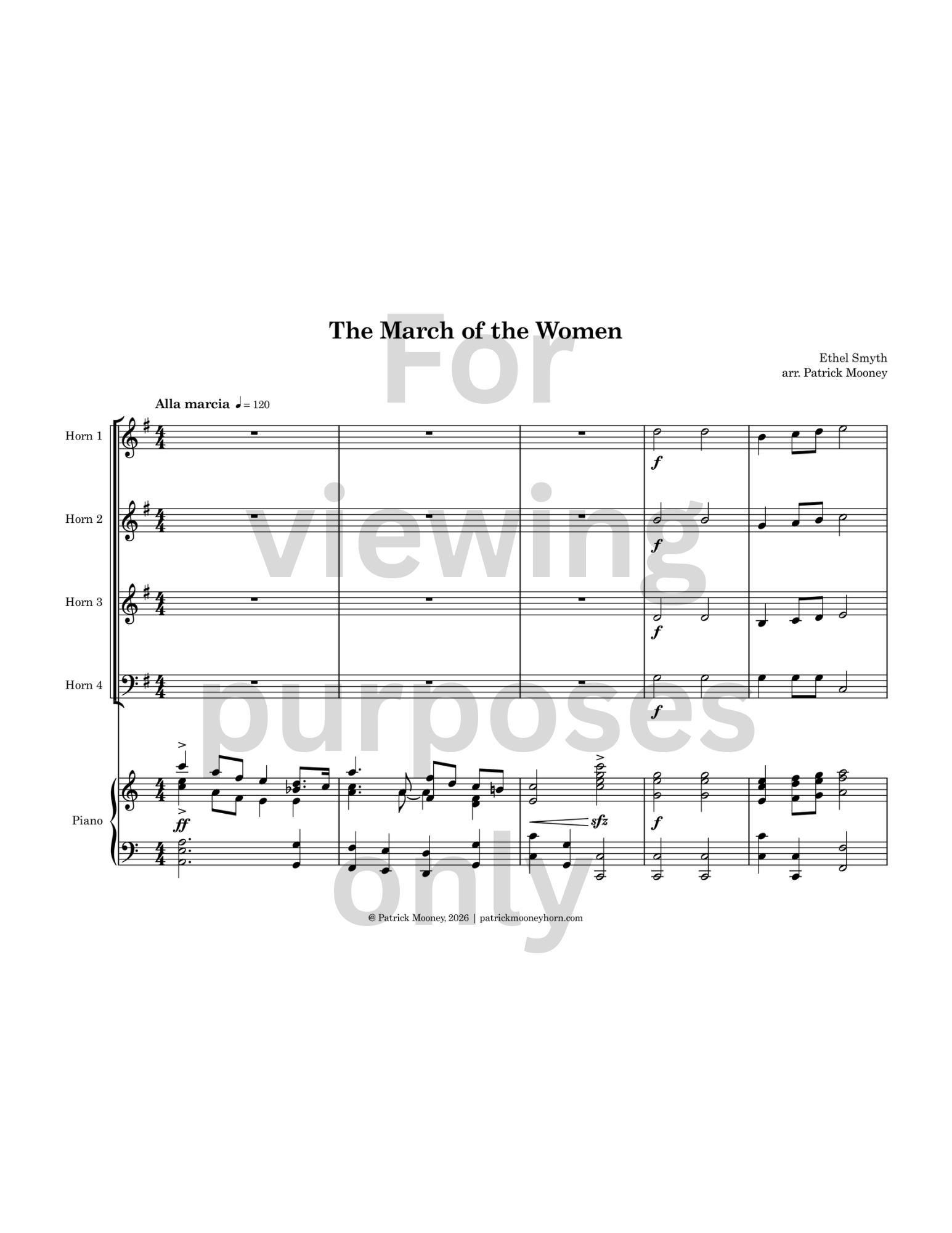
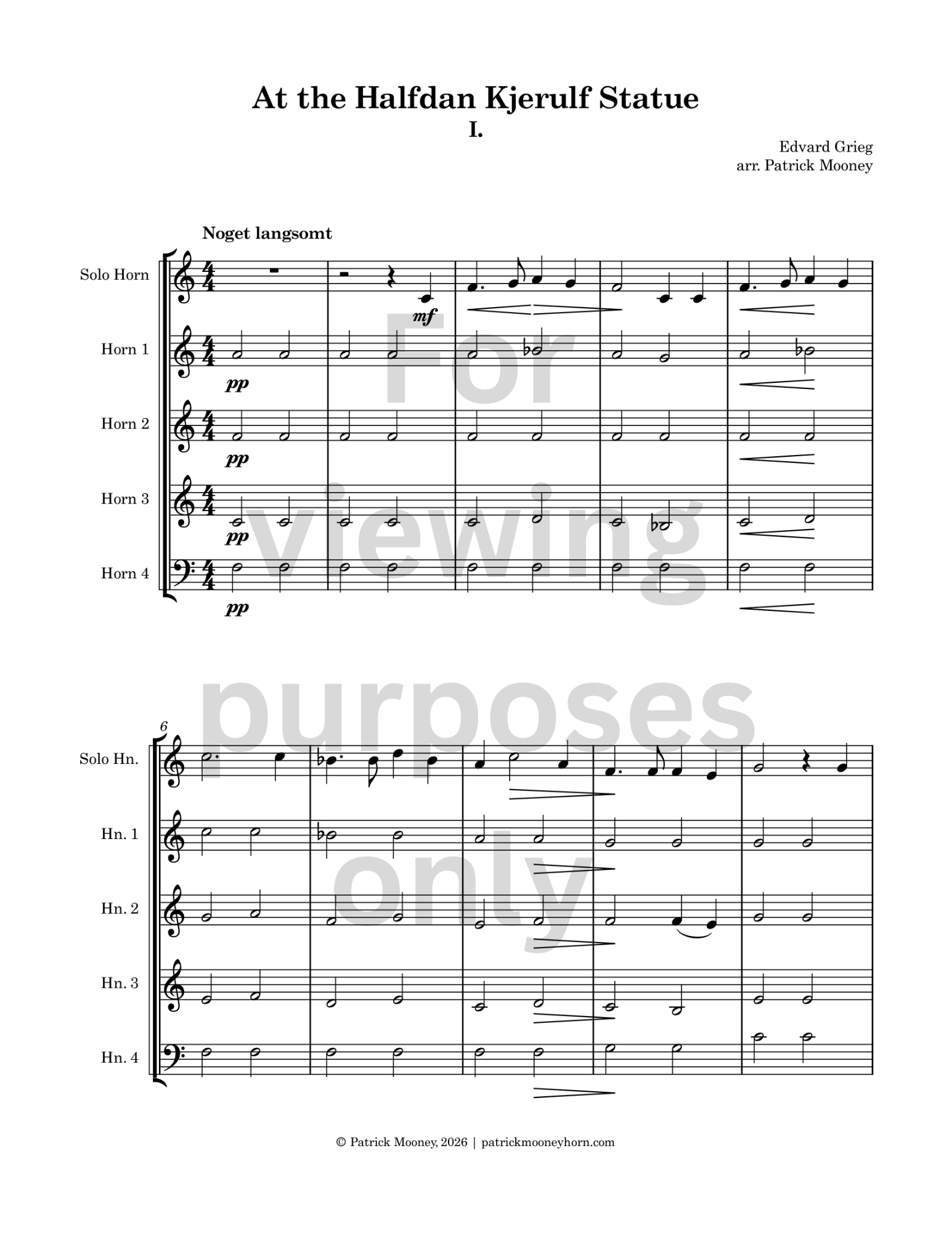
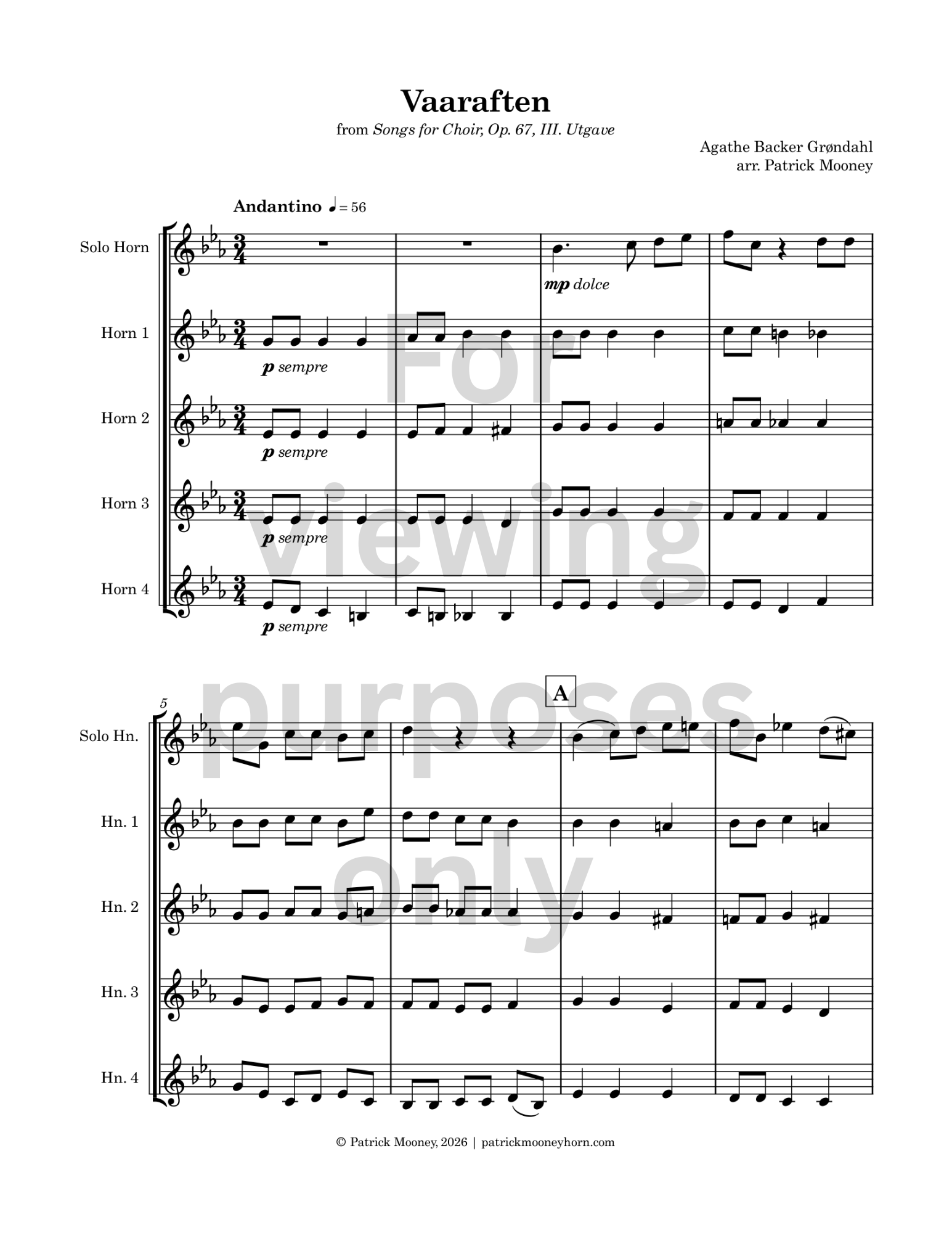
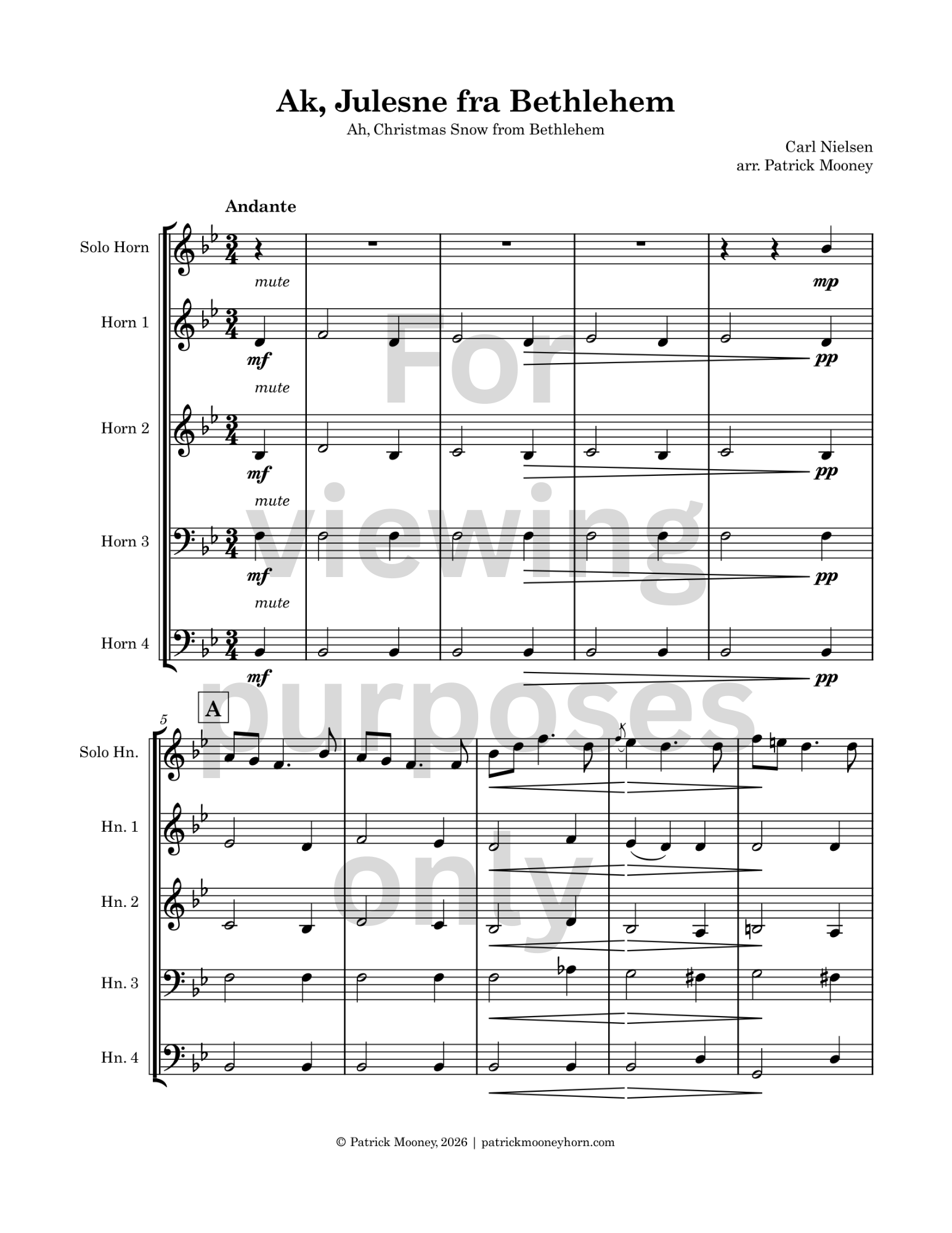
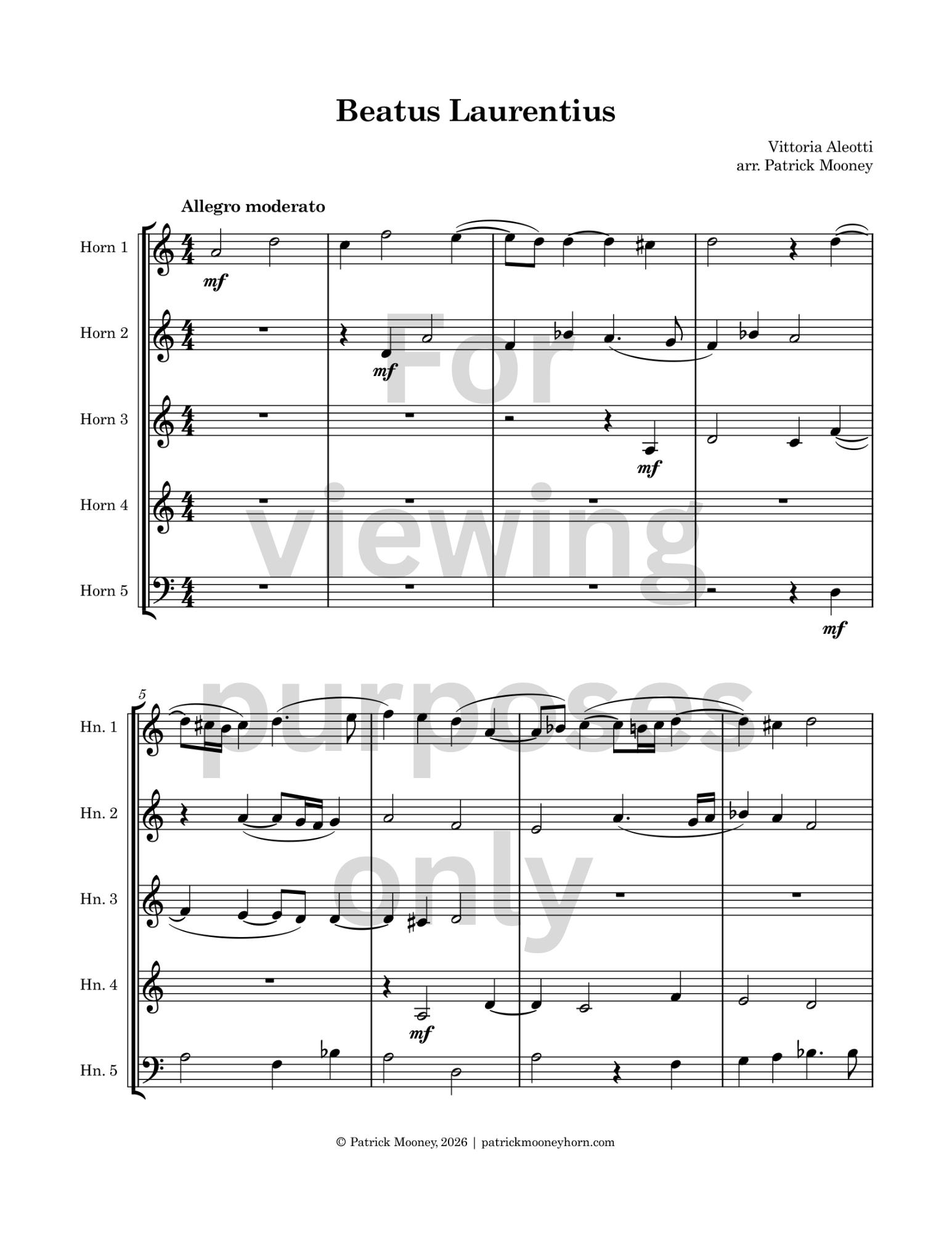
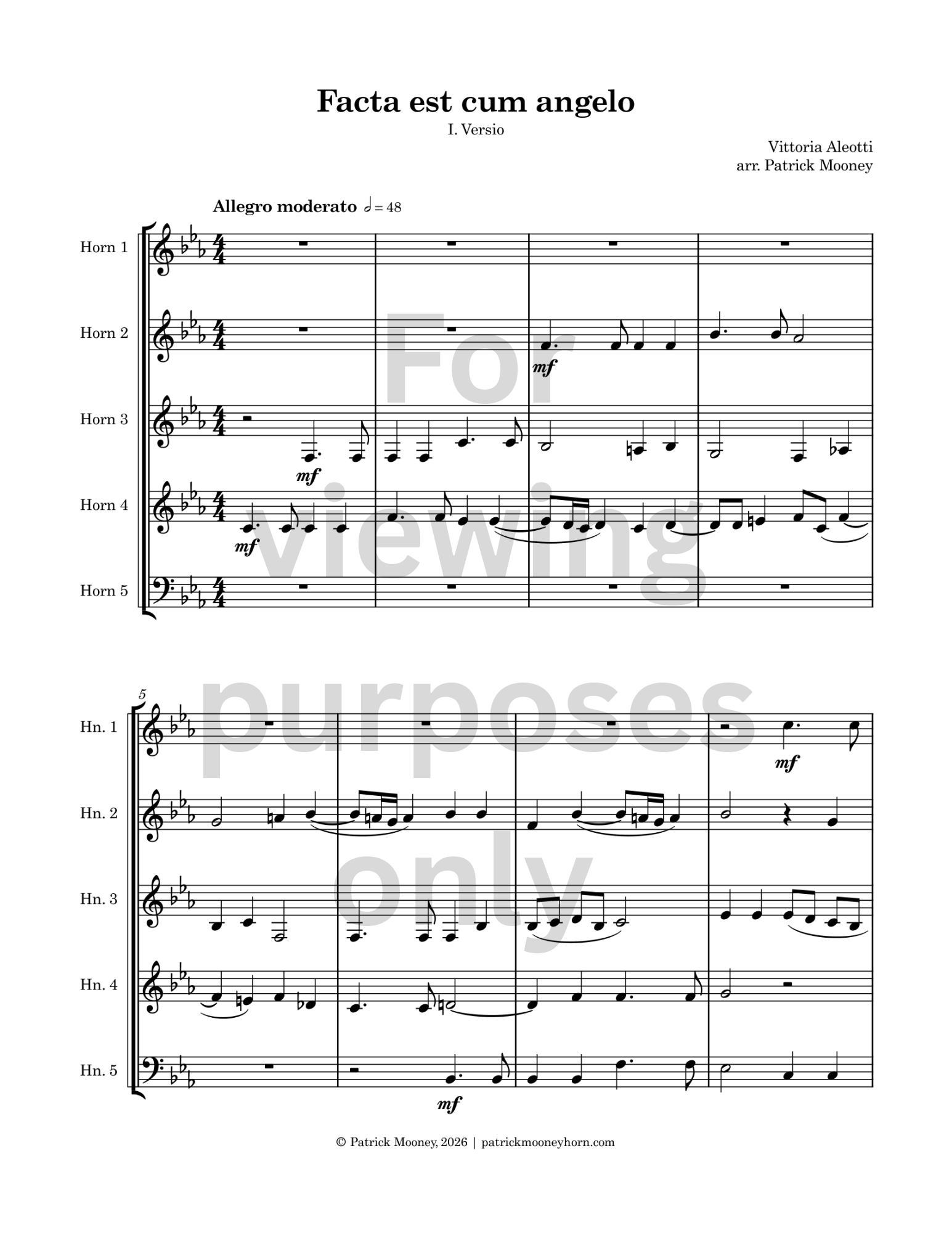
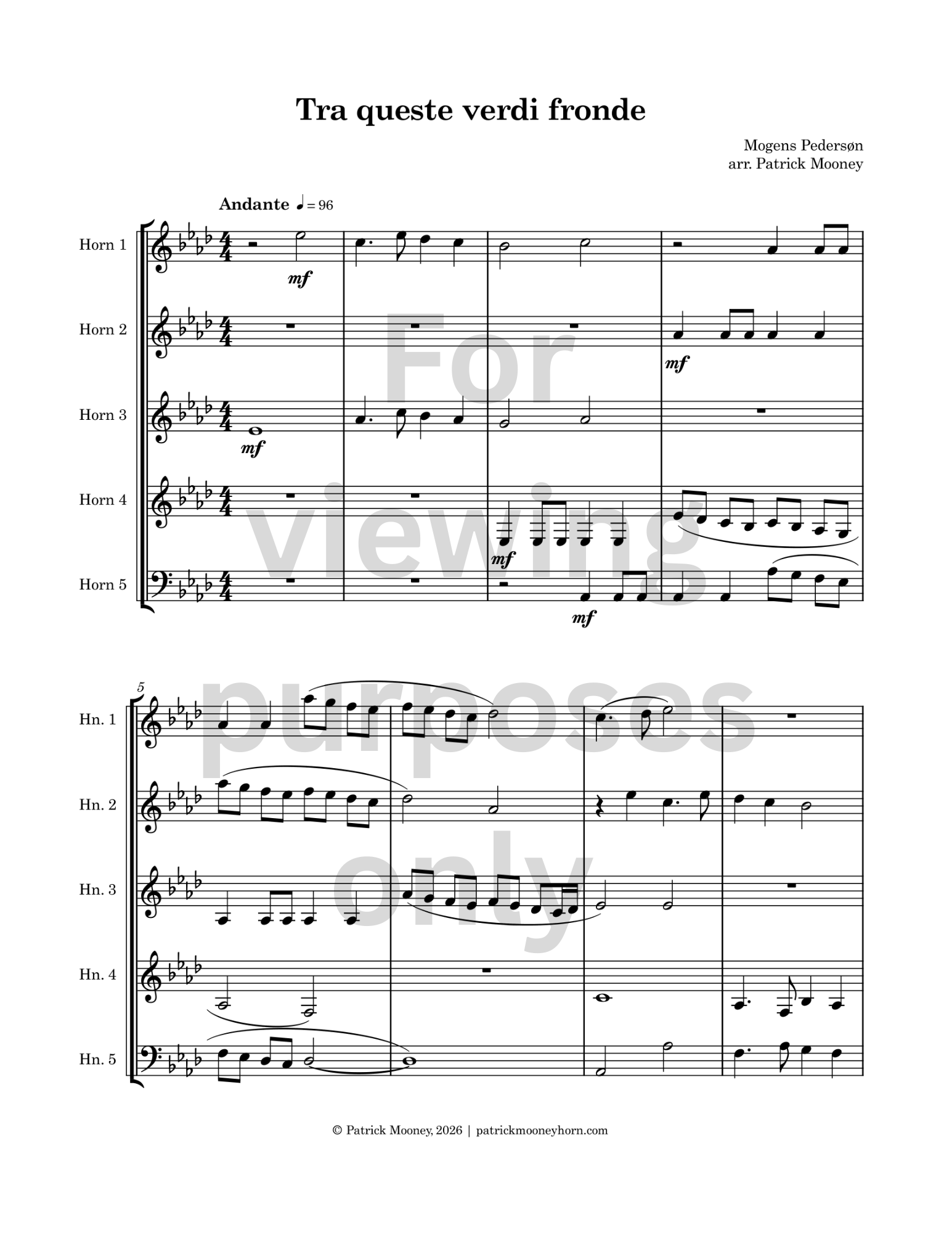
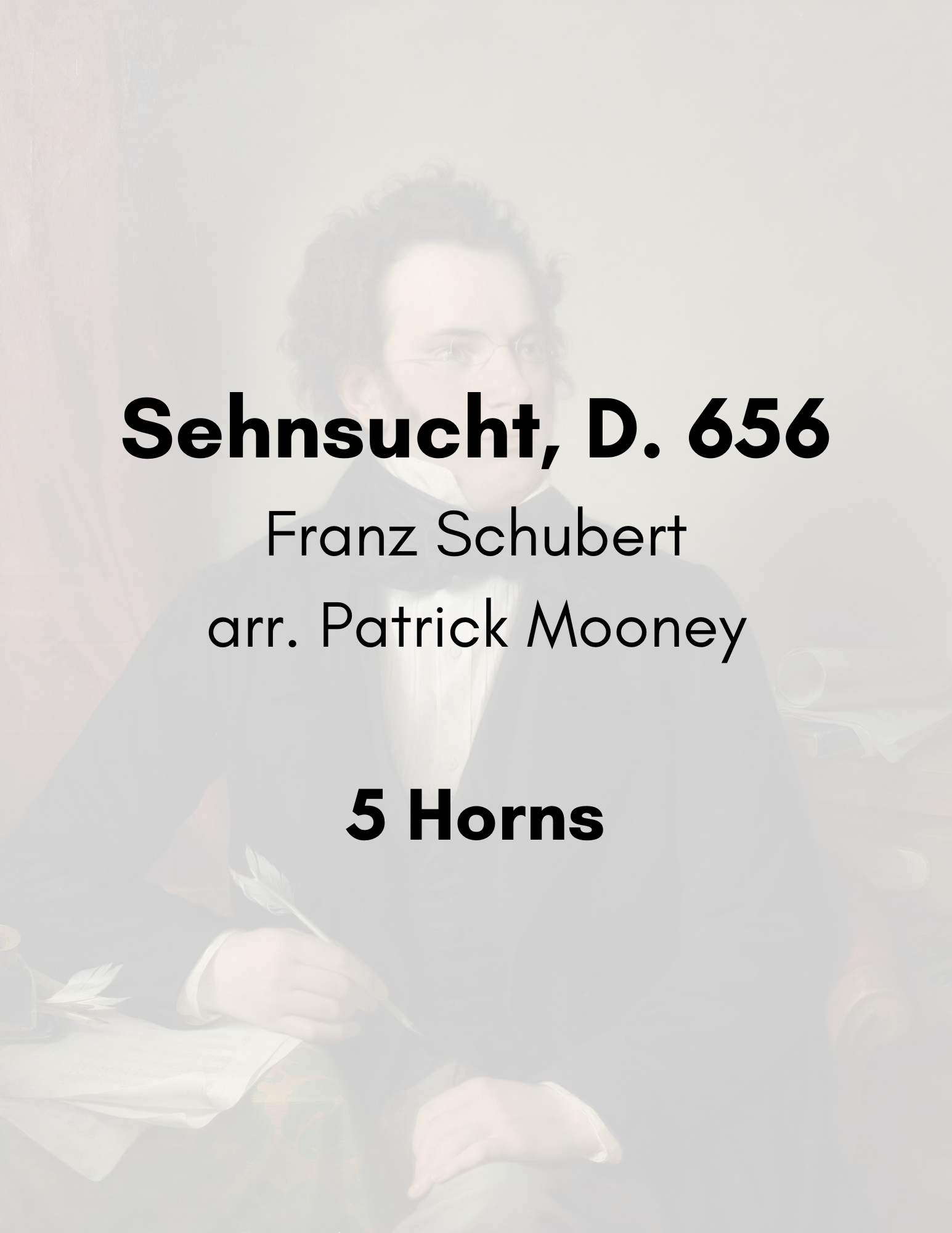
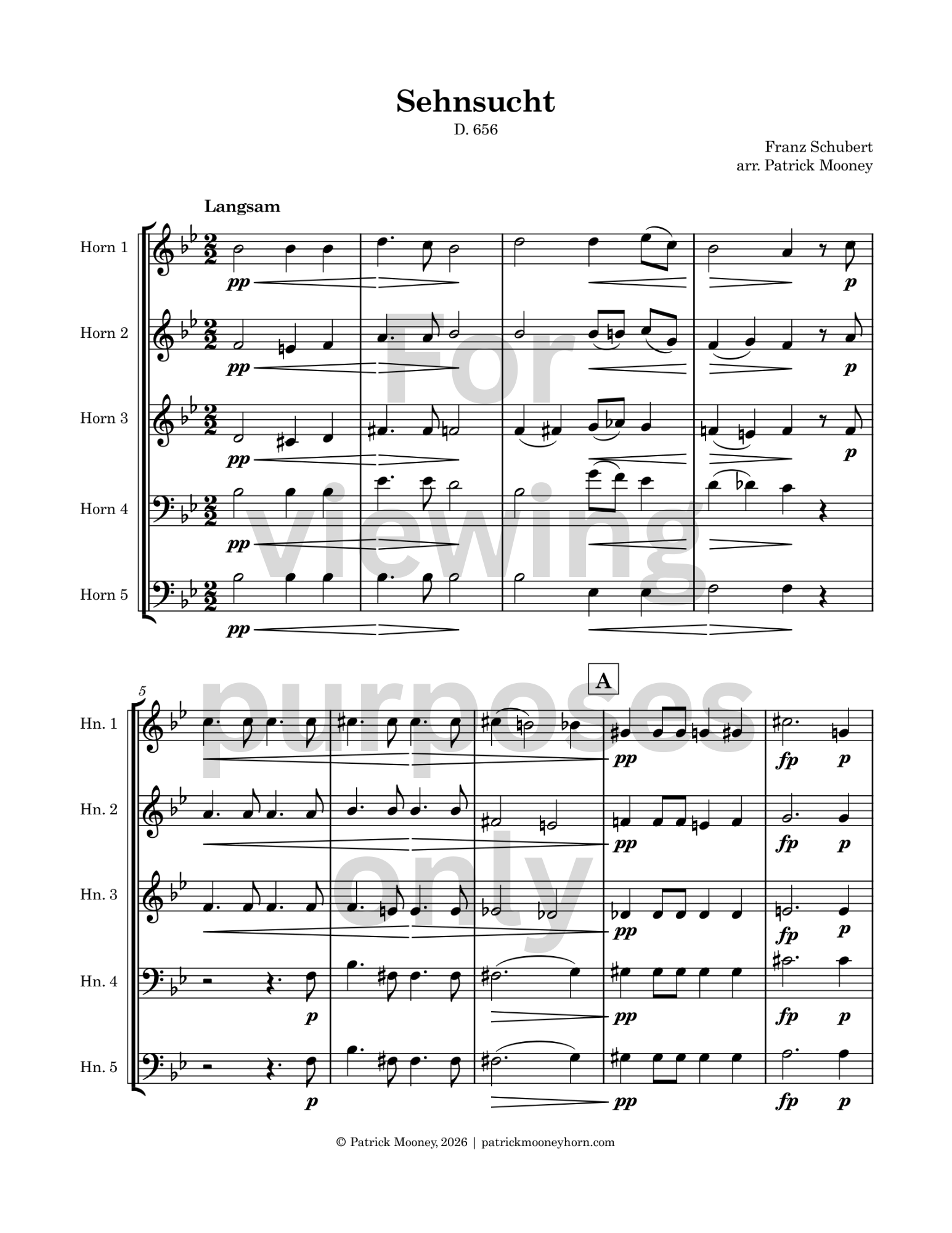
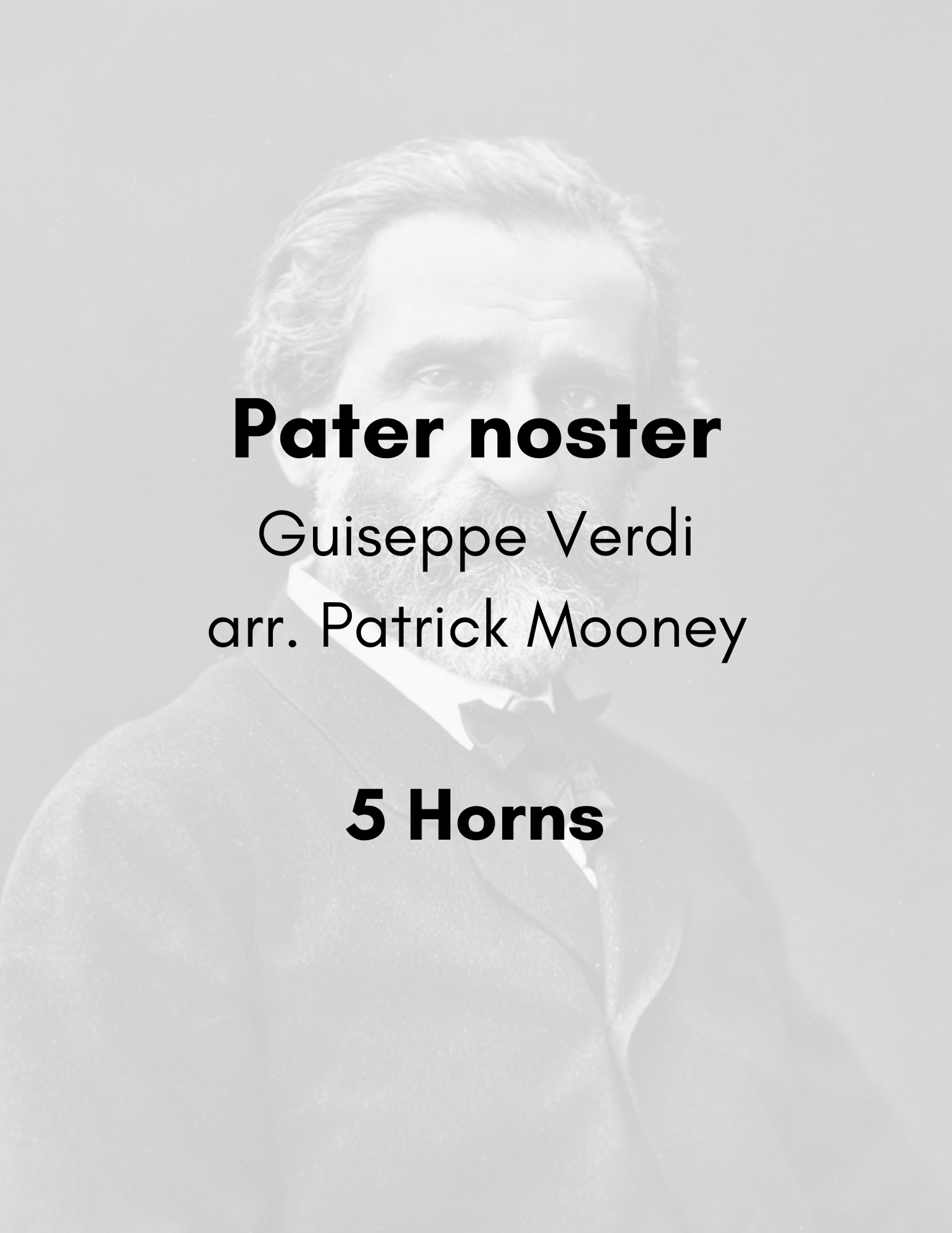
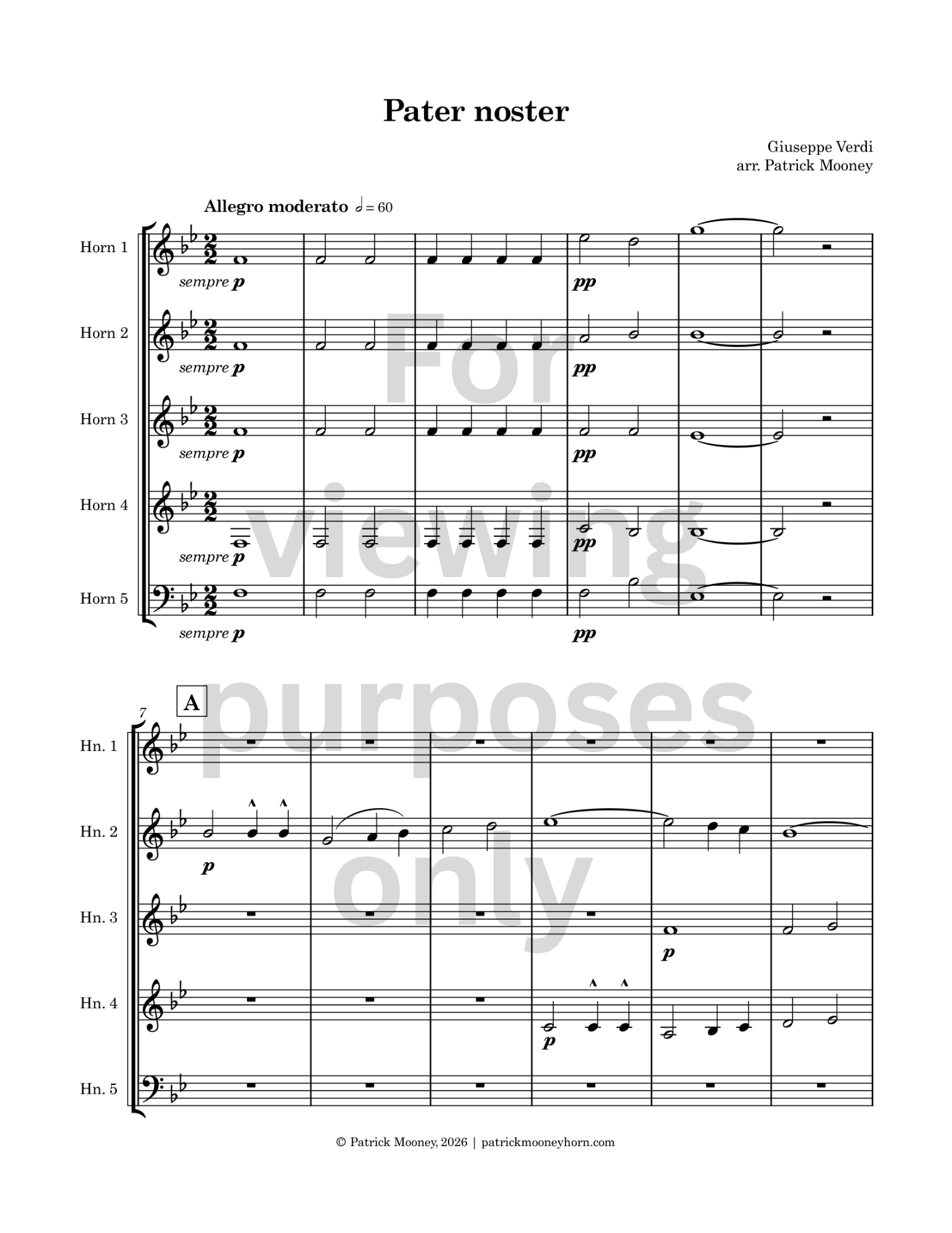
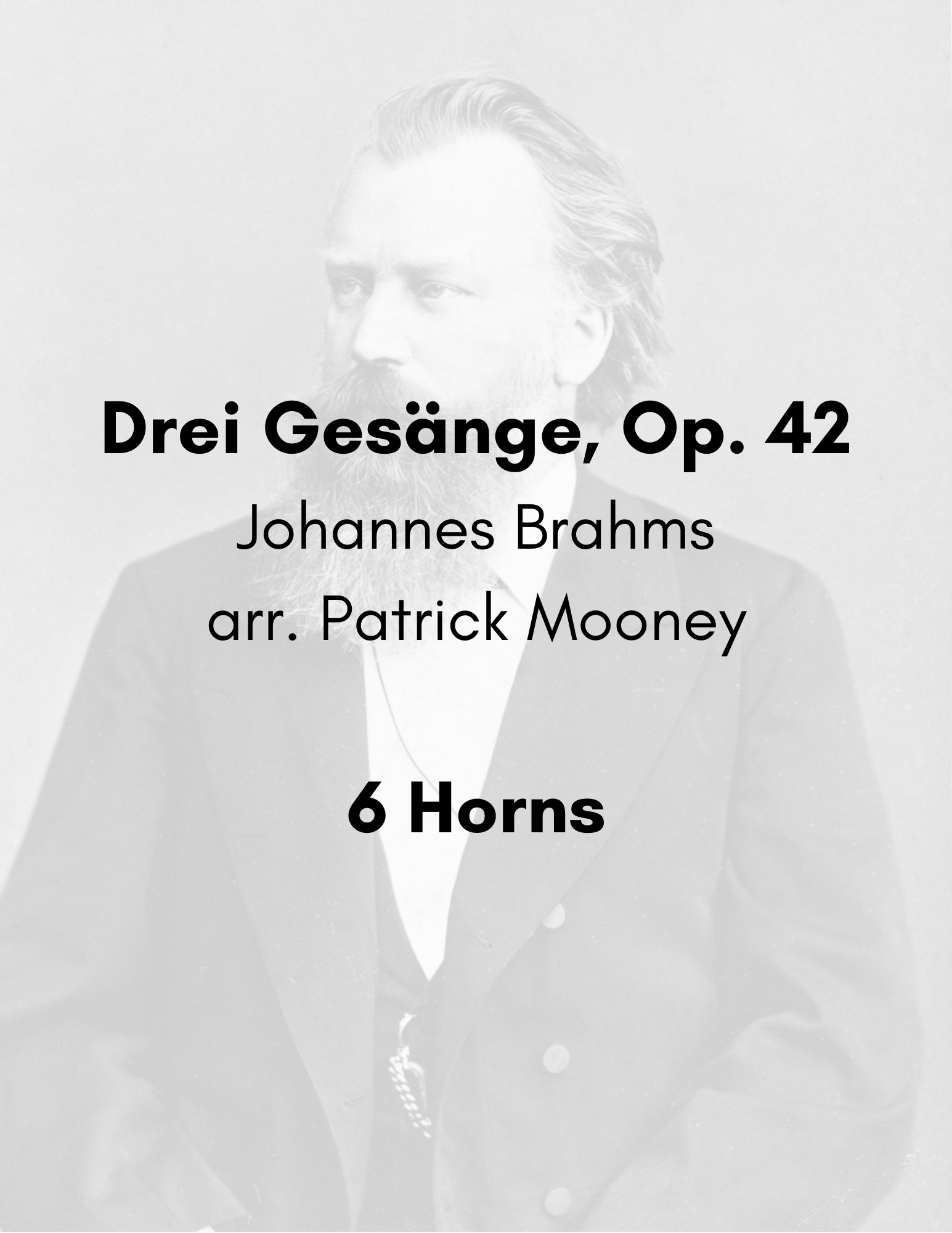
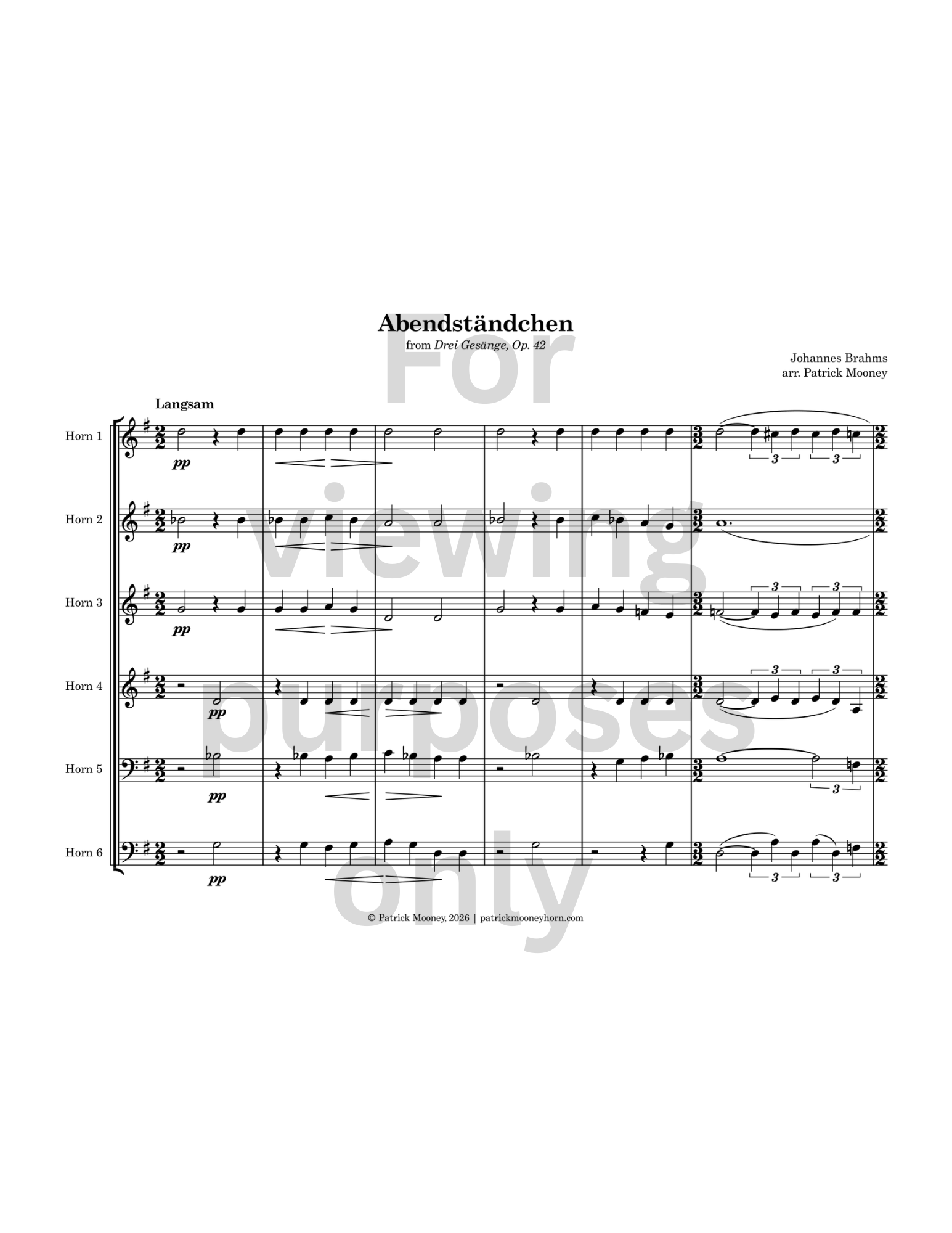
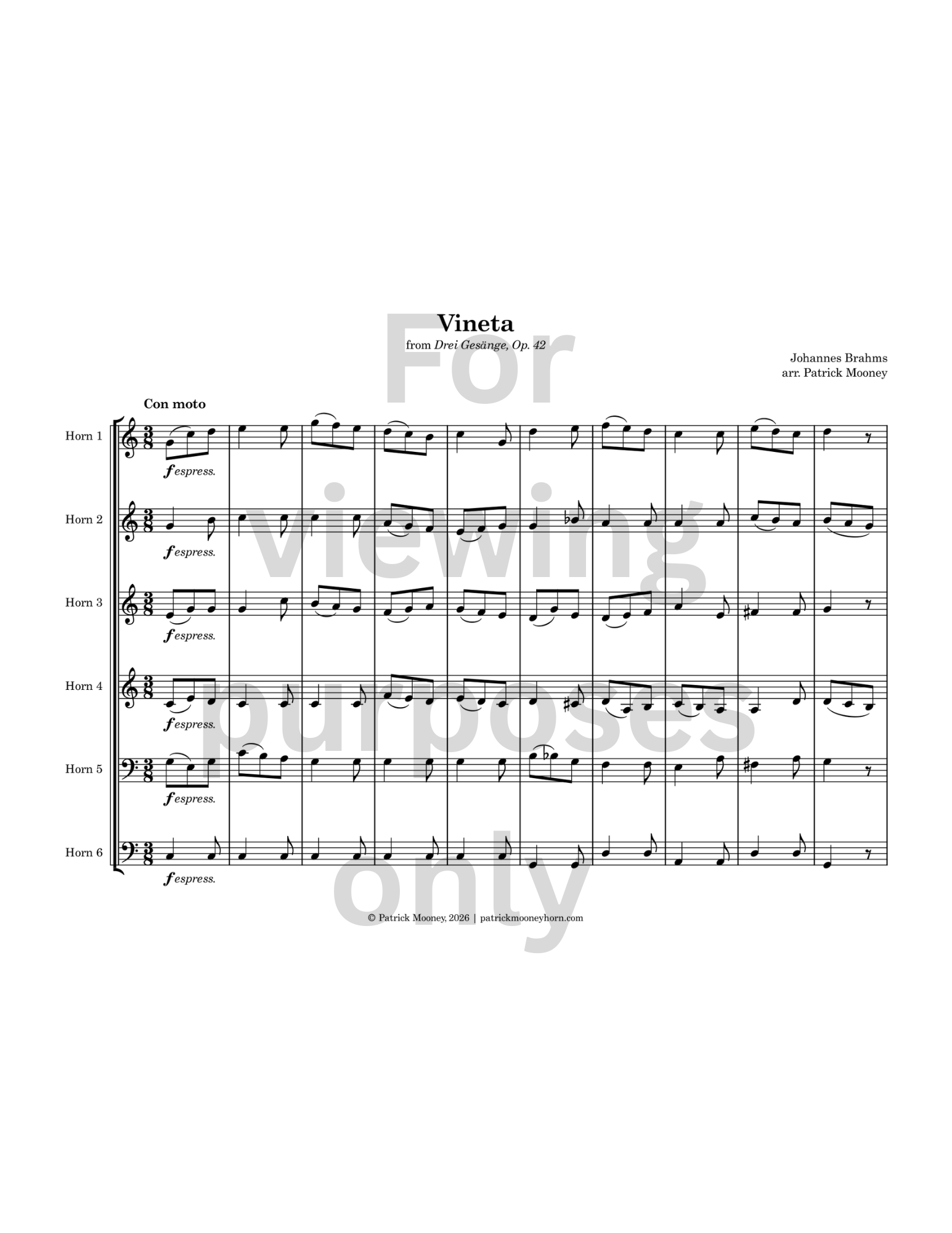
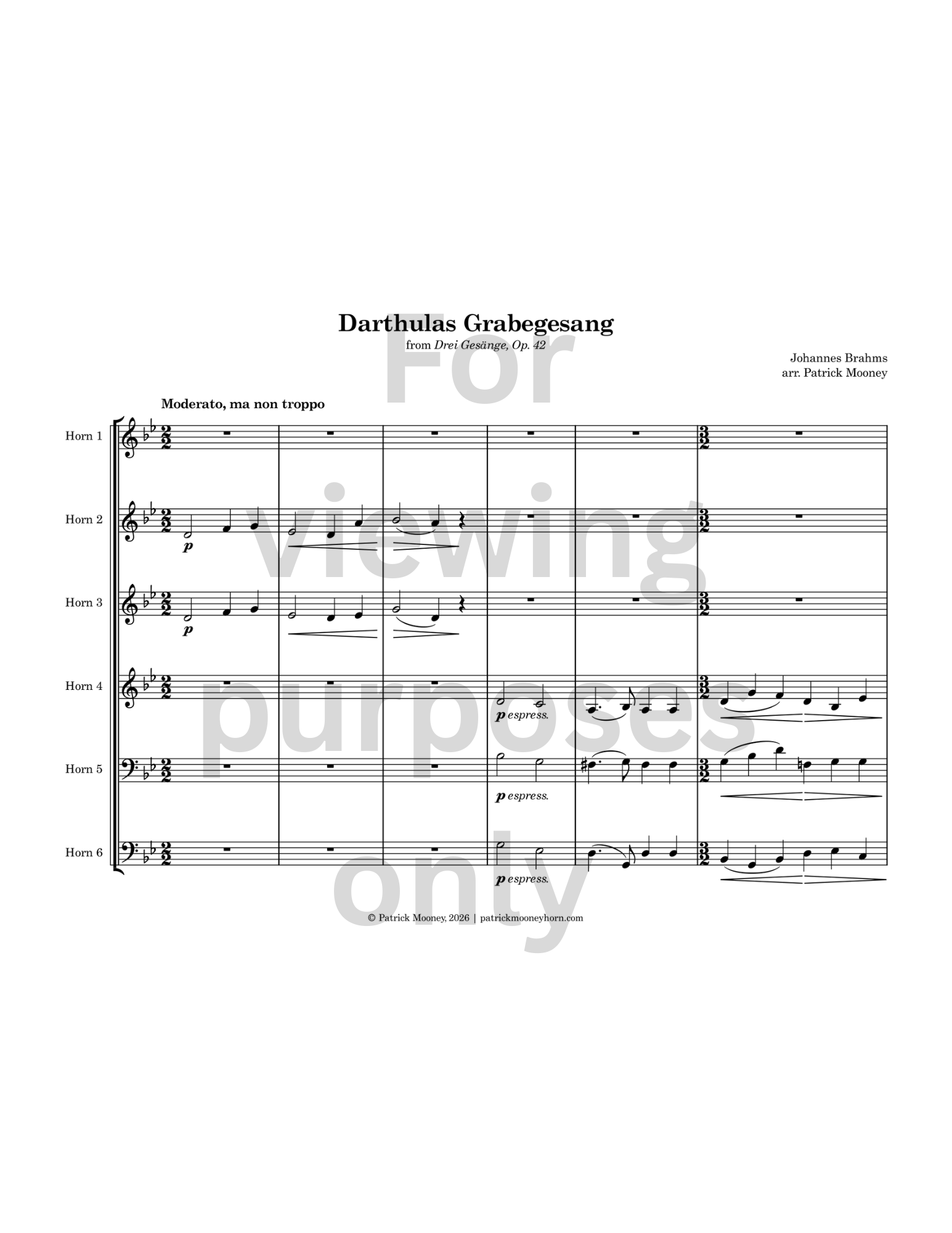
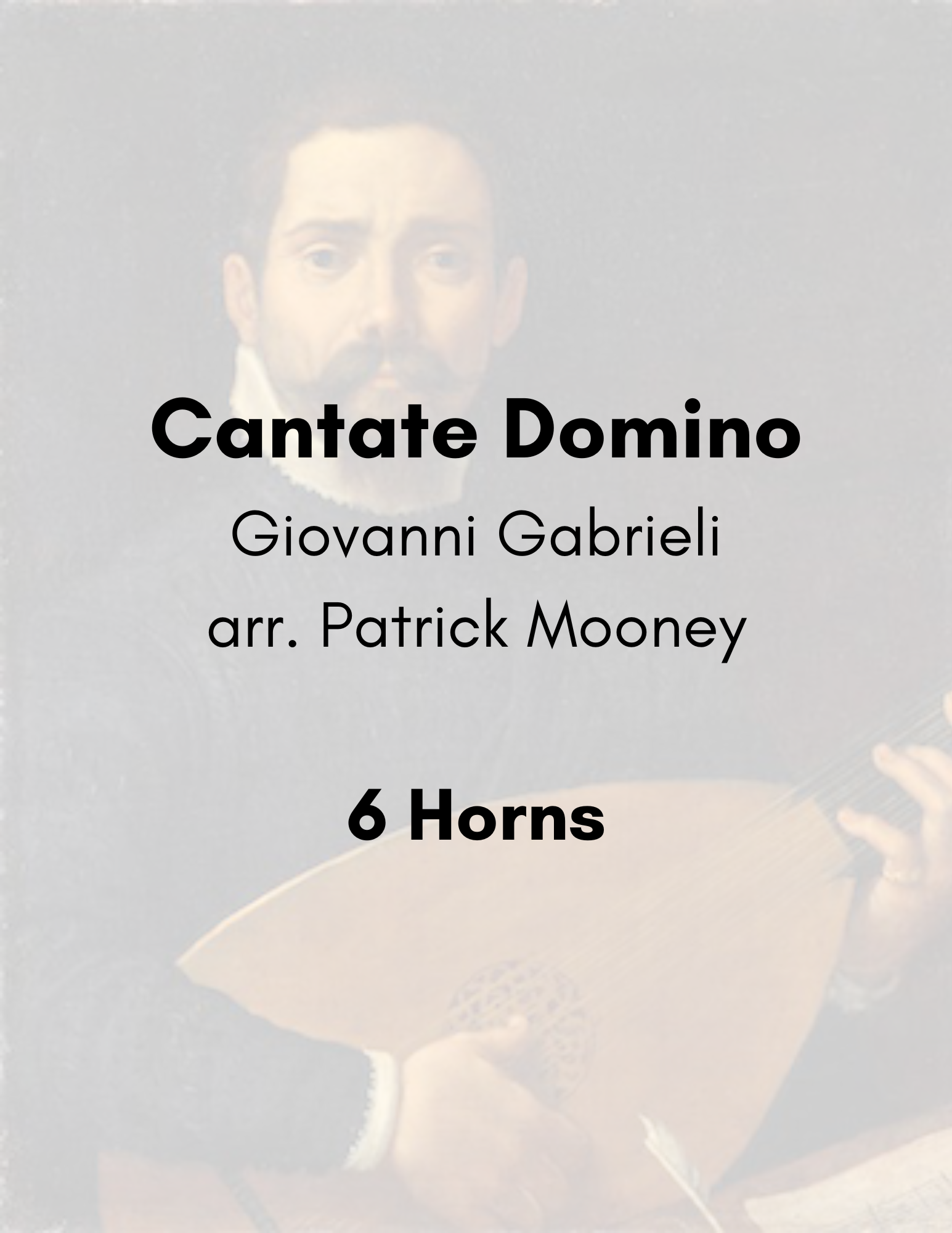
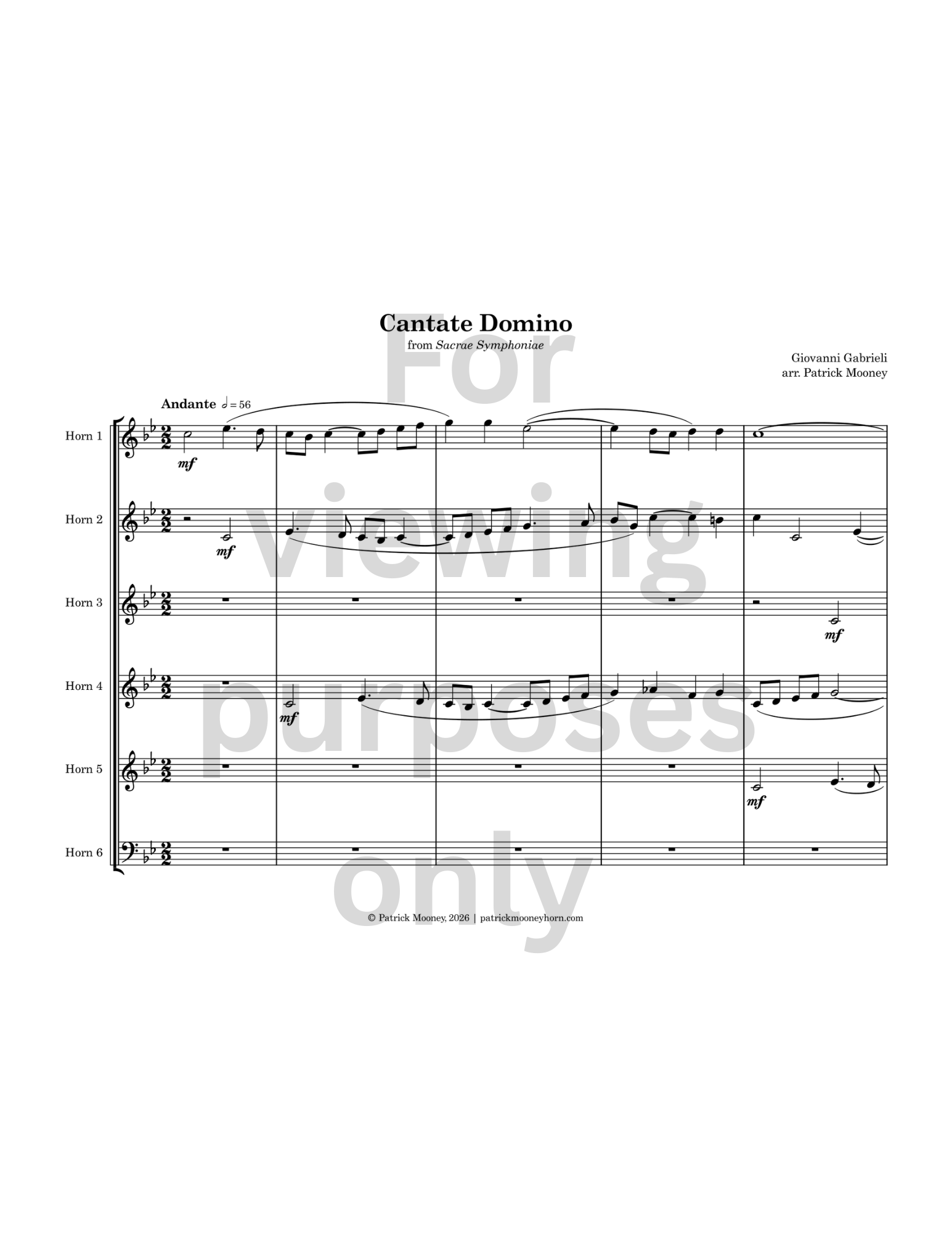
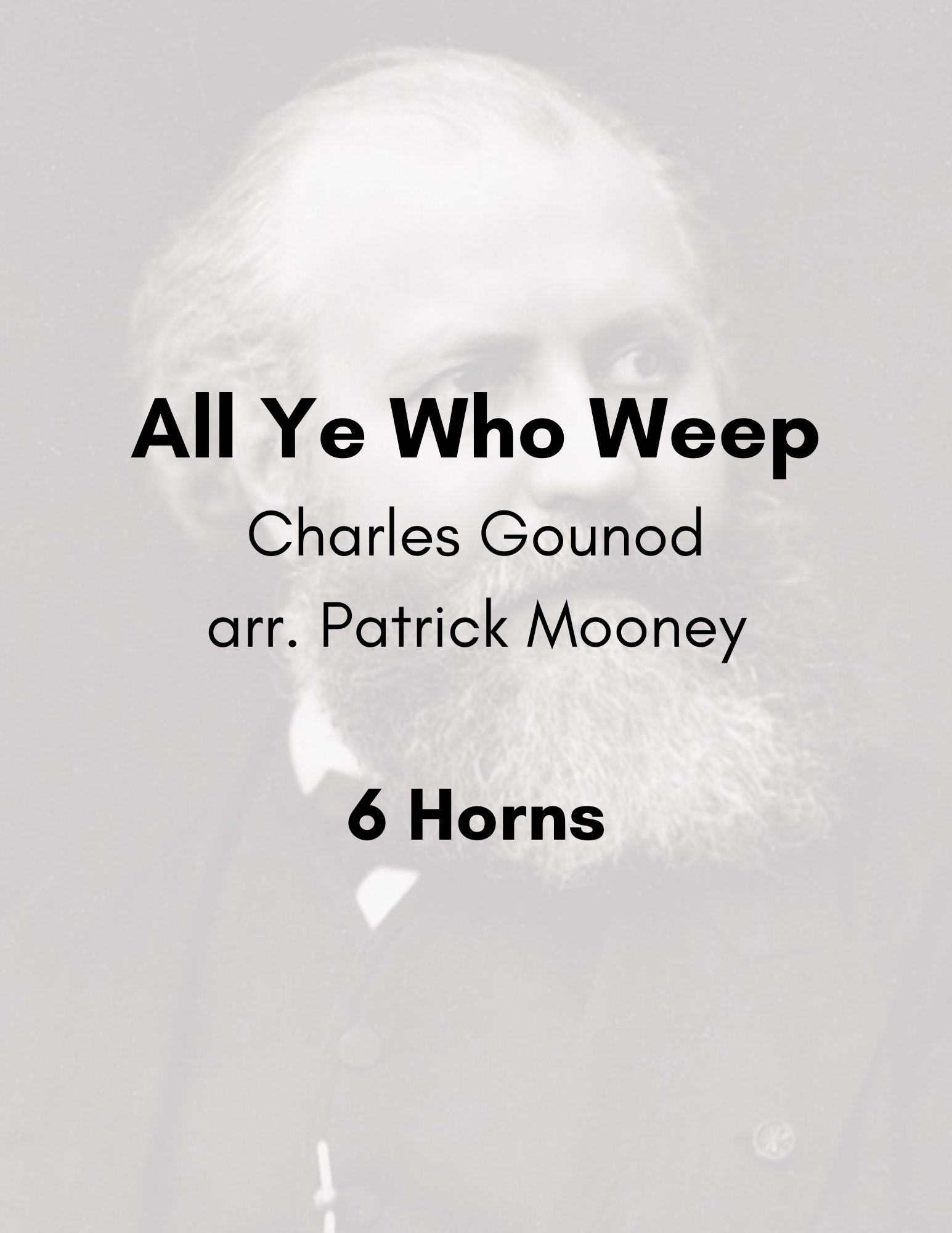
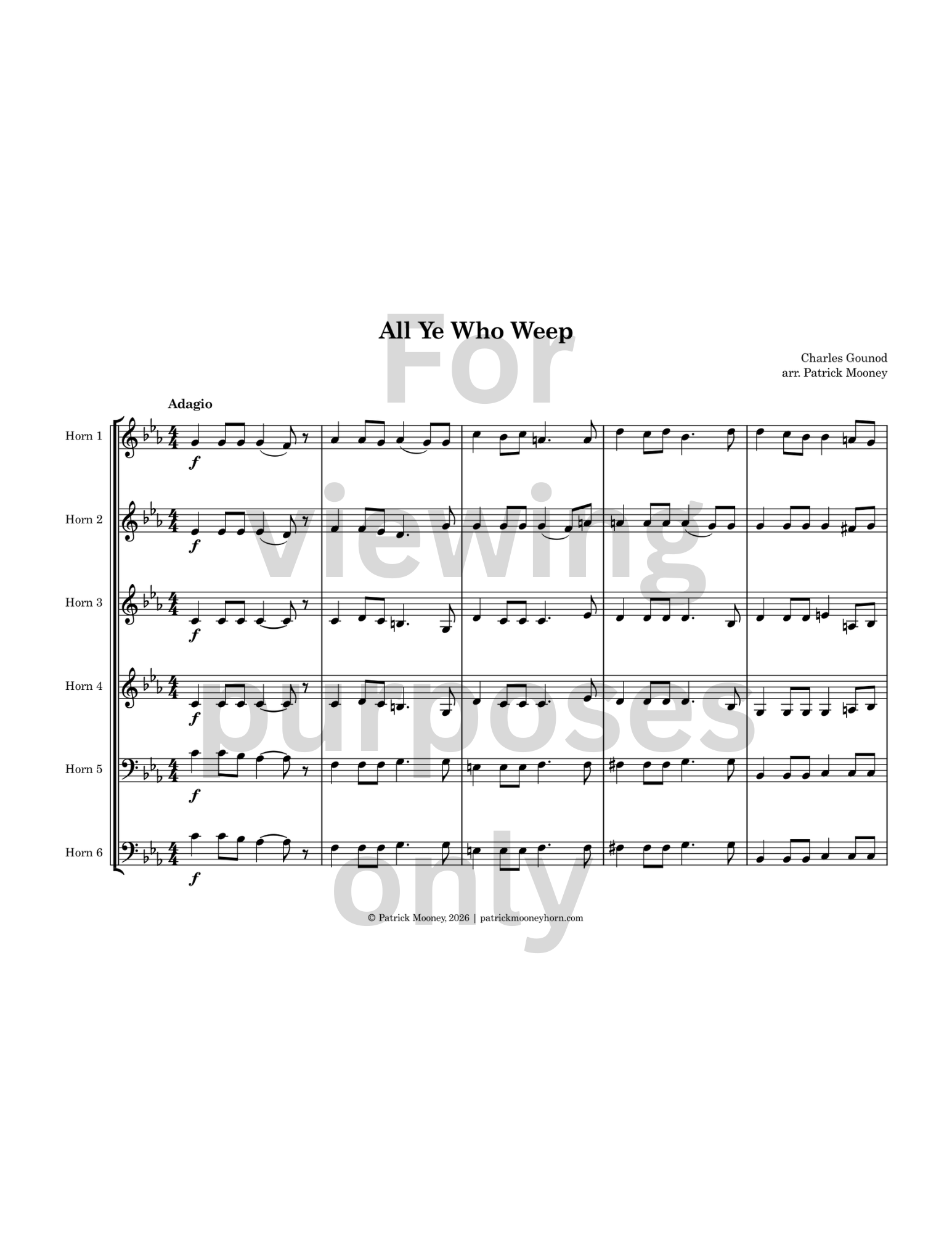
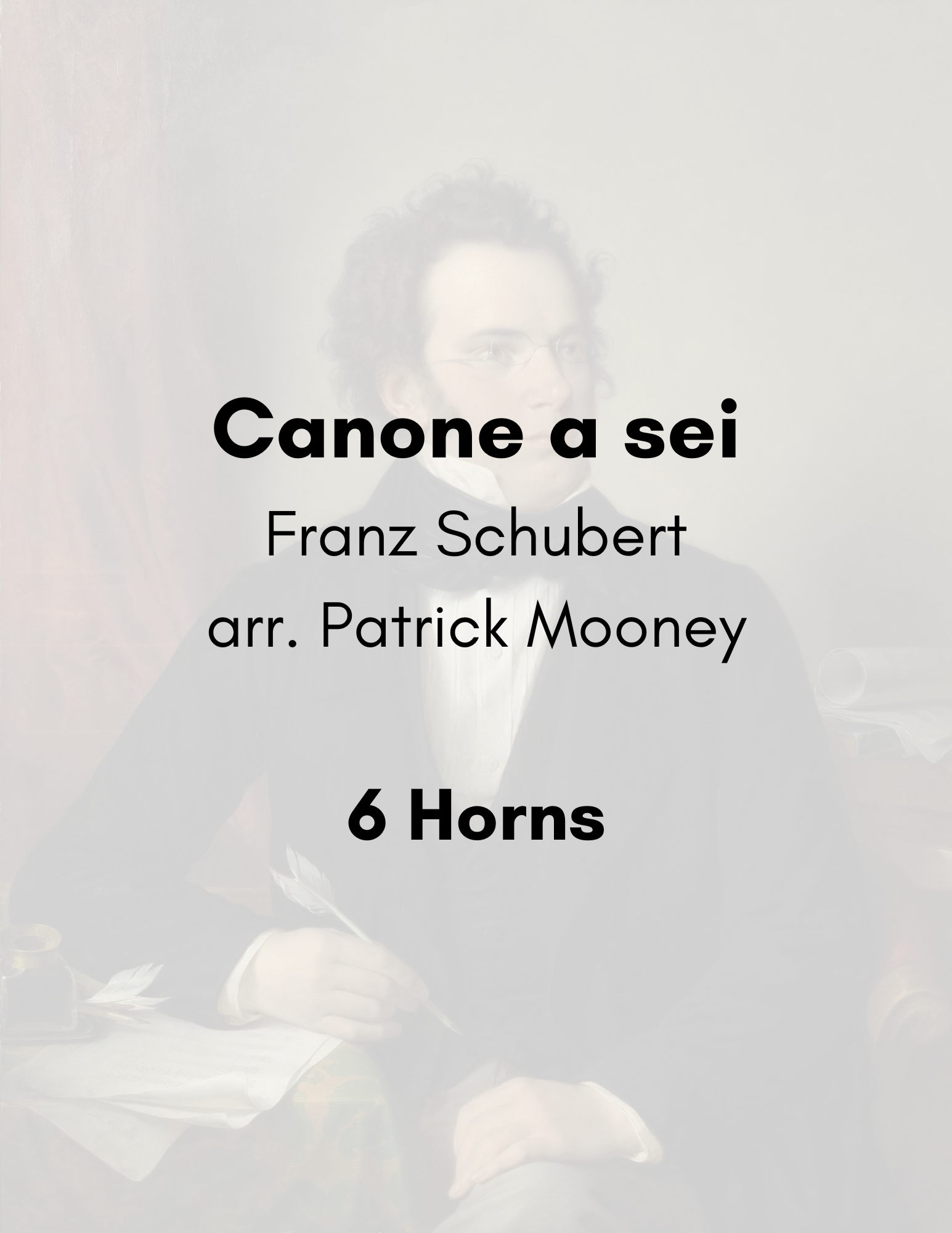
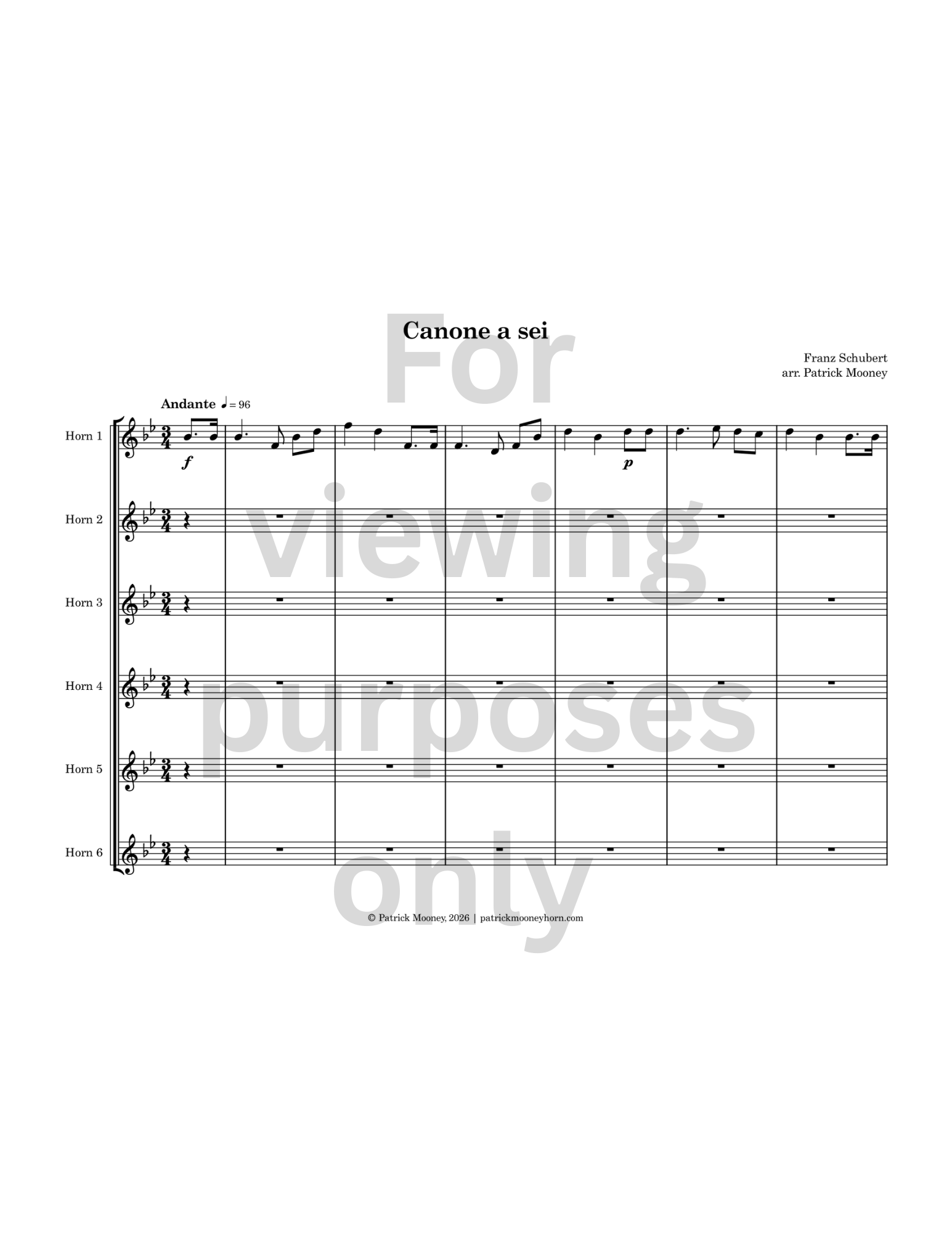
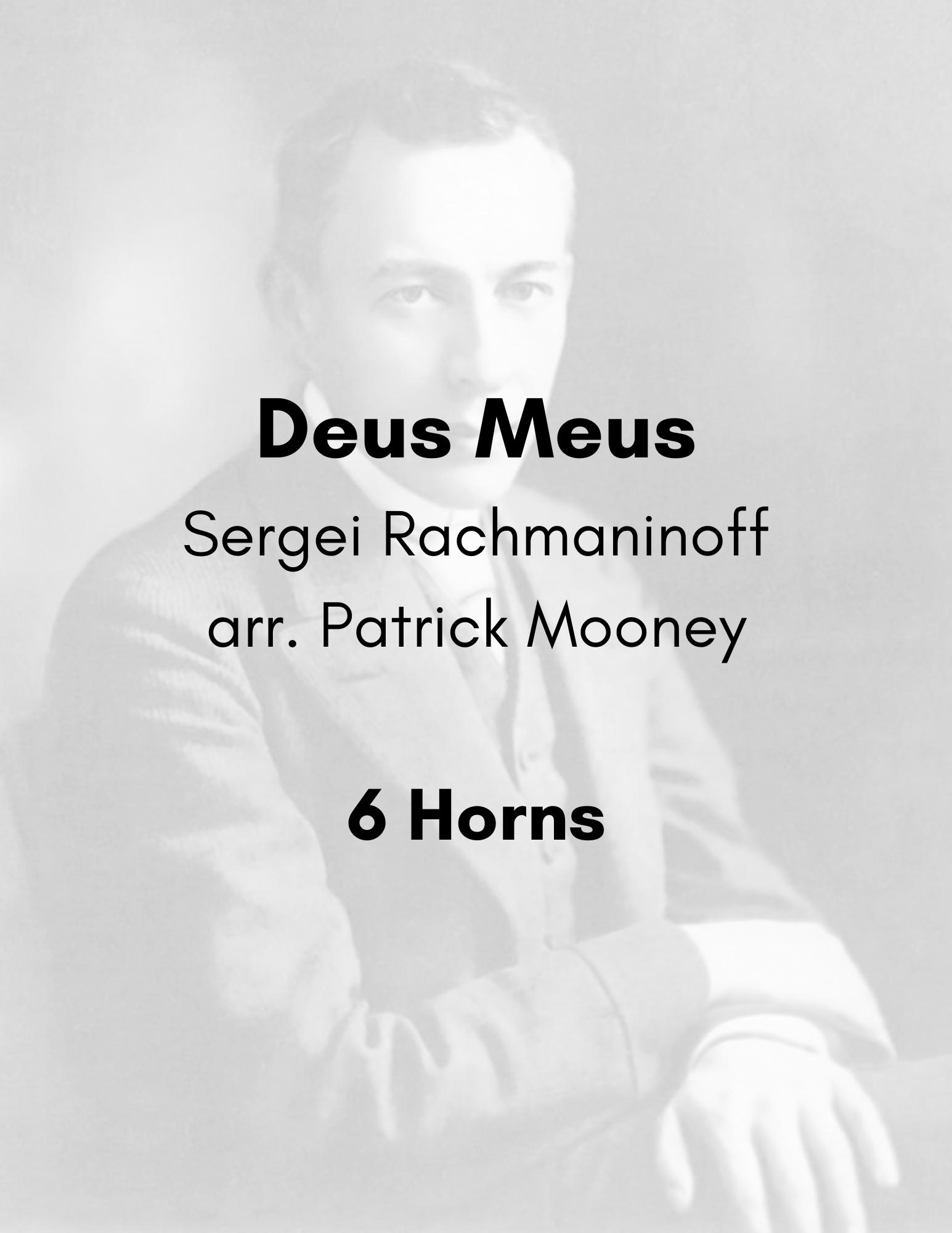
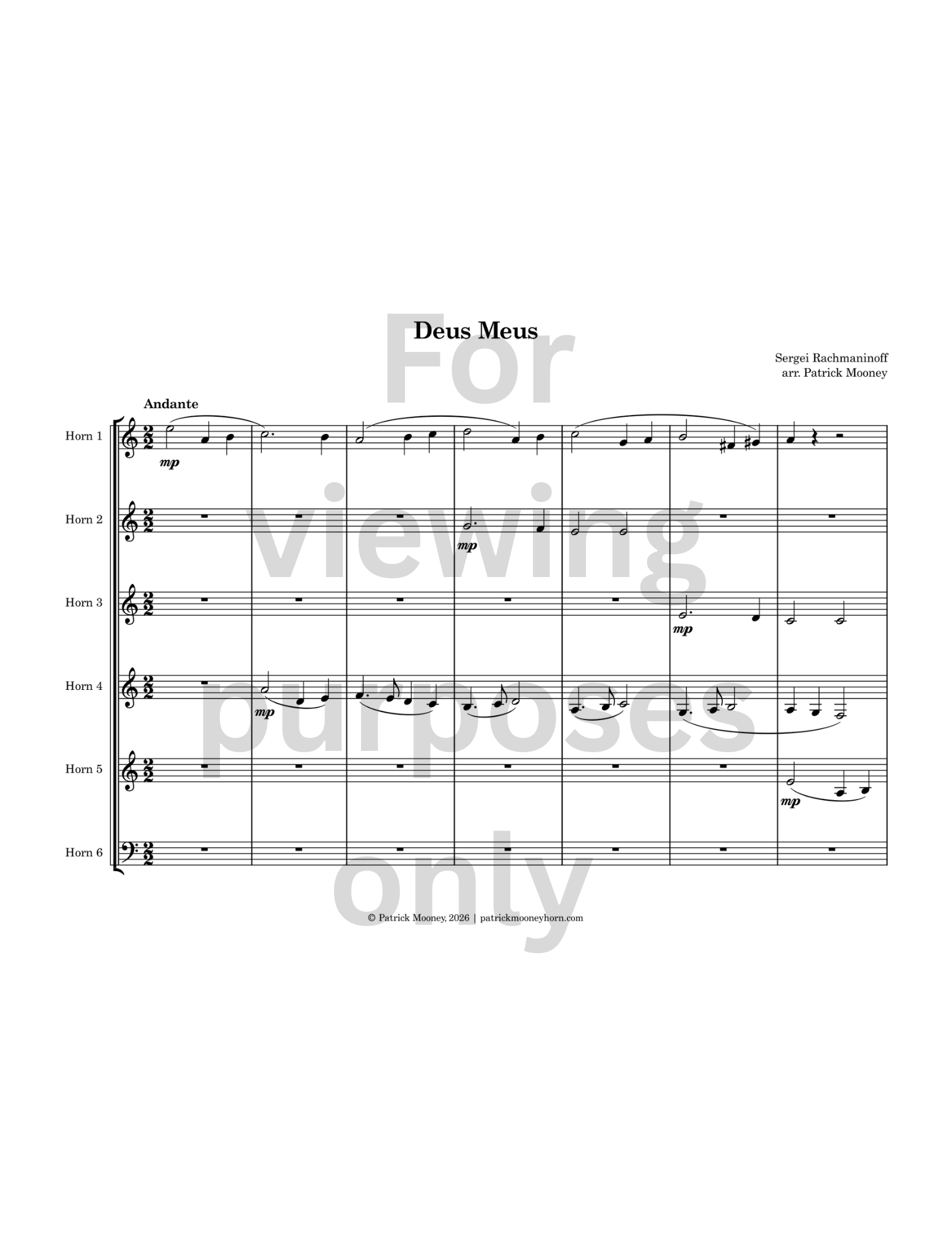
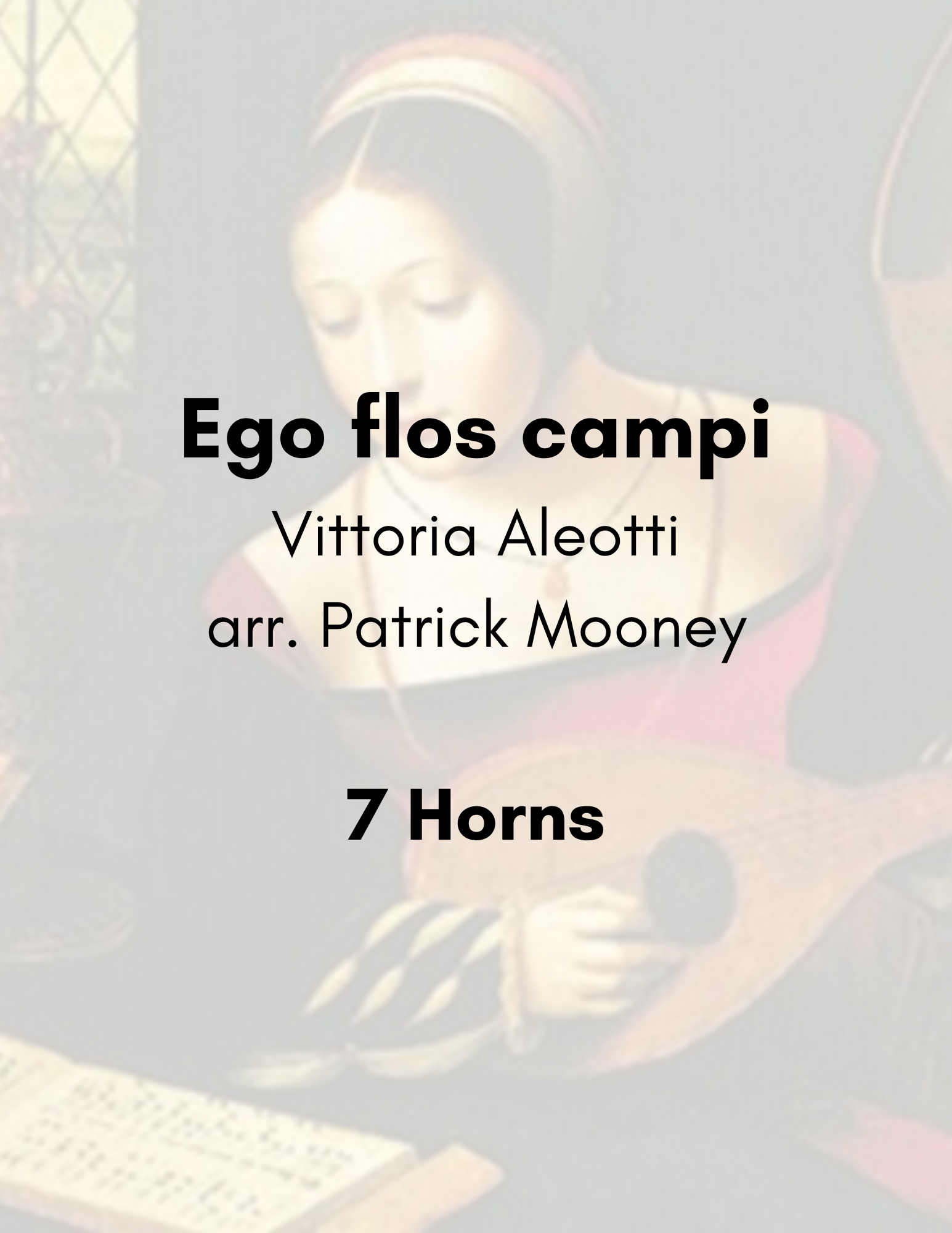
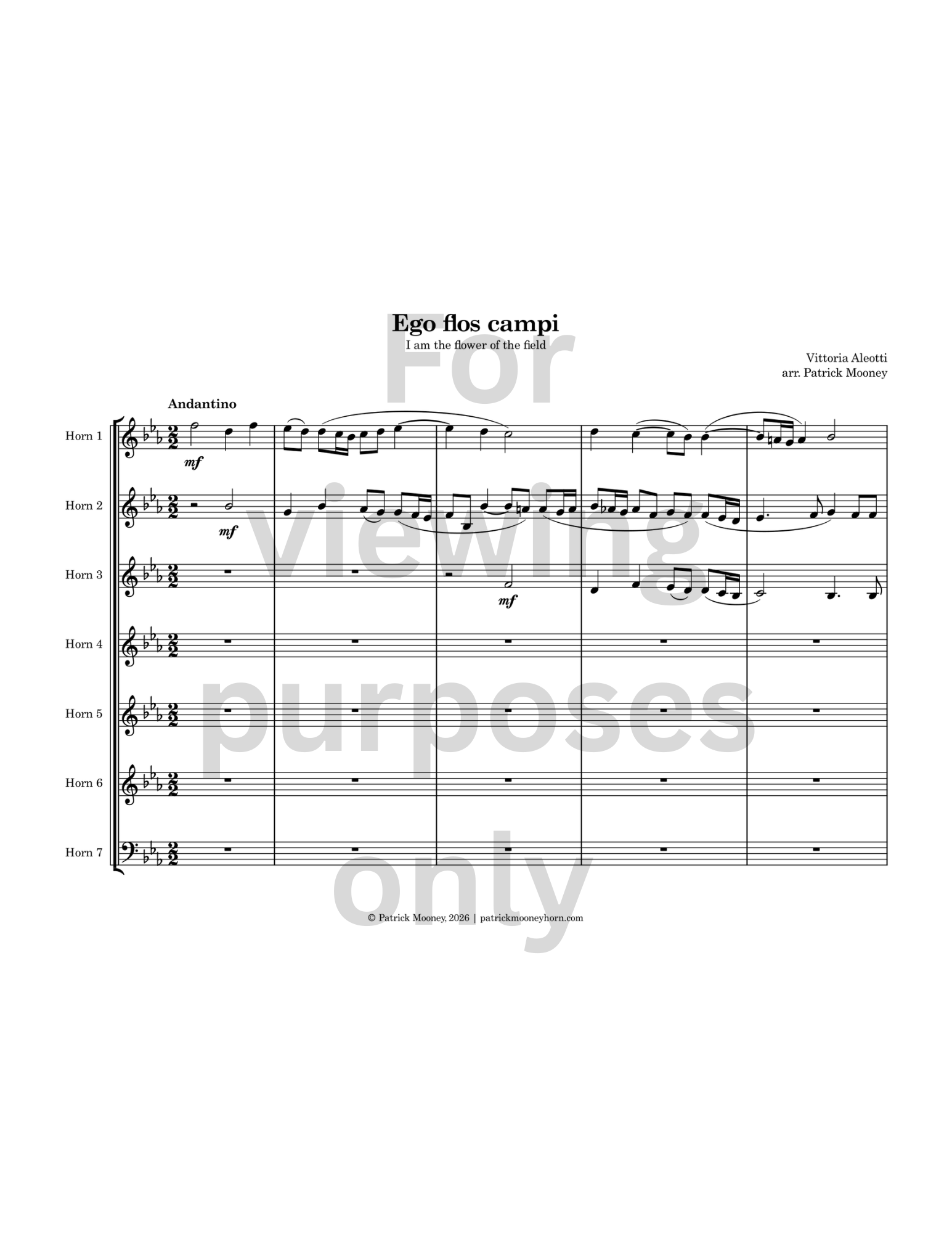
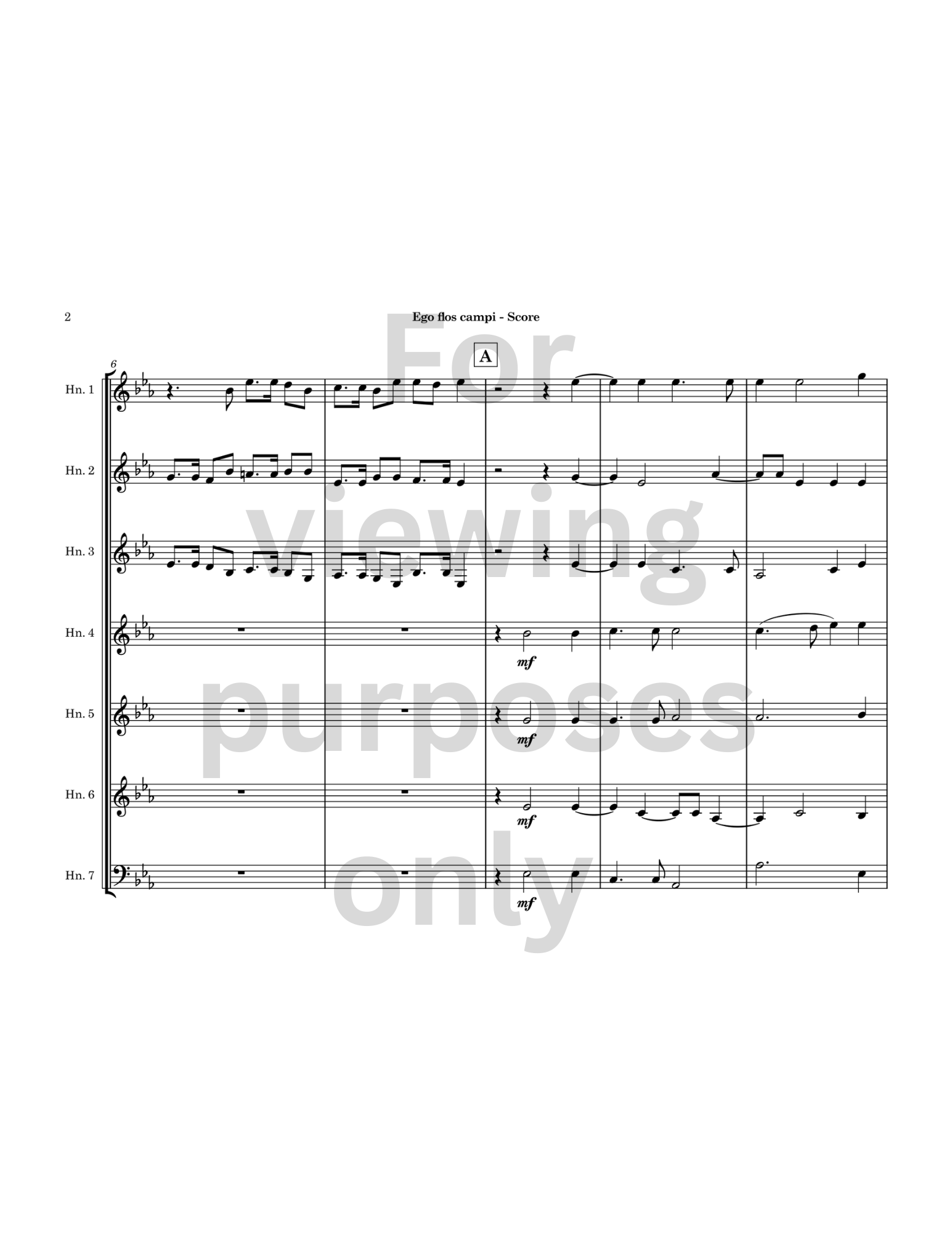
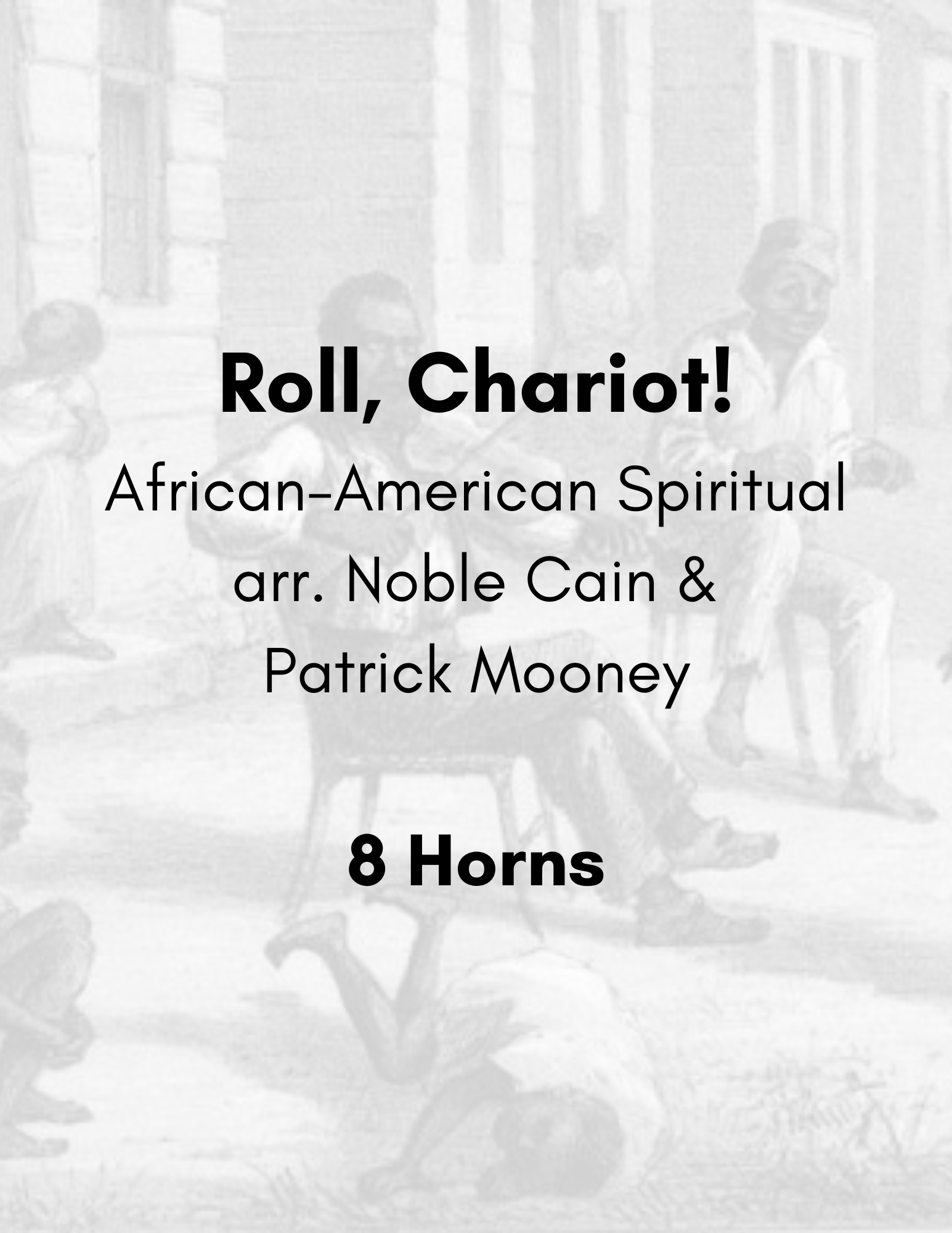
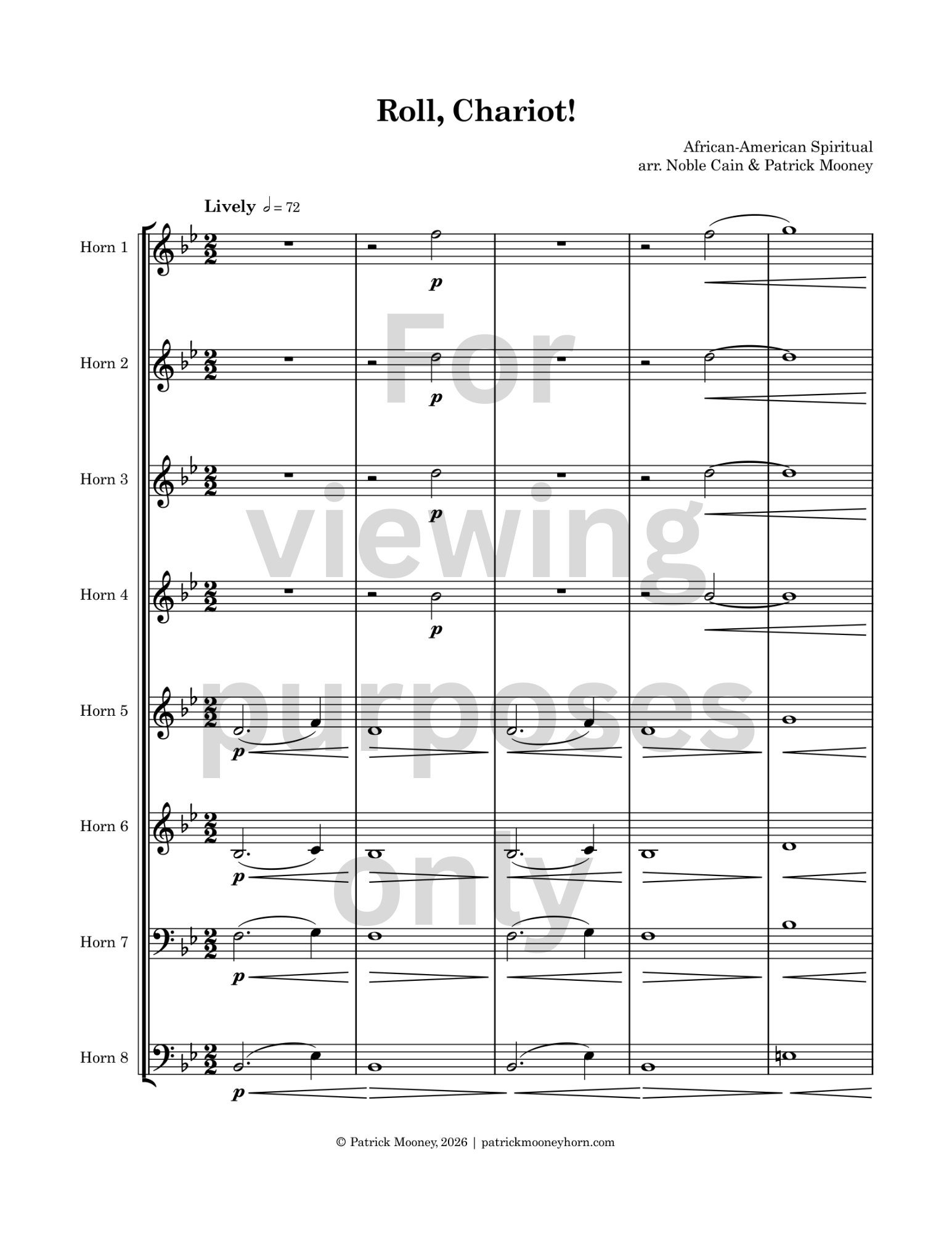
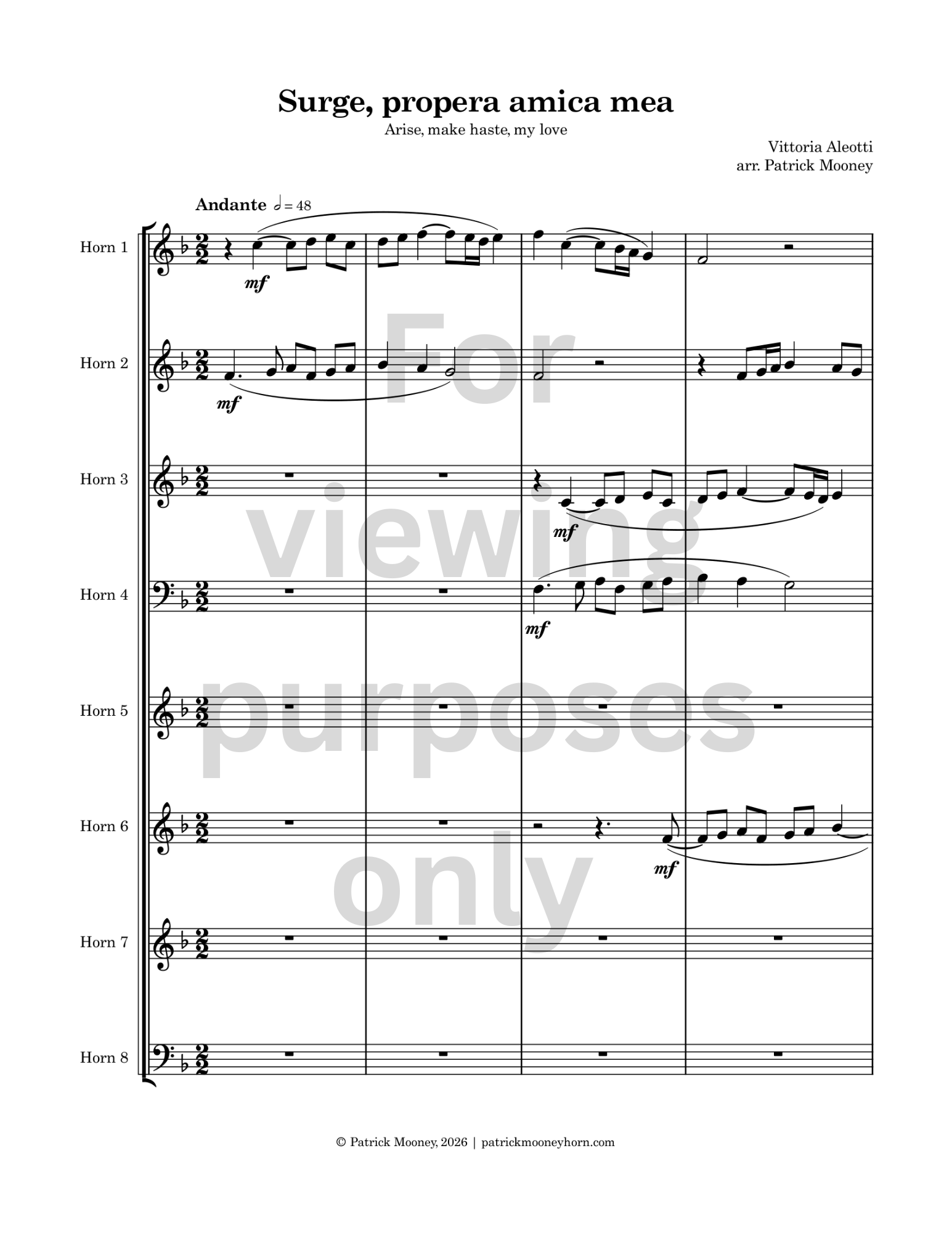
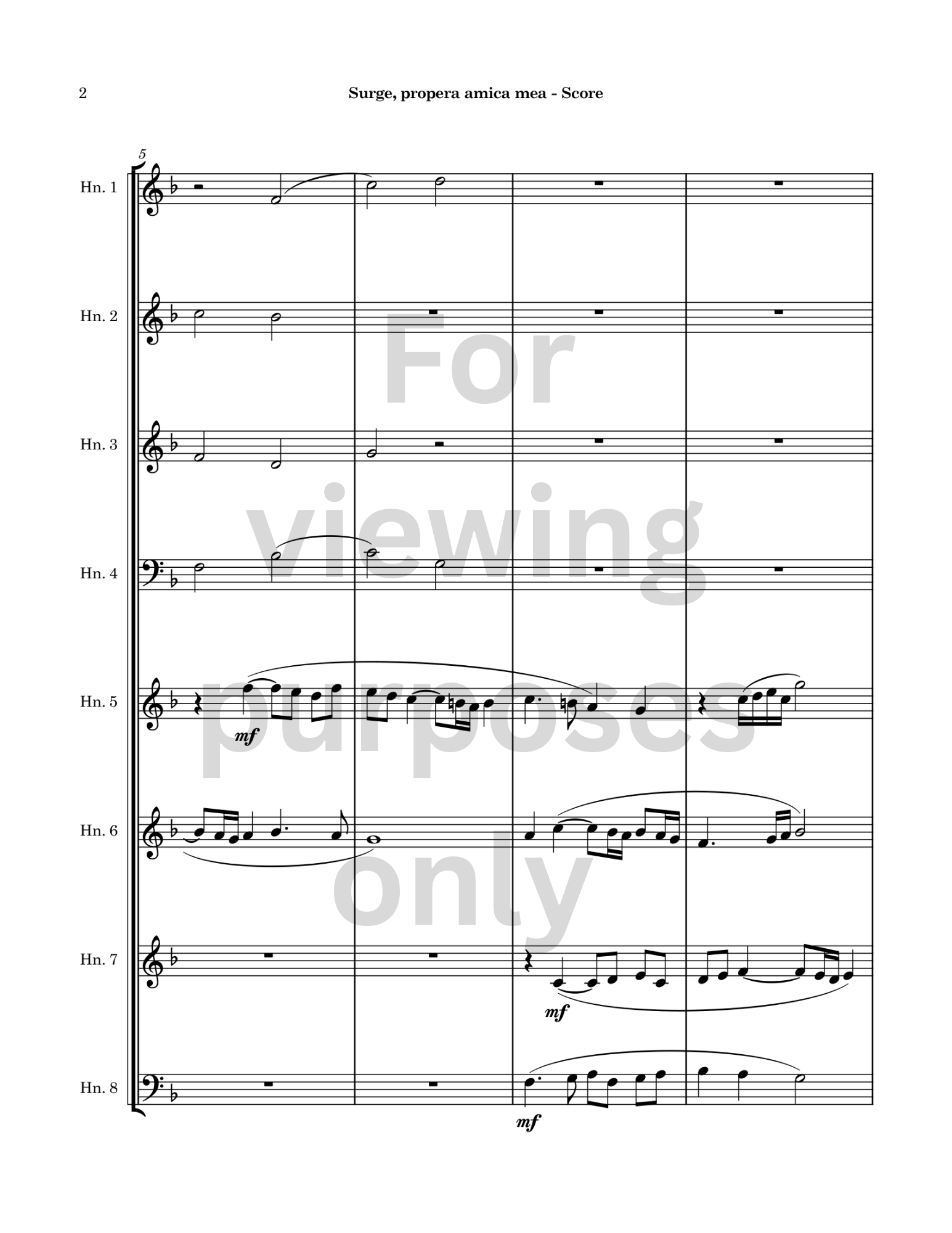
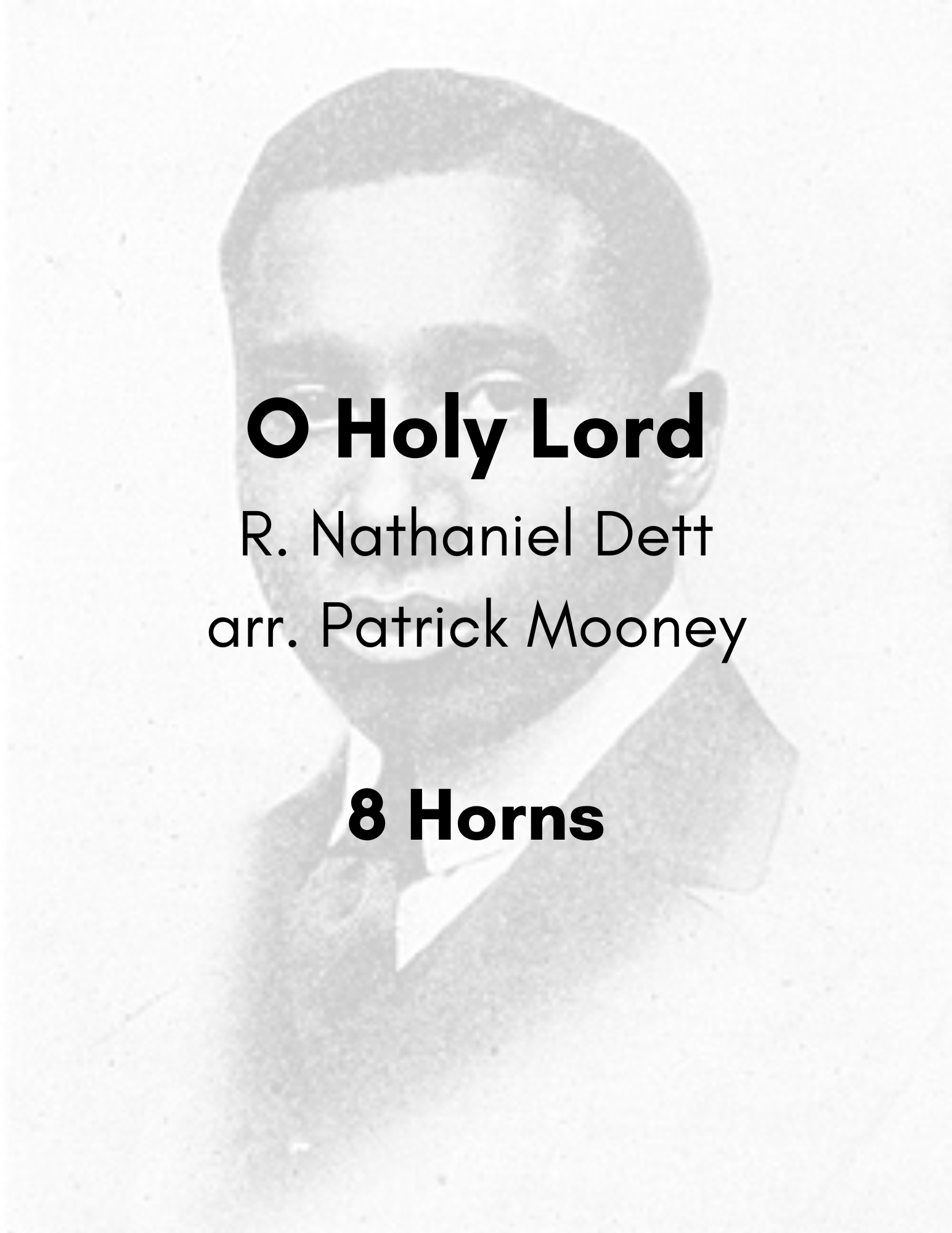
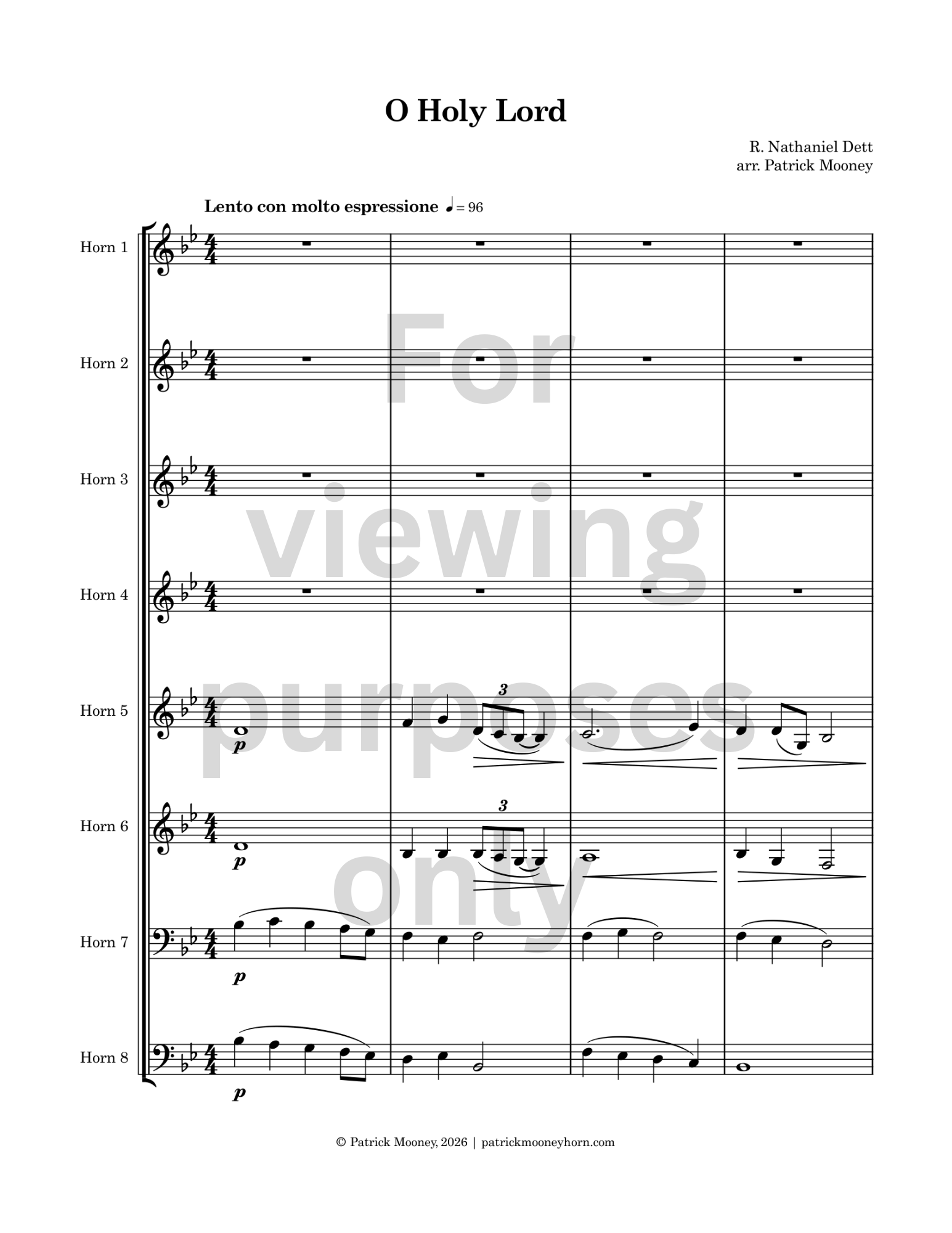
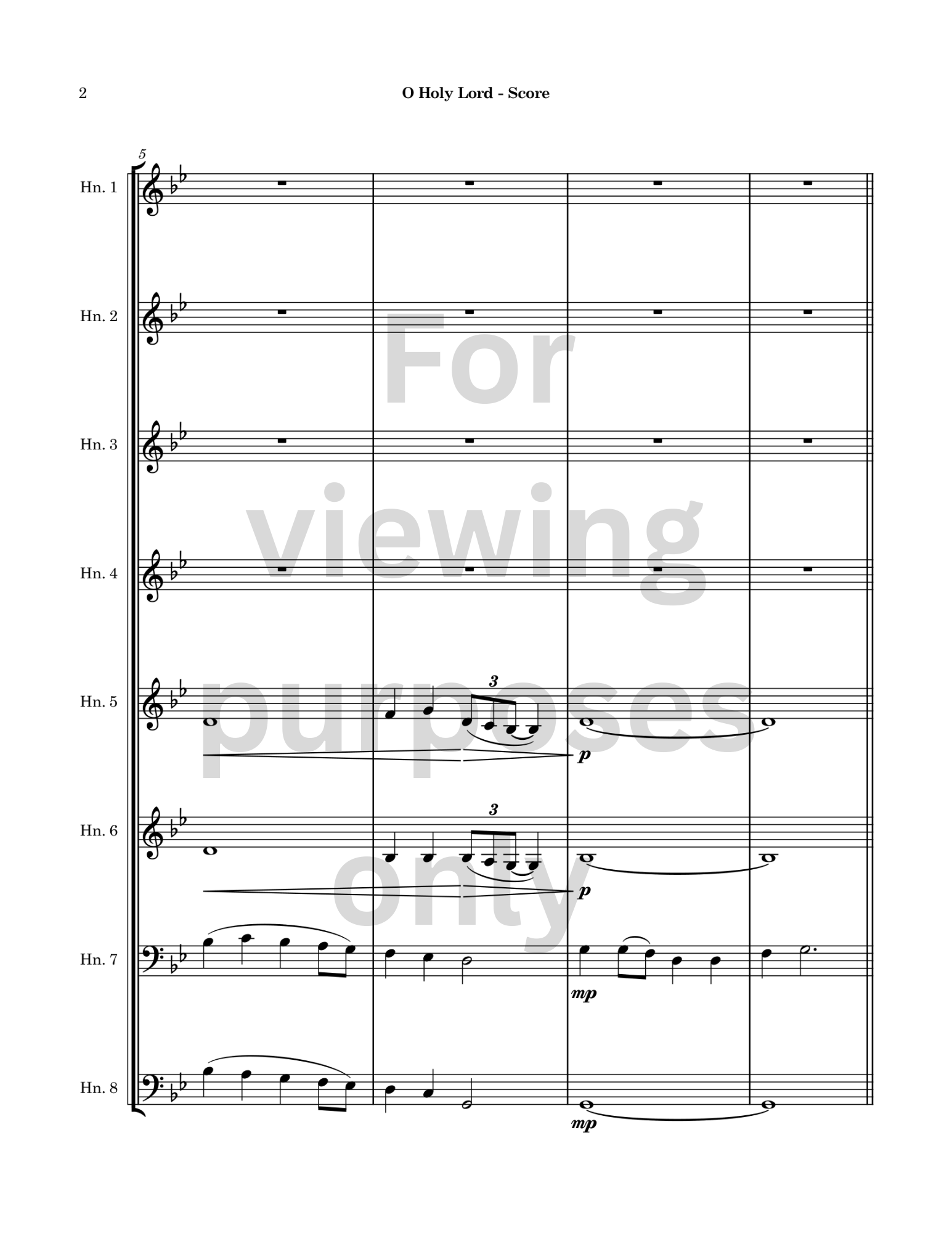
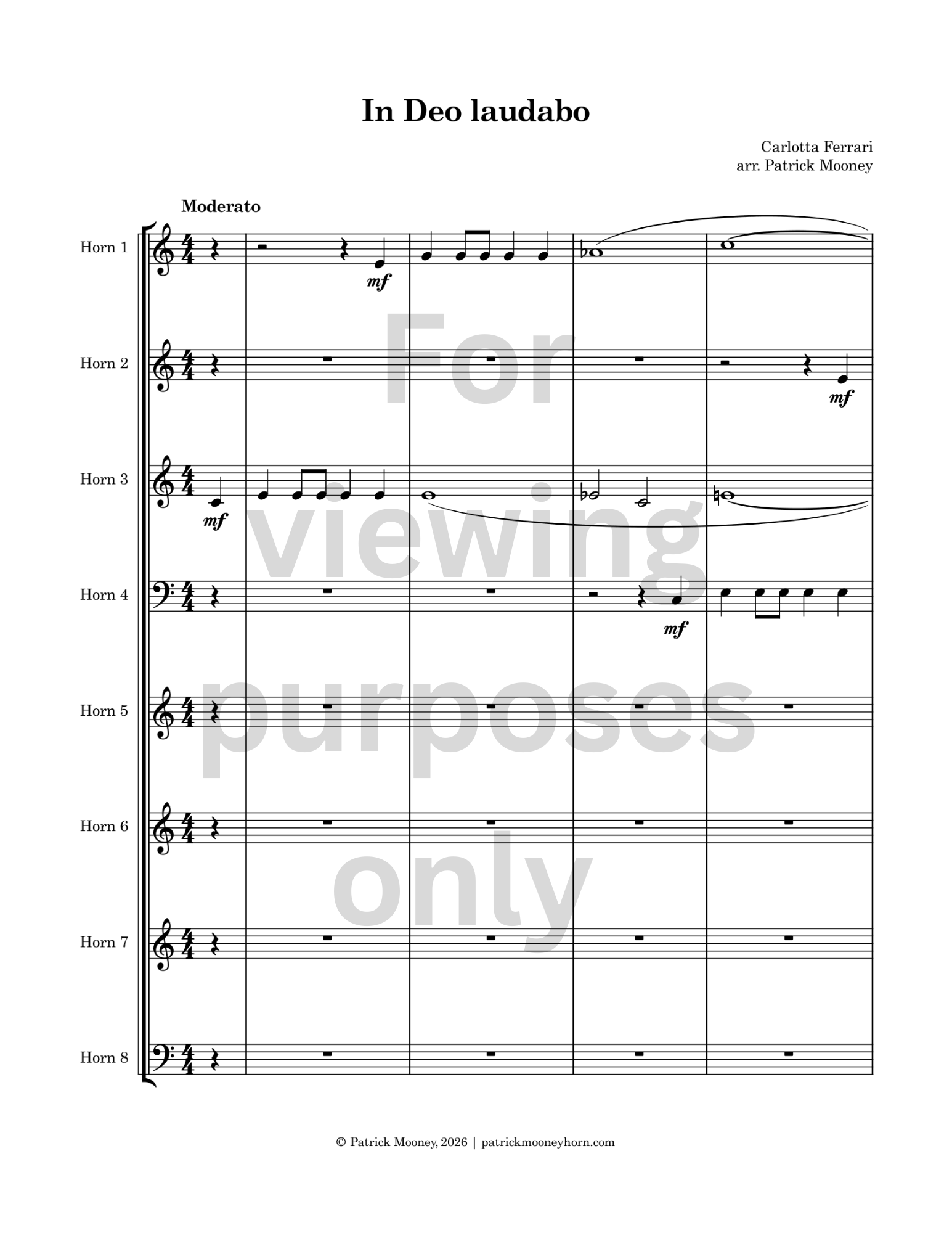
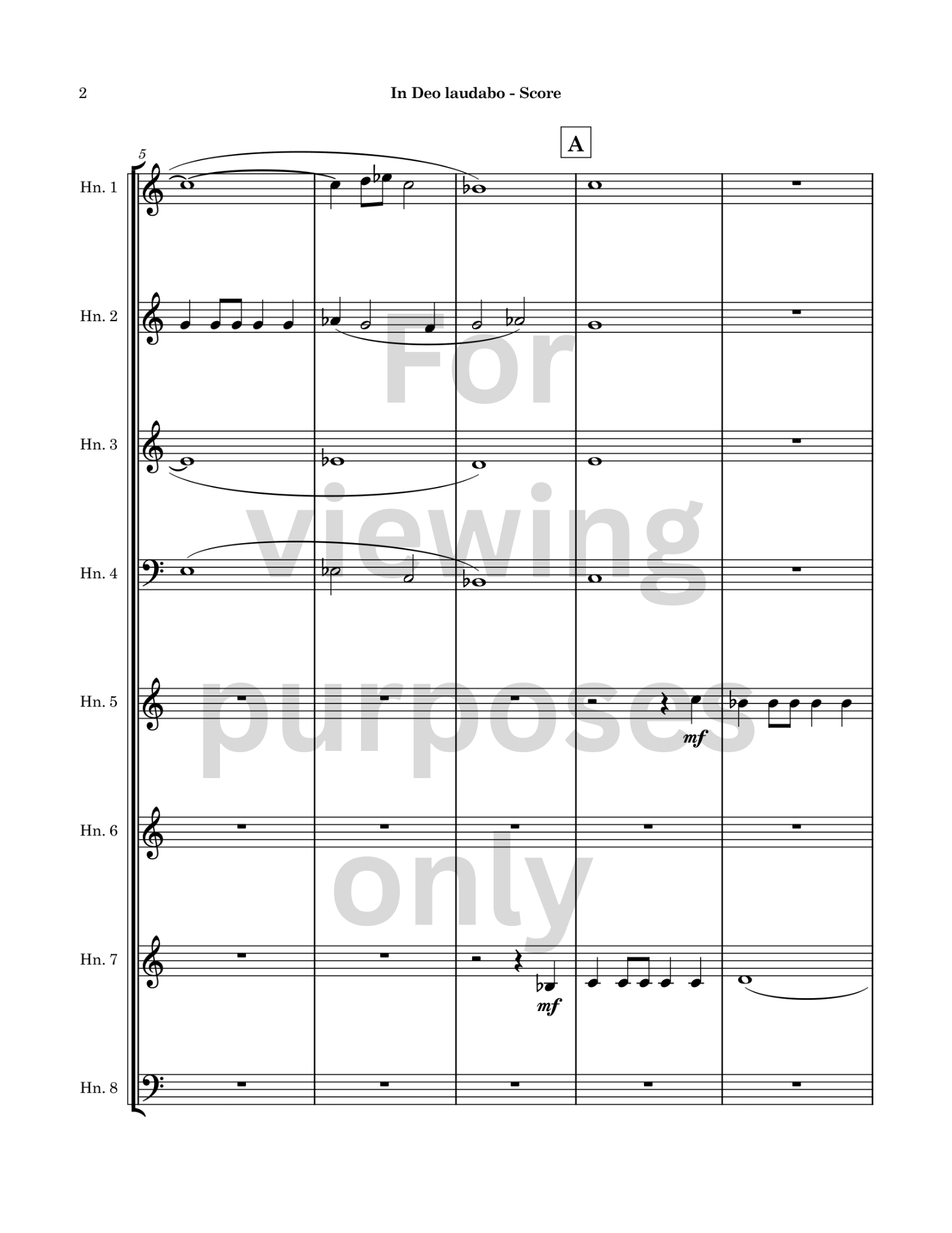
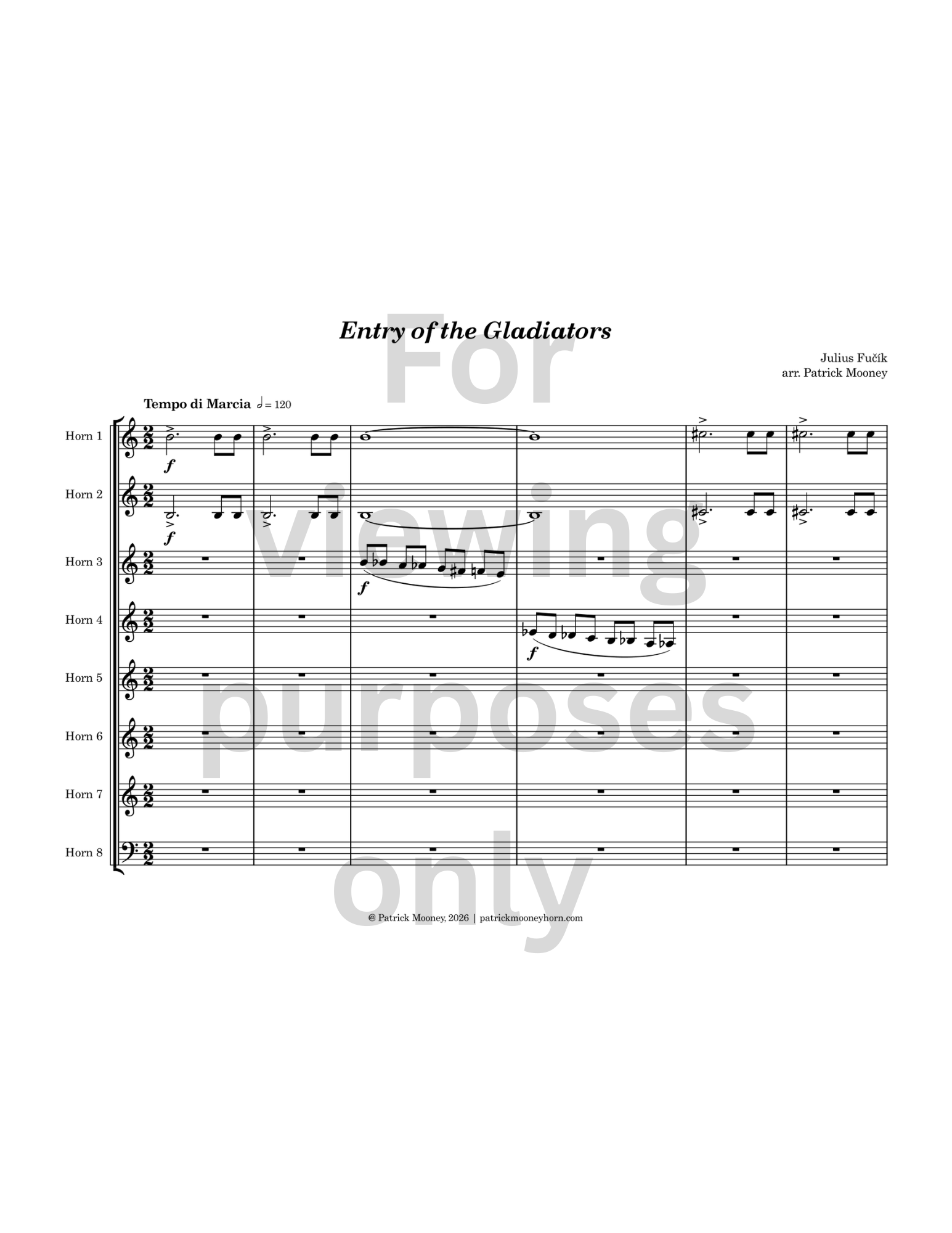
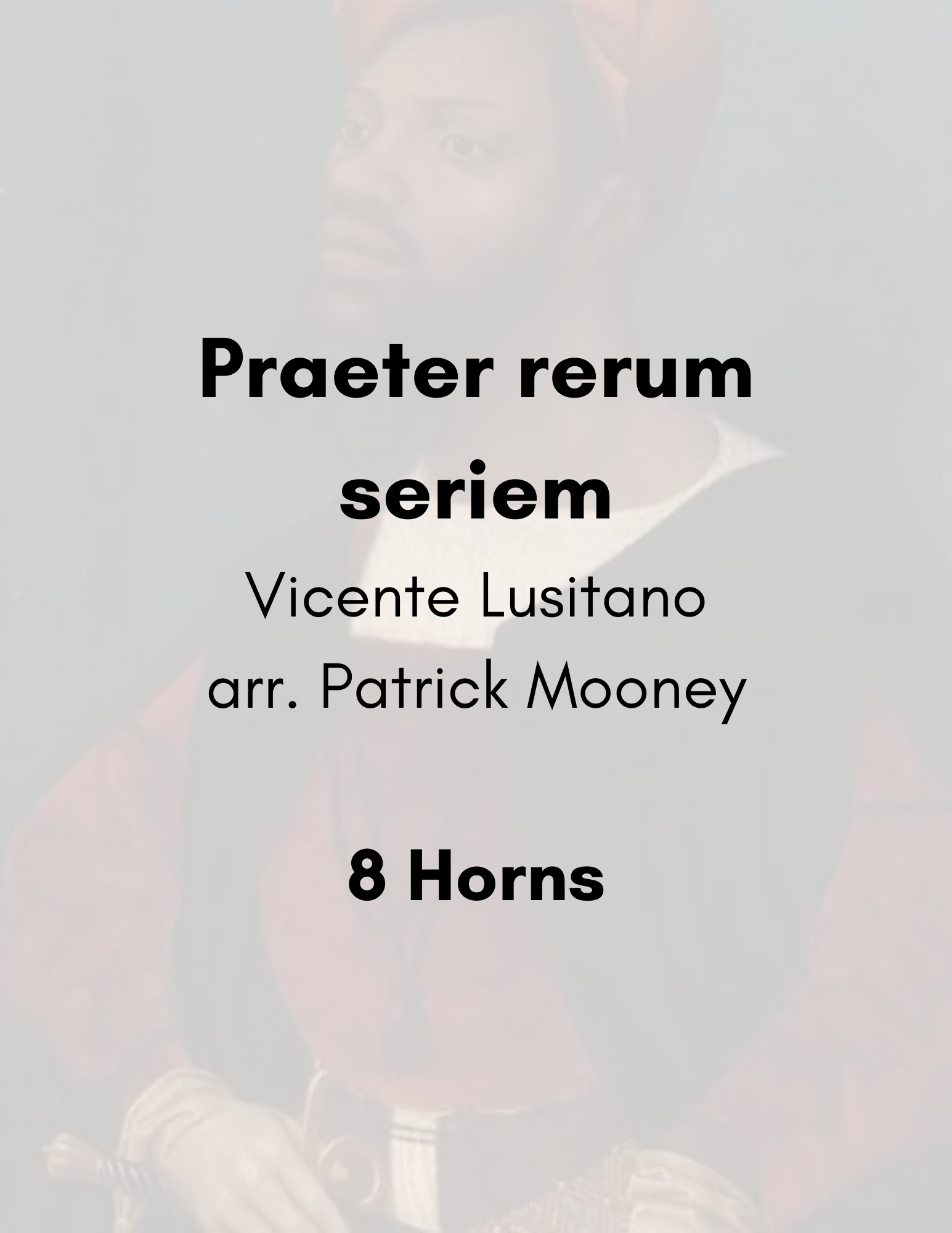
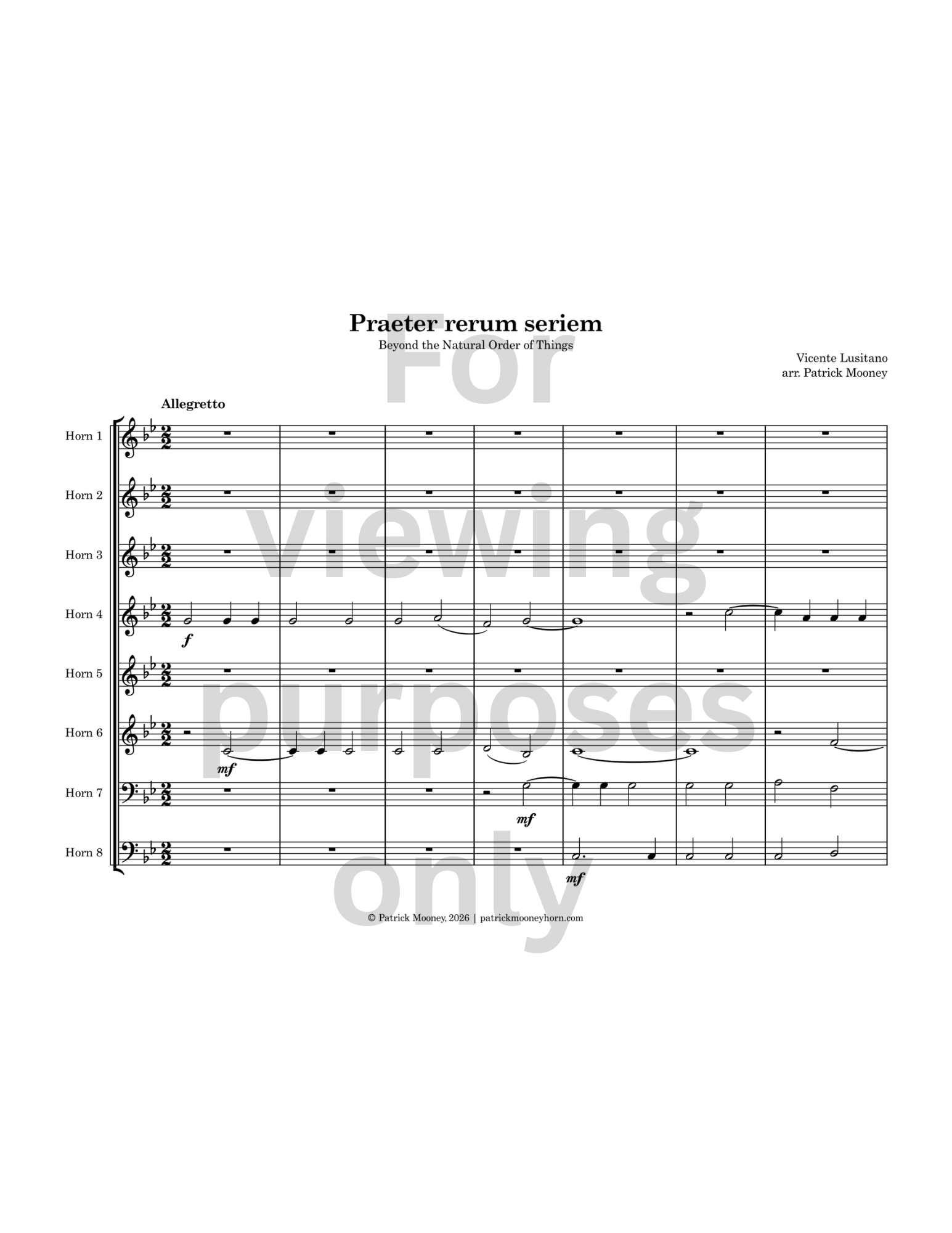
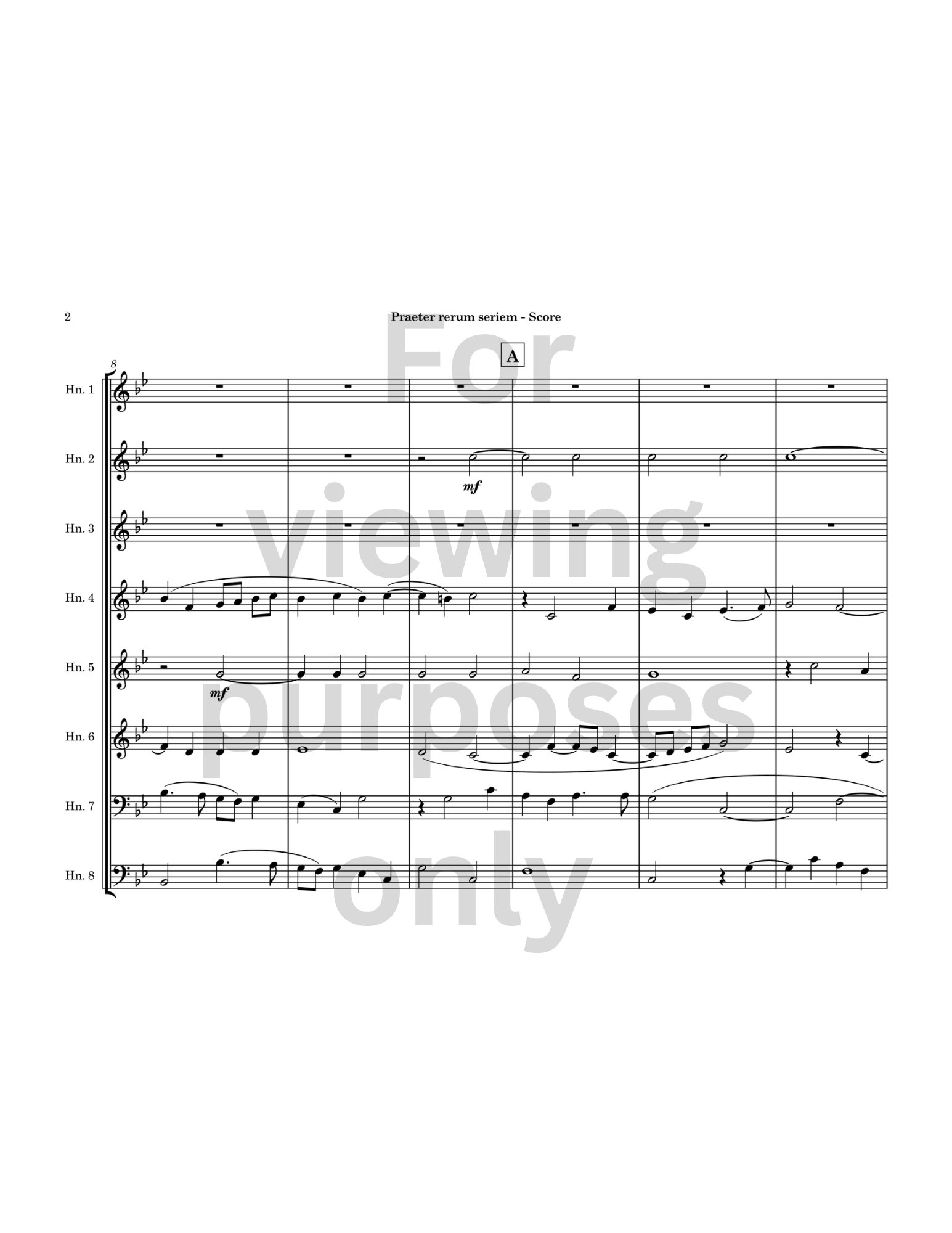
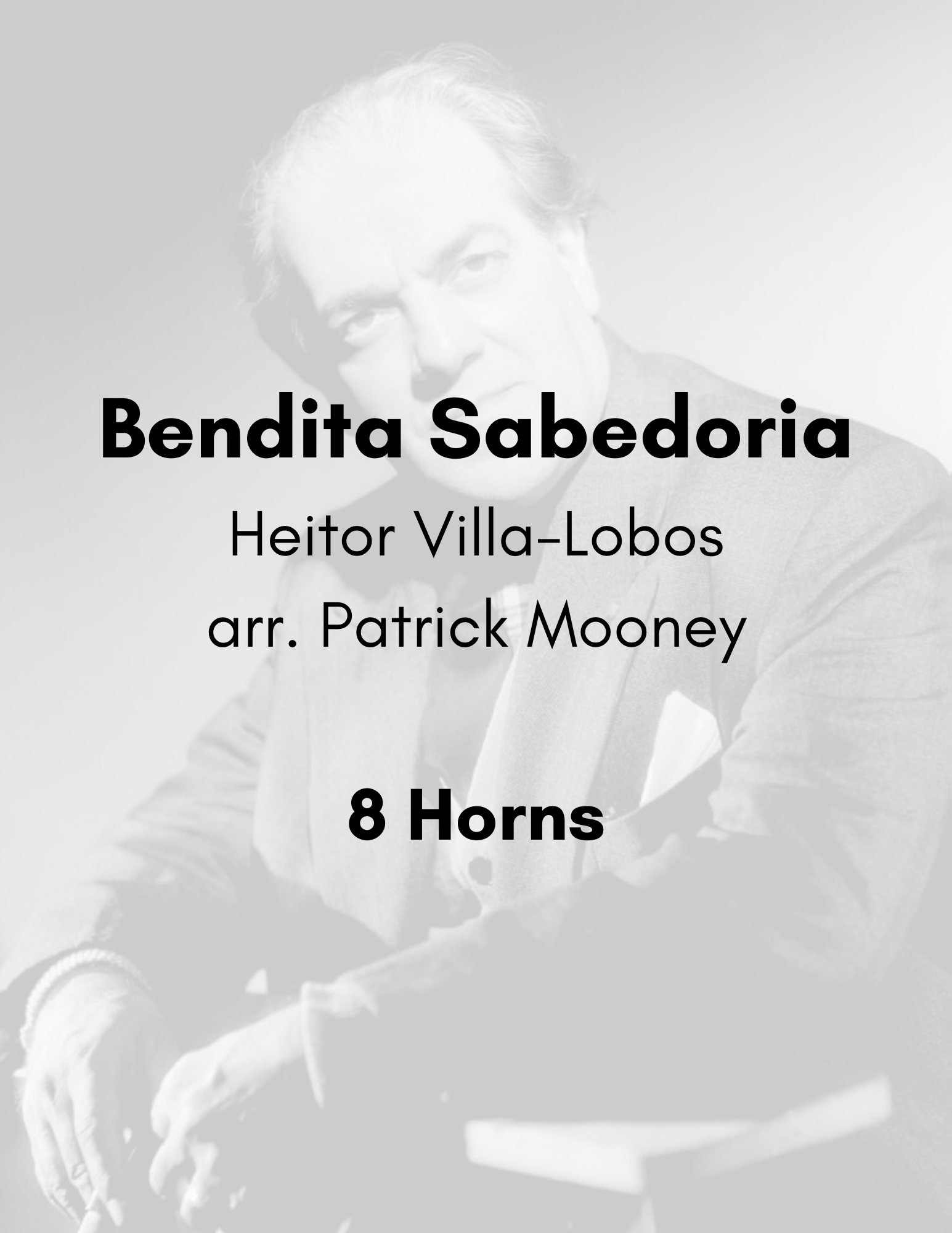
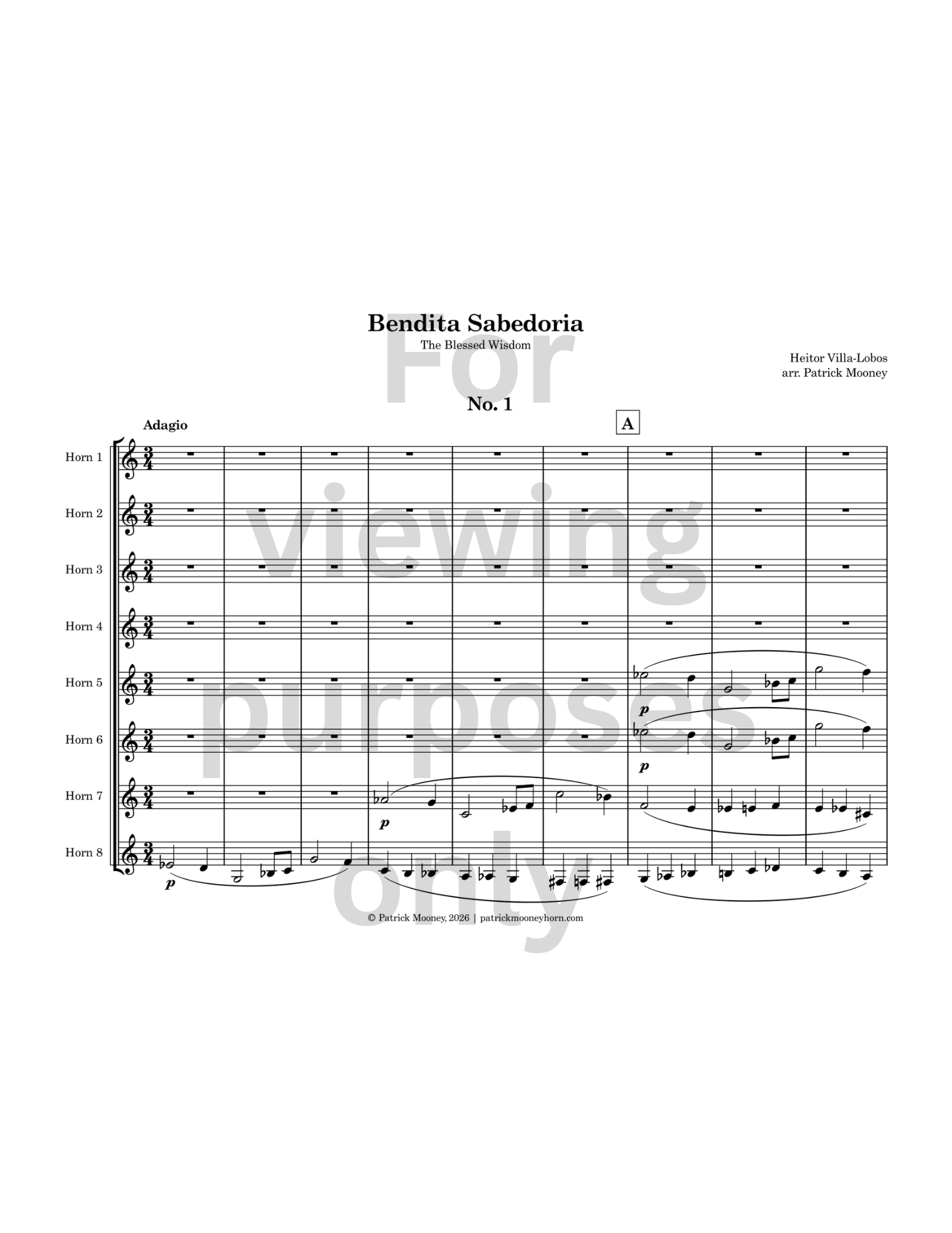
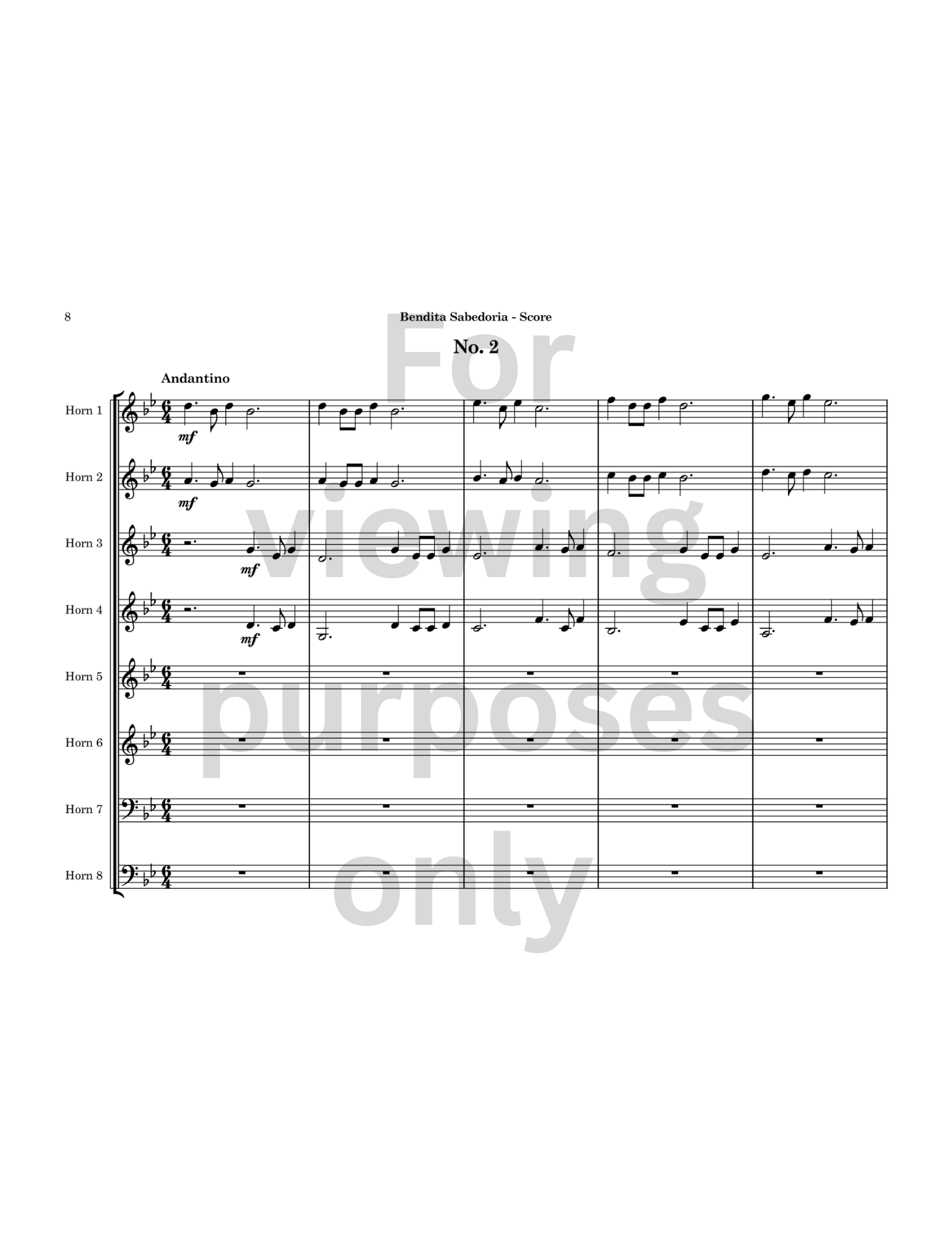
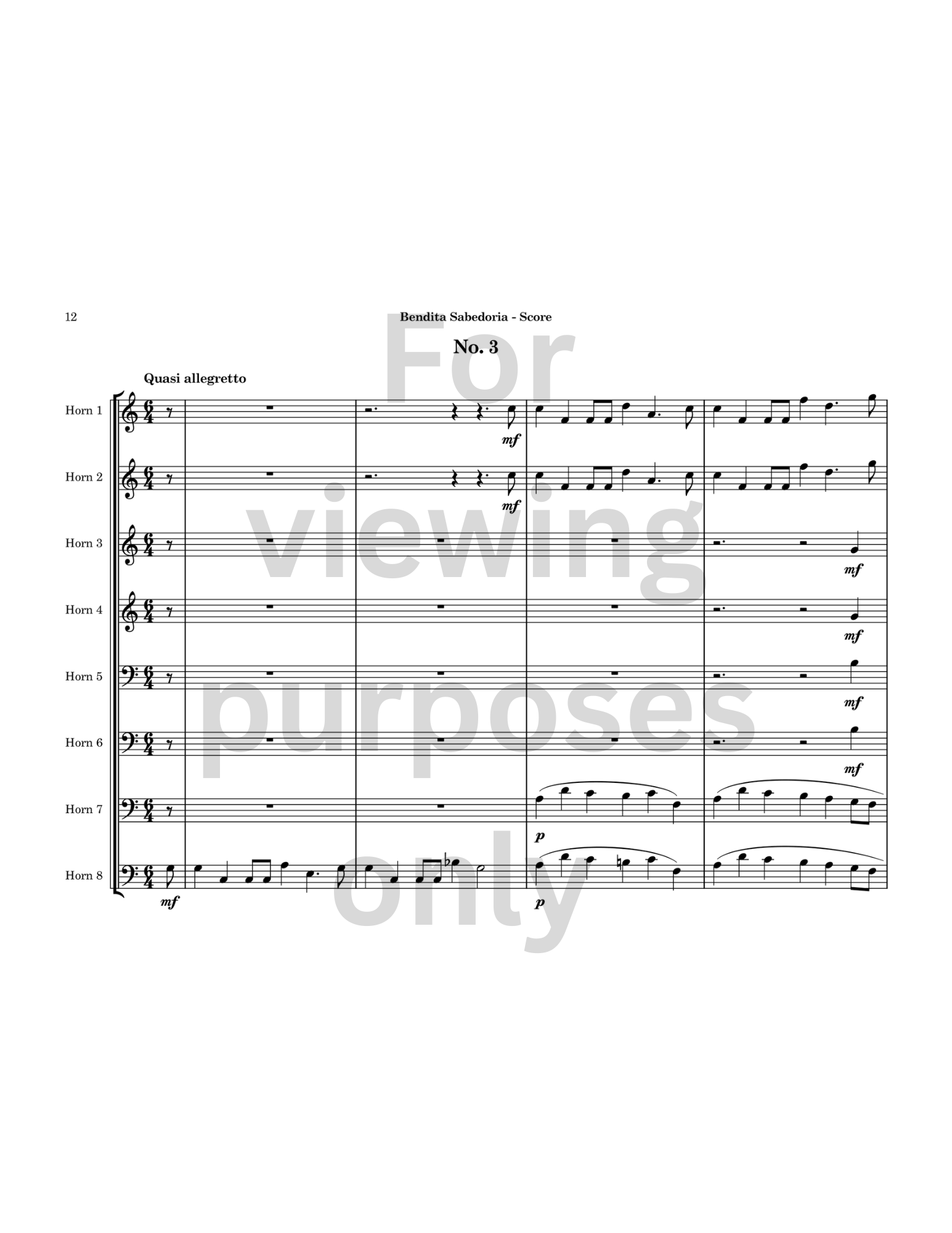
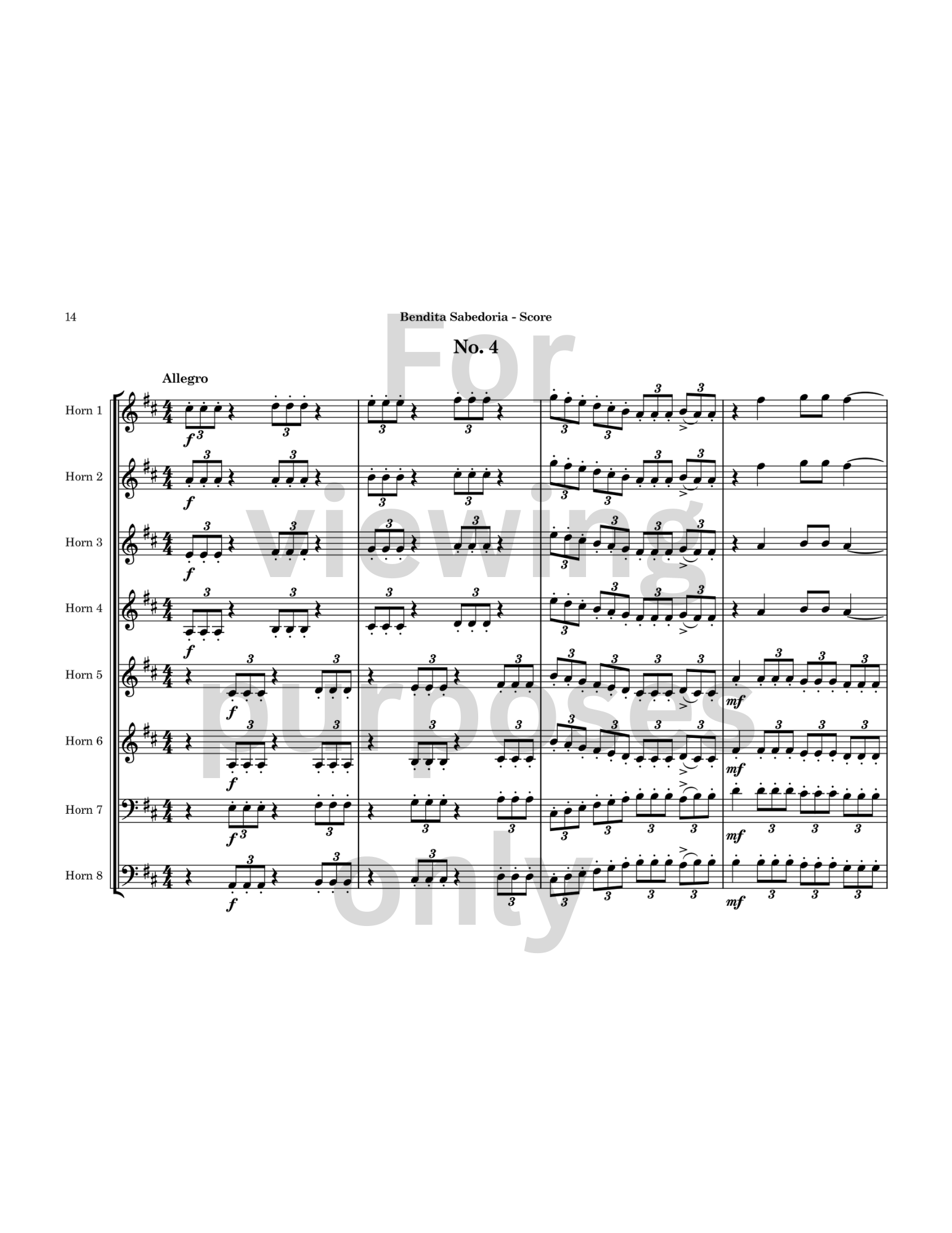
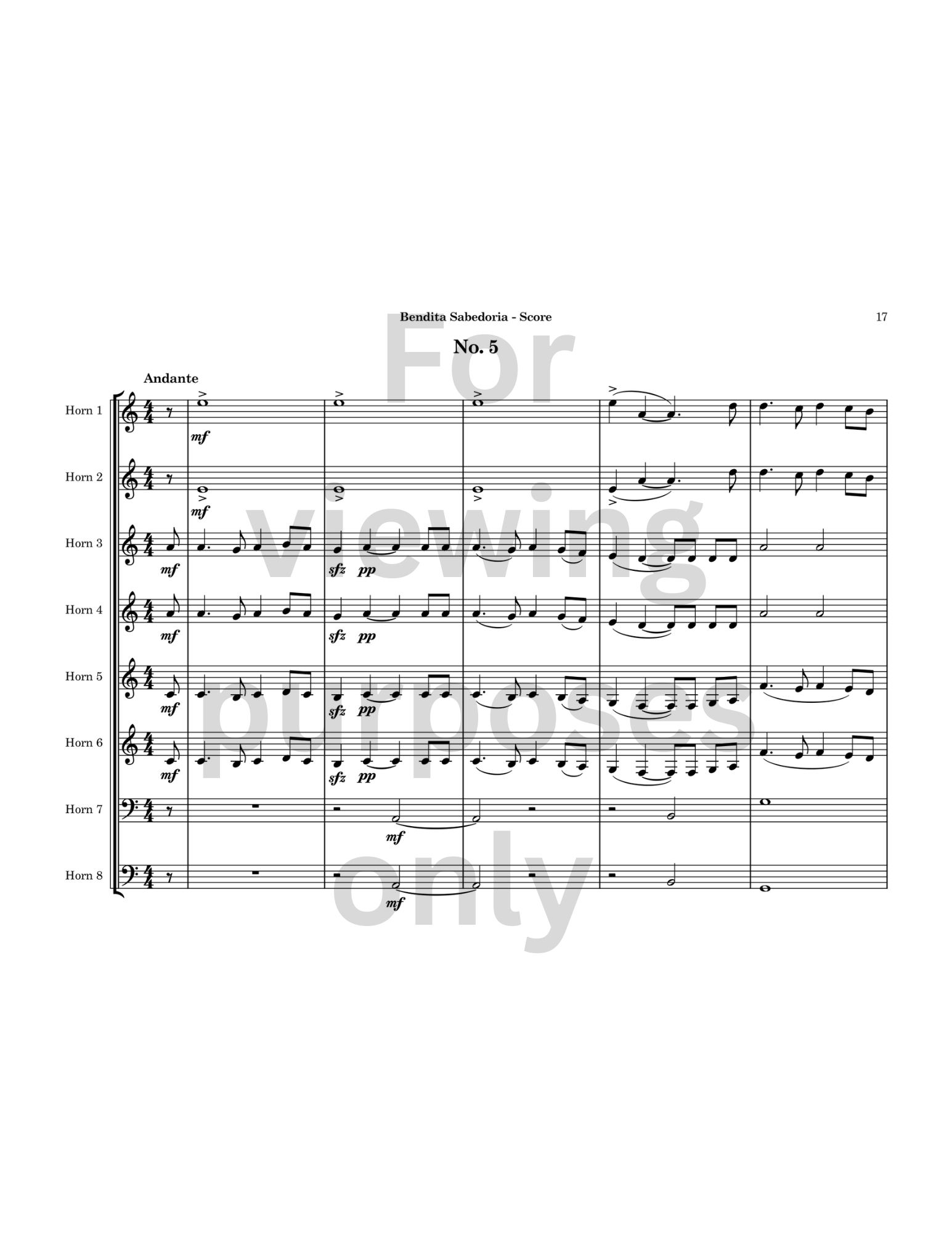
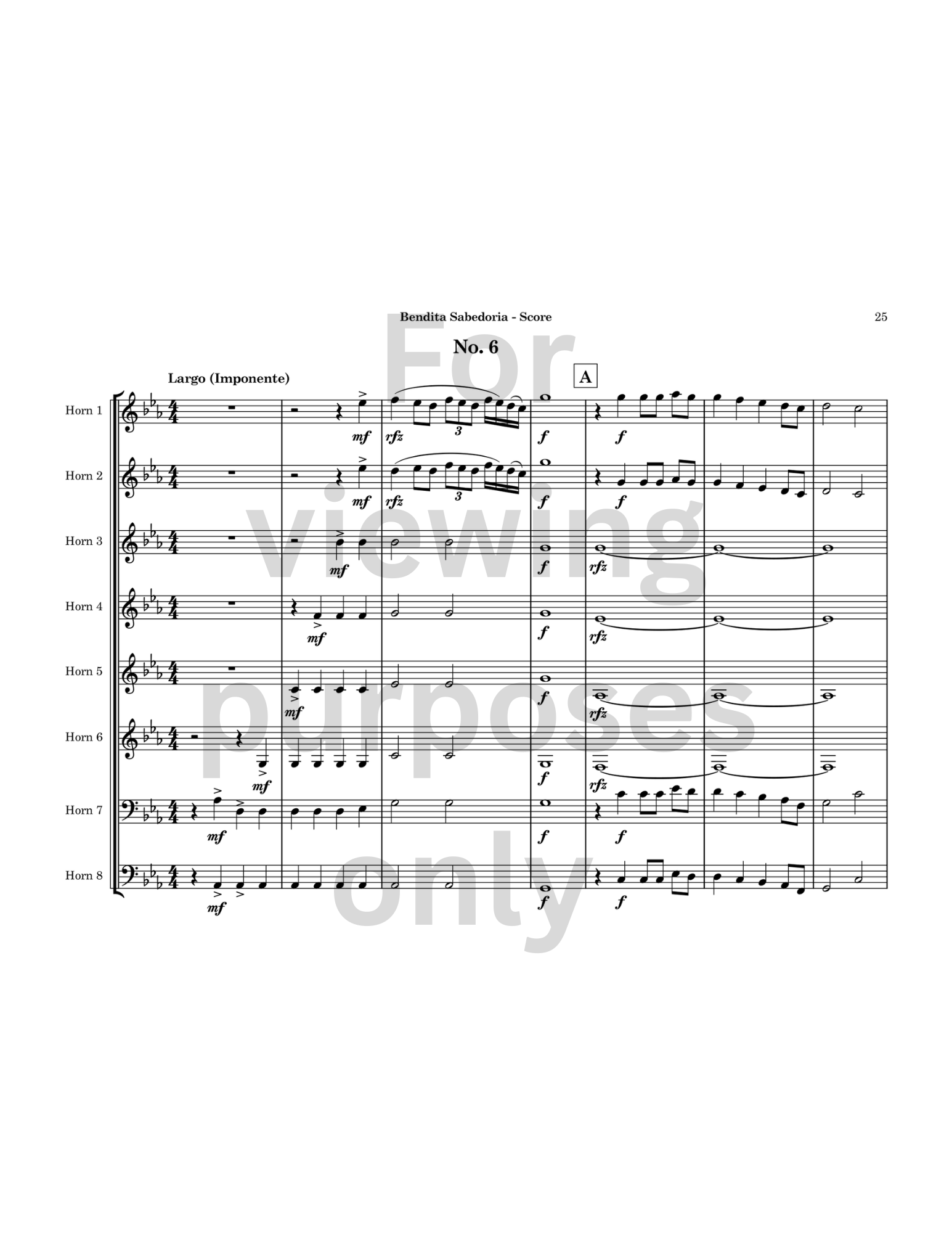
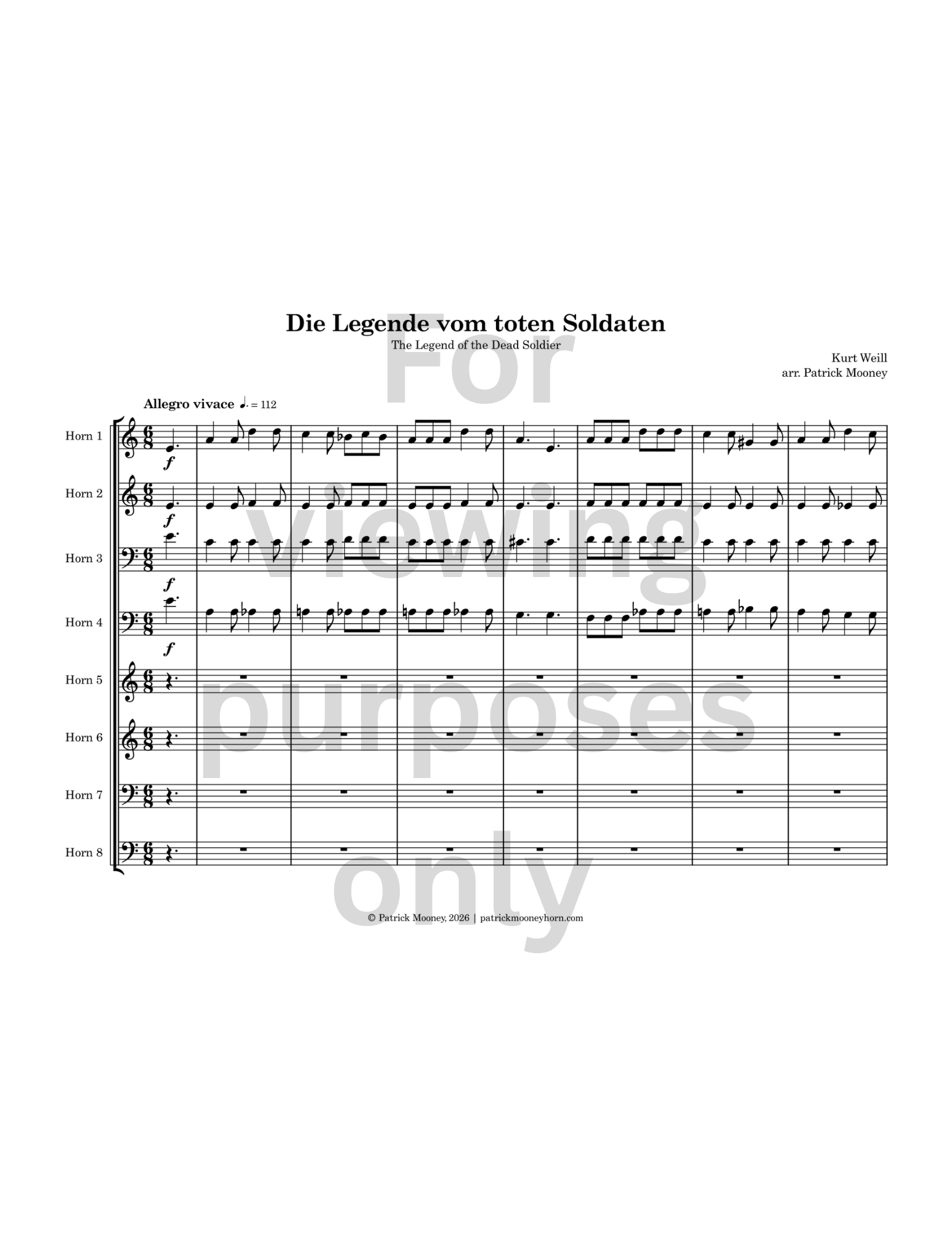
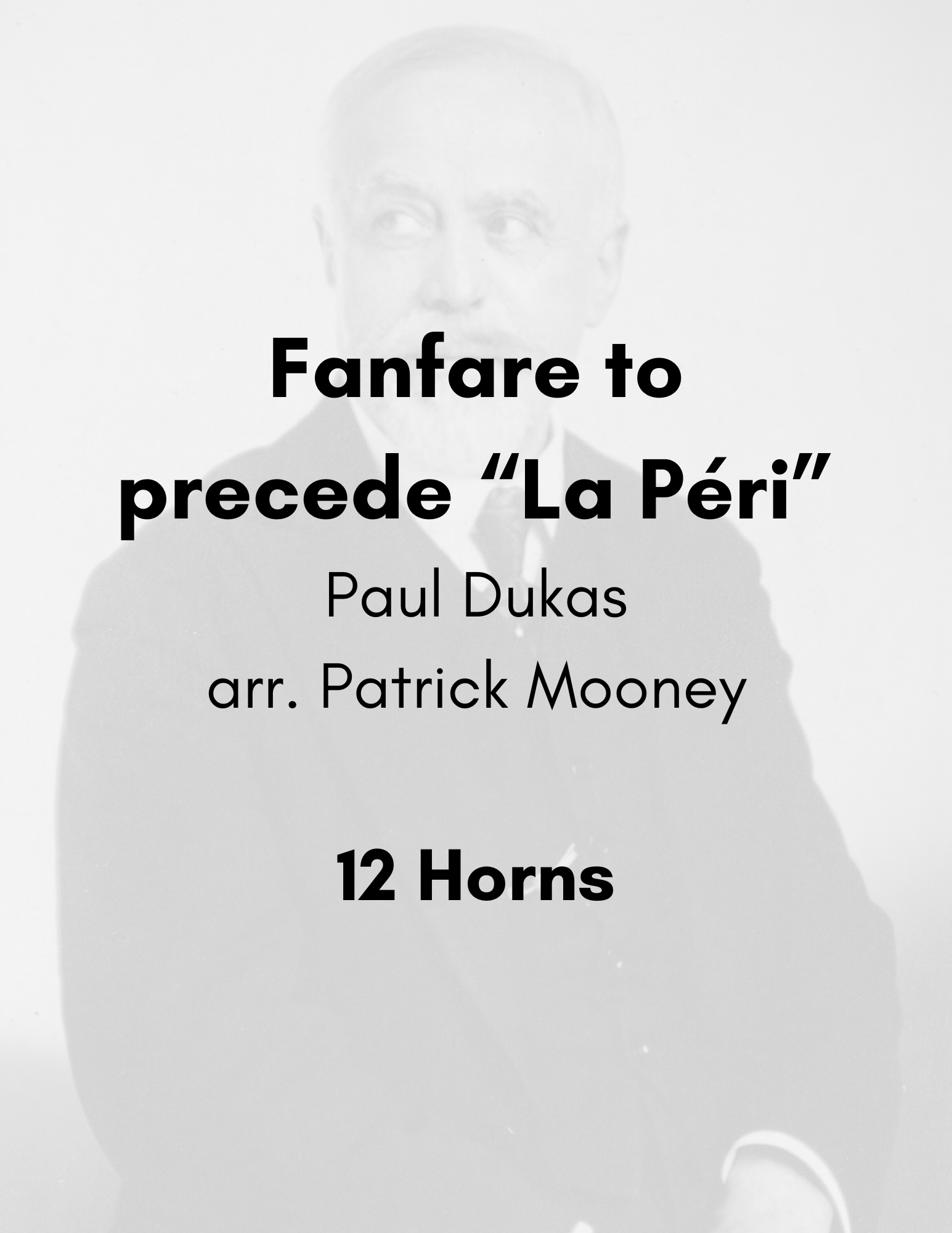
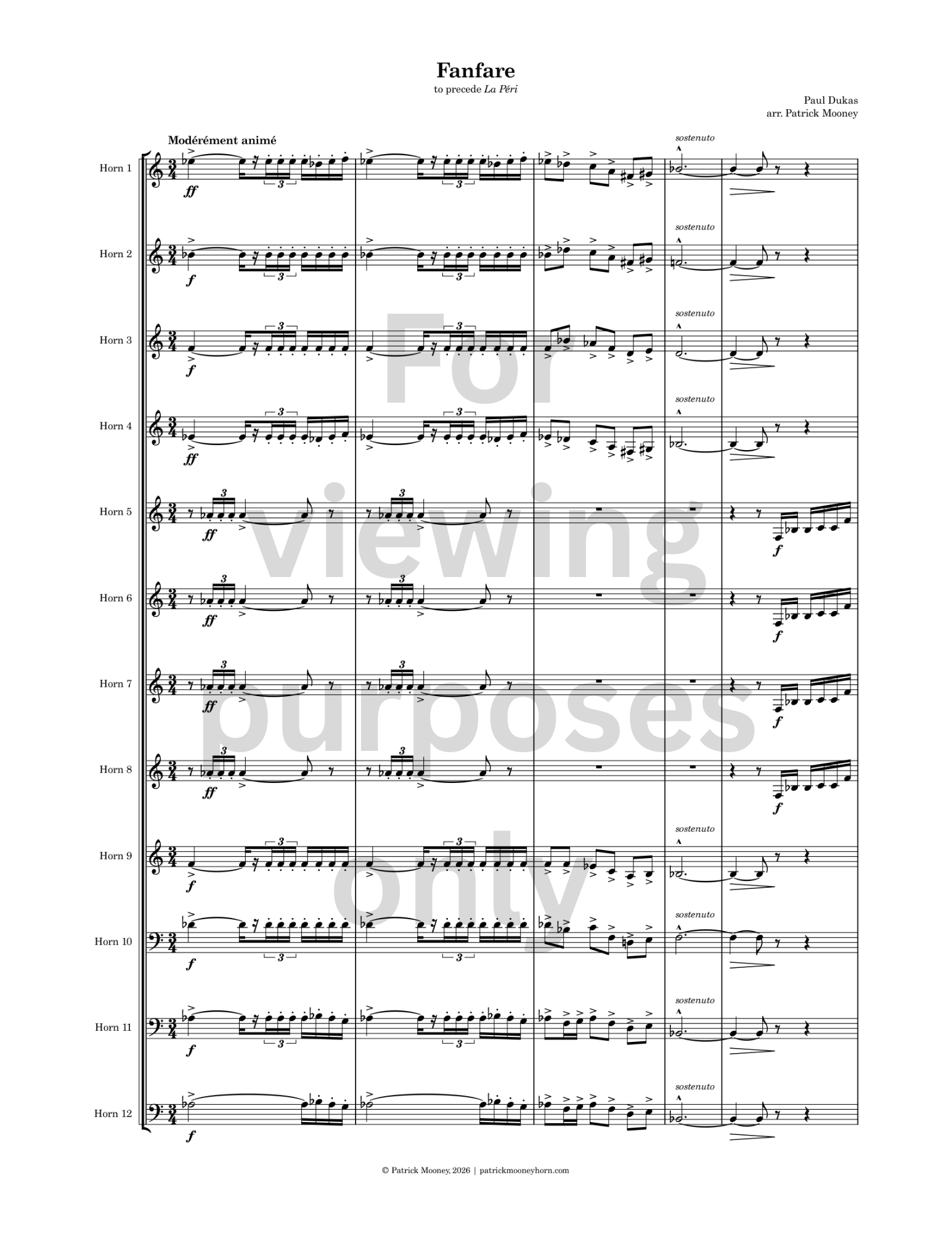
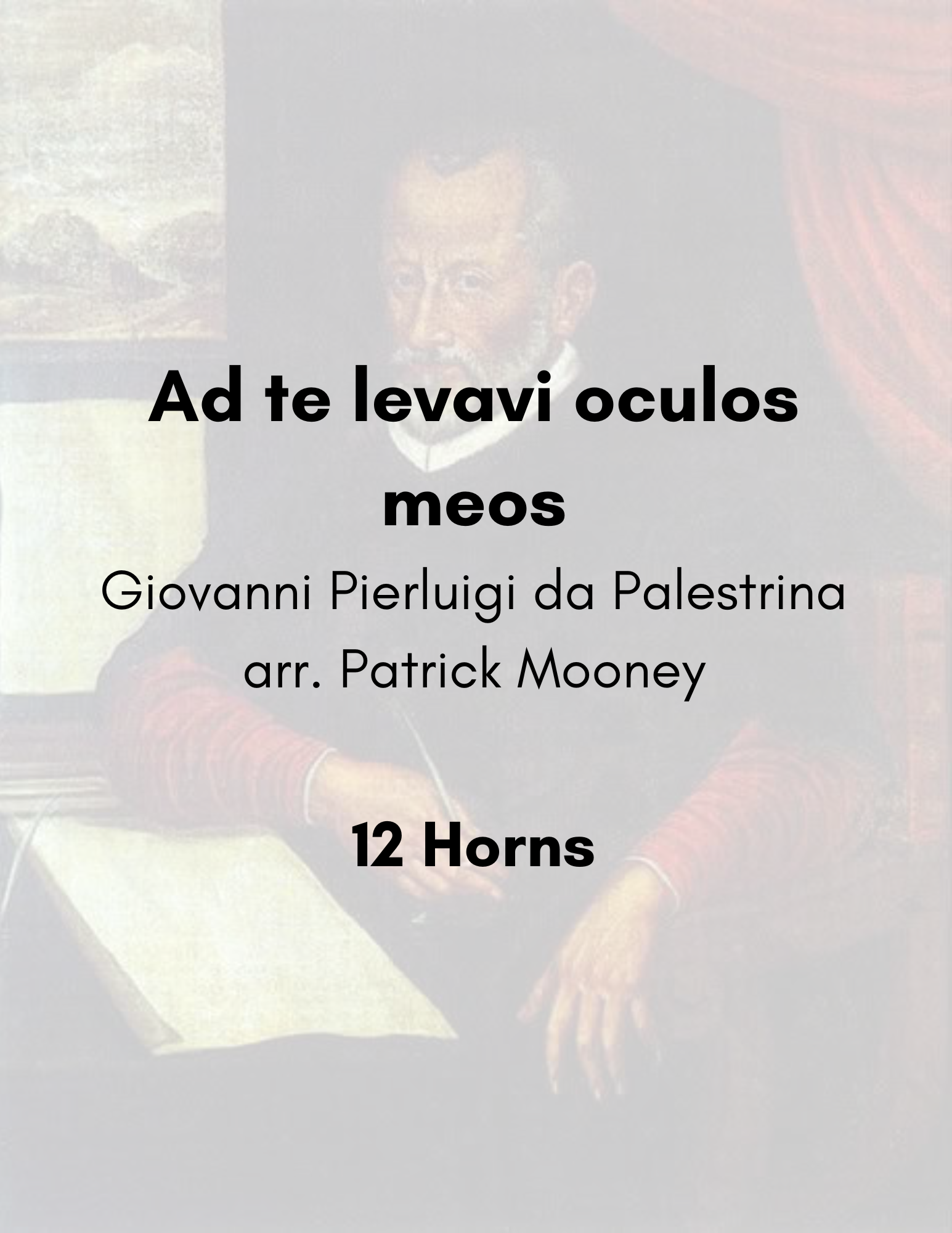
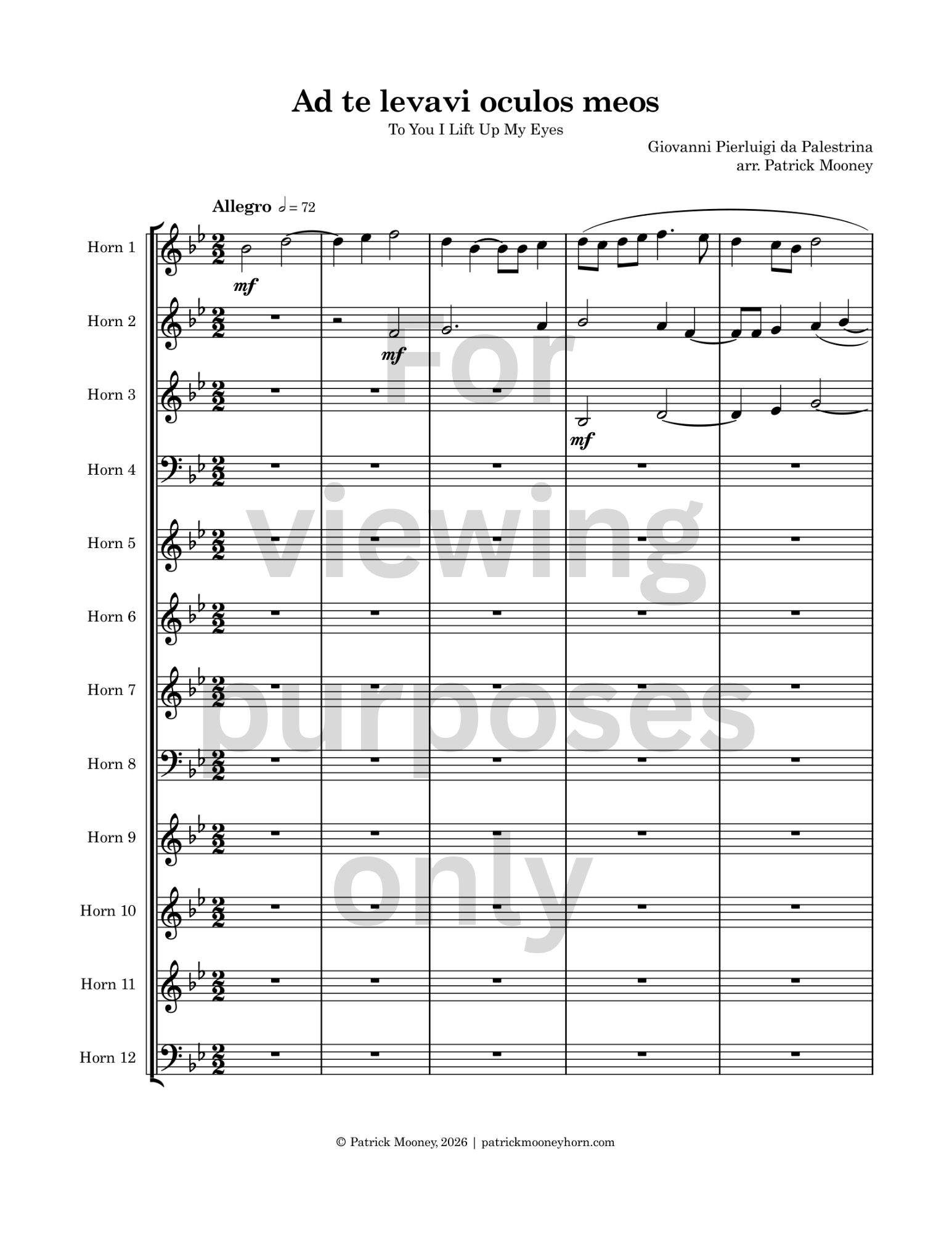
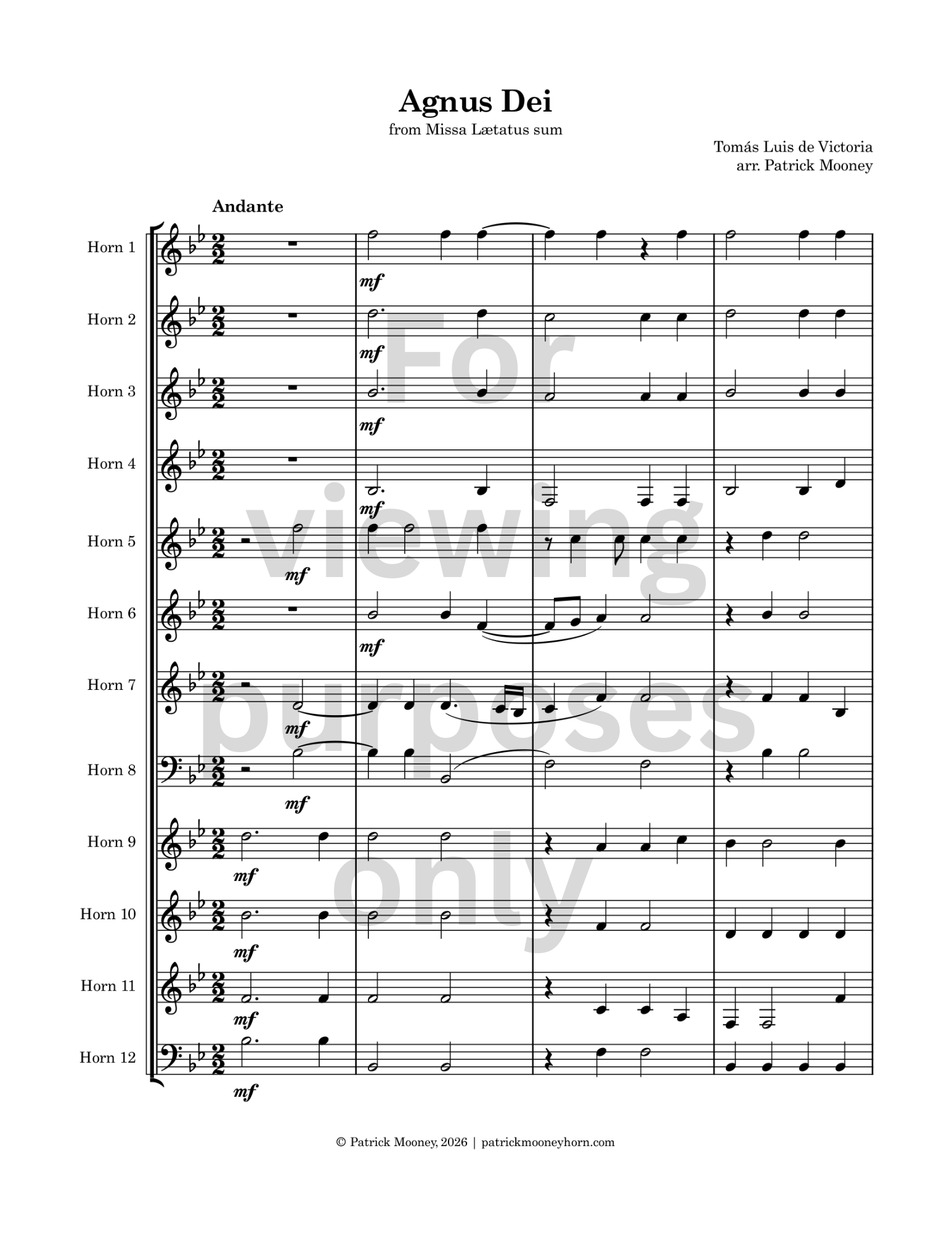
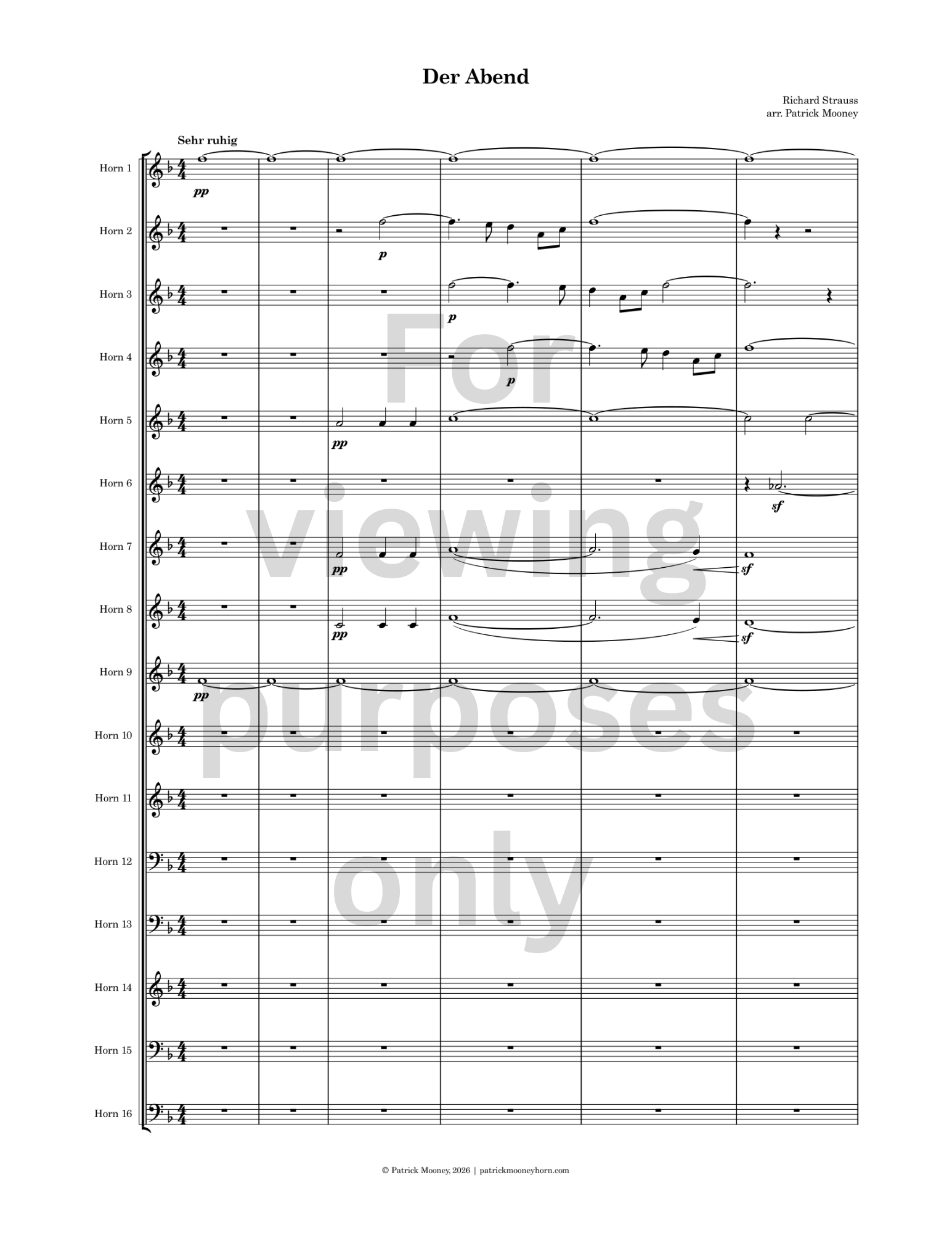
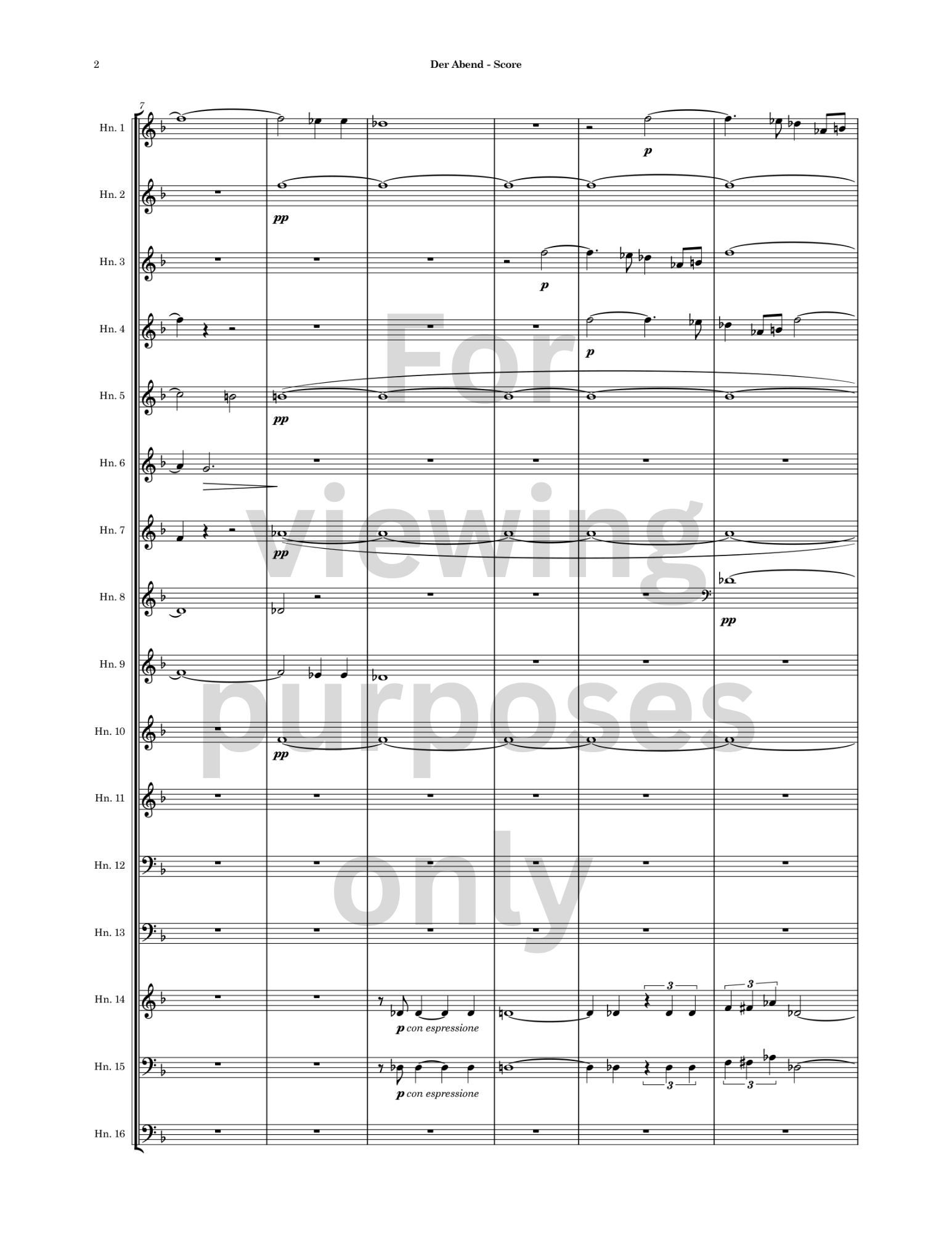
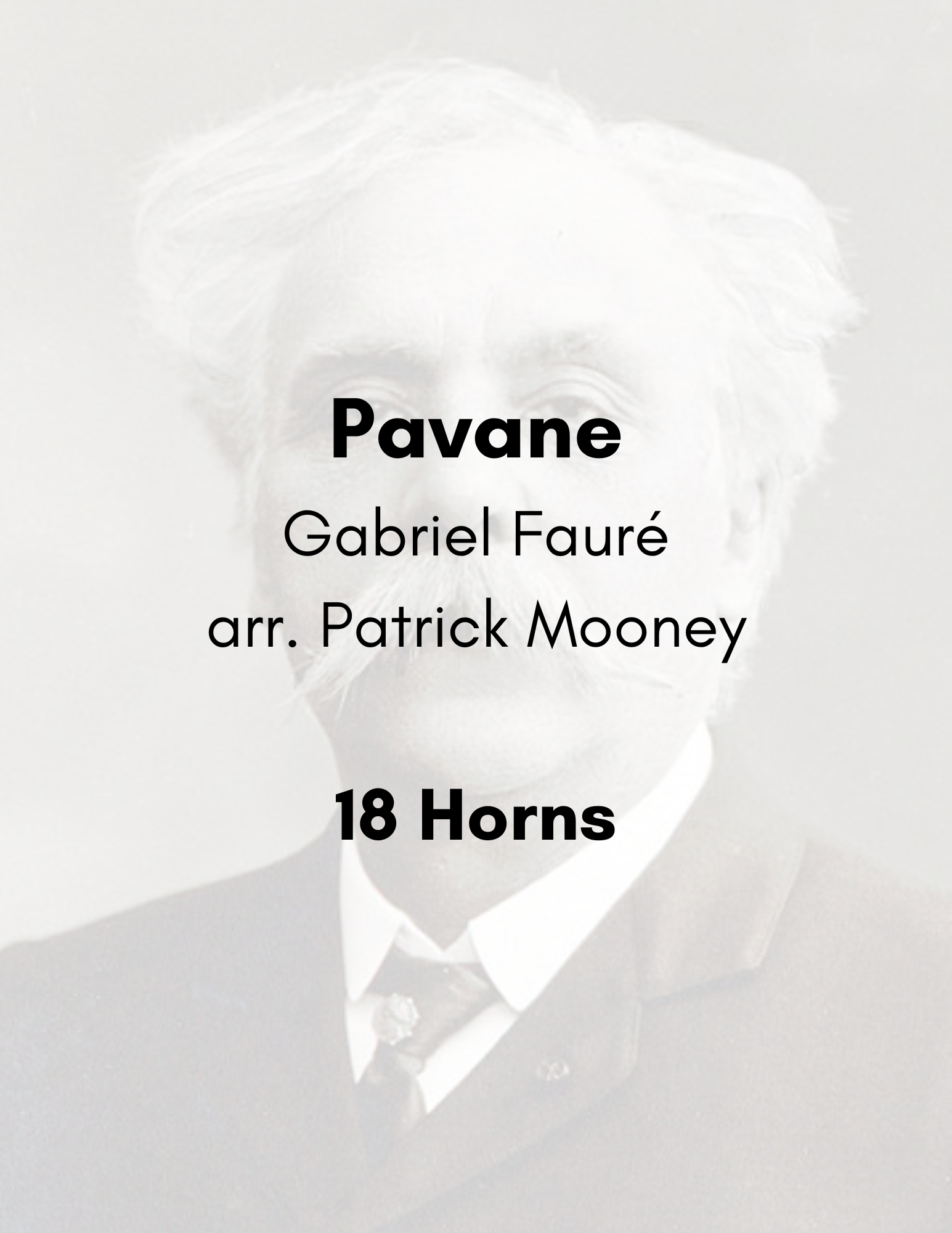
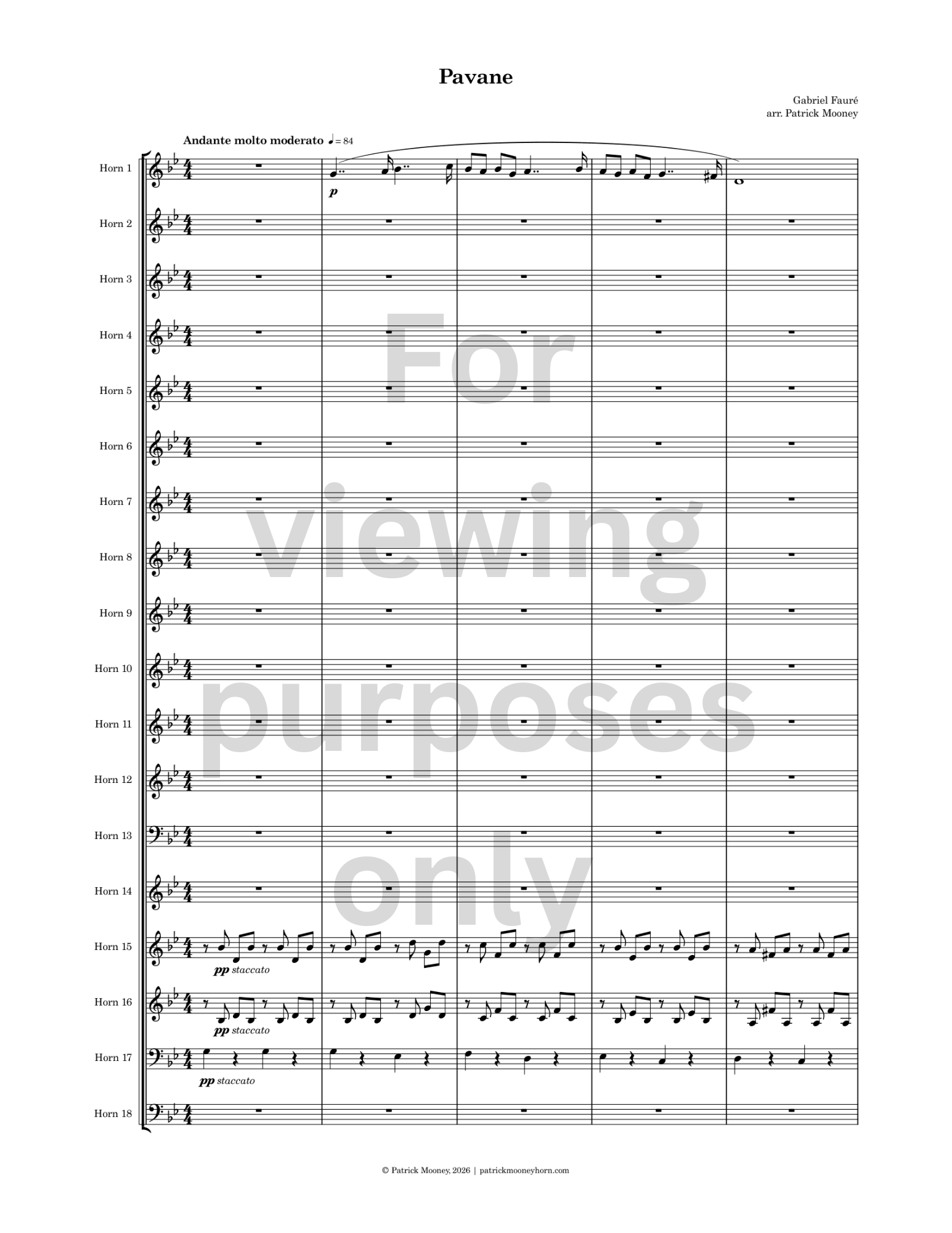
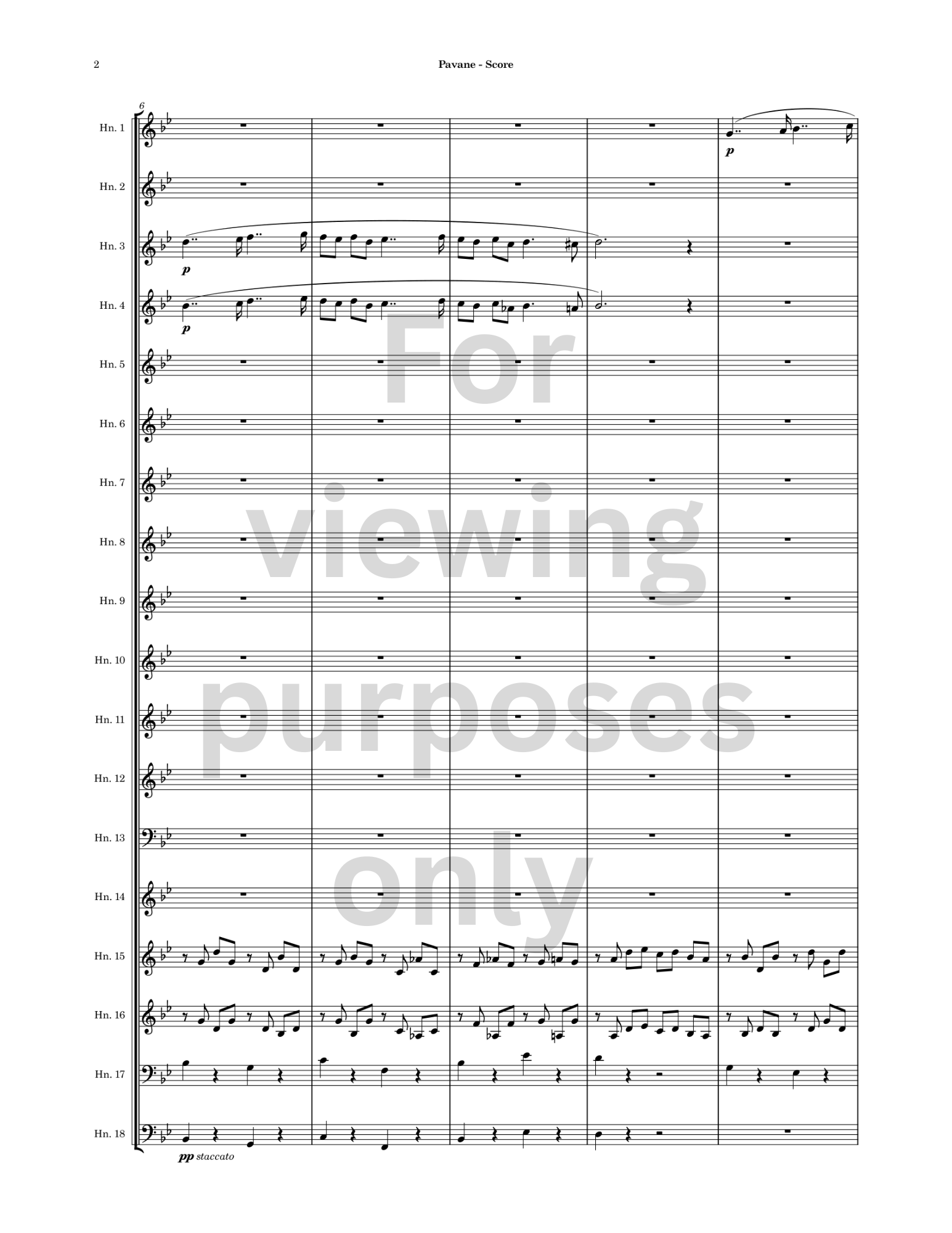
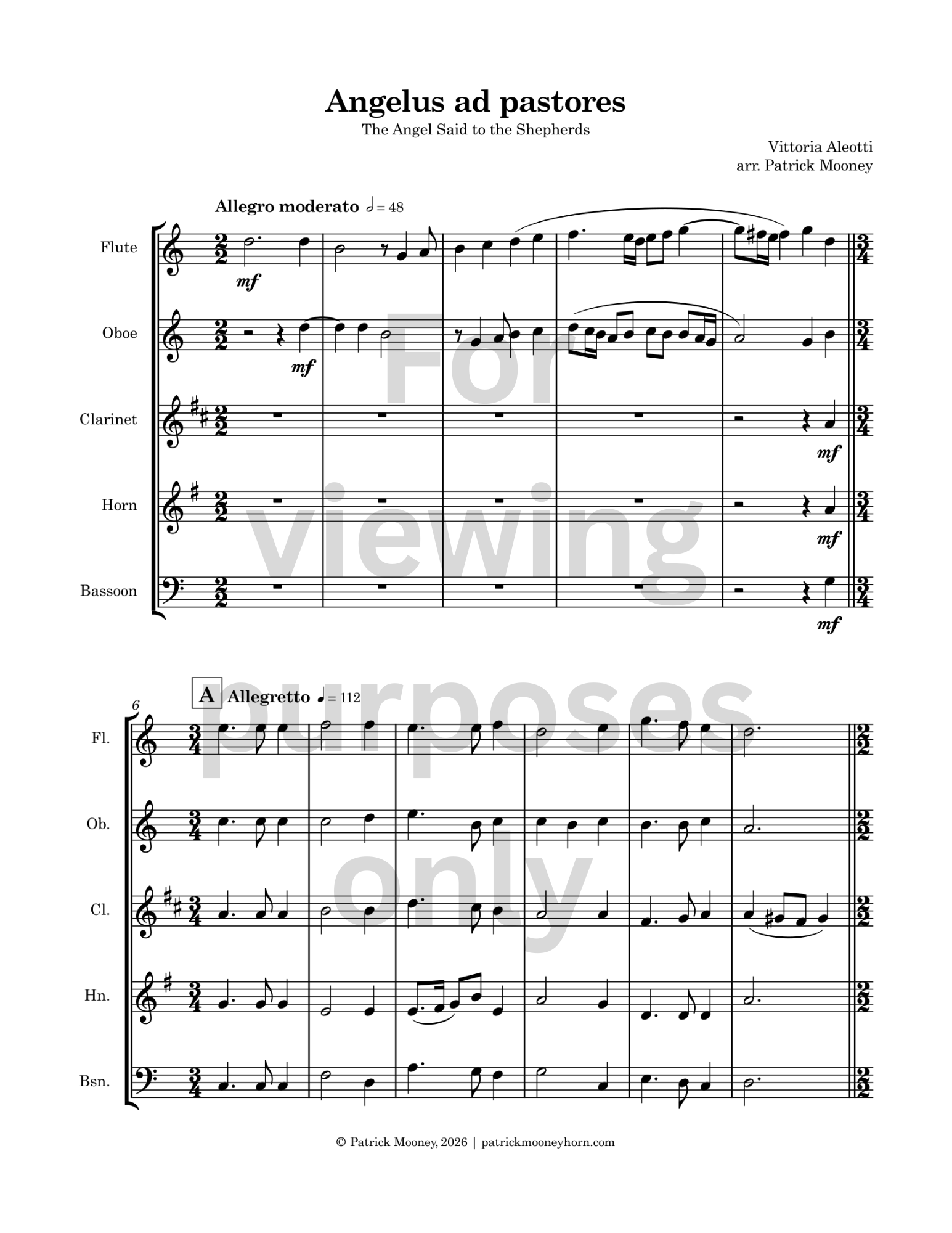
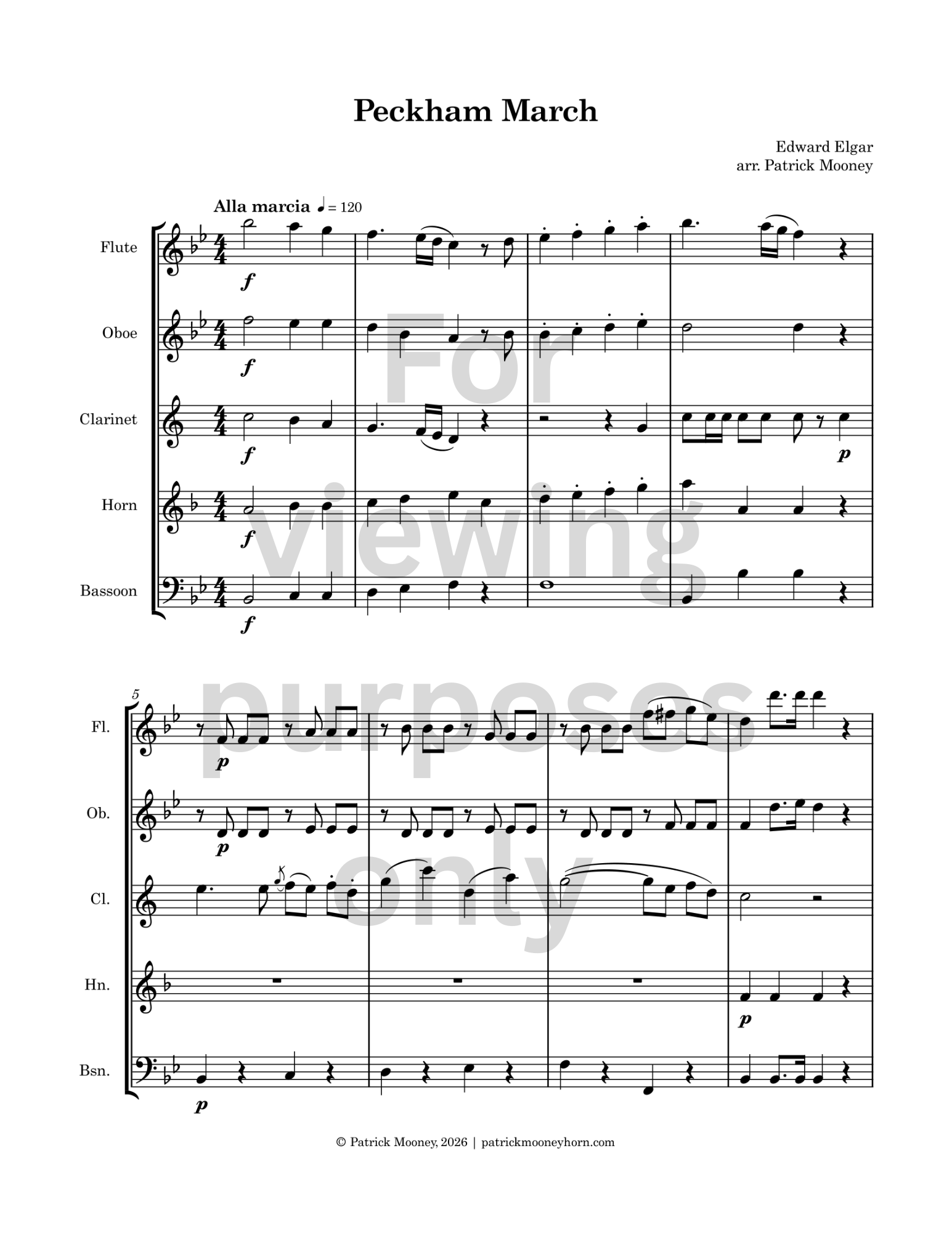
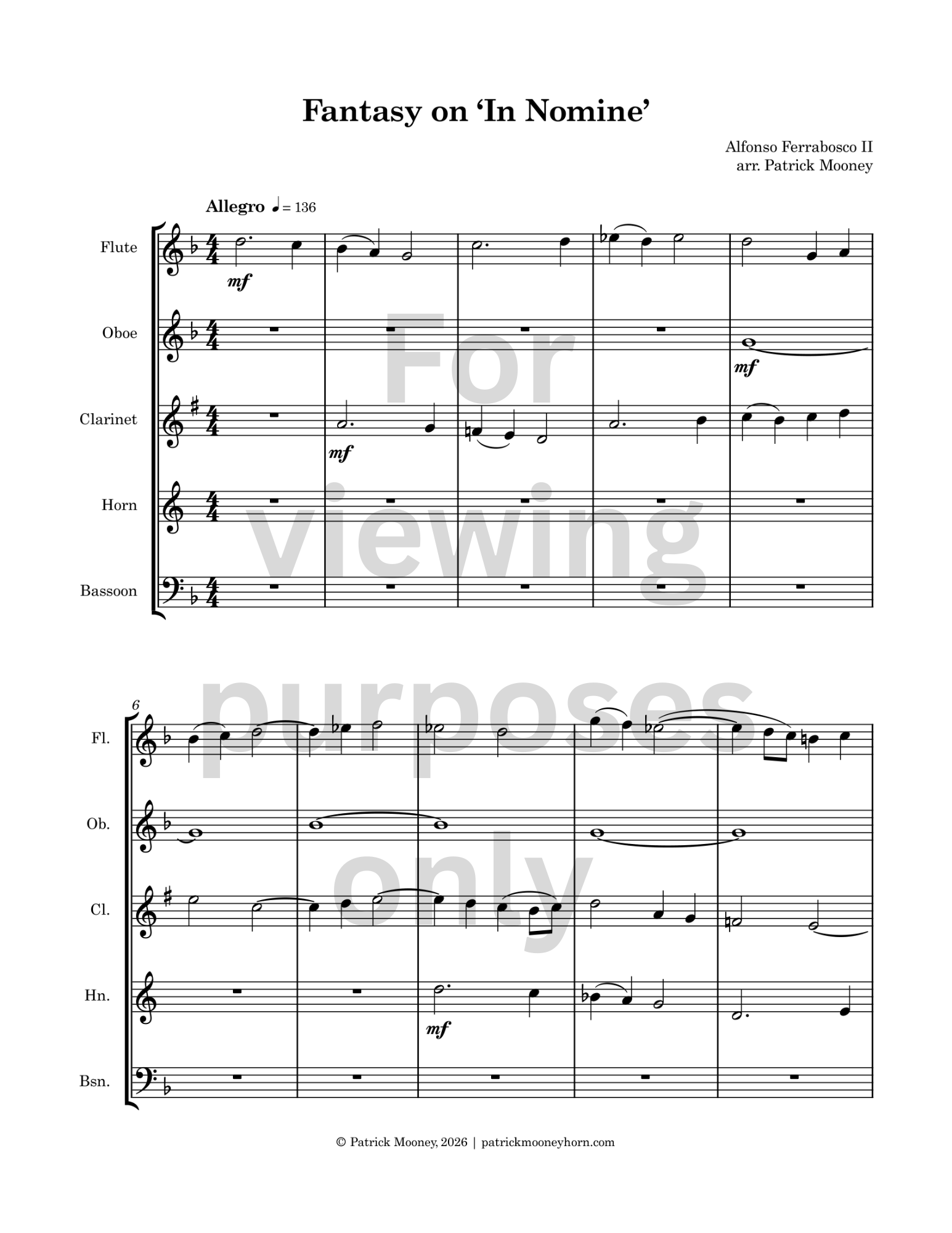
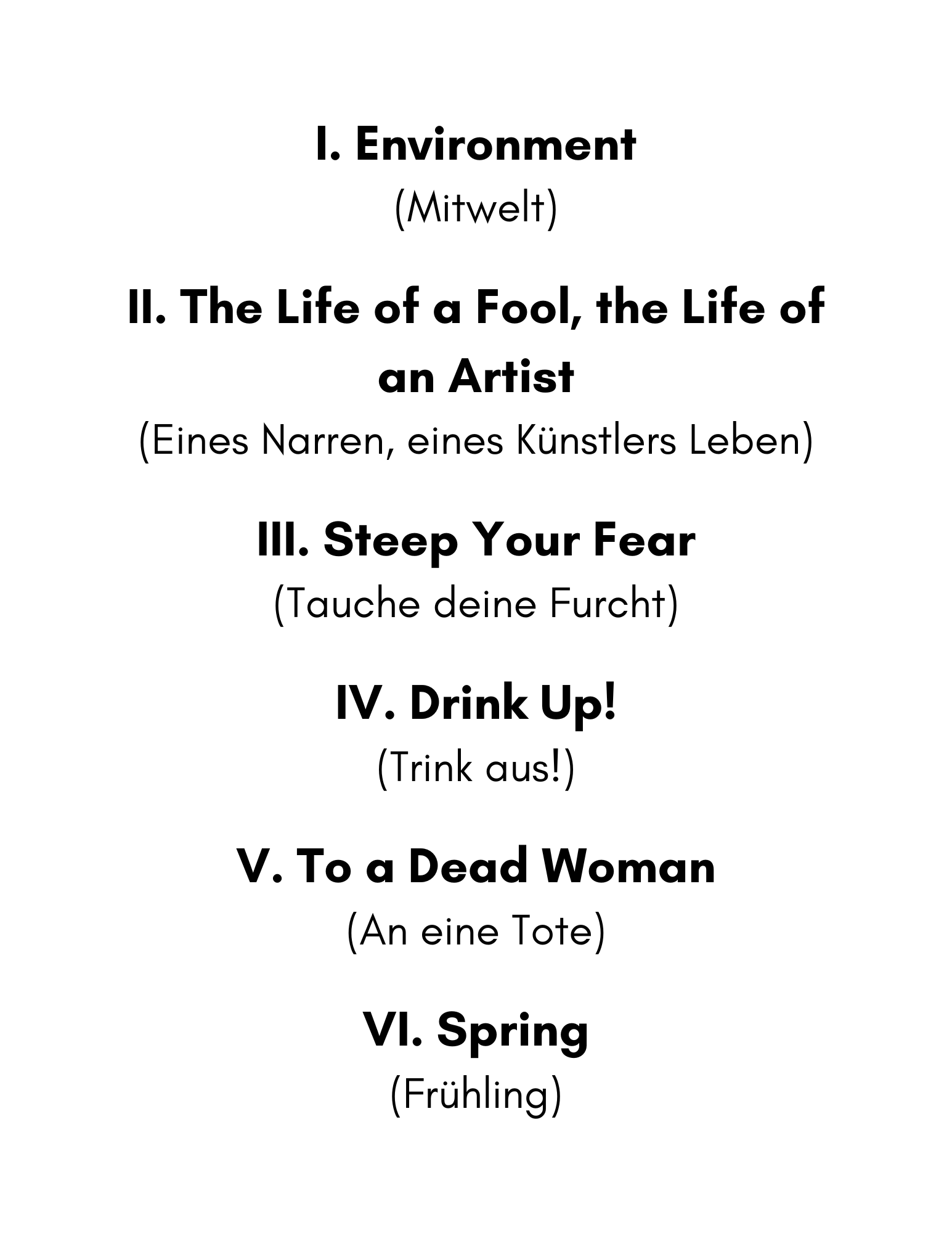
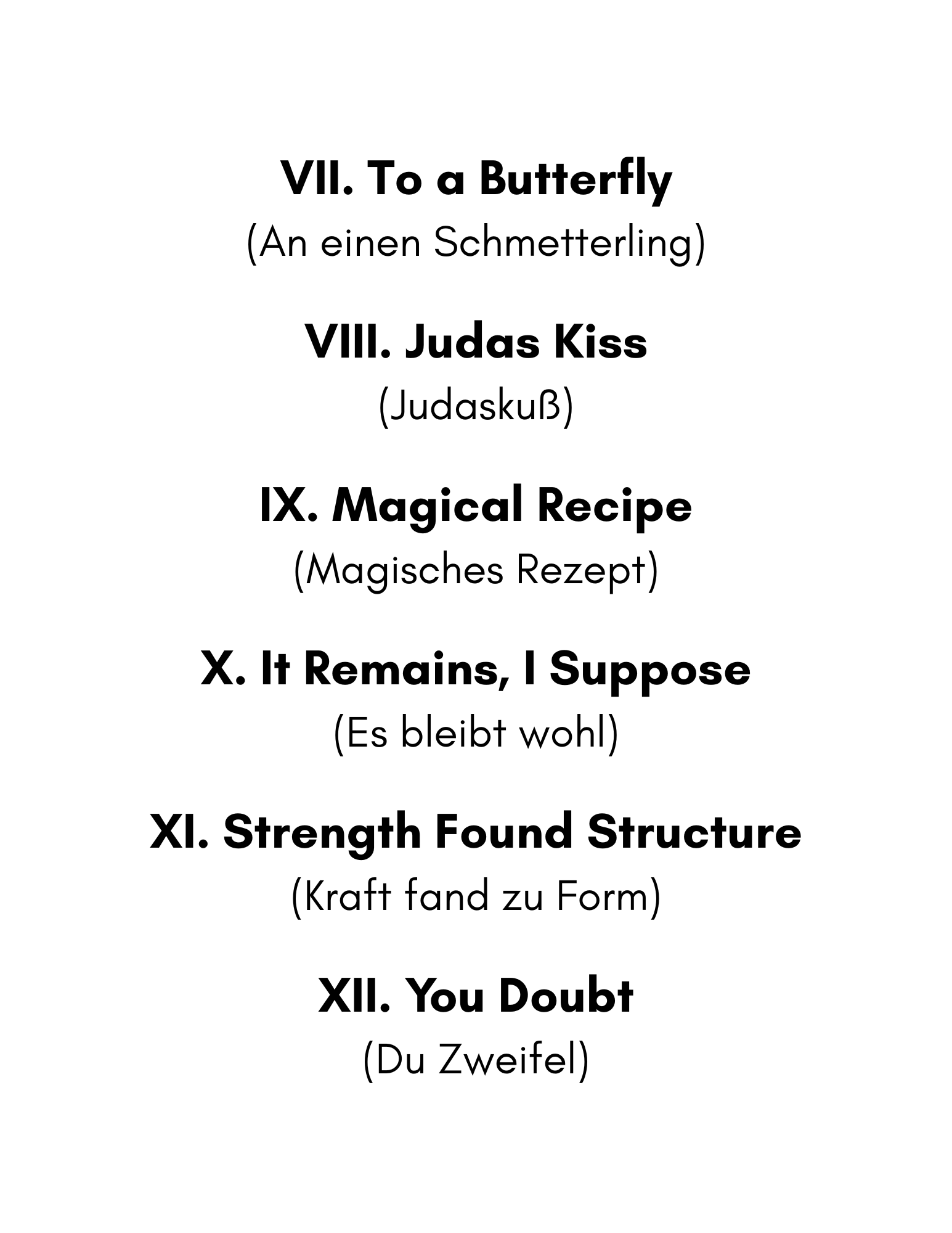
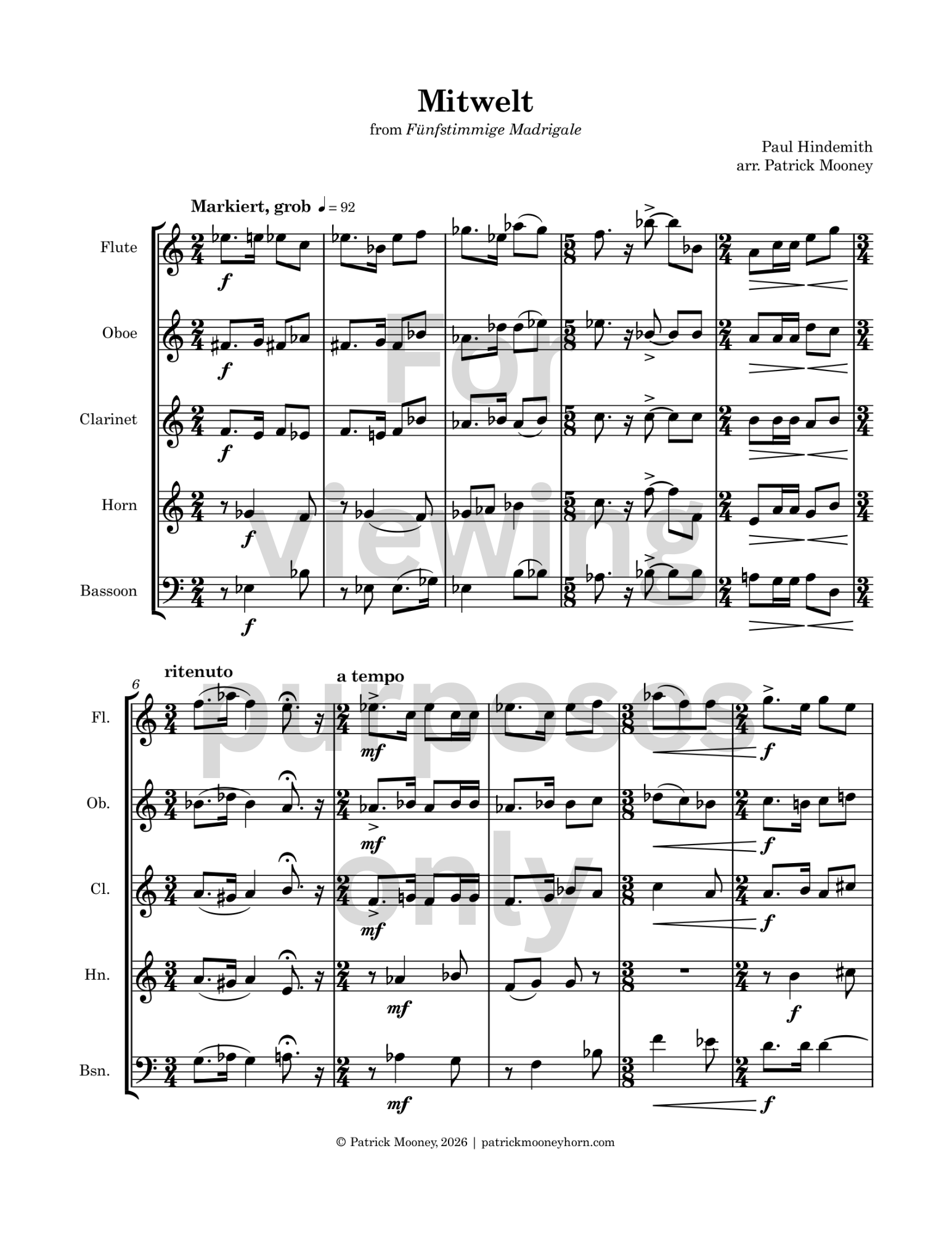
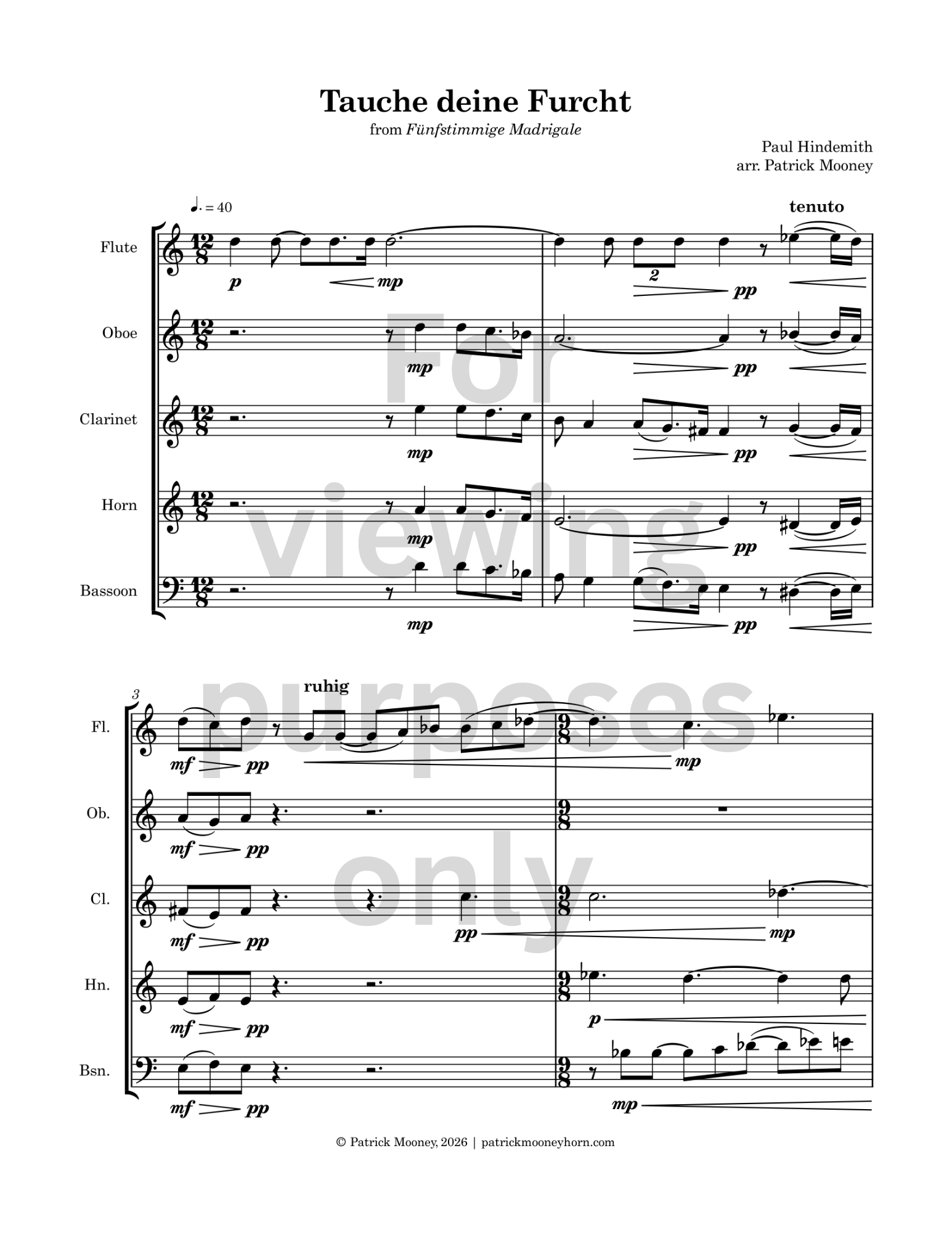
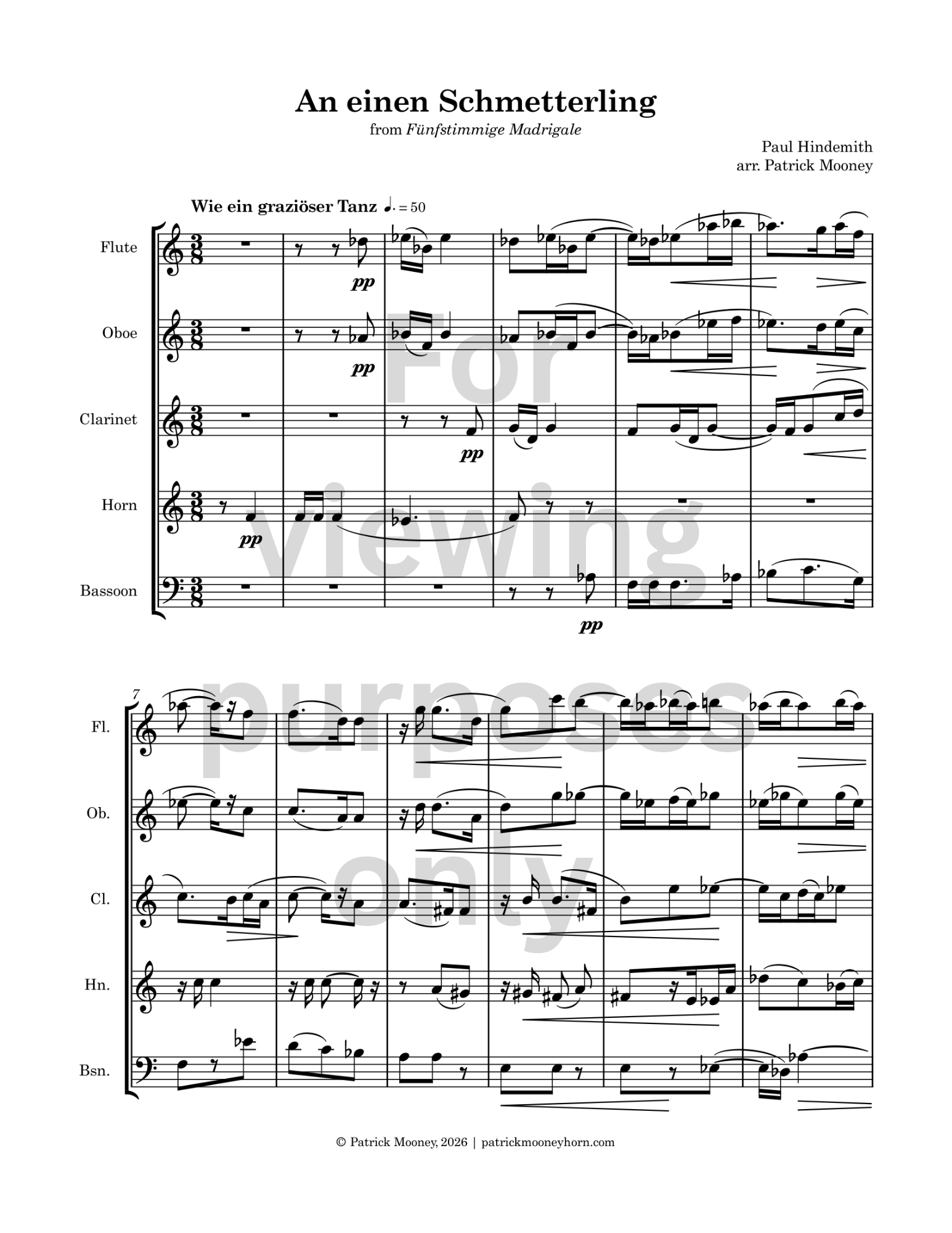
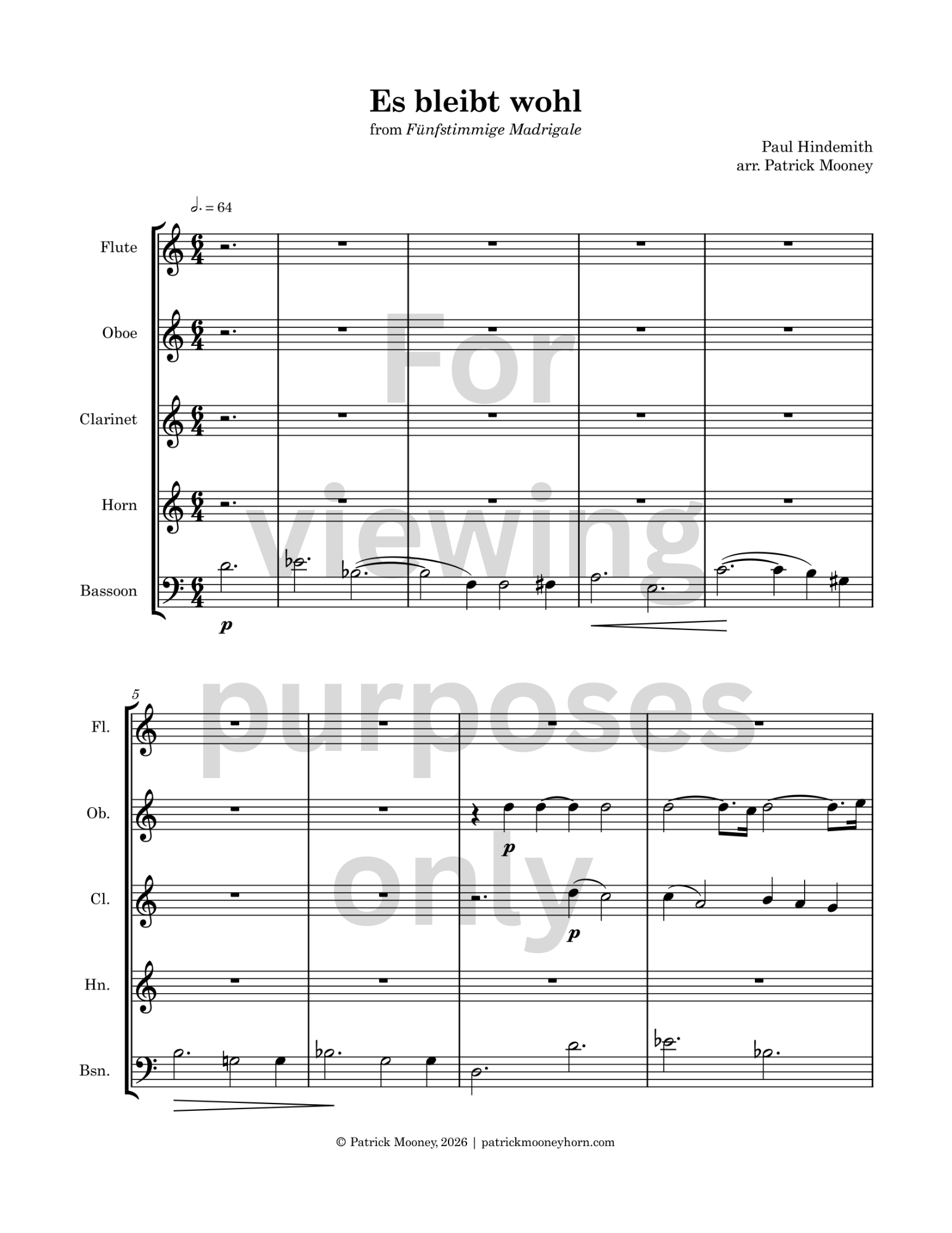
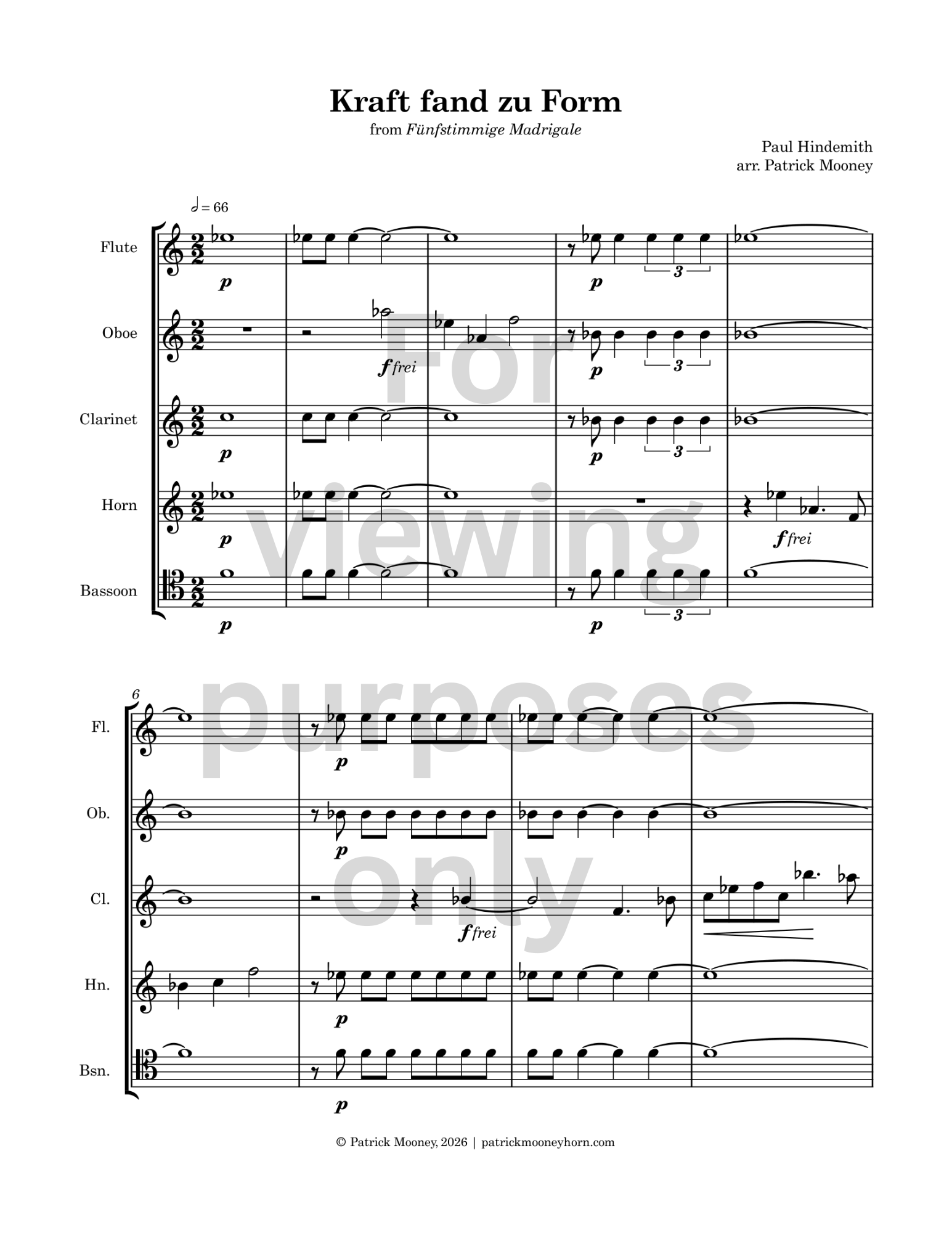
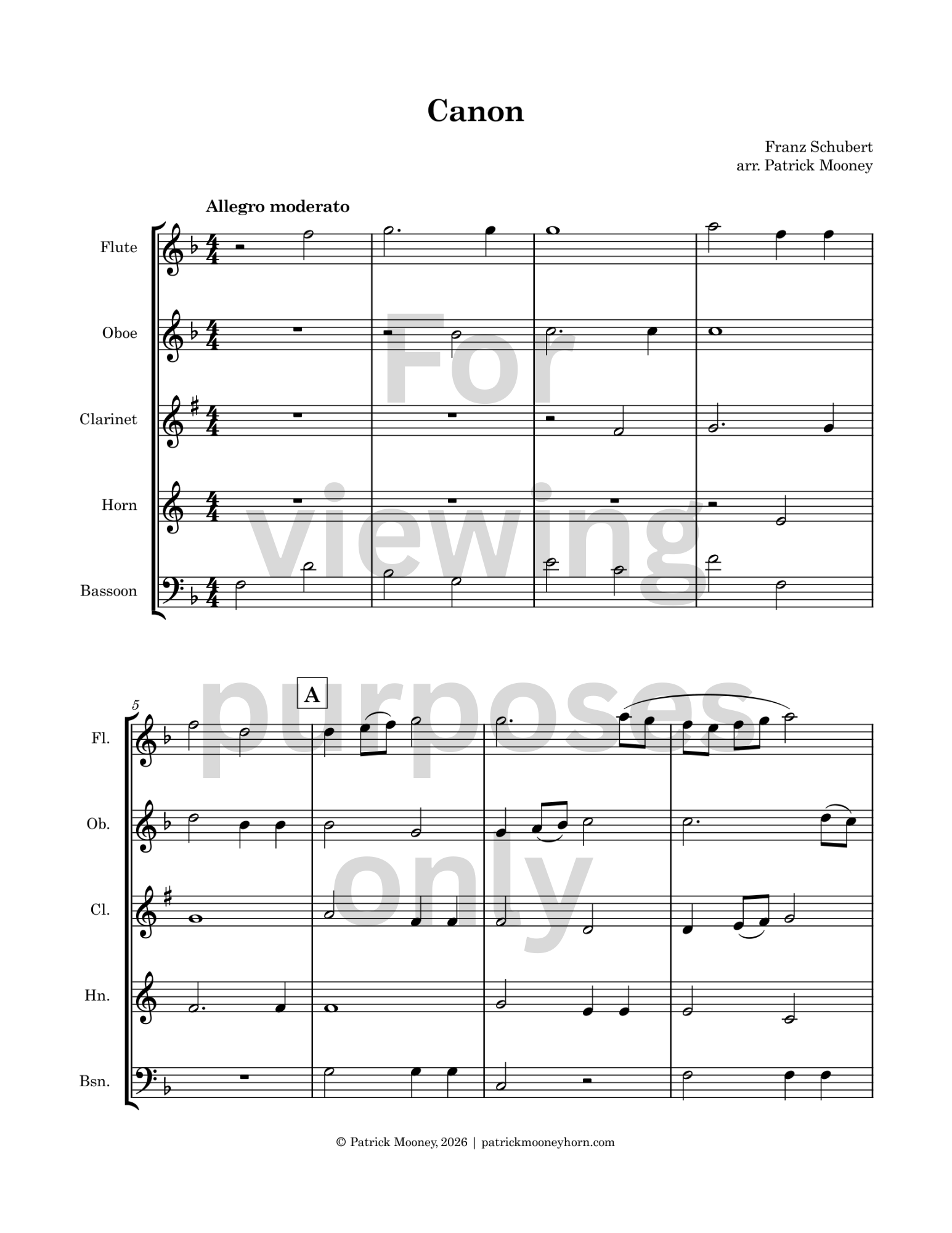
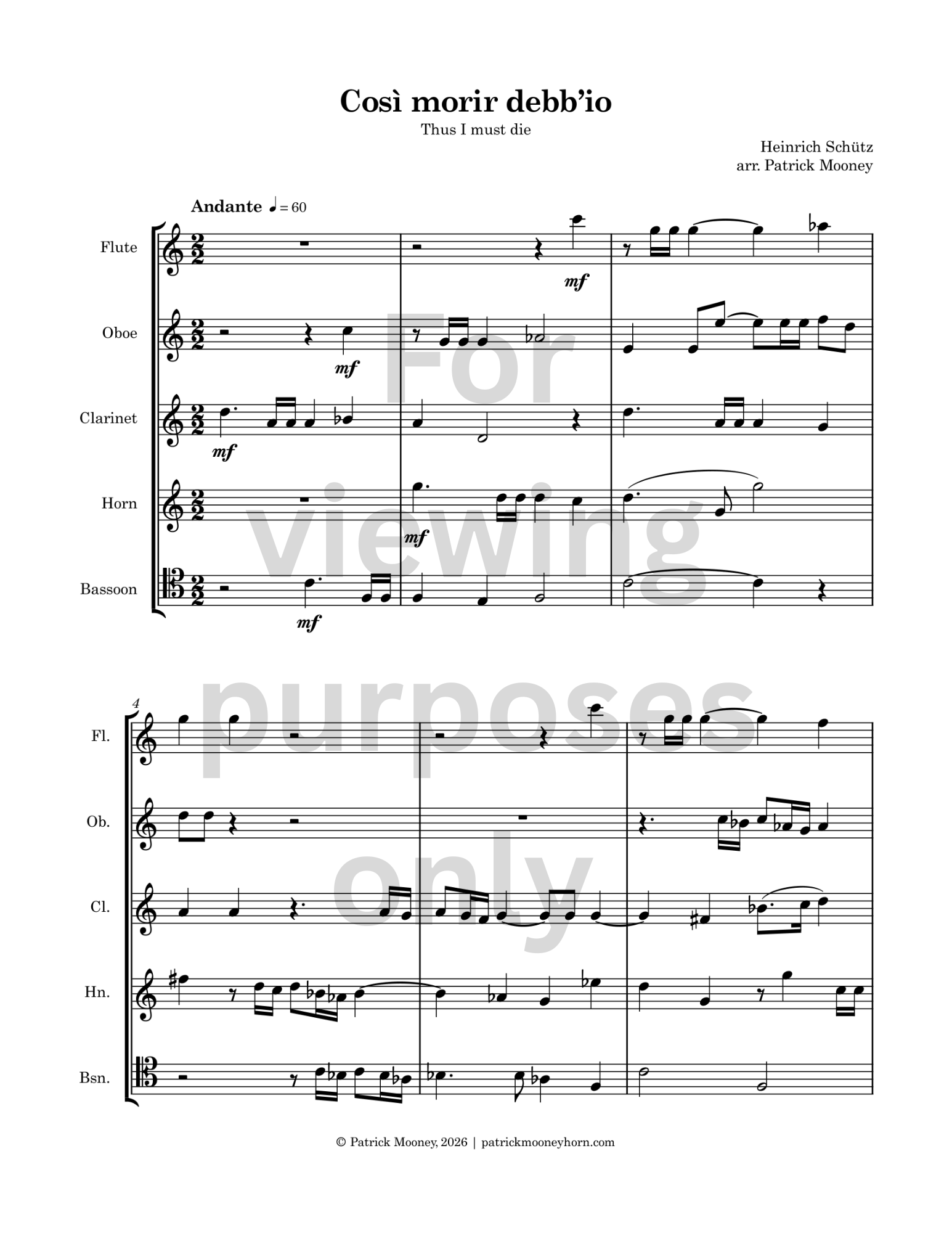
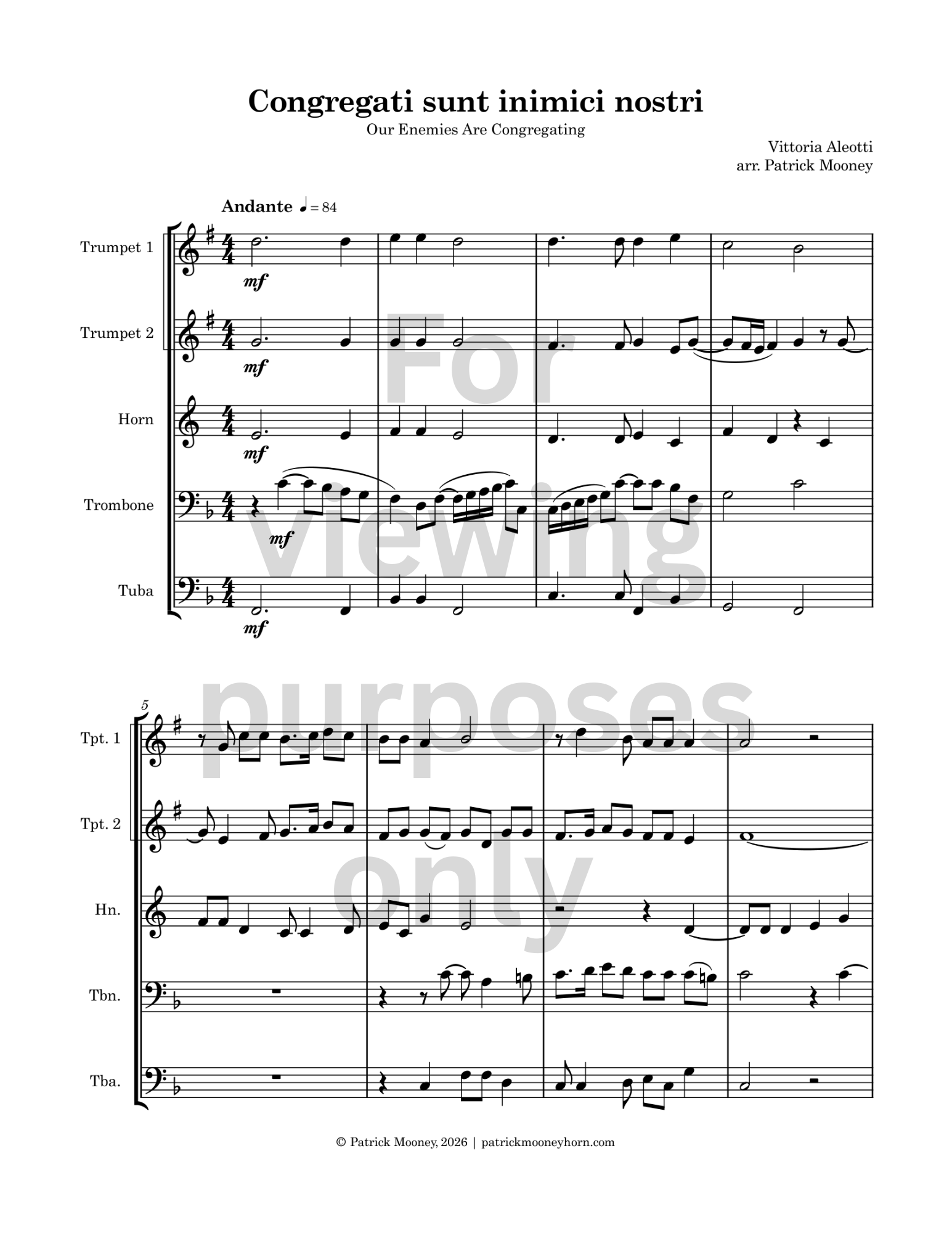
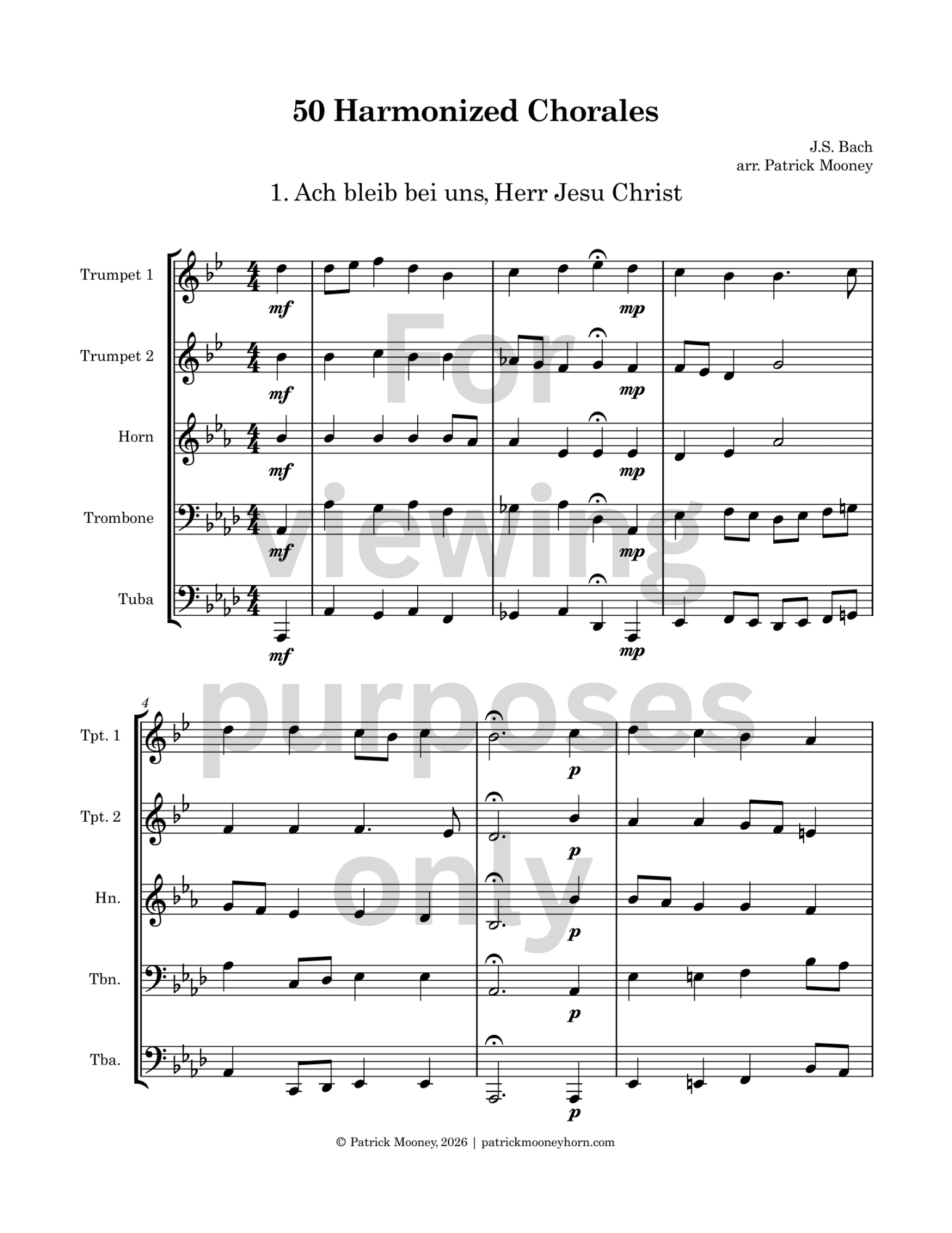
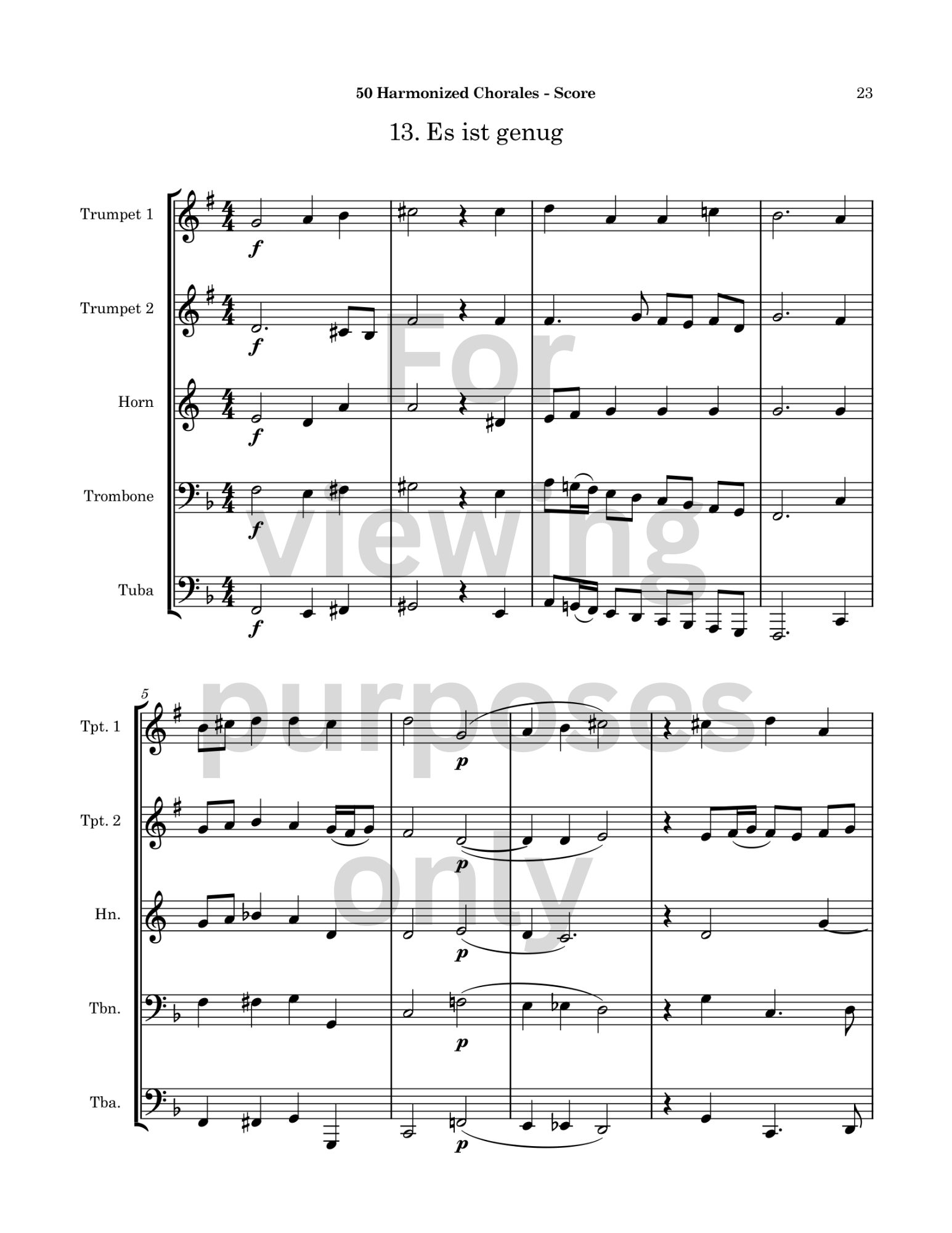
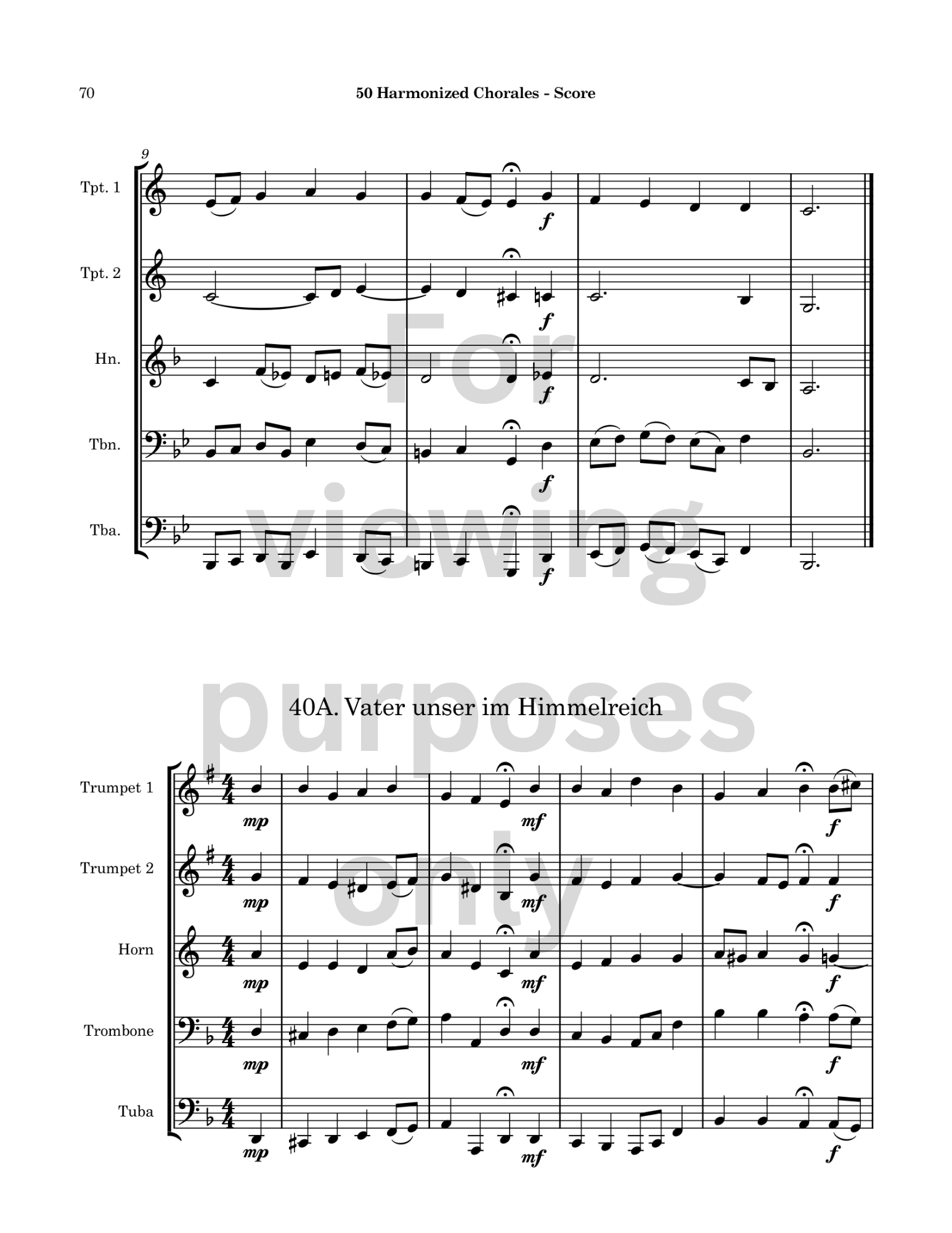
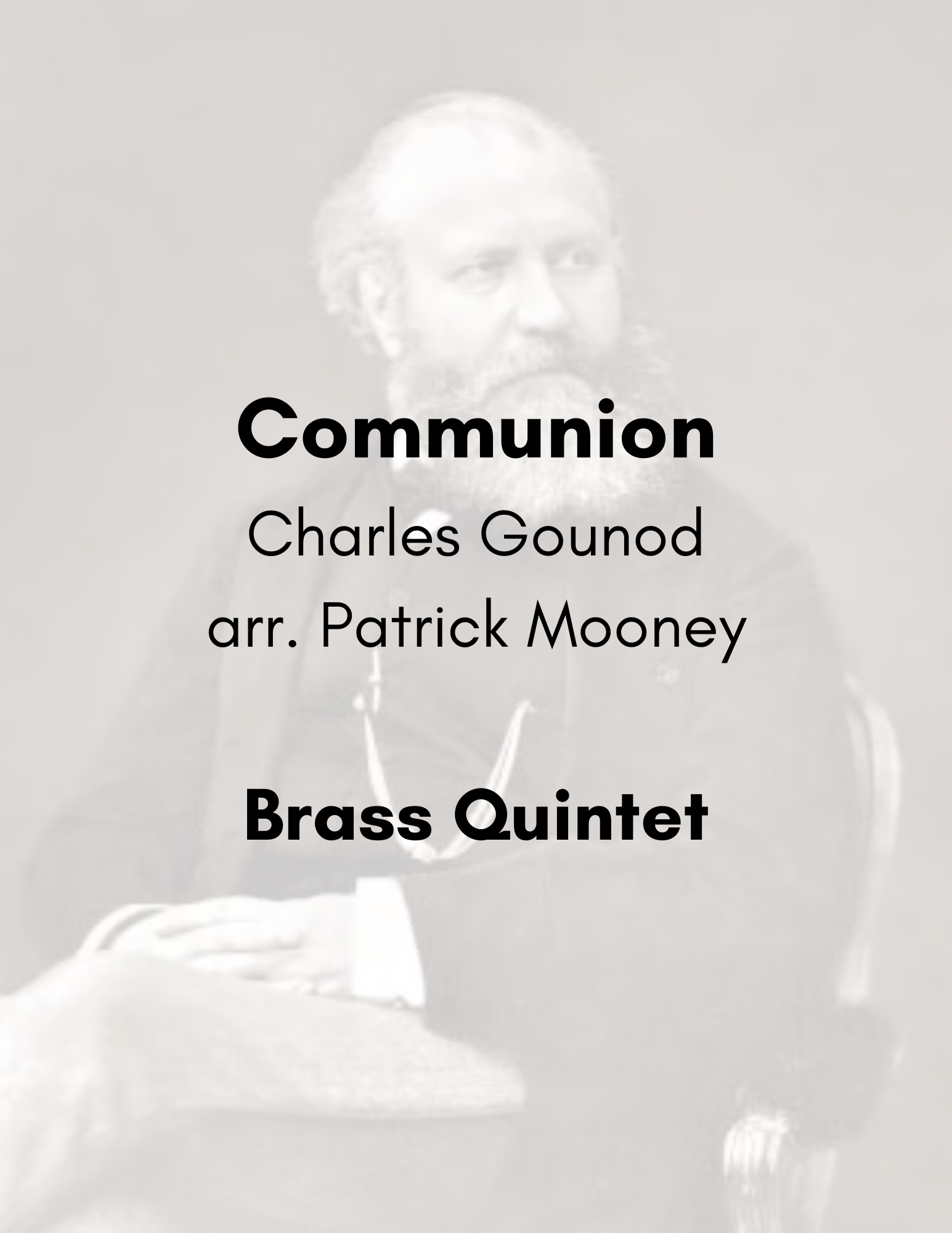
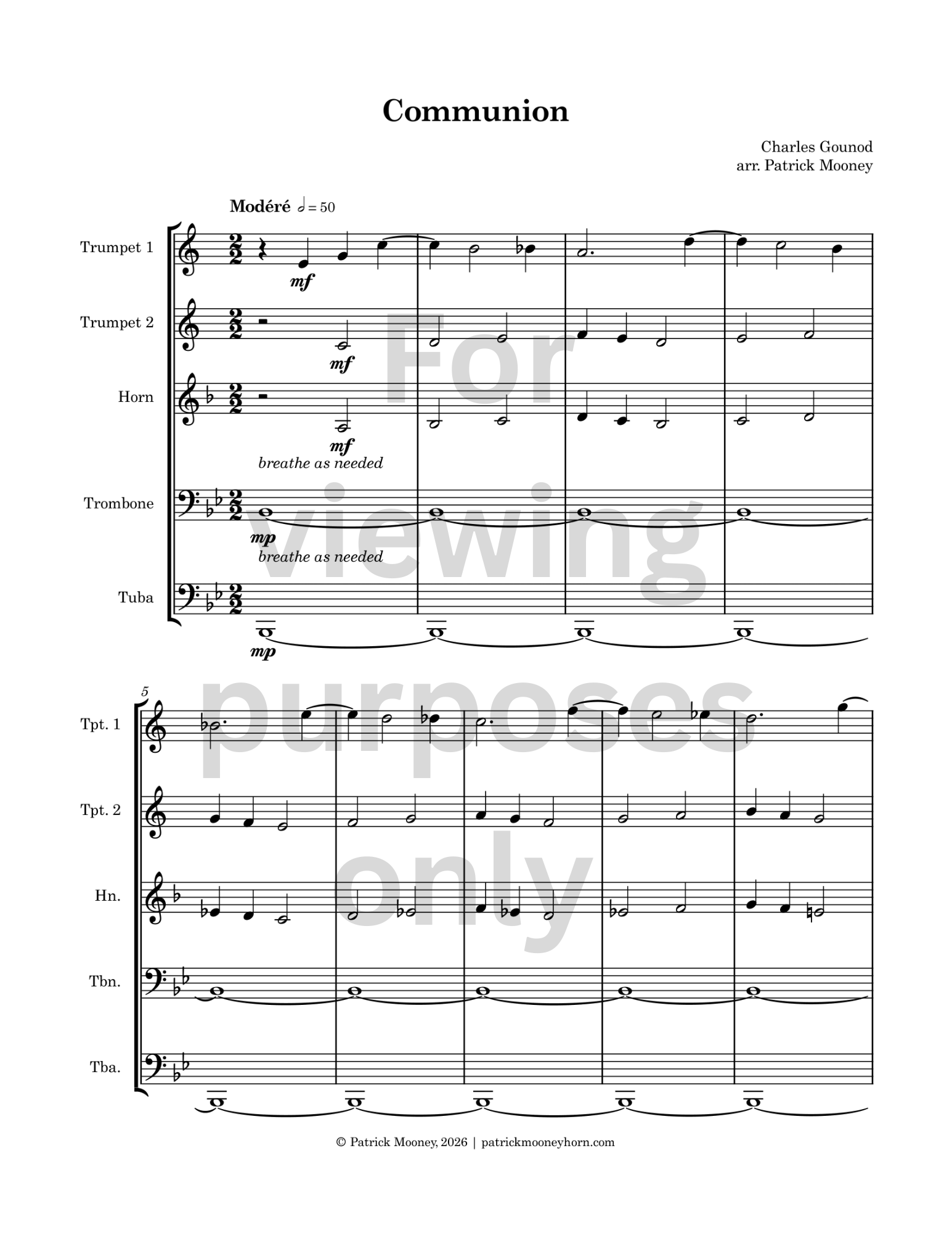
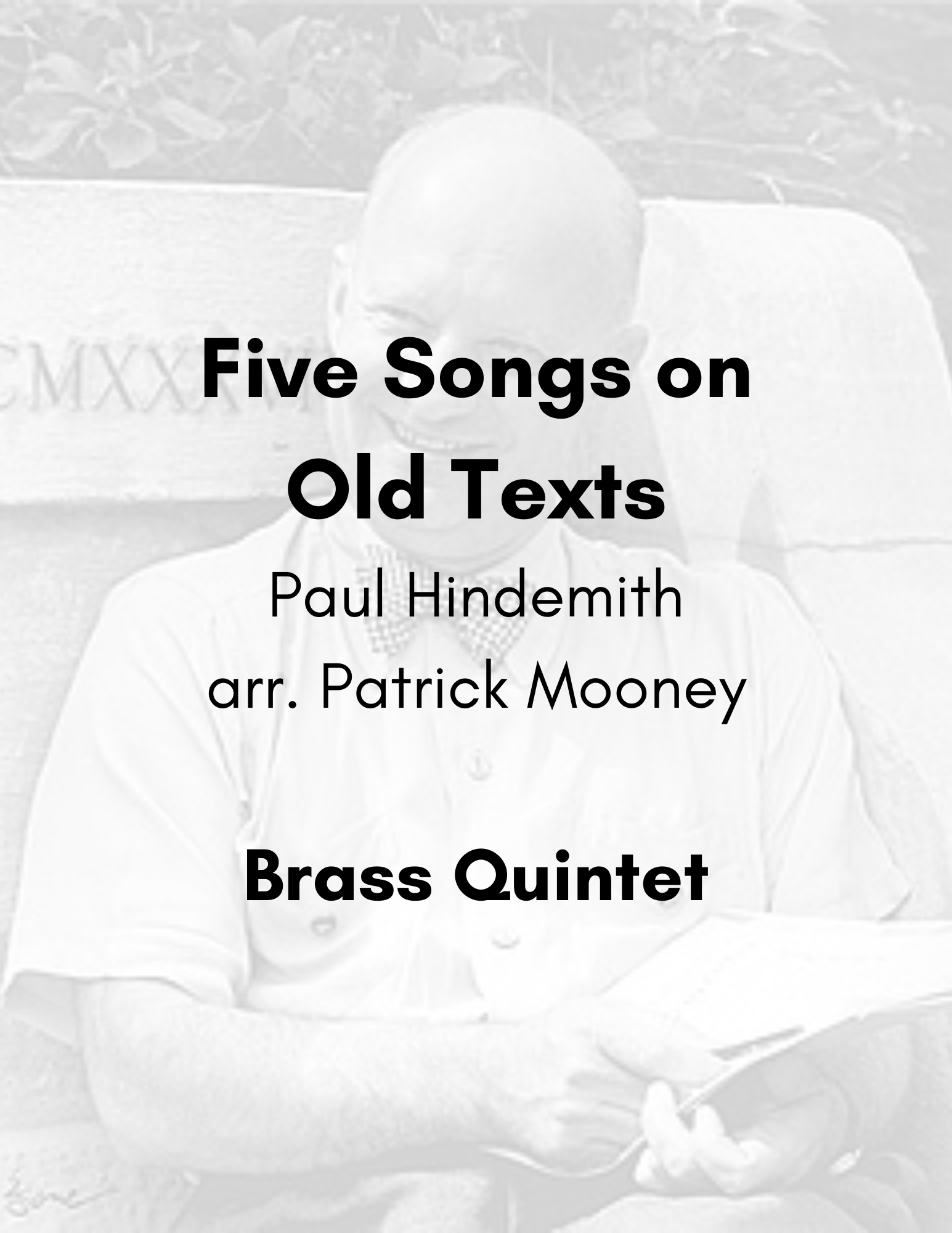
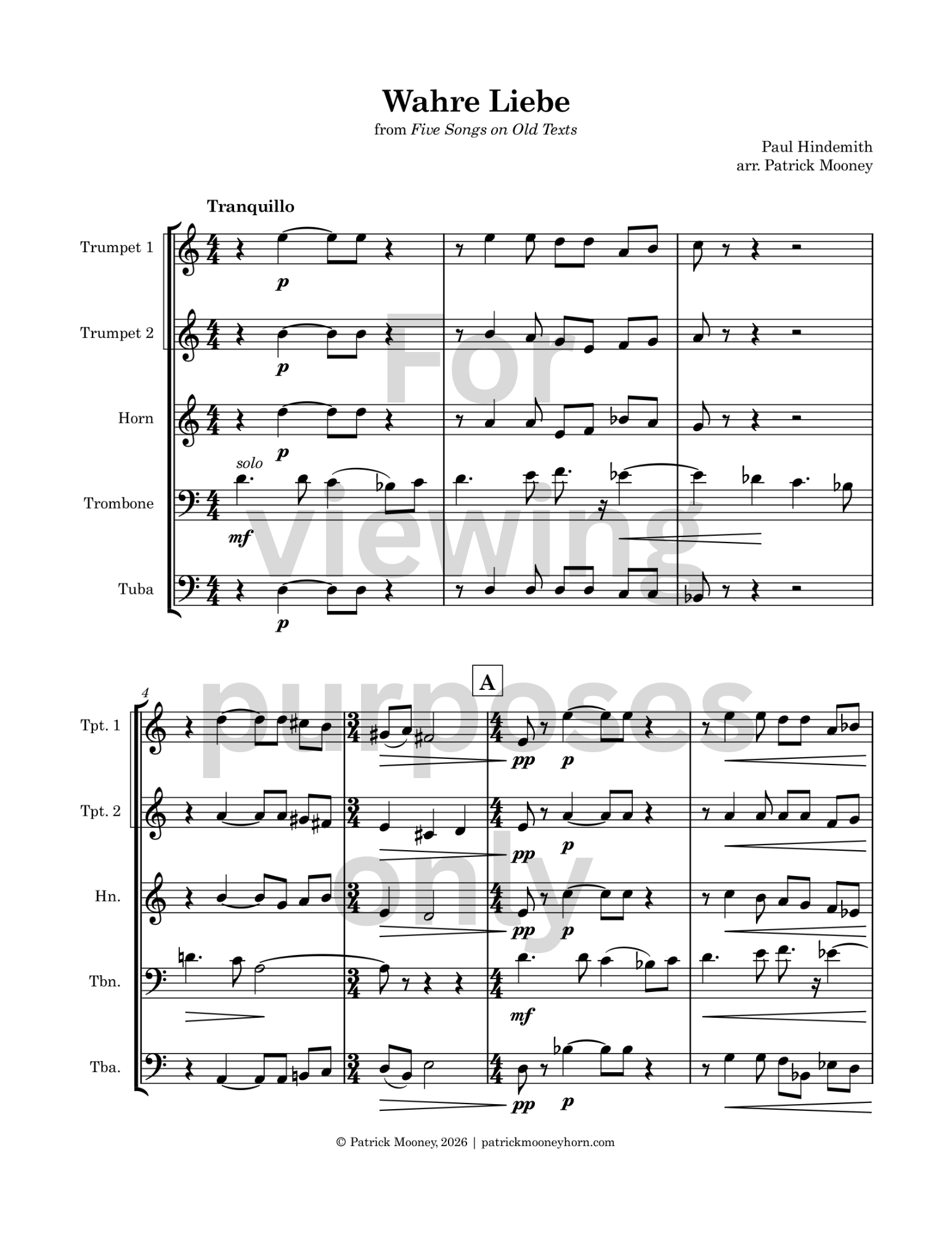
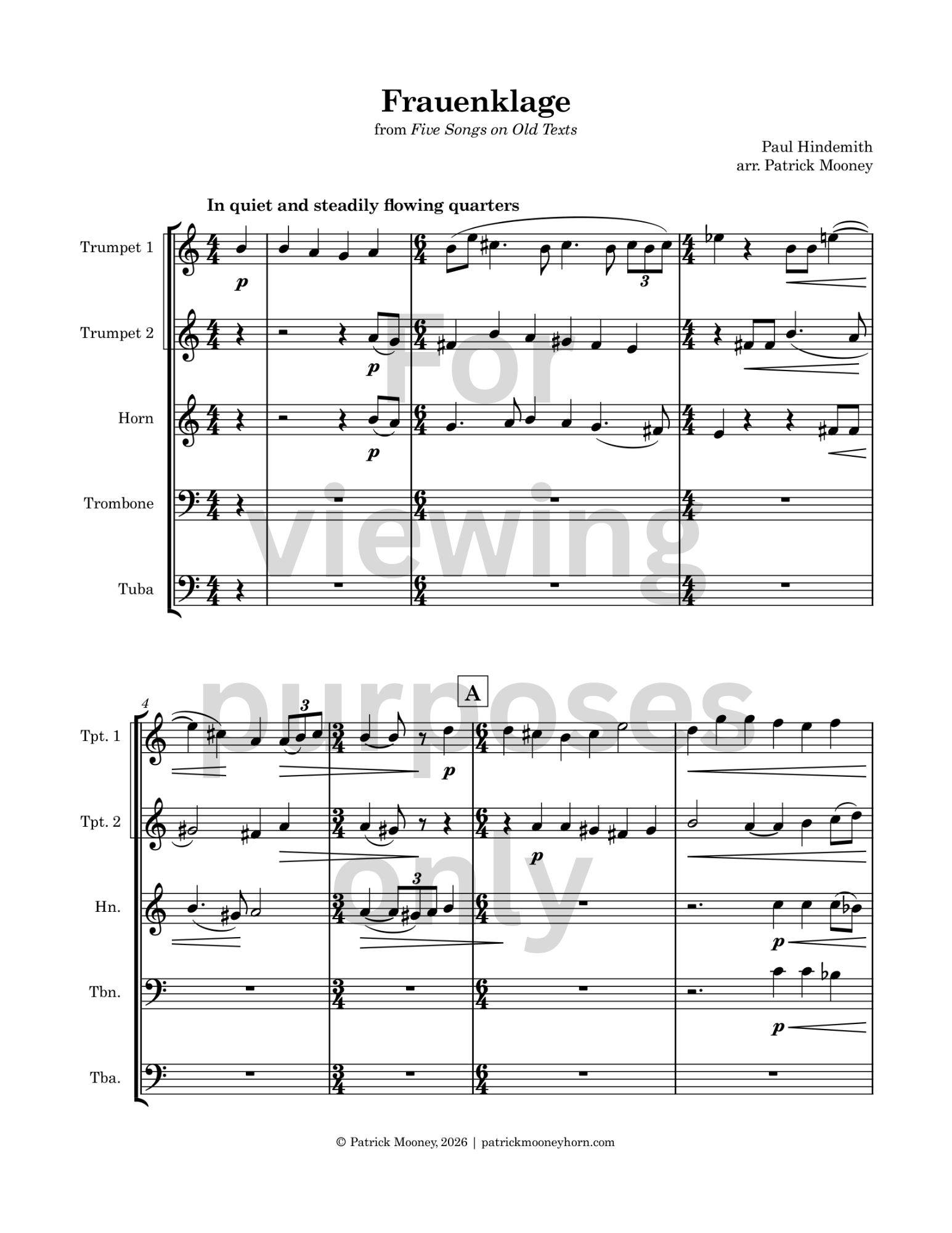
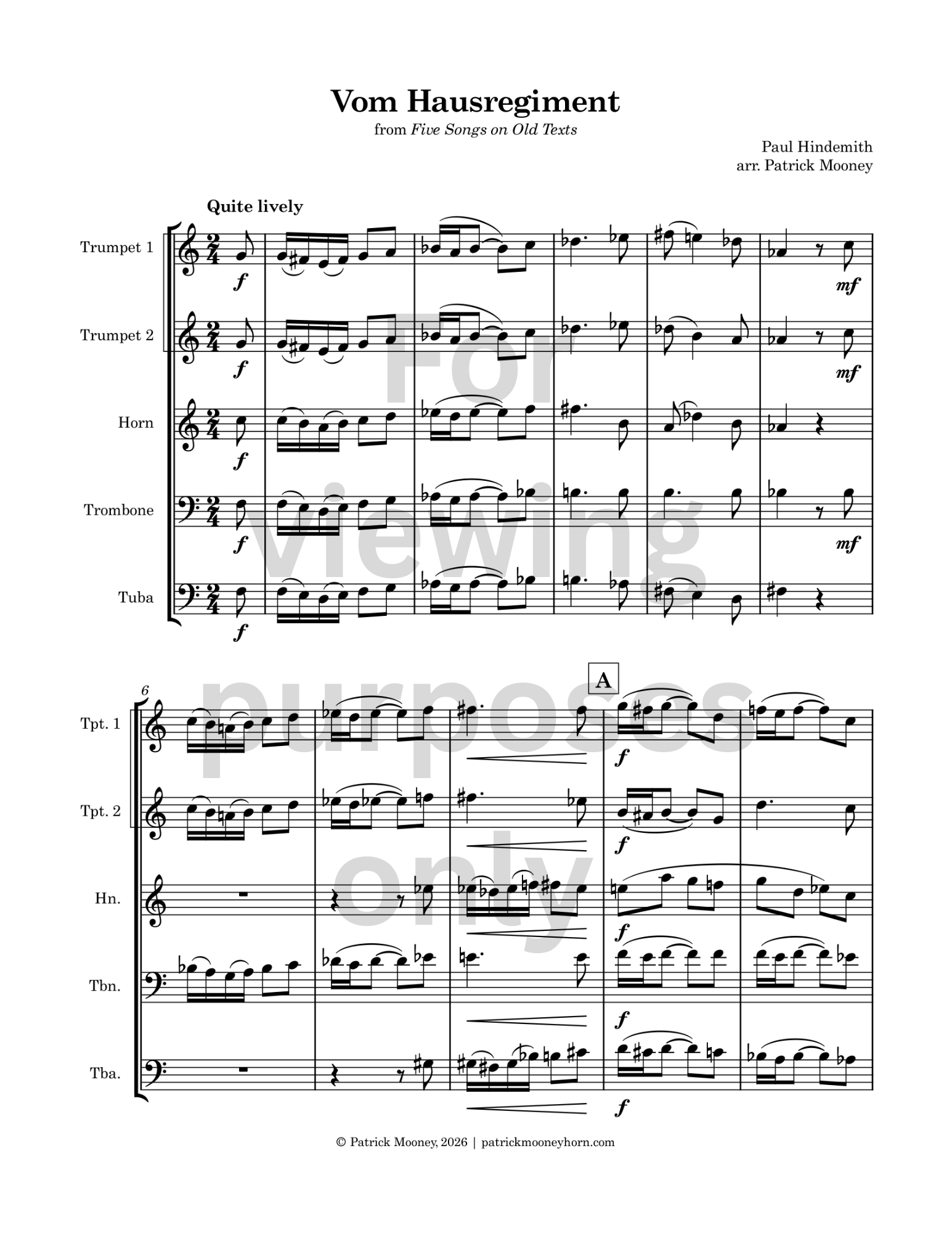
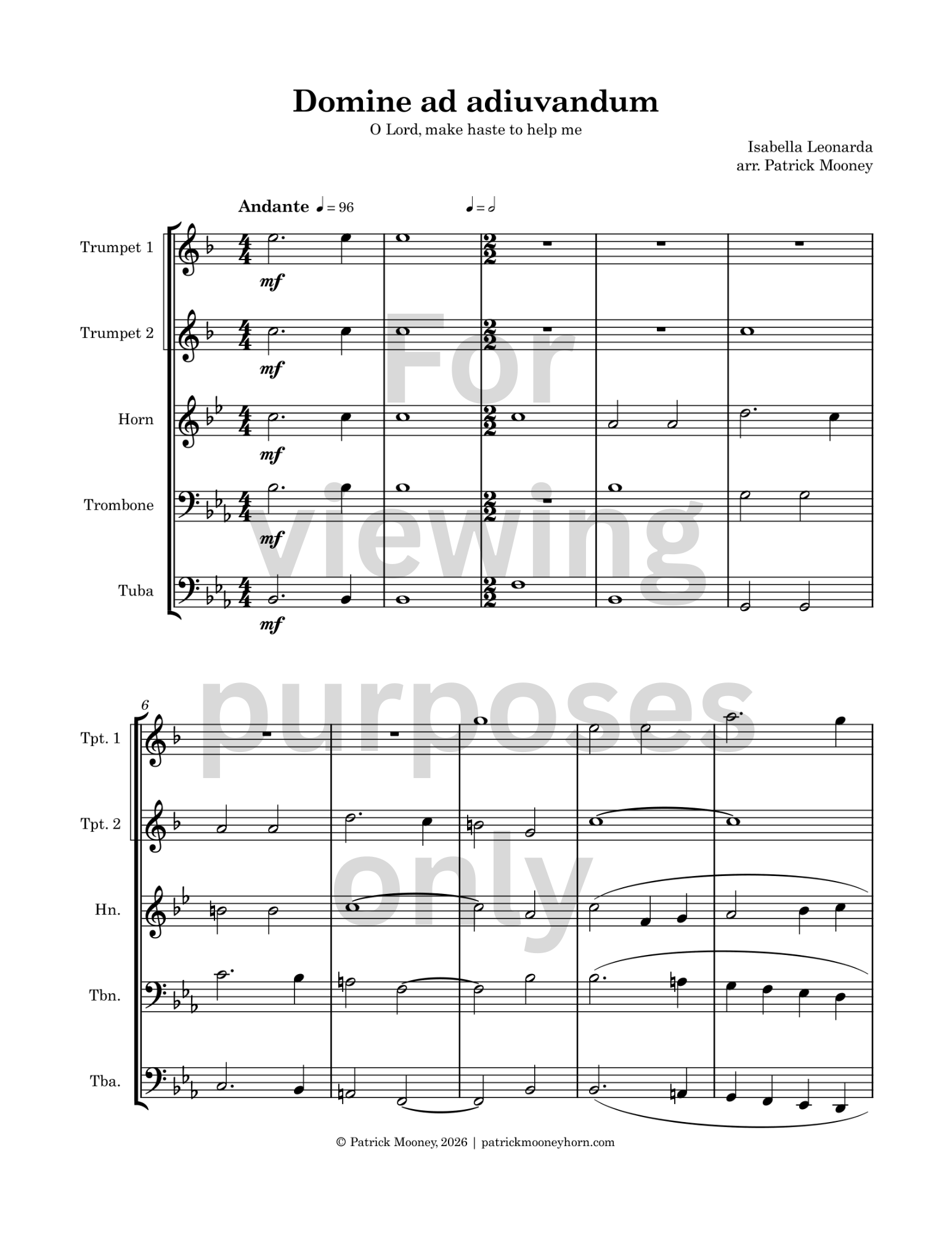
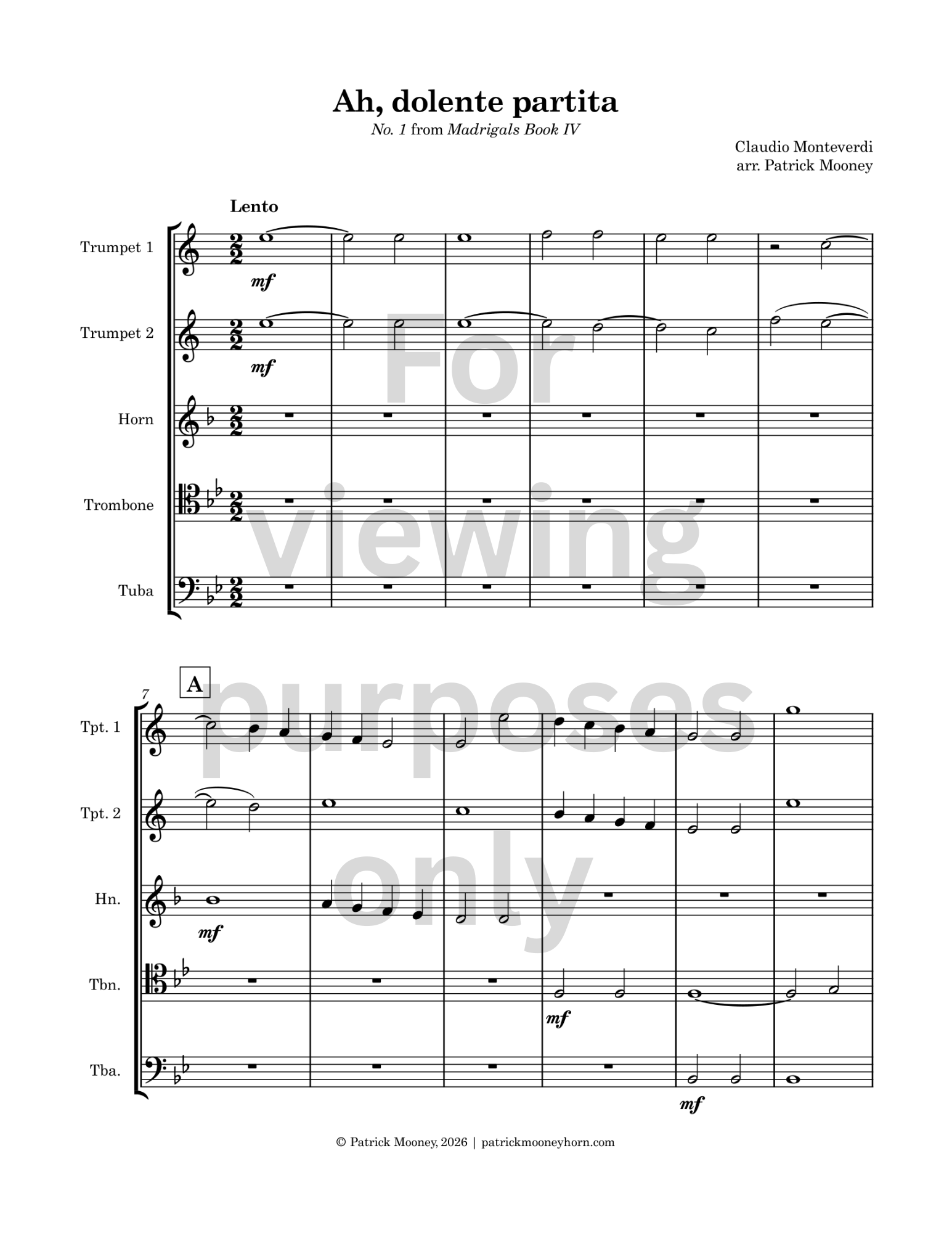
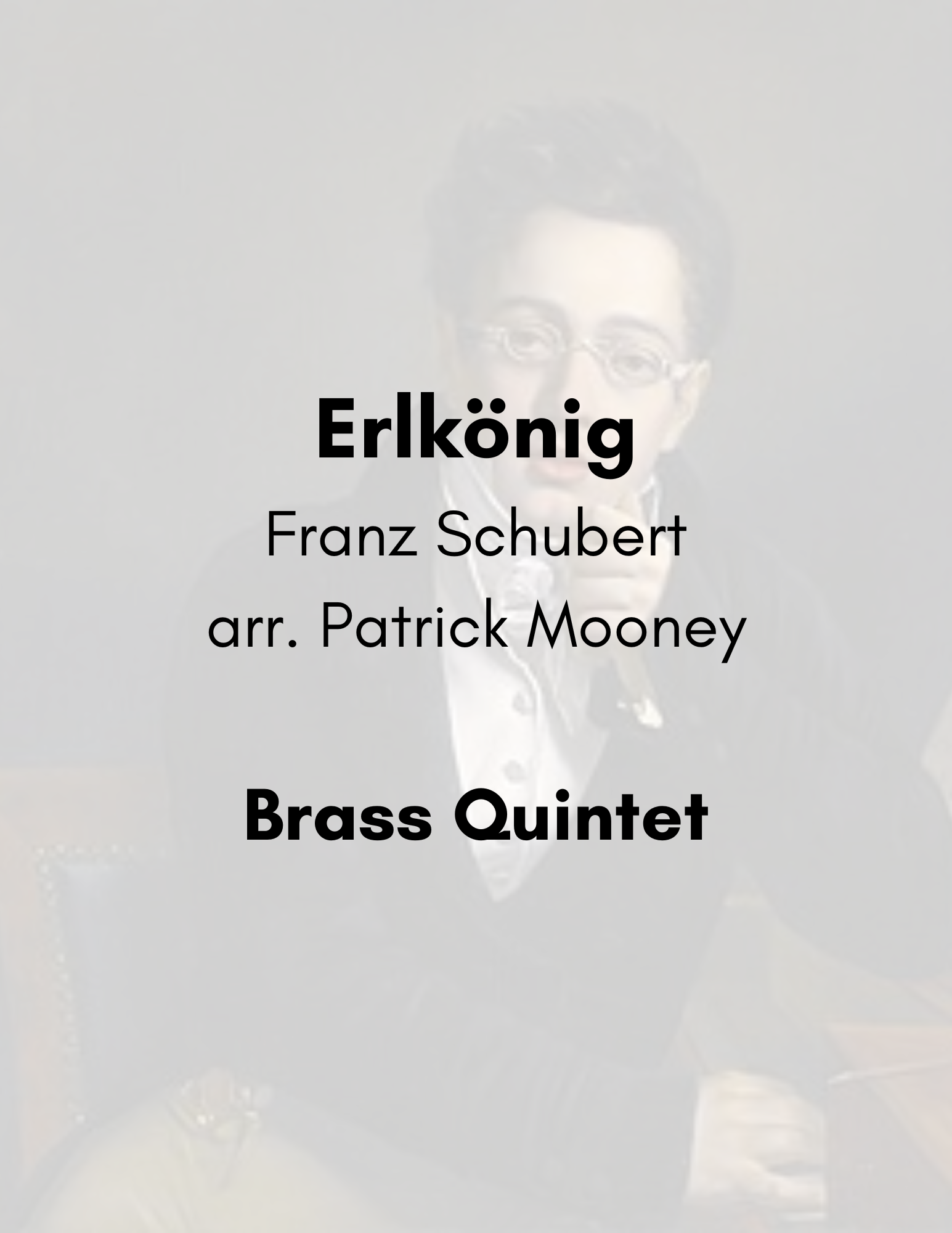
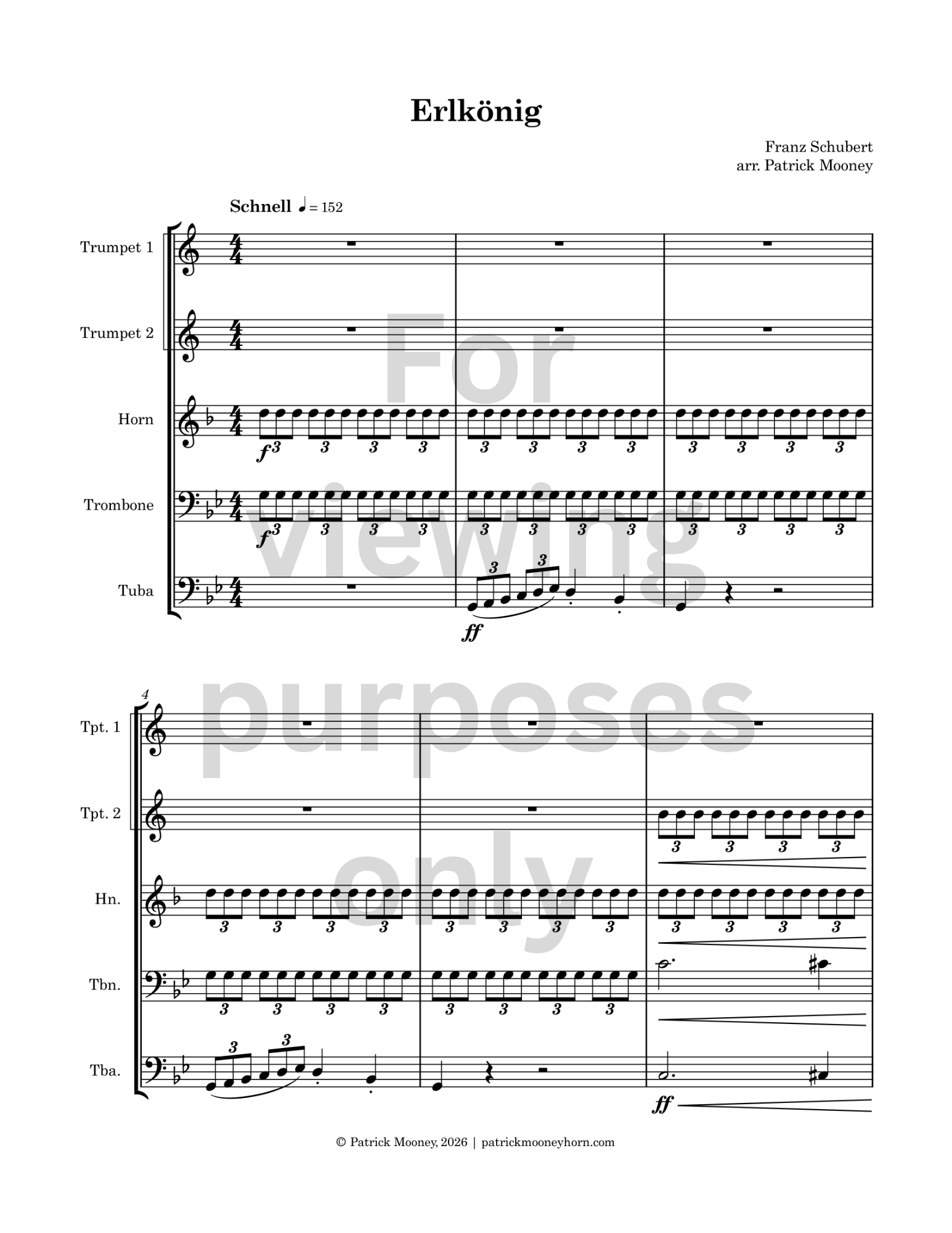
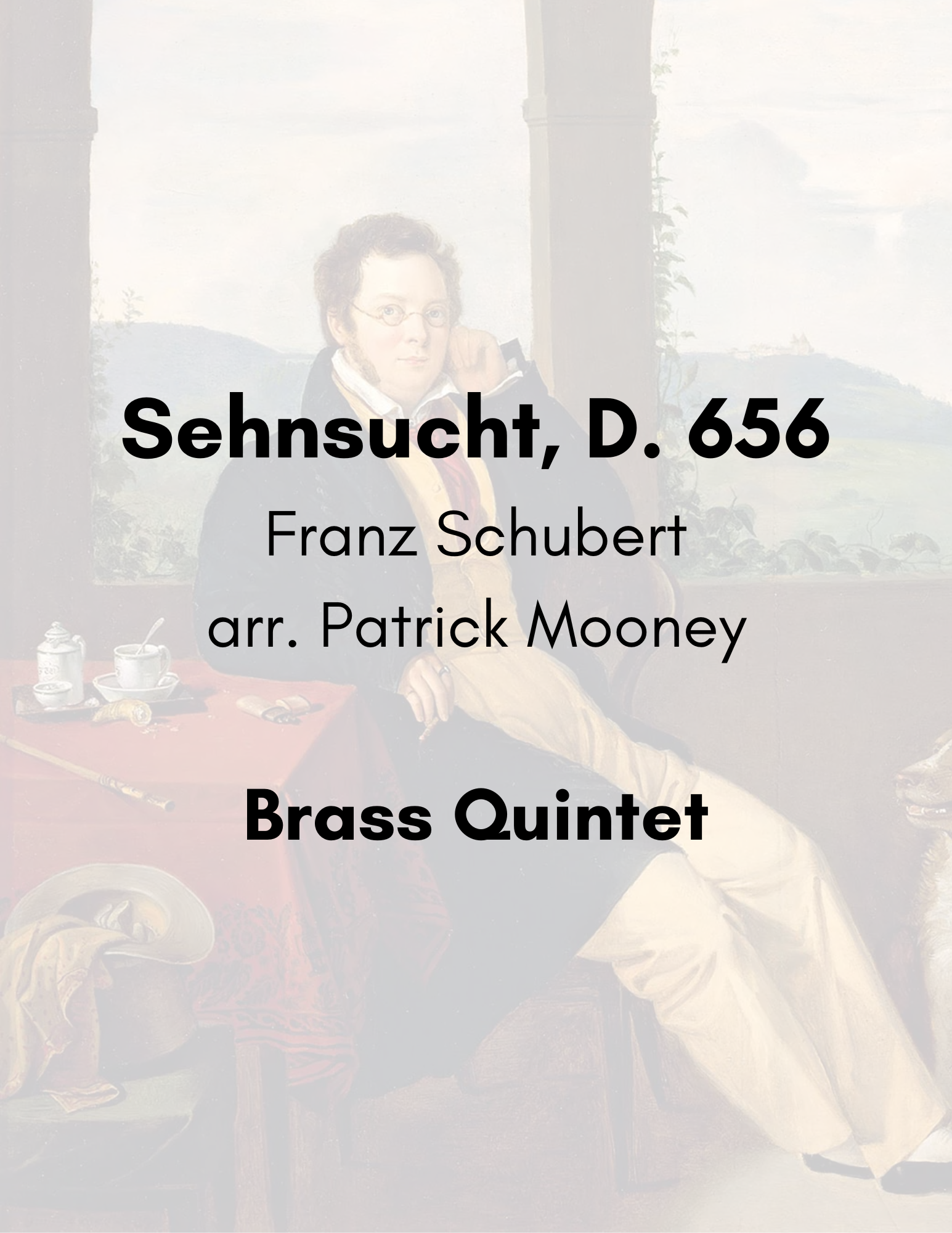
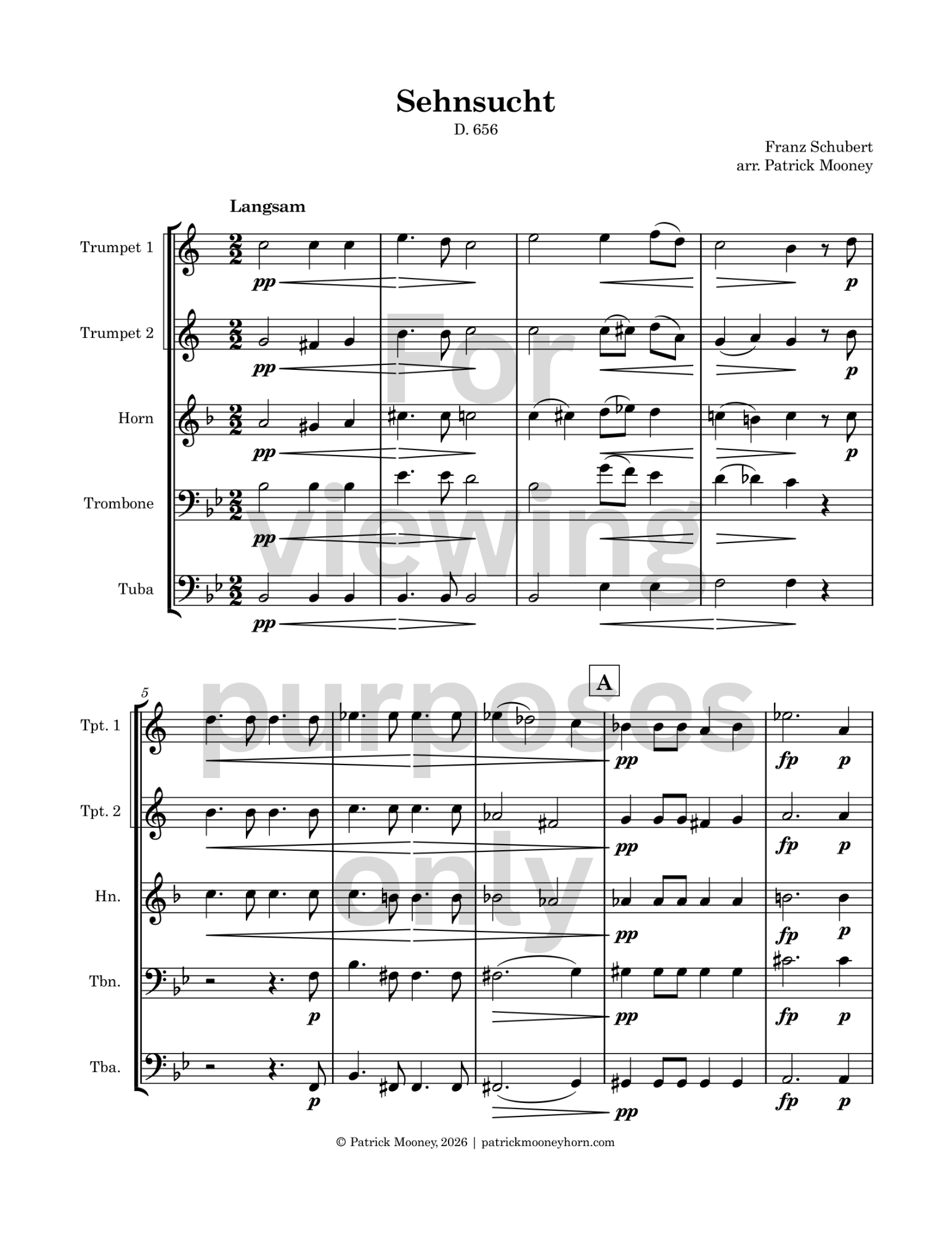
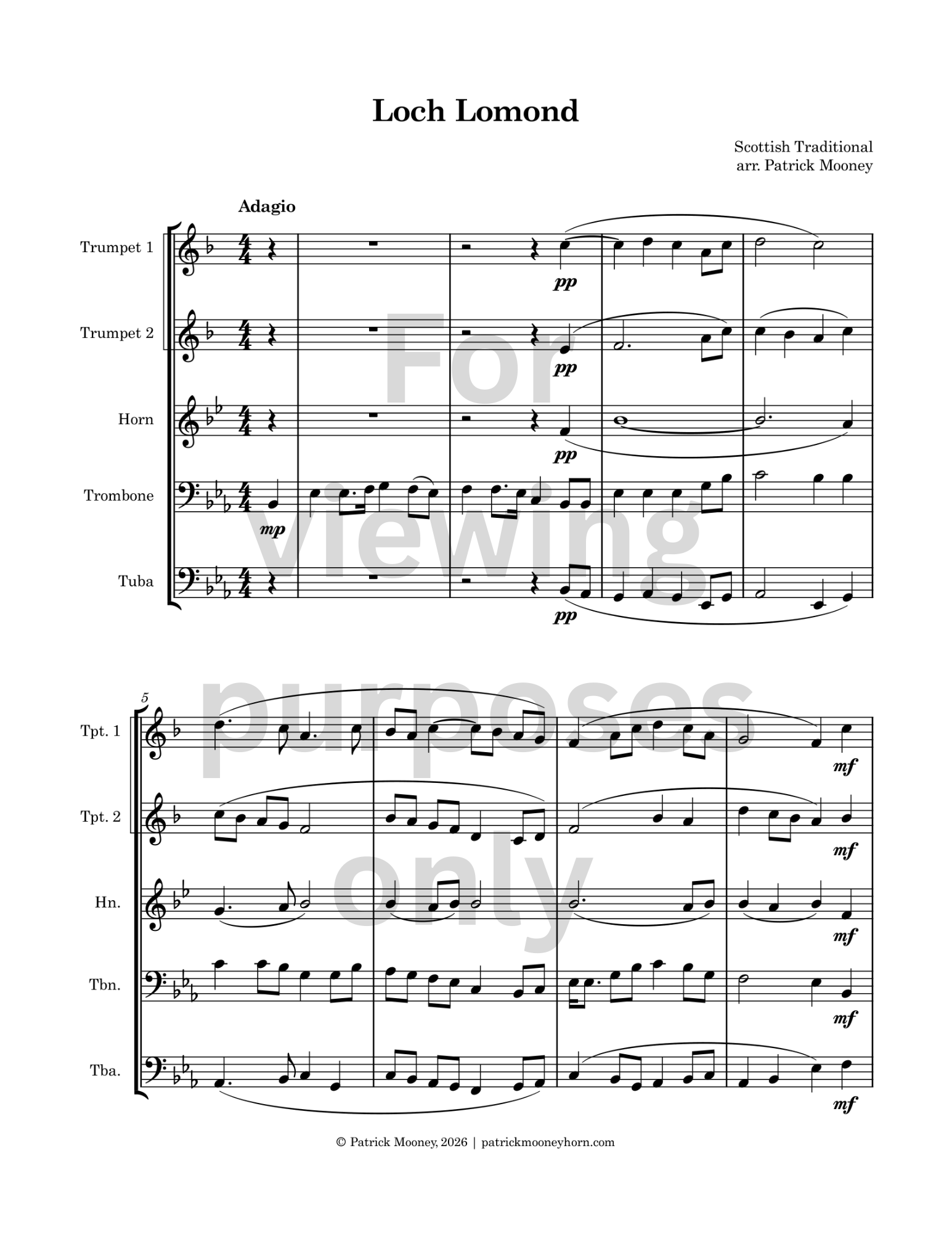
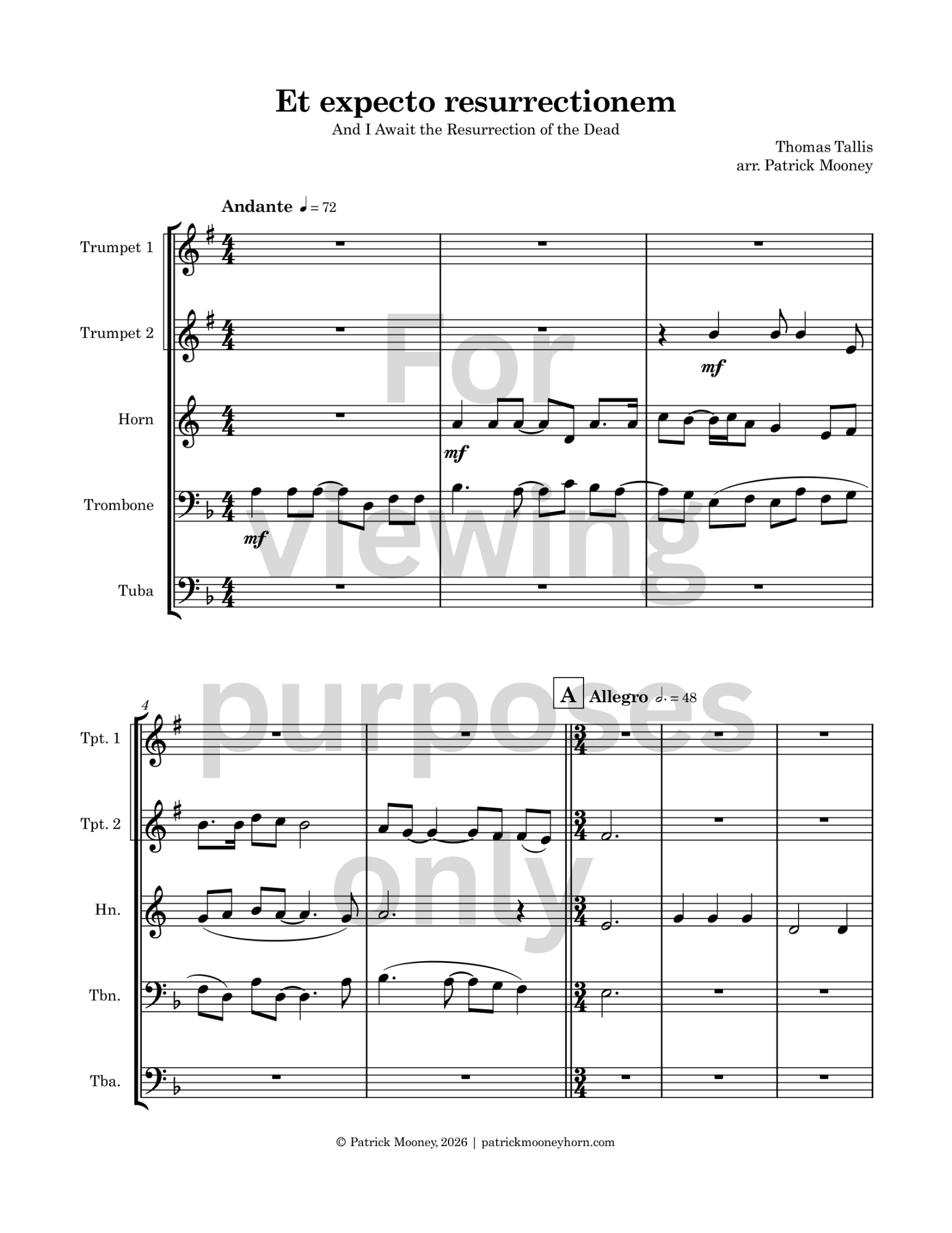
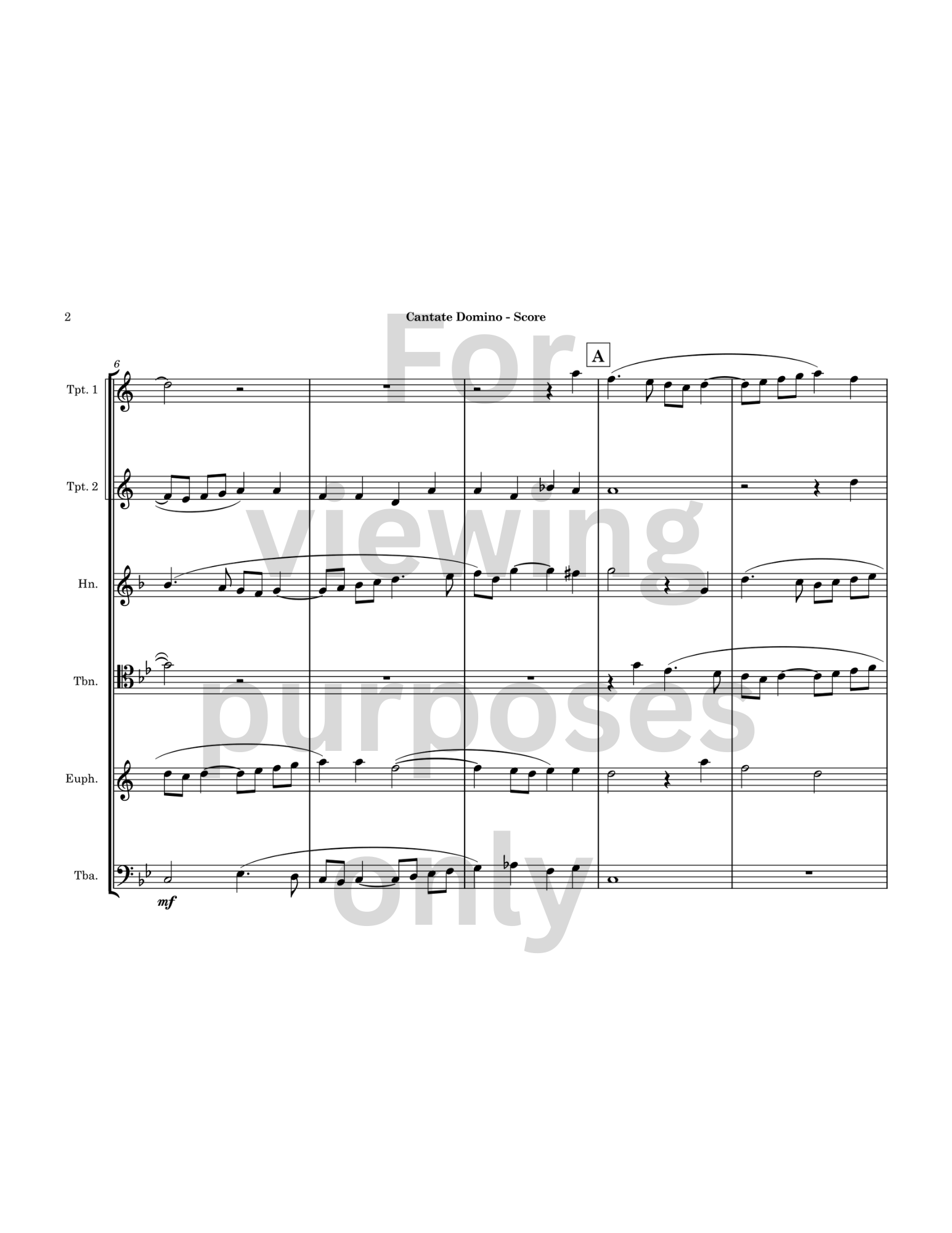
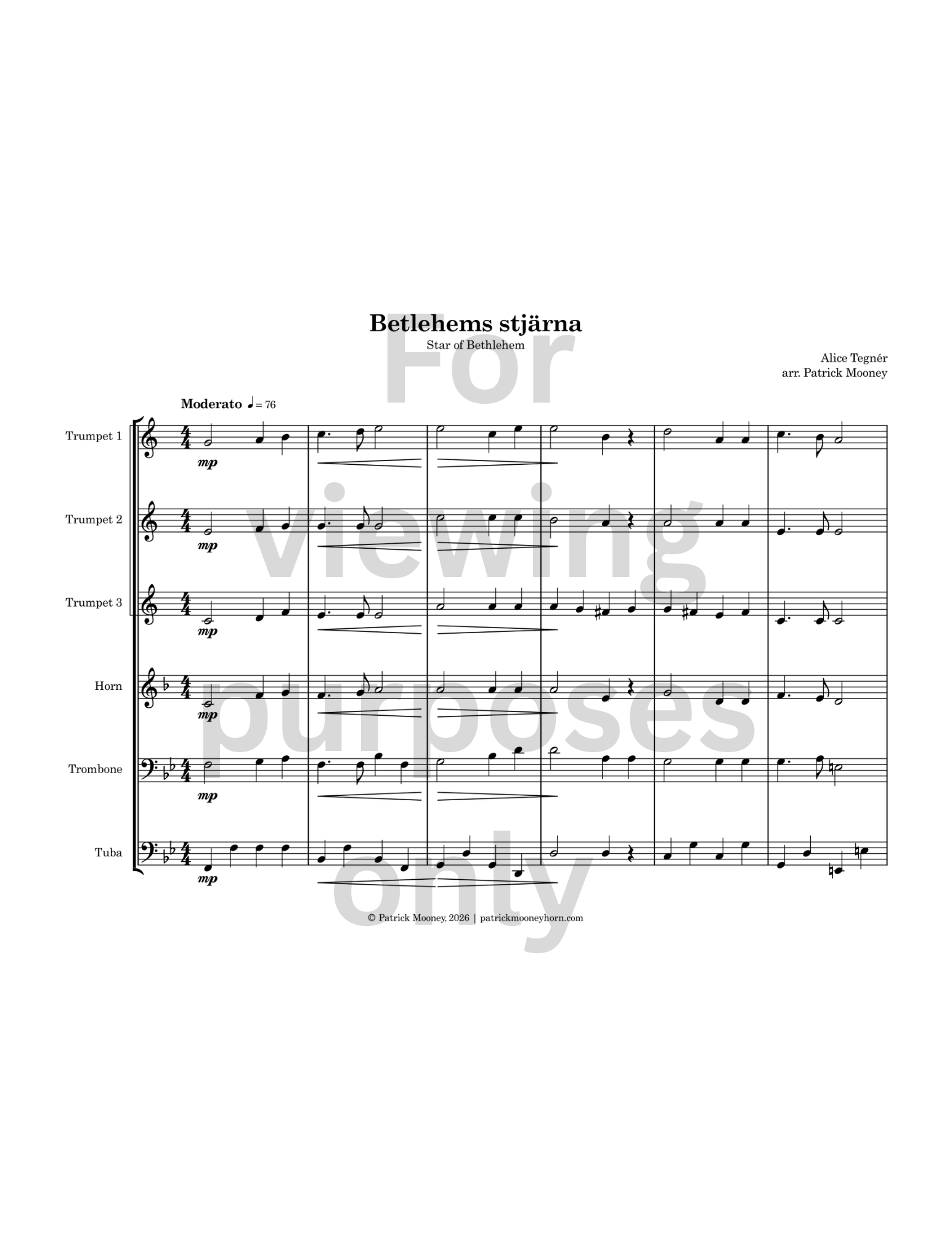
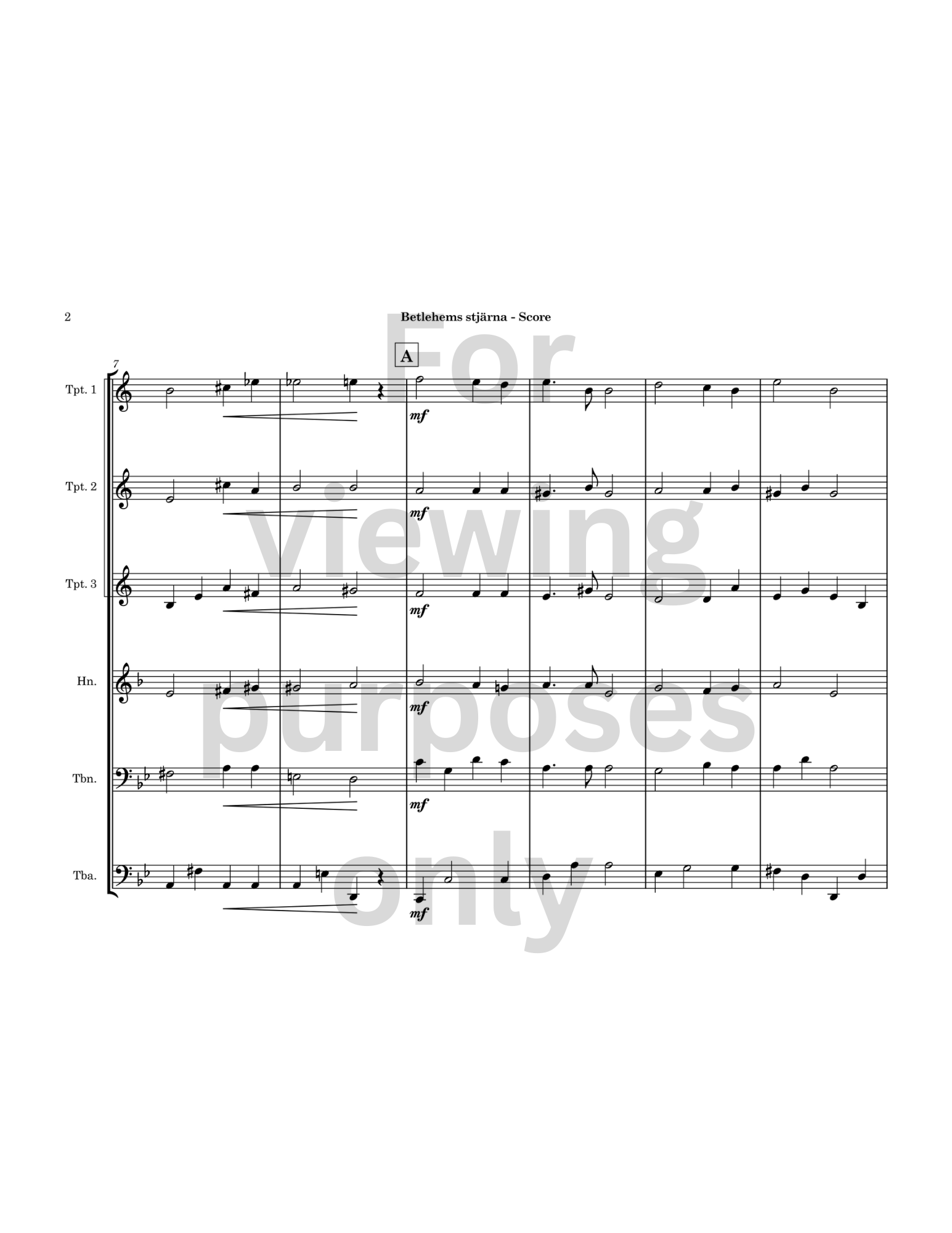
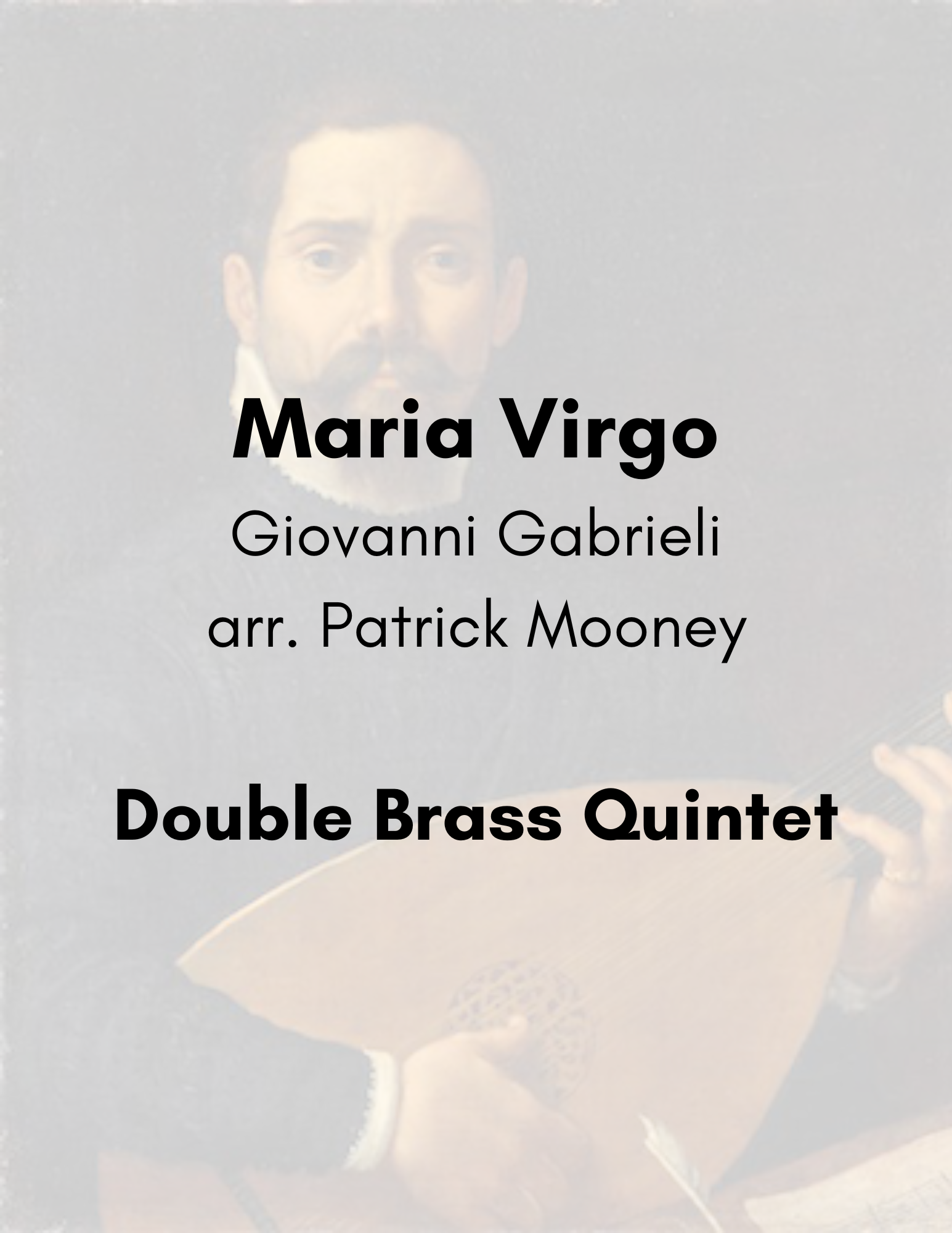
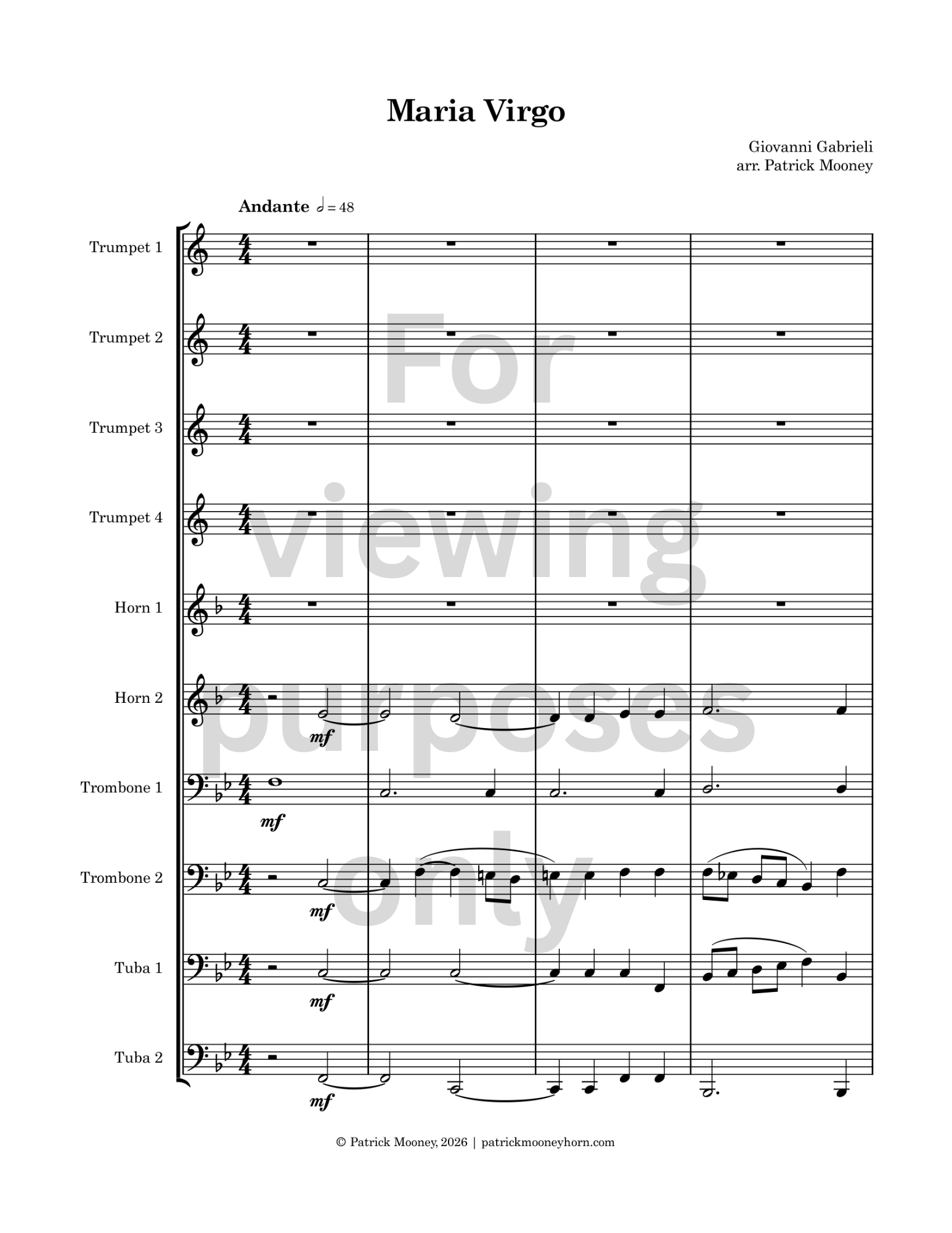
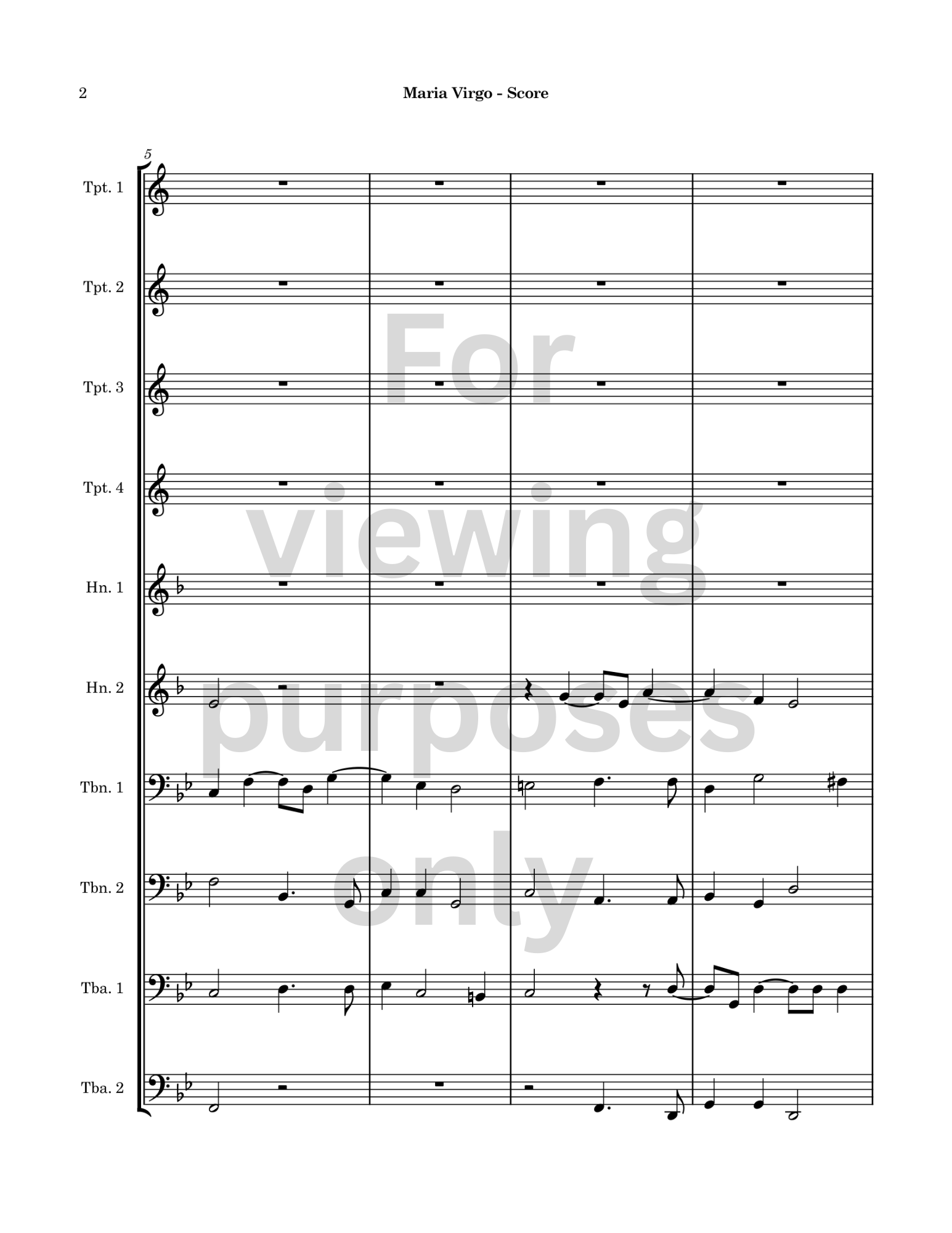
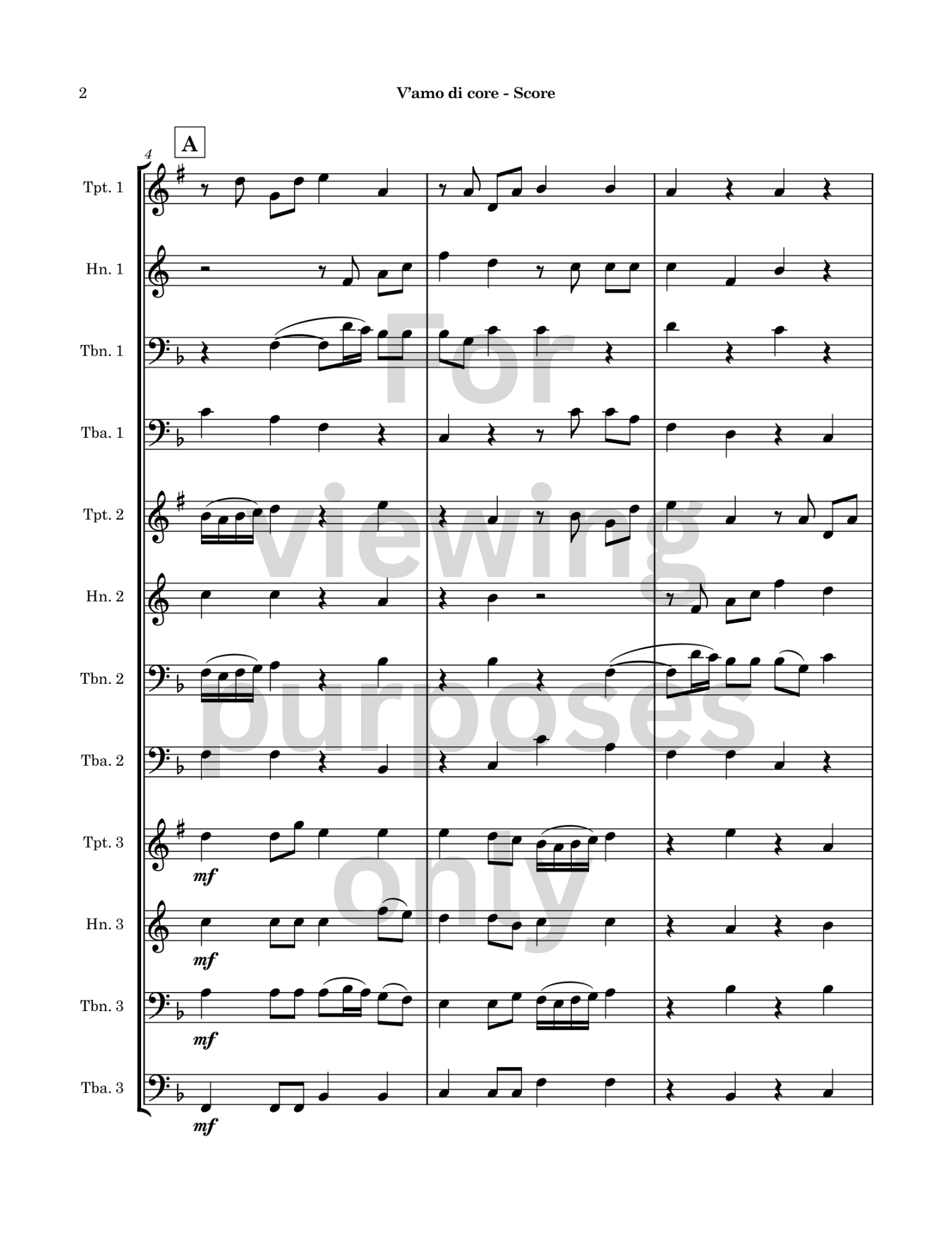
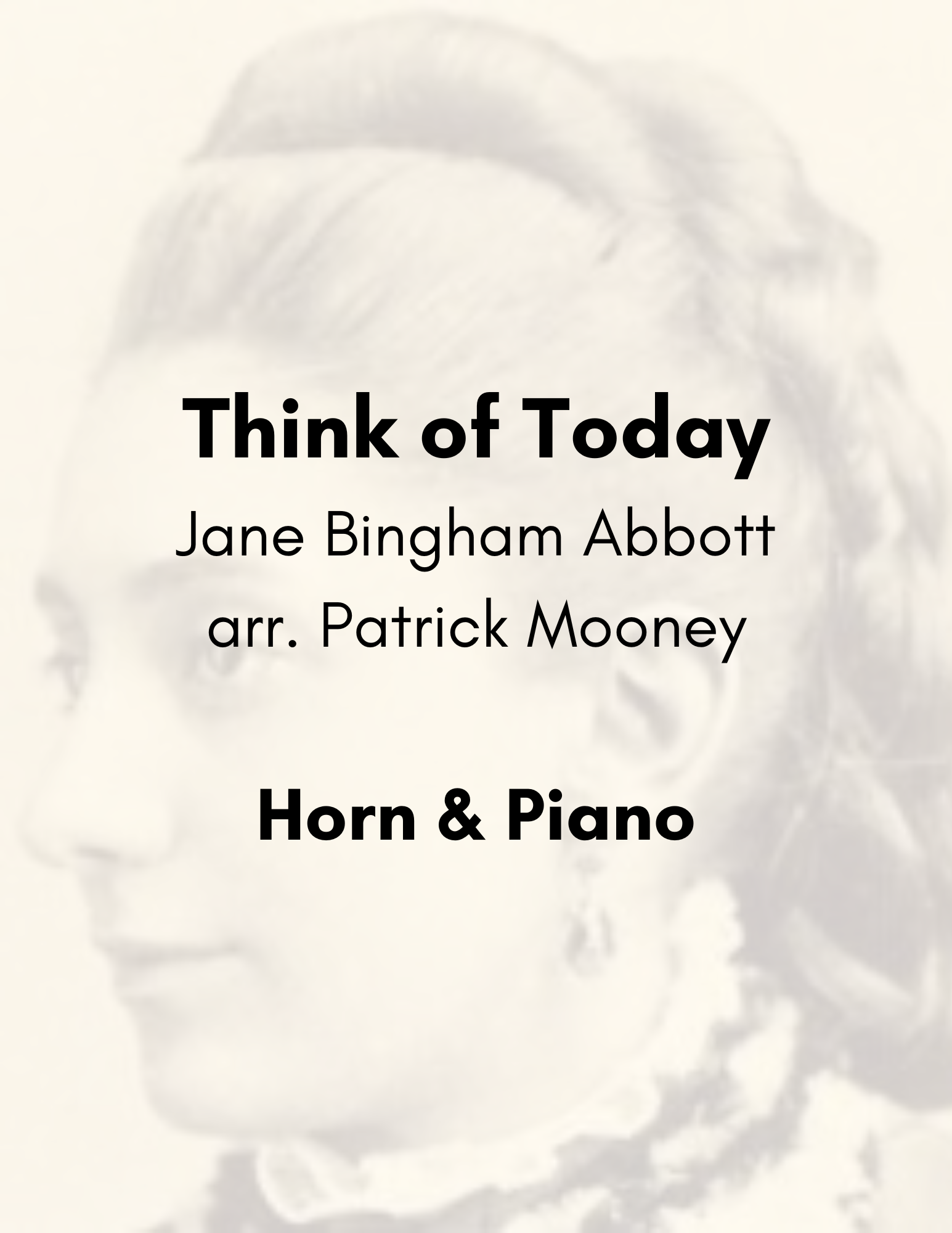
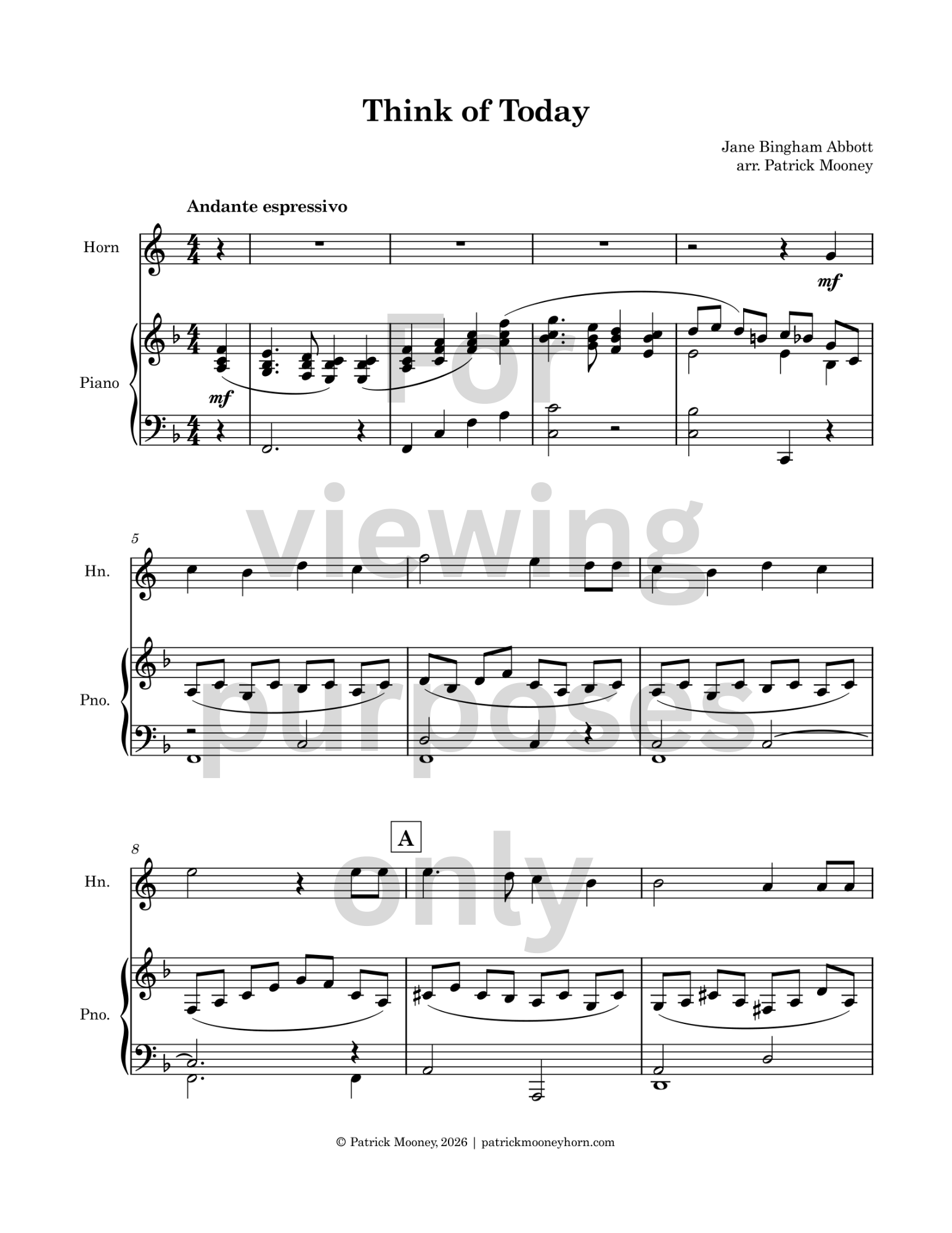
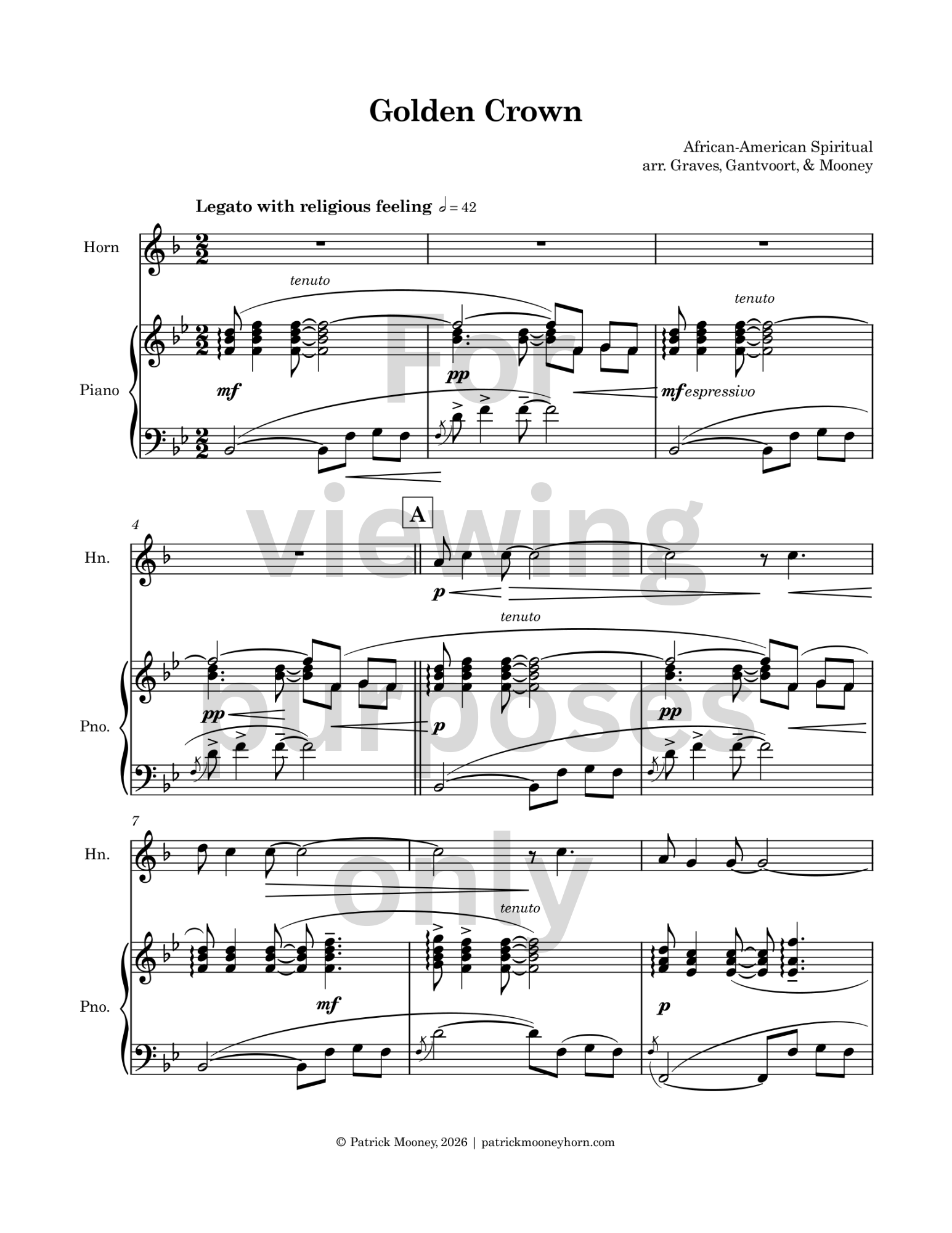
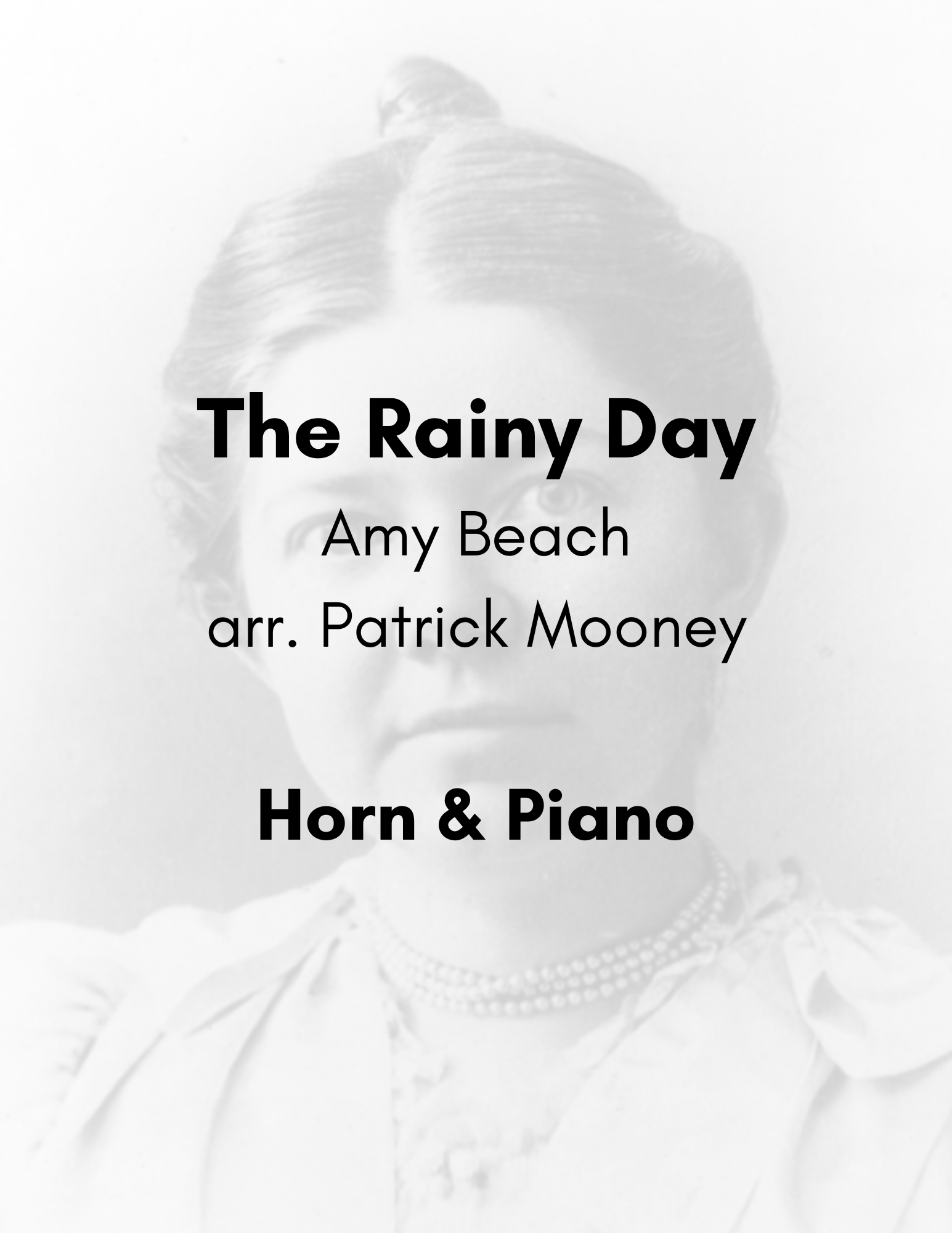
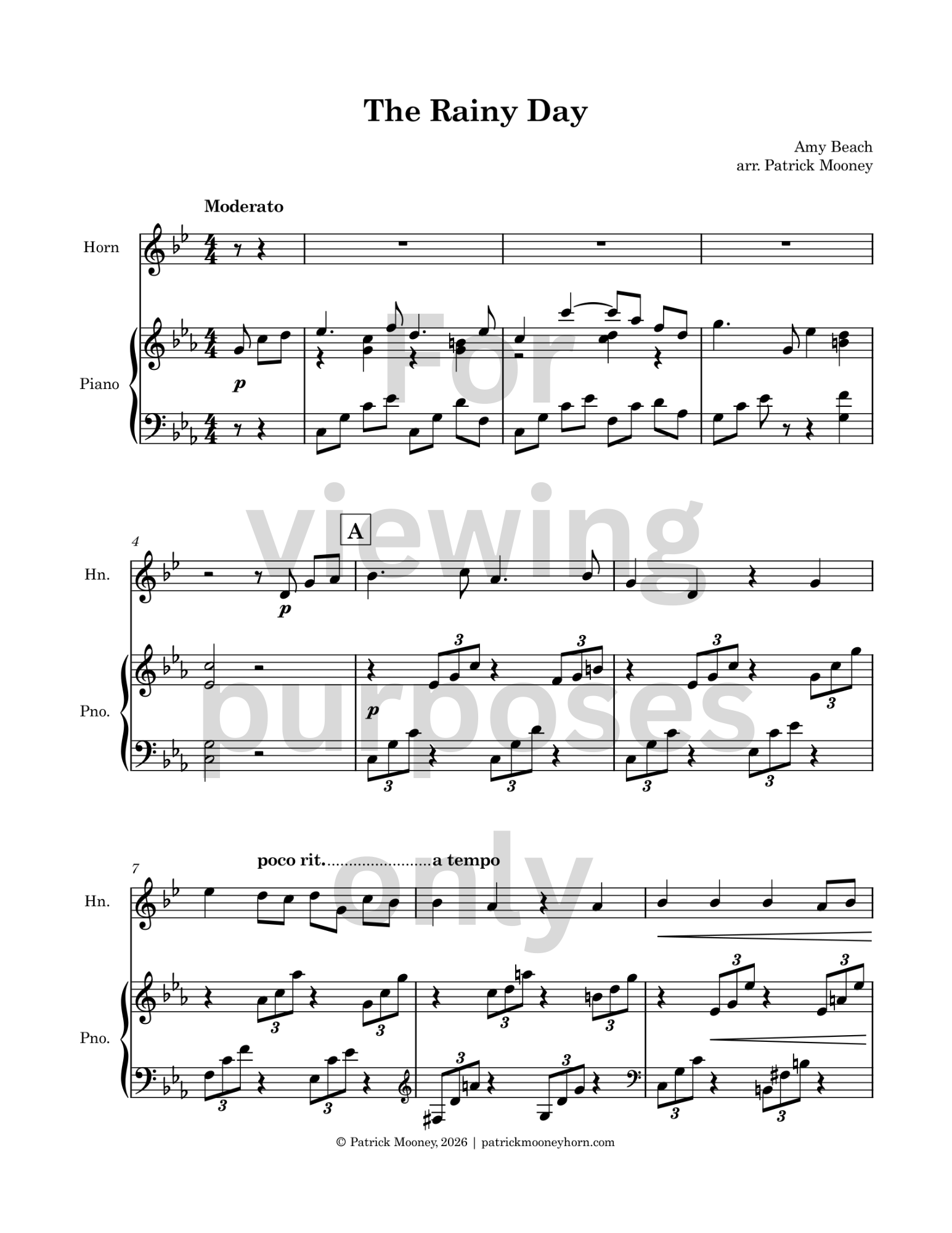
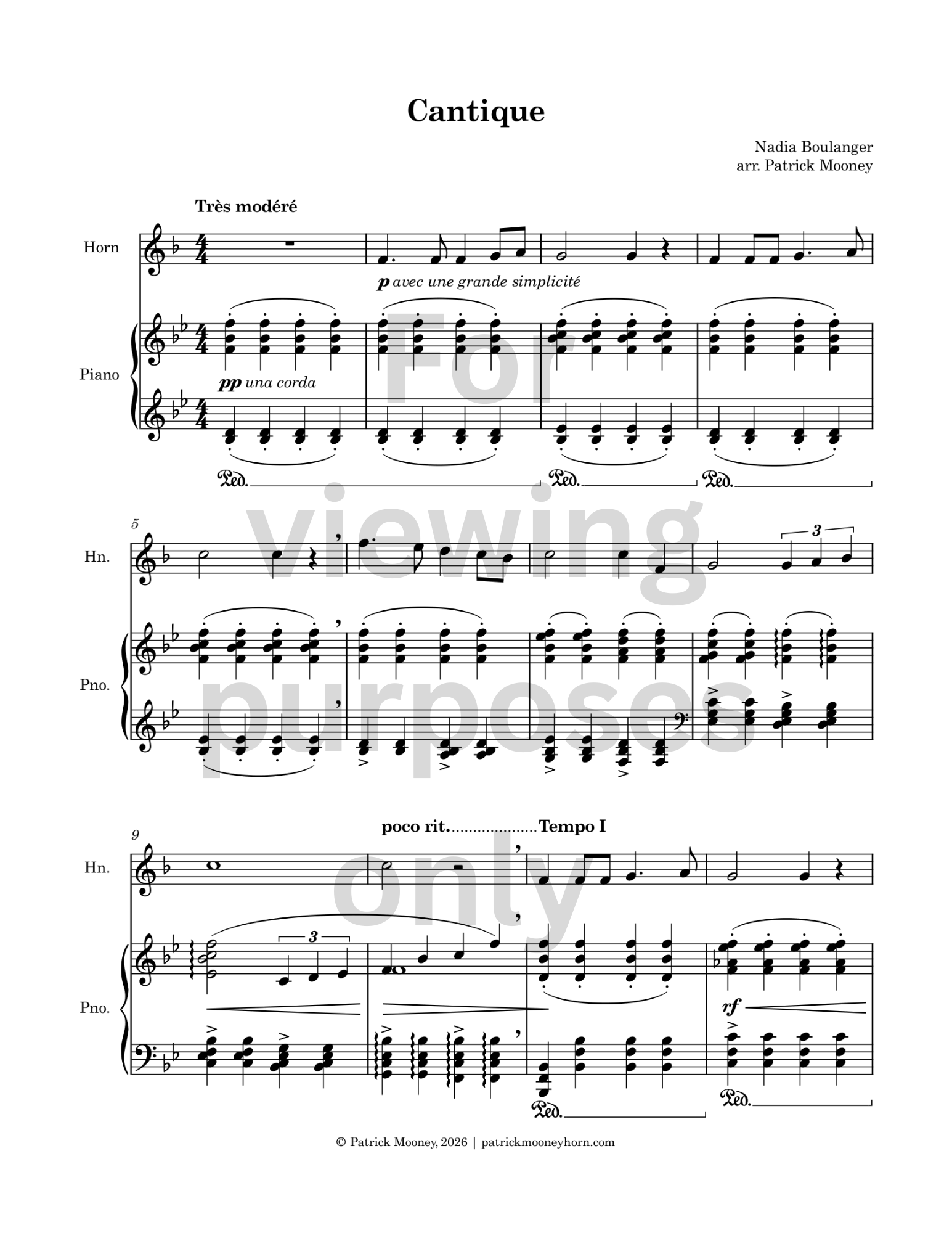
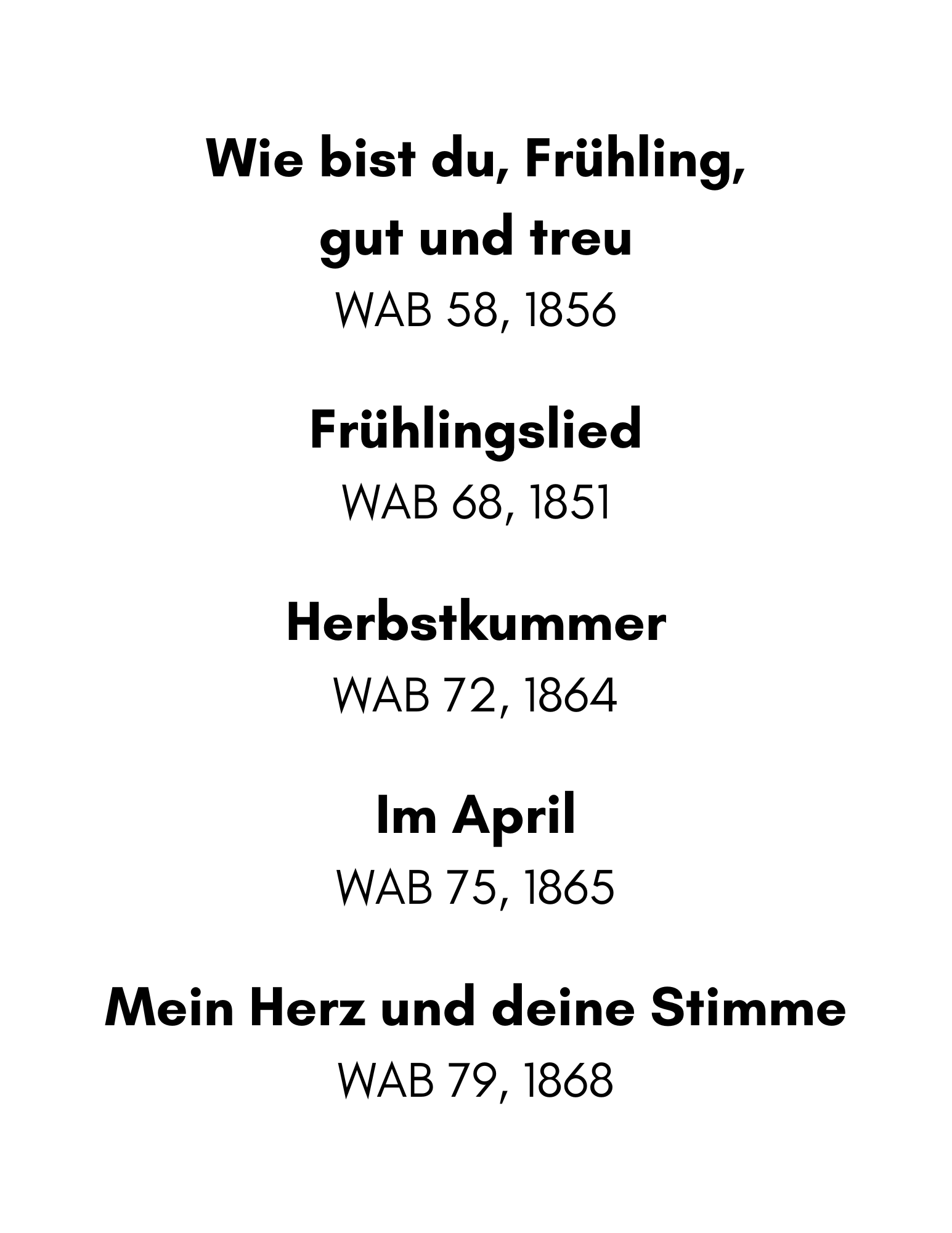
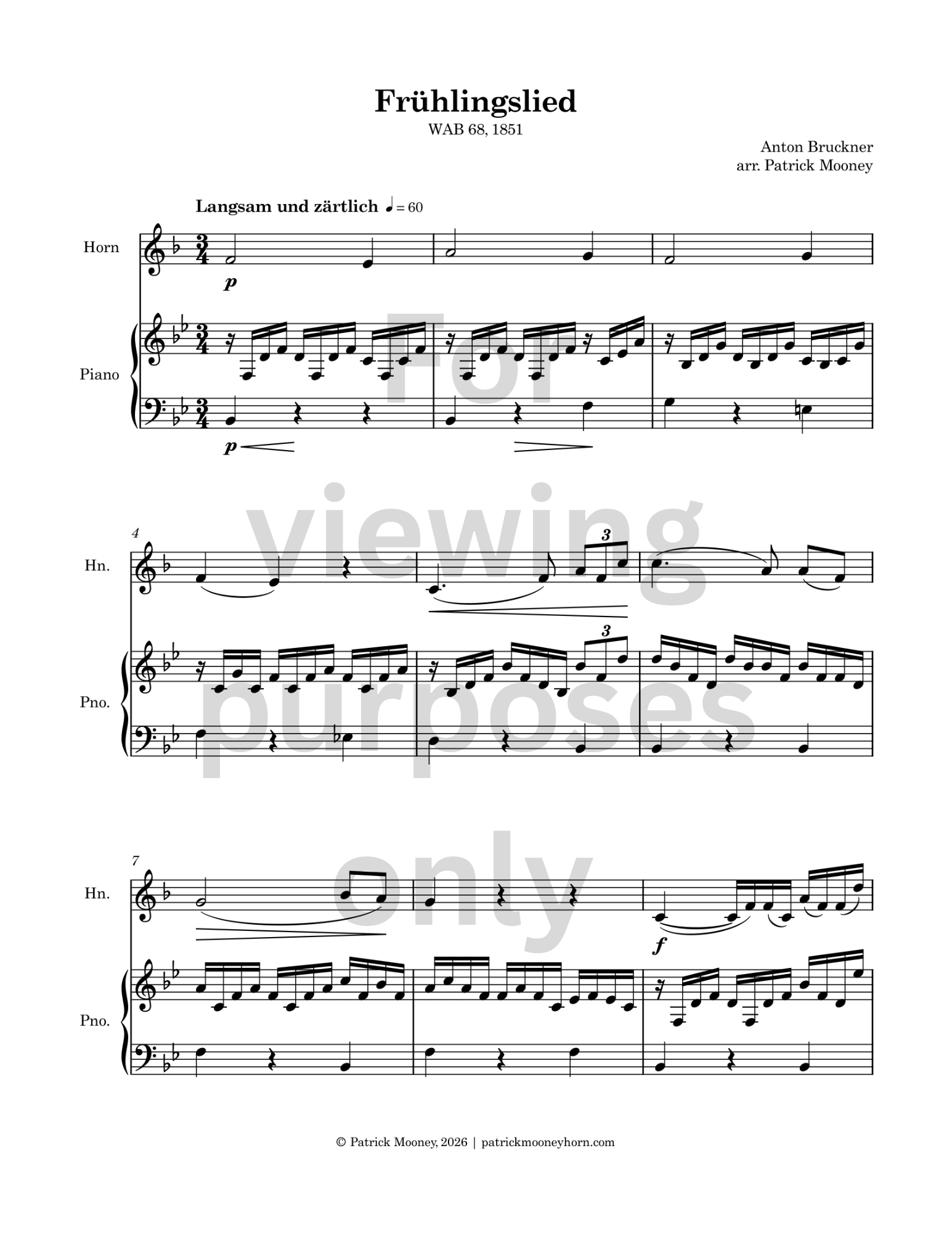
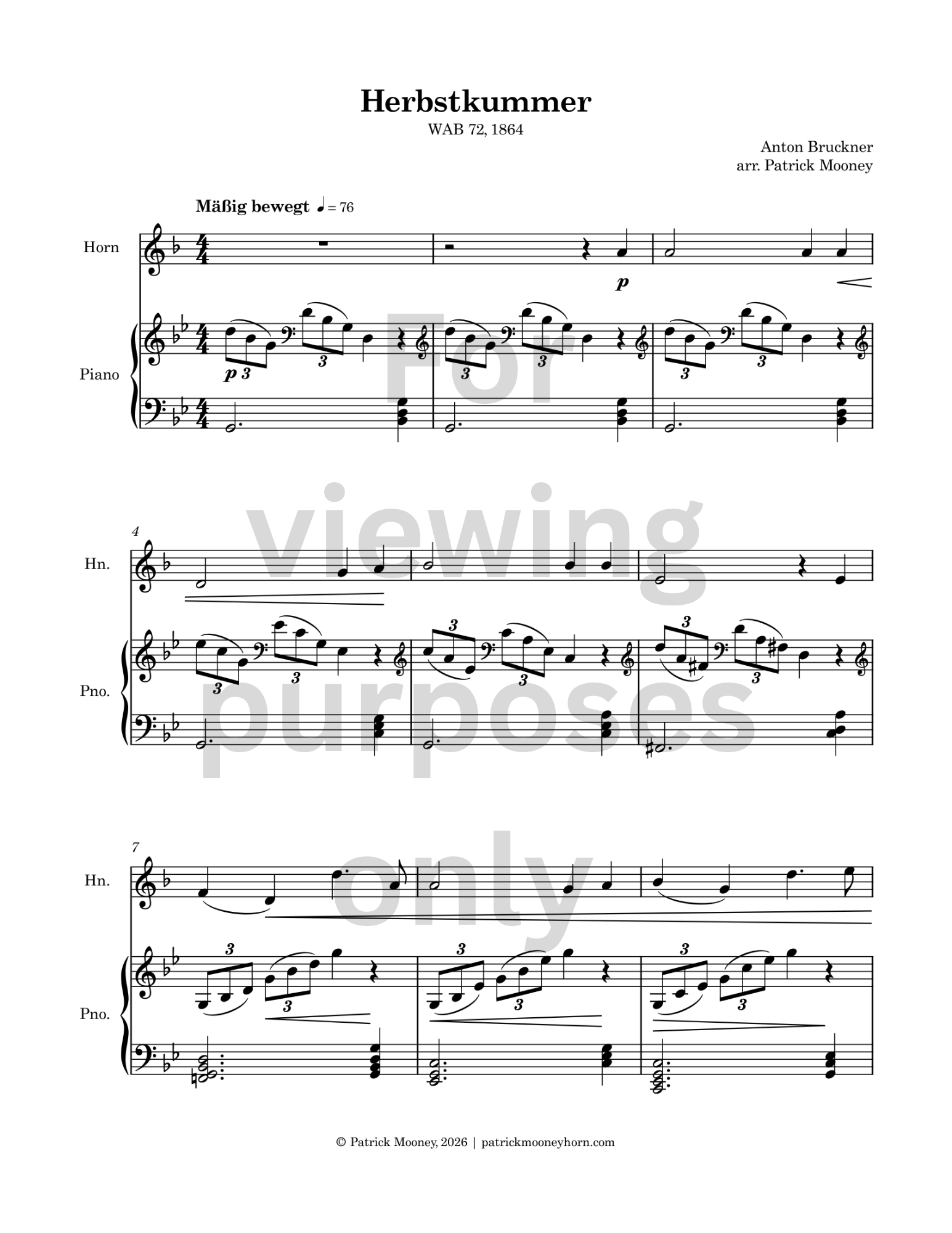
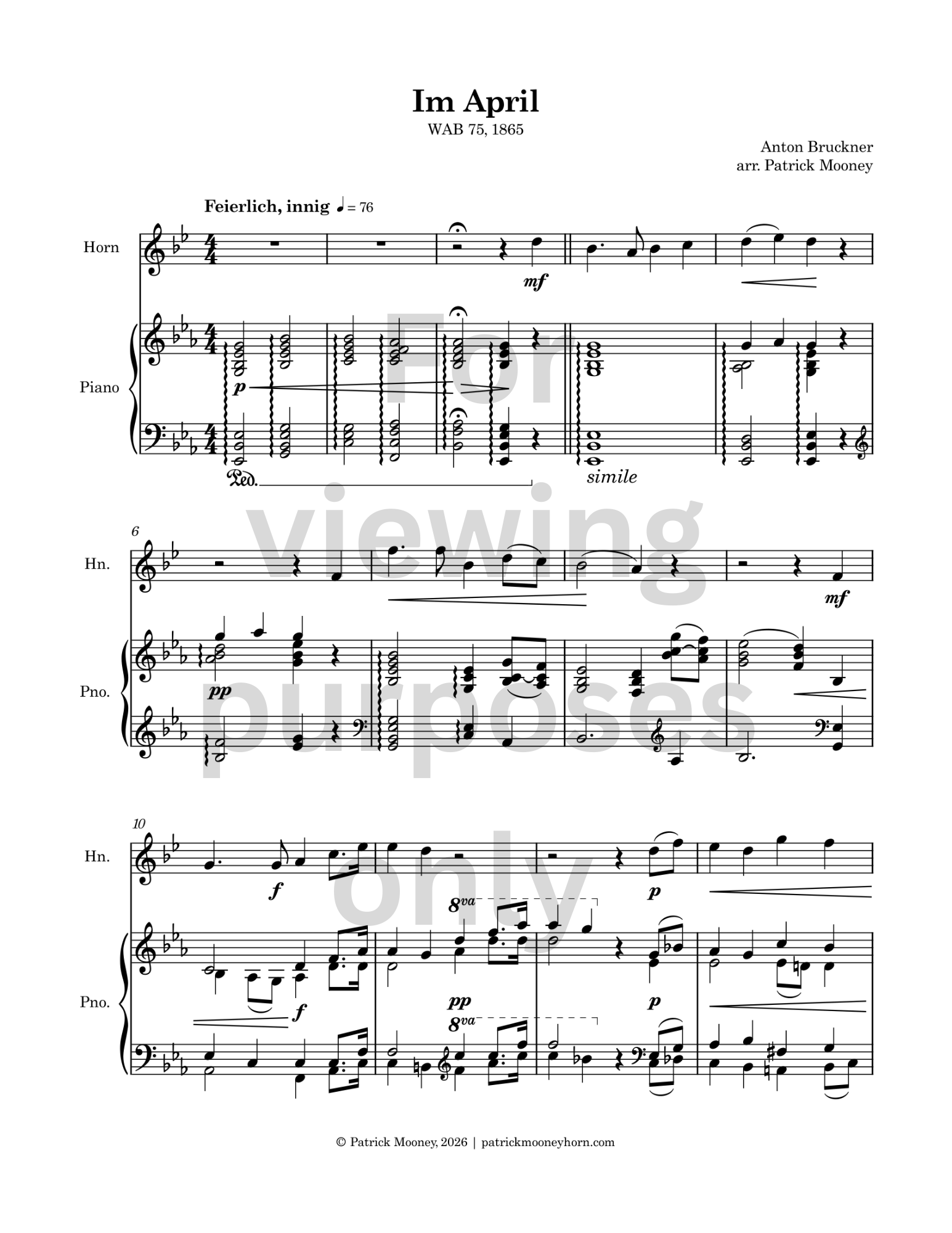
Shop Shop Clear All | Horn & Piano | 2 Horns | 2 Horns & Piano | 3 Horns | 4 Horns | 4 Horns & Piano | 4 Horns & Solo | 5 Horns | 6 Horns | 7 Horns | 8 Horns | 12 Horns | 16 Horns | 18 Horns | Wind Quintet | Brass Quintet | Brass Quintet + | Brass Choir | Categories Categories All Horn & Piano 2 Horns 2 Horns & Piano 3 Horns 4 Horns 4 Horns & Piano 4 Horns & Solo 5 Horns 6 Horns 7 Horns 8 Horns 12 Horns 16 Horns 18 Horns Wind Quintet Brass Quintet Brass Quintet + Brass Choir Filters Filter Clear Filter Think of Today Jane Bingham Abbott, arr. Patrick MooneyHorn & PianoPublished in 1909Originally scored for voice & piano; arranged for horn & piano* Score & parts included * $4.00 Add To Cart Added! Golden Crown African-American Spiritual, arr. Robert Graves, Herman Gantvoort, & Patrick MooneyHorn & PianoComposition year is unknownOriginally scored for voice & piano; arranged for horn & piano* Score & parts included * $5.00 Add To Cart Added! The Rainy Day Amy Beach, arr. Patrick MooneyHorn & PianoPublished in 1883Originally scored for voice & piano; arranged for horn & piano* Score & parts included * $3.50 Add To Cart Added! Cantique Nadia Boulanger, arr. Patrick MooneyHorn & PianoComposed in 1909Originally scored for voice & piano; arranged for horn & piano* Score & parts included * $3.50 Add To Cart Added! Fünf Lieder Anton Bruckner, arr. Patrick MooneyHorn & PianoComposed between 1851 & 1868Five songs originally scored for voice & piano; arranged for horn & piano* Score & parts included * $26.50 Add To Cart Added! Chanson de Nuit & Chanson de Matin Edward Elgar, arr. Patrick MooneyHorn & PianoComposed between 1889 & 1890Originally scored for violin & piano; arranged for horn & piano* Score & parts included * $10.50 Add To Cart Added! Die liebe Farbe Fanny Hensel, arr. Patrick MooneyHorn & PianoComposed in 1823Originally scored for voice & piano; arranged for horn & piano* Score & parts included * $3.00 Add To Cart Added! Recognition March of the Independence of Haiti Francis Johnson, arr. Patrick MooneyHorn & PianoComposed ca. 1826Originally scored for flute & piano; arranged for horn & piano* Score & parts included * $6.00 Add To Cart Added! Ekstase Alma Mahler, arr. Patrick MooneyHorn & PianoComposed in 1901; published in 1924Originally scored for voice & piano; arranged for horn & piano* Score & parts included * $5.50 Add To Cart Added! Wiegenlied Johanna Müller-Hermann, arr. Patrick MooneyHorn & PianoPublished in 1895Originally scored for voice & piano; arranged for horn & piano* Score & parts included * $1.50 Add To Cart Added! Fantasy in Purple Florence B. Price, arr. Patrick MooneyHorn & PianoComposed in 1940; published in 2011Originally scored for voice & piano; arranged for horn & piano* Score & parts included * $3.00 Add To Cart Added! Forever Florence B. Price, arr. Patrick MooneyHorn & PianoComposition year is unknownOriginally scored for voice & piano; arranged for horn & piano* Score & parts included * $3.50 Add To Cart Added! Die gute Nacht, die ich dir sage Clara Schumann, arr. Patrick MooneyHorn & PianoComposed in 1841Originally scored for voice & piano; arranged for horn & piano* Score & parts included * $3.50 Add To Cart Added! Freisinn Robert Schumann, arr. Patrick MooneyHorn & PianoComposed in 1840; No. 2 from Myrthen, Op. 25Originally scored for voice & piano; arranged for horn & piano* Score & parts included * $4.00 Add To Cart Added! Widmung Robert Schumann, arr. Patrick MooneyHorn & PianoComposed in 1840; No. 1 from Myrthen, Op. 25Originally scored for voice & piano; arranged for horn & piano* Score & parts included * $7.00 Add To Cart Added! Hofmann und kein Hofmann Ludwig van Beethoven, arr. Patrick Mooney2 HornsComposed in 1820, from Caecilia, eine Zeitschrift für die musikalische Welt, No.7Originally scored as a two part canon; arranged for 2 horns* Score & parts included * $1.50 Add To Cart Added! O del Celtico scettro Antonia Bembo, arr. Patrick Mooney2 HornsComposed ca. 1700; from Produzioni ArmonicheOriginally scored for voice and basso continuo; arranged for 2 horns* Score & parts included * $6.50 Add To Cart Added! Respice in me François Couperin, arr. Patrick Mooney2 HornsComposed between the 17th & 18th centuriesOriginally scored for voice & continuo; arranged for 2 horns* Score & parts included * $7.00 Add To Cart Added! Canon Josquin des Prez, arr. Patrick Mooney2 HornsComposed in 1547; from Heinrich Glarean’s DodecachordonOriginally scored for 2 tenor instruments; arranged for 2 horns* Score & parts included * $2.00 Add To Cart Added! Domine, non secundum peccata nostra Josquin des Prez, arr. Patrick Mooney2 HornsPublished in 1503Contains prima & secunda pars* Score & parts included * $6.50 Add To Cart Added! Chanson Charles Koechlin, arr. Patrick Mooney2 HornsComposed between 1949 & 1950No. 9 from Quinze motets de style archaïque, Op. 225* Score & parts included * $2.50 Add To Cart Added! Monodies Charles Koechlin, arr. Patrick Mooney2 HornsComposed between 1949 & 1950No. 11 from Quinze motets de style archaïque, Op. 225* Score & parts included * $5.50 Add To Cart Added! Voix d'hommes Charles Koechlin, arr. Patrick Mooney2 HornsComposed between 1949 & 1950No. 1 from Quinze motets de style archaïque, Op. 225* Score & parts included * $4.50 Add To Cart Added! Marches des Cors Jean-Baptiste Lully, arr. Patrick Mooney2 HornsComposed in 1675From Act 1 of the operatic tragedy, Thésée, LWV 51* Score & parts included * $3.50 Add To Cart Added! Canzonetta and Tarantella Nikolai Rimsky-Korsakov, arr. Patrick Mooney2 HornsComposed between 1883 & 1894Originally scored for A & Bb clarinets; arranged for 2 horns* Score & parts included * $3.00 Add To Cart Added! Grimmige Gruft Heinrich Schütz, arr. Patrick Mooney2 HornsComposed in 1623Originally scored for soprano & continuo; arranged for 2 horns* Score & parts included * $2.00 Add To Cart Added! Non c'è più fede Barbara Strozzi, arr. Patrick Mooney'2 HornsPublished in 1664Originally scored for voice & basso continuo; arranged for 2 horns* Score & parts included * $7.00 Add To Cart Added! Croquis Henri Tomasi, arr. Patrick Mooney2 HornsComposed in 1962Originally scored for 2 bassoons; arranged for 2 horns* Score & parts included * $11.25 Add To Cart Added! A Canadian Boat Song Amy Beach, arr. Patrick Mooney2 Horns & PianoComposed in 1890; from Songs of the Sea, Op. 10Originally scored for 2 voices & piano; arranged for 2 horns & piano* Score & parts included * $8.25 Add To Cart Added! Im Walde Alban Berg, arr. Patrick Mooney2 Horns & PianoComposed in 1903Originally scored for 2 voices & piano; arranged for 2 horns & piano* Score & parts included * $2.25 Add To Cart Added! Drei Duette Johannes Brahms, arr. Patrick Mooney2 Horns & PianoComposed between 1858 & 1860Originally scored for soprano, alto, & piano; arranged for 2 horns & piano* Score & parts included * $18.50 Add To Cart Added! Vier Duette Johannes Brahms, arr. Patrick Mooney2 Horns & PianoComposed between 1860 & 1862Originally scored for alto, baritone, & piano; arranged for 2 horns & piano* Score & parts included * $29.75 Add To Cart Added! Fünf Duette Johannes Brahms, arr. Patrick Mooney2 Horns & PianoComposed between 1873 & 1875Originally scored for soprano, alto, & piano; arranged for 2 horns & piano* Score & parts included * $24.50 Add To Cart Added! The Brook Edward Elgar, arr. Patrick Mooney2 Horns & PianoComposed ca. 1913Originally scored for 2 voices & piano; arranged for 2 horns & piano* Score & parts included * $2.25 Add To Cart Added! Diwa ng Bagumbayan Lorenzo S. Ilustre, arr. Patrick Mooney2 Horns & PianoComposed in the early 20th century; published in 1960Originally scored for 2 voices & piano; arranged for 2 horns & piano* Score & parts included * $7.75 Add To Cart Added! Little Boy Blue Harriett Abrams, arr. Patrick Mooney3 HornsComposed in 1799Originally scored for 3 voices; arranged for 3 horns* Score & parts included * $5.25 Add To Cart Added! O quam suavis est Domine spiritus tuus Caterina Assandra, arr. Patrick Mooney3 HornsComposed & published in 1609Originally scored for 2 voices & continuo; arranged for 3 horns* Score & parts included * $7.75 Add To Cart Added! Abbé Stadler Ludwig van Beethoven, arr. Patrick Mooney3 HornsComposed in 1820Originally scored for 3 voices; arranged for 3 horns* Score & parts included * $3.75 Add To Cart Added! Veni Creator Hector Berlioz, arr. Patrick Mooney3 HornsComposed ca. 1860 to 1868Originally scored for SSA; arranged for 3 horns* Score & parts included * $9.50 Add To Cart Added! Stavasi il mio bel Sol Maddalena Casulana, arr. Patrick Mooney3 HornsComposed in 1586Originally scored for SAA; arranged for 3 horns* Score & parts included * $6.00 Add To Cart Added! O Salutaris Hostia Louise Farrenc, arr. Patrick Mooney3 HornsComposed in the mid-1840sOriginally scored for SAT; arranged for 3 horns* Score & parts included * $7.75 Add To Cart Added! La cigale et la fourmi Charles Gounod, arr. Patrick Mooney3 HornsComposed in 1856Originally scored for 3 voices; arranged for 3 horns* Score & parts included * $8.25 Add To Cart Added! Songs for Choir I Agathe Backer Grøndahl, arr. Patrick Mooney3 HornsPublished in 1905Originally scored for SSA; arranged for 3 horns* Score & parts included * $13.25 Add To Cart Added! Kom, Gudsengel, stille Død Carl Nielsen, arr. Patrick Mooney3 HornsComposed in 1907, CNW 350Originally scored for ATB; arranged for 3 horns* Score & parts included * $3.00 Add To Cart Added! Carminalia Jean Sibelius, arr. Patrick Mooney3 HornsComposed in 1898Originally scored for SAB; arranged for 3 horns* Score & parts included * $6.00 Add To Cart Added! Love's Lullaby Augusta E. Stetson, arr. Patrick Mooney3 HornsPublished in 1917Originally scored for SSA; arranged for 3 horns* Score & parts included * $6.00 Add To Cart Added! Swing Low, Sweet Chariot African-American Spiritual, arr. H.T. Burleigh & Patrick Mooney4 HornsFirst published in 1917Originally scored for TTBB; arranged for 4 horns* Score & parts included * $8.00 Add To Cart Added! Let Us Cheer the Weary Traveler African-American Spiritual, arr. R. Nathaniel Dett & Patrick Mooney4 HornsComposed in 1926Originally scored for SATB; arranged for 4 horns* Score & parts included * $12.50 Add To Cart Added! Come here Jesus, if you please African-American Spiritual, arr. Patrick Mooney4 HornsFirst publication date is unknownOriginally scored for SATB; arranged for 4 horns* Score & parts included * $9.50 Add To Cart Added! Baciai per aver vita Vittoria Aleotti, arr. Patrick Mooney4 HornsPublished in 1593Originally scored for SATB; arranged for 4 horns* Score & parts included * $10.25 Add To Cart Added! Io v'amo vita mia Vittoria Aleotti, arr. Patrick Mooney4 HornsPublished in 1593Originally scored for SATB; arranged for 4 horns* Score & parts included * $9.50 Add To Cart Added! Kyrie Dorothea Baker, arr. Patrick Mooney4 HornsComposed in 2011; from Mass No. 1Originally scored for SATB; arranged for 4 horns* Score & parts included * $2.00 Add To Cart Added! Four Old Hungarian Folksongs Béla Bartók, arr. Patrick Mooney4 HornsComposed in 1910, revised in 1926Originally scored for TTBB; arranged for 4 horns* Score & parts included * $12.50 Add To Cart Added! Dusk in June Amy Beach, arr. Patrick Mooney4 HornsComposed in 1917Originally scored for SSAA; arranged for 4 horns * Score & parts included * $6.00 Add To Cart Added! An Mälzel Ludwig van Beethoven, arr. Patrick Mooney4 HornsComposed in 1812, WoO 162Originally scored for 4 voices; arranged for 4 horns* Score & parts included * $8.00 Add To Cart Added! Drei Equali Ludwig van Beethoven, arr. Patrick Mooney4 HornsComposed in 1812, WoO 30Originally scored for 4 trombones; arranged for 4 horns* Score & parts included * $13.25 Add To Cart Added! Glück zum neuen Jahr Ludwig van Beethoven, arr. Patrick Mooney4 HornsComposed in 1815, WoO 165Originally scored for SATB; arranged for 4 horns* Score & parts included * $2.00 Add To Cart Added! Kennst du die rothe Rose? Ingeborg Bronsart, arr. Patrick Mooney4 HornsPublished in 1873Originally scored for SATB; arranged for 4 horns* Score & parts included * $8.00 Add To Cart Added! Der Abendhimmel I & II Anton Bruckner, arr. Patrick Mooney4 HornsComposed between 1862 & 1866Originally scored for SATB; arranged for 4 horns* Score & parts included * $12.50 Add To Cart Added! Nun komm, der Heiden Heiland Dietrich Buxtehude, arr. Patrick Mooney4 HornsComposition date is unknownOriginally scored for organ; arranged for 4 horns* Score & parts included * $6.00 Add To Cart Added! Ave Maria R. Nathaniel Dett, arr. Patrick Mooney4 HornsComposed in 1930Originally scored for SATB & baritone solo; arranged for 4 horns* Score & parts included * $11.00 Add To Cart Added! Mandskor Agathe Backer Grøndahl, arr. Patrick Mooney4 HornsPublished in 1888Originally scored for TTBB; arranged for 4 horns* Score & parts included * $3.00 Add To Cart Added! Songs for Choir II Agathe Backer Grøndahl, arr. Patrick Mooney4 HornsPublished in 1905Originally scored for SATB & TTBB; arranged for 4 horns* Score & parts included * $39.50 Add To Cart Added! Einkehr Mathilde Kralik, arr. Patrick Mooney4 HornsComposition date is unknownOriginally scored for SATB; arranged for 4 horns* Score & parts included * $5.00 Add To Cart Added! He Mele Lāhui Hawaiʻi Lili'uokalani, arr. Patrick Mooney4 HornsComposed in 1868Originally scored for SATB; arranged for 4 horns* Score & parts included * $4.00 Add To Cart Added! Quatrains Valaisans Darius Milhaud, arr. Patrick Mooney4 HornsComposed in 1939, Op. 206Originally scored for SATB; arranged for 4 horns* Score & parts included * $14.00 Add To Cart Added! Abendruhe Wolfgang Amadeus Mozart, arr. Patrick Mooney4 HornsComposition date is unknownOriginally scored for SATB; arranged for 4 horns* Score & parts included * $9.50 Add To Cart Added! Priez pour paix Francis Poulenc, arr. Patrick Mooney4 HornsComposed in 1938Originally composed for voice & piano; arranged for 4 horns* Score & parts included * $7.00 Add To Cart Added! Ad Dominum dum tribularer Alessandro Scarlatti, arr. Patrick Mooney4 HornsComposed in 1708Originally scored for SATB; arranged for 4 horns* Score & parts included * $11.00 Add To Cart Added! Dreimal tausend Jahre Arnold Schoenberg, arr. Patrick Mooney4 HornsComposed in 1949, Op. 50aOriginally scored for SATB; arranged for 4 horns* Score & parts included * $8.75 Add To Cart Added! The Blue Bells of Scotland Scottish Traditional, arr. Patrick Mooney4 HornsFirst published in 1801Originally scored for TTBB; arranged for 4 horns* Score & parts included * $9.50 Add To Cart Added! Fuga Bedřich Smetana, arr. Patrick Mooney4 HornsComposed between 1844 & 1847Originally scored for open instrumentation; arranged for 4 horns* Score & parts included * $8.00 Add To Cart Added! Ave Maria Igor Stravinsky, arr. Patrick Mooney4 HornsComposed in 1949; 2nd revision by StravinskyOriginally scored for SATB; arranged for 4 horns* Score & parts included * $5.00 Add To Cart Added! O magnum mysterium Tomás Luis de Victoria, arr. Patrick Mooney4 HornsPublished in 1572Originally scored for SATB; arranged for 4 horns* Score & parts included * $8.75 Add To Cart Added! Hard Times Come Again No More Stephen Foster, arr. Patrick Mooney4 Horns & PianoFirst published in 1854Originally scored for SATB & piano; arranged for 4 horns & piano* Score & parts included * $7.50 Add To Cart Added! Herbstgefühl Mathilde Kralik, arr. Patrick Mooney4 Horns & PianoComposed in 1893Originally scored for SATB & piano; arranged for 4 horns & piano* Score & parts included * $12.50 Add To Cart Added! The March of the Women Ethel Smyth, arr. Patrick Mooney4 Horns & PianoComposed in 1910Originally scored for SATB & piano; arranged for 4 horns & piano* Score & parts included * $7.50 Add To Cart Added! At the Halfdan Kjerulf Statue Edvard Grieg, arr. Patrick Mooney4 Horns & SoloComposed in 1874Originally scored for TTBB & tenor solo; arranged for 4 horns & solo* Score & parts included * $20.00 Add To Cart Added! Songs for Choir III Agathe Backer Grøndahl, arr. Patrick Mooney4 Horns & SoloPublished in 1905Originally scored for SSAA & TTBB with soprano, tenor, baritone, or bass solo; arranged for 4 horns & solo* Score & parts included * $22.00 Add To Cart Added! Ak, Julesne fra Bethlehem Carl Nielsen, arr. Patrick Mooney4 Horns & SoloComposed in 1914Originally scored for TTBB & soprano solo; arranged for 4 horns & solo* Score & parts included * $7.50 Add To Cart Added! Beatus Laurentius Vittoria Aleotti, arr. Patrick Mooney5 HornsPublished ca. 1593Originally scored for cantus, altus, tenor, quintus, & bassus; arranged for 5 horns* Score & parts included * $5.00 Add To Cart Added! Facta est cum angelo I & II Vittoria Aleotti, arr. Patrick Mooney5 HornsComposed ca. 1593Originally scored for SATTB (I) & SSAAB (II); arranged for 5 horns* Score & parts included * $15.00 Add To Cart Added! Tra queste verdi fronde Mogens Pedersøn, arr. Patrick Mooney5 HornsPublished in 1608Originally scored for canto, quinto, alto, tenore, & basso; arranged for 5 horns* Score & parts included * $13.75 Add To Cart Added! Sehnsucht Franz Schubert, arr. Patrick Mooney5 HornsComposed in 1819Originally scored for TTBBB; arranged for 5 horns* Score & parts included * $13.75 Add To Cart Added! Pater noster Guiseppe Verdi, arr. Patrick Mooney5 HornsComposed in 1873Originally scored for SSATB; arranged for 5 horns* Score & parts included * $20.00 Add To Cart Added! Drei Gesänge Johannes Brahms, arr. Patrick Mooney6 HornsComposed between 1859 & 1861Originally scored for SAATBB; arranged for 6 horns* Score & parts included * $33.00 Add To Cart Added! Serenade César Cui, arr. Patrick Mooney6 HornsComposed in 1893Originally scored for SSSAAA; arranged for 6 horns* Score & parts included * $17.00 Add To Cart Added! Cantate Domino Giovanni Gabrieli, arr. Patrick Mooney6 HornsComposed in 1597Originally scored for SATTBB; arranged for 6 horns* Score & parts included * $9.00 Add To Cart Added! All Ye Who Weep Charles Gounod, arr. Patrick Mooney6 HornsComposed ca. 1860Originally scored for SATTBB; arranged for 6 horns* Score & parts included * $14.25 Add To Cart Added! Canone a sei Franz Schubert, arr. Patrick Mooney6 HornsComposed ca. 1826Originally scored for 6 voices; arranged for 6 horns* Score & parts included * $19.00 Add To Cart Added! Deus Meus Sergei Rachmaninoff, arr. Patrick Mooney6 HornsComposed in 1890Originally scored for SAATTB; arranged for 6 horns* Score & parts included * $9.00 Add To Cart Added! Ego flos campi Vittoria Aleotti, arr. Patrick Mooney7 HornsPublished in 1593; from Sacrae cantionesOriginally scored for SAT SATB; arranged for 7 horns* Score & parts included * $10.50 Add To Cart Added! Roll, Chariot! African-American Spiritual, arr. Noble Cain & Patrick Mooney8 HornsComposition date is unknownOriginally scored for SSAATTBB; arranged for 8 horns* Score & parts included * $20.00 Add To Cart Added! Plenty Good Room African-American Spiritual, arr. W. Henry Smith & Patrick Mooney8 HornsFirst published in 1937Originally scored for SSAATTBB; arranged for 8 horns* Score & parts included * $16.00 Add To Cart Added! Surge, propera amica mea Vittoria Aleotti, arr. Patrick Mooney8 HornsComposed ca. 1593Originally scored for SATB SATB; arranged for 8 horns* Score & parts included * $18.00 Add To Cart Added! O Holy Lord R. Nathaniel Dett, arr. Patrick Mooney8 HornsComposed in 1916Originally scored for SSAATTBB; arranged for 8 horns* Score & parts included * $20.00 Add To Cart Added! In Deo laudabo Carlotta Ferrari, arr. Patrick Mooney8 HornsComposed in 2016Originally for SATB SATB; arranged for 8 horns* Score & parts included * $21.00 Add To Cart Added! Entry of the Gladiators Julius Fučík, arr. Patrick Mooney8 HornsComposed in 1897Originally scored for orchestra; arranged for 8 horns* Score & parts included * $18.00 Add To Cart Added! Praeter rerum seriem Vicente Lusitano, arr. Patrick Mooney8 HornsComposed in 1551; from Liber primus epigramatumOriginally scored for SSAAATBB; arranged for 8 horns* Score & parts included * $33.00 Add To Cart Added! Bendita Sabedoria Heitor Villa-Lobos, arr. Patrick Mooney8 HornsComposed in 1958Originally scored for SSAATTBB; arranged for 8 horns* Score & parts included * $41.00 Add To Cart Added! Die Legende vom toten Soldaten Kurt Weill, arr. Patrick Mooney8 HornsComposed in 1929Originally scored for SSAATTBB; arranged for 8 horns* Score & parts included * $22.00 Add To Cart Added! Fanfare to precede "La Péri" Paul Dukas, arr. Patrick Mooney12 HornsComposed in 1912Originally scored for brass choir; arranged for 12 horns* Score & parts included * $24.00 Add To Cart Added! Ad te levavi oculos meos Giovanni Pierluigi da Palestrina, arr. Patrick Mooney12 HornsComposition date is unknown; published in 1593Originally scored for SATB SATB SATB; arranged for 12 horns* Score & parts included * $30.00 Add To Cart Added! Agnus Dei Tomás Luis de Victoria, arr. Patrick Mooney12 HornsComposition date is unknown; published in 1600Originally scored for SAAB SATB SATB; arranged for 12 horns* Score & parts included * $18.00 Add To Cart Added! Der Abend Richard Strauss, arr. Patrick Mooney16 HornsComposed in 1897Originally scored for 4 sopranos, 4 altos, 4 tenors, & 4 basses; arranged for 16 horns* Score & parts included * $42.00 Add To Cart Added! Pavane Gabriel Fauré, arr. Patrick Mooney18 HornsComposed in 1887Originally scored for orchestra; arranged for 18 horns* Score & parts included * $49.50 Add To Cart Added! Angelus ad pastores Vittoria Aleotti, arr. Patrick MooneyWind QuintetComposed ca. 1593Originally scored for SSATB; arranged for wind quintet* Score & parts included * $6.25 Add To Cart Added! Peckham March Edward Elgar, arr. Patrick MooneyWind QuintetComposed in 1877Originally scored for 2 flutes, oboe, clarinet, & bassoon; arranged for wind quintet* Score & parts included * $10.00 Add To Cart Added! Fantasy on 'In Nomine' Alfonso Ferrabosco II, arr. Patrick MooneyWind QuintetComposed ca. 1600Originally scored for 5 viols; arranged for wind quintet* Score & parts included * $13.75 Add To Cart Added! Fünf stimmige Madrigale Paul Hindemith, arr. Patrick MooneyWind QuintetComposed in 1958Originally scored for SSATB; arranged for wind quintet* Score & parts included * $58.00 Add To Cart Added! Canon Franz Schubert, arr. Patrick MooneyWind QuintetComposed ca. 1826Originally scored for 5 voices; arranged for wind quintet* Score & parts included * $5.00 Add To Cart Added! Così morir debb'io Heinrich Schütz, arr. Patrick MooneyWind QuintetPublished in 1611Originally scored for SATTB; arranged for wind quintet* Score & parts included * $11.25 Add To Cart Added! Congregati sunt inimici nostri Vittoria Aleotti, arr. Patrick MooneyBrass QuintetComposed ca. 1593Originally scored for SATTB; arranged for 5 horns* Score & parts included * $7.50 Add To Cart Added! 50 Harmonized Chorales Johann Sebastian Bach, arr. Patrick MooneyBrass QuintetComposed ca. 1710 to 1750Originally scored for SATB; arranged for brass quintet* Score & parts included * $35.00 Add To Cart Added! Zwei Motetten Johannes Brahms, arr. Patrick MooneyBrass QuintetComposed between 1856 & 1860Originally scored for SATBB; arranged for brass quintet* Score & parts included * $35.00 Add To Cart Added! Communion Charles Gounod, arr. Patrick MooneyBrass QuintetComposed in 1858Originally scored for organ; arranged for brass quintet* Score & parts included * $8.75 Add To Cart Added! Five Songs on Old Texts Paul Hindemith, arr. Patrick MooneyBrass QuintetComposed in 1937 & 1938Originally scored for SSATB; arranged for brass quintetTuba part is interchangeable with bass trombone* Score & parts included * $23.75 Add To Cart Added! Domine ad adiuvandum Isabella Leonarda, arr. Patrick MooneyBrass QuintetPublished in 1698Originally scored for SATB & continuo; arranged for brass quintet* Score & parts included * $12.50 Add To Cart Added! Ah, dolente partita Claudio Monteverdi, arr. Patrick MooneyBrass QuintetComposed ca. 1603Originally scored for SSATB; arranged for brass quintet* Score & parts included * $21.25 Add To Cart Added! Erlkönig Franz Schubert, arr. Patrick MooneyBrass QuintetComposed in 1815Originally for voice & piano; arranged for brass quintet* Score & parts included * $15.00 Add To Cart Added! Sehnsucht Franz Schubert, arr. Patrick MooneyBrass QuintetComposed in 1819Originally scored for TTBBB; arranged for brass quintet* Score & parts included * $13.75 Add To Cart Added! Loch Lomond Scottish Traditional, arr. Patrick MooneyBrass QuintetThought to date back to the Jacobite rising of 1745Originally scored for solo voice; arranged for brass quintet* Score & parts included * $12.50 Add To Cart Added! Et expecto resurrectionem Thomas Tallis, arr. Patrick MooneyBrass QuintetComposed ca. 1554Originally scored for 5 voices; arranged for brass quintet* Score & parts included * $5.00 Add To Cart Added! Cantate Domino Giovanni Gabrieli, arr. Patrick MooneyBrass Quintet + EuphoniumComposed in 1597Originally scored for SATTBB; arranged for brass quintet + euphonium* Score & parts included * $9.00 Add To Cart Added! Betlehems stjärna Alice Tegnér, arr. Patrick MooneyBrass Quintet + TrumpetComposed in 1893Originally scored for SATB; arranged for brass quintet + trumpet* Score & parts included * $14.00 Add To Cart Added! Deus, qui beatum Marcum Giovanni Gabrieli, ed. Paul Hindemith, & arr. Patrick MooneyDouble Brass QuintetComposed ca. 1597Originally scored for SATTB SATTB; arranged for double brass quintet* Score & parts included * $20.00 Add To Cart Added! Maria Virgo Giovanni Gabrieli, arr. Patrick MooneyDouble Brass QuintetComposed ca. 1597Originally scored for 4 cantos, 2 altos, 2 quintos, 2 tenores, & 2 bassos; arranged for double brass quintet* Score & parts included * $27.50 Add To Cart Added! Hor che la nuova e vaga primavera Orlando di Lasso, arr. Patrick MooneyDouble Brass QuintetPublished in 1575Originally scored for 2 choirs of canto, alto, quinto, tenore, & basso; arranged for double brass quintet* Score & parts included * $22.50 Add To Cart Added! V'amo di core Wolfgang Amadeus Mozart, arr. Patrick Mooney12 Part Brass ChoirComposed between 1782 & 1783Originally scored for SATB SATB SATB; arranged for 12 part brass choir* Score & parts included * $9.00 Add To Cart Added! Ad te levavi oculos meos Giovanni Pierluigi da Palestrina, arr. Patrick Mooney12 Part Brass ChoirComposition date is unknown; published in 1593Originally scored for SATB SATB SATB; arranged for 12 part brass choir* Score & parts included * $30.00 Add To Cart Added! Agnus Dei Tomás Luis de Victoria, arr. Patrick Mooney12 Part Brass ChoirComposition date is unknown; published in 1600Originally scored for SAAB SATB SATB; arranged for 12 part brass choir* Score & parts included * $18.00 Add To Cart Added! No results found No results match your search. Try removing a few filters.


![Bruckner, arr. Mooney - Mein Herz und deine Stimme [44] (Watermark).png](https://images.squarespace-cdn.com/content/v1/694c5df6c2f7be39f0f1a9f5/052c1158-55b9-47a0-bcdf-e31dac9c7267/Bruckner%2C+arr.+Mooney+-+Mein+Herz+und+deine+Stimme+%5B44%5D+%28Watermark%29.png)
![Bruckner, arr. Mooney - Mein Herz und deine Stimme [128] (Watermark).png](https://images.squarespace-cdn.com/content/v1/694c5df6c2f7be39f0f1a9f5/9280ef7c-ae20-4808-9493-103b5bc1ec62/Bruckner%2C+arr.+Mooney+-+Mein+Herz+und+deine+Stimme+%5B128%5D+%28Watermark%29.png)